
May 14, 2026
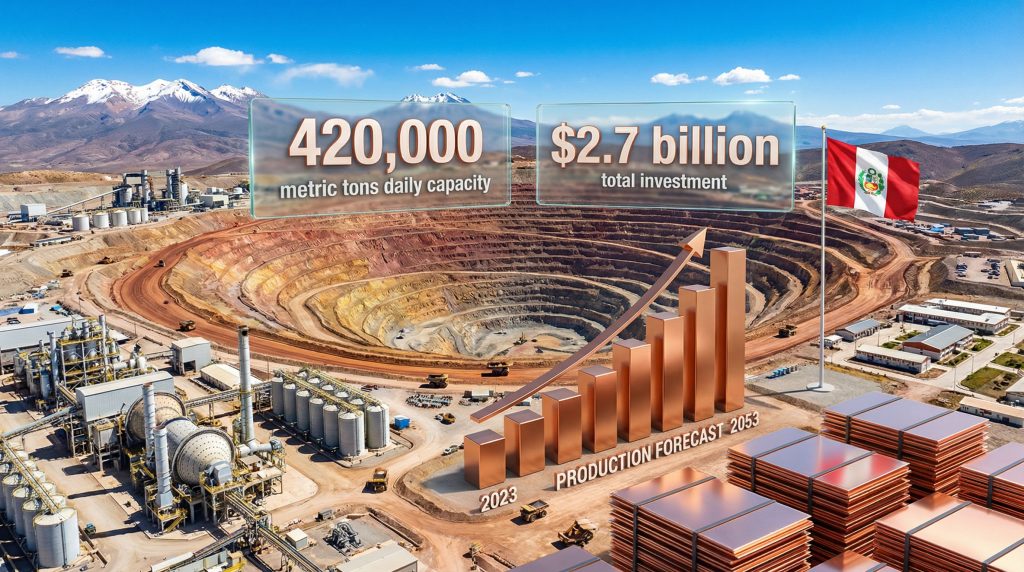
Global mining dynamics increasingly pivot on long-term supply security as electrification demands surge worldwide. Major copper operations face mounting pressure to extend productive lifecycles while navigating complex regulatory frameworks and environmental considerations. The intersection of technological advancement, resource optimization, and strategic investment planning now defines competitive positioning in South America's copper mining landscape, where Peru approves extension of Cerro Verde mine life as a pivotal development.
Understanding Strategic Mine Life Extensions in Peru's Copper Sector
Peru's mining regulatory environment has evolved to accommodate large-scale extension projects that support national economic objectives while addressing global supply chain vulnerabilities. The approval process for major mine life extensions involves comprehensive technical evaluations, environmental impact assessments, and economic benefit analyses that align with the country's broader mining development strategy.
Mine life extension projects typically require substantial capital investment for infrastructure upgrades, processing capacity enhancements, and environmental management systems. These investments enable operators to maximise resource extraction from existing deposits while maintaining operational efficiency throughout extended production periods. Furthermore, mineral exploration insights demonstrate the critical importance of geological assessments in planning such extensions.
Production Capacity and Market Position Analysis
Large-scale copper operations in Peru often process hundreds of thousands of metric tons of ore daily, requiring sophisticated mill systems and integrated processing facilities. The technical complexity of expanding these operations involves careful consideration of ore grade variations, mill throughput optimisation, and tailings management capacity.
Processing capacity expansions must account for changing ore characteristics over extended mine lives, as deeper extraction typically encounters different mineralogical compositions. Advanced metallurgical techniques become essential for maintaining copper recovery rates and product quality specifications throughout the extended operational period.
Key technical considerations include:
- Mill throughput optimisation for varying ore hardness
- Flotation circuit adjustments for changing mineral compositions
- Tailings storage expansion and long-term stability
- Water management system capacity enhancements
- Power infrastructure upgrades for increased processing demands
Financial Investment Structure and Return Analysis
Extension projects require multi-phase investment strategies that balance immediate capital requirements with long-term operational optimisation. Initial infrastructure investments typically focus on critical processing and environmental systems, while subsequent phases address capacity expansion and efficiency improvements.
Investment frameworks for mine life extensions generally incorporate strategic copper investment strategies that maximise returns across extended operational timeframes.
Primary Infrastructure Investment:
- Processing facility upgrades and expansions
- Tailings management system enhancements
- Environmental monitoring and mitigation systems
- Transportation and logistics infrastructure improvements
Optimisation Programme Components:
- Advanced automation and control systems
- Energy efficiency improvements
- Water recycling and conservation technologies
- Predictive maintenance systems implementation
Return on investment calculations for extension projects must account for commodity price volatility, operational cost inflation, and regulatory compliance expenses over extended timeframes. Risk-adjusted return metrics become crucial for evaluating project viability across different market scenarios.
When big ASX news breaks, our subscribers know first
Ownership Structure Dynamics in Large-Scale Mining Operations
Complex ownership structures characterise major South American copper operations, reflecting strategic partnerships between international mining companies, regional operators, and local stakeholders. These arrangements enable risk sharing, technical expertise exchange, and capital resource optimisation.
Stakeholder Analysis and Strategic Roles
| Stakeholder Category | Typical Involvement | Strategic Contribution |
|---|---|---|
| International Operators | Technical management and financing | Global market access and expertise |
| Regional Partners | Local knowledge and relationships | Regulatory navigation and community relations |
| Technical Specialists | Engineering and processing expertise | Operational optimisation and innovation |
| Financial Investors | Capital provision and risk management | Investment diversification and returns |
Multi-stakeholder ownership structures provide operational resilience through diversified expertise and resource access. International operators typically contribute advanced mining technologies and global market connections, while regional partners offer essential local knowledge and stakeholder relationships.
Corporate Strategy Implications for Extension Projects
Extension project approval requires alignment among all stakeholder interests, balancing immediate financial returns with long-term strategic positioning. Decision-making frameworks must accommodate varying risk tolerances and investment horizons across different stakeholder categories.
Strategic considerations include:
- Market positioning relative to global copper supply chains
- Technology integration and operational efficiency improvements
- Environmental and social responsibility commitments
- Regional economic development contributions
- Currency exposure and financial risk management
Technical Engineering Requirements for Mine Life Extensions
Engineering specifications for major mine life extensions involve comprehensive assessments of existing infrastructure capacity, geological resource characteristics, and operational optimisation opportunities. Technical planning must address both immediate expansion requirements and long-term operational sustainability. In addition, mining industry innovation continues to drive technological advancement in these complex projects.
Processing System Integration and Capacity Enhancement
Mill system upgrades for extended operations require careful analysis of ore feed characteristics, processing circuit efficiency, and product quality specifications. Advanced process control systems enable operators to optimise recovery rates while accommodating varying ore grades throughout extended mine lives.
Critical technical elements include:
Ore Processing Optimisation:
- Grinding circuit efficiency improvements
- Flotation system capacity expansions
- Concentrate dewatering and handling upgrades
- Quality control and assurance systems
Infrastructure Integration:
- Power supply reliability and capacity
- Water management and recycling systems
- Waste management and environmental controls
- Transportation and logistics coordination
Resource Extraction Strategy and Production Phases
Extended mine operations typically follow structured production phases that optimise resource extraction while maintaining operational efficiency. Early phases focus on higher-grade ore zones, while later phases may incorporate lower-grade resources as processing capabilities improve.
Production planning considerations include:
- Pit design optimisation for extended extraction
- Grade control and ore blending strategies
- Equipment fleet sizing and replacement planning
- Environmental impact minimisation throughout operations
Long-term production scheduling must balance immediate cash flow generation with resource conservation, ensuring optimal value extraction across the entire extended operational period.
Peru's Position in Global Copper Market Competition
Peru's copper mining sector competes directly with Chile, the Democratic Republic of Congo, and other major producing regions for global market share. Strategic mine life extensions support national objectives to maintain competitive positioning while attracting continued international investment in the mining sector. However, understanding the broader context requires examining the global copper supply forecast and its implications for Peru's position.
South American Copper Production Dynamics
Regional copper production competition centres on operational efficiency, resource quality, and infrastructure capabilities. Peru's mining sector benefits from established transportation networks, experienced workforce, and supportive regulatory frameworks that facilitate large-scale operations.
Competitive advantages include:
- Proximity to Pacific shipping routes for Asian markets
- Established mining service provider networks
- Experienced technical workforce and management capabilities
- Stable regulatory environment for foreign investment
Integration with National Mining Development Pipeline
Peru's mining project pipeline represents significant planned investment in copper production capacity expansion. Peru's mining investment projects across various regions contribute to national production growth objectives while supporting regional economic development.
Key Development Regions:
- Arequipa Province: Multiple large-scale copper projects in development
- Northern Peru: Advanced exploration and development activities
- Central Highlands: Resource expansion and infrastructure development
- Southern Regions: Integration with existing mining operations
Pipeline project coordination enables infrastructure sharing, workforce development, and supply chain optimisation across multiple operations. Strategic planning considers transportation networks, power supply requirements, and environmental management systems on a regional basis.
Environmental Management and Social Considerations
Large-scale mine life extensions require comprehensive environmental management frameworks that address water resources, waste management, and ecosystem protection throughout extended operational periods. Environmental planning must anticipate changing conditions and regulatory requirements over multi-decade timeframes.
Water Resource Management in Arid Regions
Water scarcity presents significant operational challenges for mining operations in Peru's arid southern regions. Advanced water management systems become essential for sustaining large-scale processing operations while minimising environmental impacts on local water resources.
Water management strategies include:
- Advanced water recycling and treatment systems
- Groundwater monitoring and protection protocols
- Surface water impact minimisation measures
- Community water resource sharing agreements
Technology innovations in water management enable significant reductions in fresh water consumption through improved recycling efficiency and advanced treatment capabilities. These systems require substantial initial investment but provide long-term operational sustainability benefits.
Community Engagement and Social Licence Maintenance
Social licence maintenance requires ongoing engagement with local communities, indigenous groups, and regional stakeholders throughout extended operational periods. Successful community relations programmes emphasise economic development, environmental stewardship, and cultural preservation initiatives.
Key engagement elements include:
- Employment and Training Programmes: Local workforce development and skills training initiatives
- Economic Development Support: Small business development and supply chain participation opportunities
- Environmental Monitoring: Community participation in environmental oversight and reporting
- Cultural Preservation: Support for traditional practices and heritage site protection
Long-term social licence sustainability depends on demonstrable community benefits, transparent communication, and responsive grievance mechanisms that address community concerns promptly and effectively.
Market Forces Influencing Extended Mining Operations
Global copper demand projections through 2053 reflect accelerating electrification trends, renewable energy deployment, and infrastructure development requirements. These fundamental demand drivers support long-term price stability and investment confidence for extended mining operations.
Electrification and Infrastructure Copper Demand
Electric vehicle adoption, renewable energy systems, and grid modernisation projects require substantial copper quantities for electrical conductivity applications. Industry analyses indicate copper intensity per electric vehicle ranges from 80-100 kilograms, significantly exceeding traditional vehicle requirements.
Demand growth factors include:
- Electric vehicle market expansion across global regions
- Renewable energy installation acceleration
- Grid infrastructure modernisation and expansion
- Industrial electrification and automation systems
These demand fundamentals provide strong market support for extended copper production operations, particularly those with established supply chain relationships and quality specifications aligned with electrical applications.
Supply Chain Integration and Export Infrastructure
Peru's copper export infrastructure enables efficient global market access through established Pacific coast port facilities and transportation networks. Supply chain optimisation focuses on product quality consistency, delivery reliability, and cost competitiveness in international markets.
Export infrastructure elements include:
- Port handling capacity and storage facilities
- Rail and road transportation networks
- Quality control and certification systems
- International shipping and logistics coordination
Advanced supply chain management systems enable real-time coordination between mining operations, processing facilities, and export terminals, optimising inventory management and delivery scheduling for international customers.
The next major ASX story will hit our subscribers first
What Makes Peru Approves Extension of Cerro Verde Mine Life Significant?
Extended mine life operations contribute to global copper supply stability by providing predictable production volumes over extended timeframes. This supply predictability helps moderate price volatility and supports long-term planning for copper-intensive industries.
Major copper system analysis reveals similar patterns across South America, where Peru approves extension of Cerro Verde mine life represents a broader regional trend towards operational longevity. Consequently, these developments strengthen supply chain security for manufacturers requiring copper supply certainty.
Market stability contributions include:
- Reduced supply disruption risks from operational issues
- Predictable production volumes for long-term supply contracts
- Geographic diversification benefits for supply security
- Established quality specifications and delivery capabilities
Investment Strategy Considerations for Copper Exposure
Extended mine operations offer unique investment characteristics through long-term production visibility and established operational frameworks. Investment analysis must consider commodity price exposure, operational risk factors, and geographic concentration effects.
Investment evaluation factors include:
Risk Assessment Elements:
- Commodity price volatility exposure
- Operational and technical risk factors
- Regulatory and political stability considerations
- Currency exposure and financial risk management
Return Optimisation Strategies:
- Hedging strategies for price and currency exposure
- Operational efficiency improvement potential
- Capital allocation optimisation across multiple assets
- ESG compliance and sustainability metrics
Portfolio diversification benefits from copper exposure reflect the metal's essential role in global electrification and infrastructure development, providing inflation protection and economic growth correlation characteristics.
Regulatory Framework and Approval Process Analysis
Peru's mining regulatory framework balances economic development objectives with environmental protection and social responsibility requirements. The approval process for major mine life extensions involves comprehensive technical review, environmental assessment, and stakeholder consultation procedures.
Ministry of Energy and Mines Evaluation Criteria
Regulatory approval for mine life extensions requires demonstration of technical feasibility, environmental compliance, and economic benefit generation. Evaluation criteria encompass engineering specifications, environmental impact mitigation, and community benefit programmes.
Key evaluation components include:
- Technical feasibility and operational safety assessments
- Environmental impact evaluation and mitigation planning
- Economic benefit analysis for national and regional development
- Community consultation and social impact assessment
- Financial capability and project funding confirmation
The regulatory review process typically involves multiple government agencies, technical consultants, and public consultation periods to ensure comprehensive evaluation of all project aspects.
Policy Alignment with National Mining Strategy
Peru's national mining development strategy emphasises foreign investment attraction, technology advancement, and sustainable development practices. Mine life extension approvals align with broader policy objectives to maximise resource value while maintaining environmental and social standards. For instance, Peru's project approval system demonstrates the government's commitment to facilitating mining development.
Strategic policy elements include:
- Foreign investment protection and promotion frameworks
- Technology transfer and innovation support programmes
- Environmental sustainability and circular economy principles
- Regional development and economic diversification initiatives
Tax policy frameworks for mining operations balance revenue generation with investment incentive maintenance, supporting continued capital investment in operational improvements and extension projects. Furthermore, Peru's mining industry development reflects the country's strategic approach to maintaining global competitiveness.
Investment Implications and Market Outlook
The approval of major mine life extensions reflects confidence in long-term copper market fundamentals and Peru's competitive position in global mining. These developments support continued investment in South American mining infrastructure and technology advancement.
Market implications include strengthened supply chain security for copper-intensive industries, enhanced investment attractiveness for mining sector exposure, and continued development of Peru's mining expertise and infrastructure capabilities. Moreover, when Peru approves extension of Cerro Verde mine life, it signals sustained confidence in the region's mining potential.
Long-term outlook considerations encompass technological advancement in mining operations, environmental management system improvements, and integration with global sustainability initiatives that define the future of responsible mining operations.
Investment Disclaimer: This analysis provides general market information and should not be considered investment advice. Mining investments involve significant risks including commodity price volatility, operational challenges, and regulatory changes. Investors should conduct thorough due diligence and consider professional financial advice before making investment decisions.
Looking to Capitalise on Strategic Mining Developments?
Discovery Alert's proprietary Discovery IQ model delivers real-time alerts on significant ASX mineral discoveries, instantly empowering subscribers to identify actionable opportunities ahead of the broader market. Understand why major mineral discoveries can lead to substantial returns by exploring Discovery Alert's dedicated discoveries page, showcasing historic examples of exceptional outcomes, and begin your 14-day free trial today to position yourself ahead of the market.