July 11, 2026
The global monetary landscape has long hinged on the symbiotic relationship between oil and the US dollar, a system commonly referred to as the petrodollar regime. Since the 1970s, oil has been almost exclusively priced and settled in US dollars, compelling oil-importing nations to accumulate dollar reserves. However, US economic constraints are now amplifying concerns about petrodollar erosion and its far-reaching implications for international finance. This dynamic supported persistent global demand for US Treasury securities, reinforcing dollar dominance across international finance and trade.
This dollar-oil linkage facilitated an unparalleled circulation of capital, making the US the linchpin of global liquidity. Oil producers, particularly in the Gulf, recycled their surplus back into US financial assets, providing a steady pool of buyers for American debt.
Quantifying the Scale of Global Petrodollar Flows
Estimates as of early 2026 indicate that approximately 80% of global oil trade continues to be transacted in US dollars, down from nearly universal participation decades earlier. Recent disruptions, however, have seen roughly 20% of oil transactions shift to non-dollar currencies, accelerating the slow-motion fragmentation of this architecture.
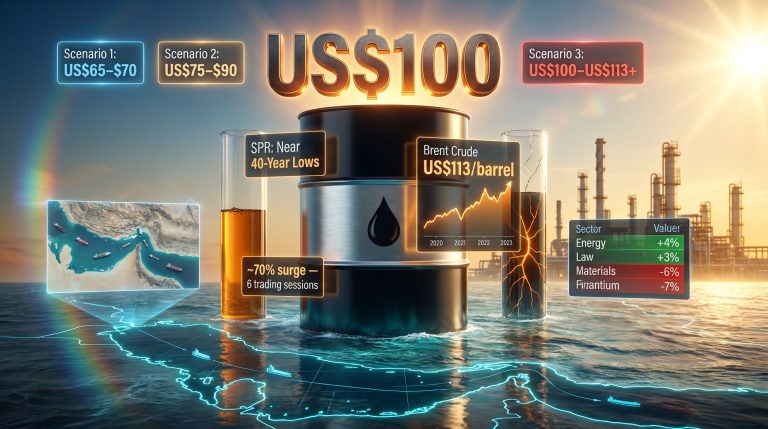
The Strait of Hormuz, as a crucial conduit, channels about 21% of global petroleum liquids, highlighting the systemic risk posed by disruptions in its dollar-settlement channel. Furthermore, oil price movements continue to influence the stability of this traditional arrangement.
Economic Multiplier Effects on US Borrowing Costs
The petrodollar flow traditionally acted as a subsidy for American borrowing. Foreign demand for dollars obliged central banks and sovereign funds to reinvest oil export proceeds in US Treasuries, keeping yields artificially low. Consequently, the gradual erosion of this cycle threatens to raise the baseline cost of US debt service, increase budget deficits, and rein in fiscal flexibility.
When former net buyers transition to sellers—seeking liquidity or rebalancing in non-dollar currencies—yield curves are pressured upwards, potentially setting off broader financial tightening.
When big ASX news breaks, our subscribers know first
How Did the 1974 Saudi Agreement Shape Five Decades of Monetary Policy?
Nixon Shock Aftermath and the Search for Dollar Stability
The closure of the US gold window in 1971 terminated direct gold convertibility, upending the Bretton Woods system. The subsequent 1974 arrangement between the United States and Saudi Arabia was a geopolitical maneuver to re-anchor global confidence in the dollar. By ensuring that OPEC oil would be priced exclusively in dollars, the US created a structural demand for its currency just as a gold-backed floor had vanished.
OPEC Adoption Patterns and Currency Standardization
Following the US-Saudi agreement, other OPEC members rapidly standardised on dollar invoicing, cementing the greenback's role as the world's dominant reserve and transactional currency. The combination of US military protection and access to deep, liquid markets attracted petrodollar recycling, as surplus revenues flowed directly into Treasuries and other dollar-denominated assets.
In addition, the impact of saudi exploration impact continues to shape global energy dynamics and currency flows.
Recycling Mechanisms That Subsidised US Debt Markets
Mechanisms underpinning this cycle included not just sovereign investments in US government bonds but also expansions in the Eurodollar market, where offshore dollar deposits multiplied global dollar liquidity. This system effectively allowed the US to finance persistent trade deficits with minimal penalty, as export-driven economies reinvested their surpluses into US markets, sustaining dollar hegemony.
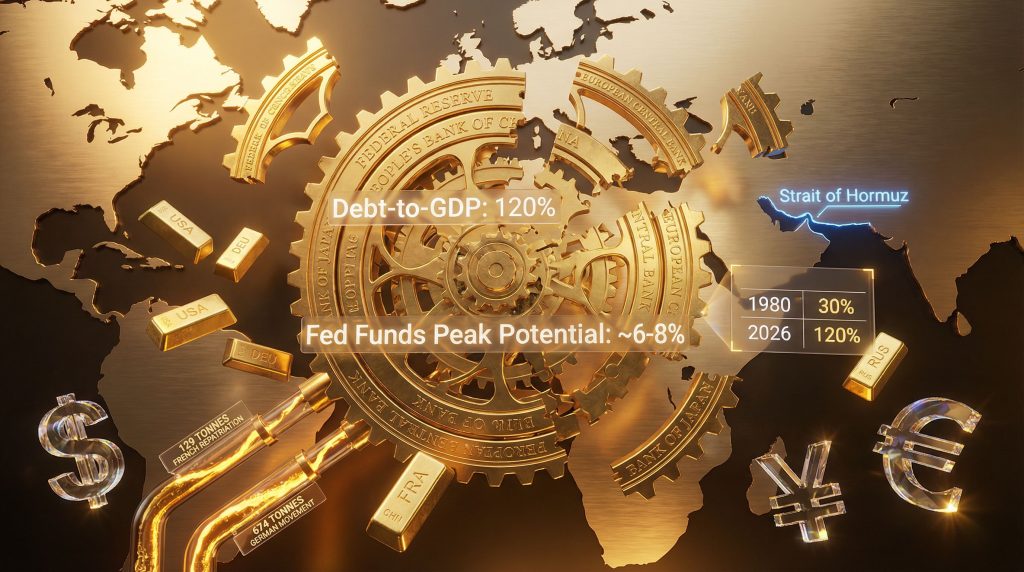
The following table contrasts current US fiscal constraints to those in the Volcker era:
| Metric | 1980 | 2026 | Policy Implication |
|---|---|---|---|
| Debt-to-GDP | 30% | 120% | Limited rate hike capacity |
| Fed Funds Peak Potential | 20% | ~6-8% | Constrained by debt service |
| Fiscal Space | High | Severely Limited | Structural dependency on low rates |
What Are the Primary Drivers Accelerating Petrodollar System Breakdown?
Geopolitical Fragmentation and Security Guarantee Failures
Emerging multipolarity and the perceived erosion of US security guarantees have contributed to a reassessment of the longstanding oil-dollar trade. Ongoing volatility in the Middle East, including the 2026 Iran conflict, challenged the credibility of US commitments and hastened diversification away from exclusive dollar settlements.
Sanctions Weaponisation Creating Alternative Payment Corridors
US-led sanctions regimes—particularly against Iran and Russia—have incentivised the creation of alternative payment systems. Iran, for instance, has actively encouraged oil customers to pay in euros or yuan, conditioning safe Strait of Hormuz passage on non-dollar settlements. Consequently, global actors seeking to avoid sanctions risk are building new corridors using alternative currencies, digital platforms, and barter arrangements.
Rising Debt-to-GDP Ratios Limiting Monetary Policy Options
The US faces a vastly different fiscal environment than in the Volcker era. With a debt-to-GDP ratio of **120%**—four times higher than in 1980—any aggressive monetary tightening risks destabilising public finances. This subdues the Federal Reserve's ability to counter inflation or defend the dollar with sharply higher rates, amplifying the risk of petrodollar erosion.
How Are Energy Market Disruptions Reshaping Currency Preferences?
Strait of Hormuz Control and Dollar Bypass Mechanisms
Control over strategic chokepoints magnifies currency risk. When threats in the Strait of Hormuz disrupt conventional oil flows, bypass mechanisms using alternative currencies gain urgency. Oil sold outside the dollar system incrementally diminishes American leverage and can prompt rapid rebalancing in global energy finance.
Yuan-Denominated Oil Contracts and Settlement Systems
China's energy importers have increasingly settled transactions in yuan, both directly and through platforms such as the Shanghai International Energy Exchange. This trend strengthens Chinese financial infrastructure and signals willingness among producers and consumers to embrace new currency paradigms.
As explained on the Marketplace, the potential end of the petrodollar system could fundamentally reshape global trade relationships.
European Energy Security and Euro-Based Transactions
Driven by the need to hedge both dollar volatility and supply insecurity post-Ukraine conflict, European energy buyers are experimenting with increased euro-based settlements. This shift is gradual but, coupled with EU ambitions for strategic autonomy, could push forward a trajectory of regional diversification.
The Strait of Hormuz handles approximately 21% of global petroleum liquids transit. Any disruption to dollar-denominated settlements through this corridor creates immediate pressure for alternative currency arrangements, accelerating structural shifts away from petrodollar recycling.
Which Central Banks Are Leading the Gold Repatriation Movement?
France's $15 Billion Strategic Repositioning from New York Fed
Between July 2025 and January 2026, France moved 129 tonnes of gold from New York to Paris, leading to a reported capital gain of about $15 billion. The Banque de France's holdings, now fully within domestic borders (2,437 tonnes), illustrate a structural move to operational independence, rather than mere symbolic politics. This repatriation signals both reservation toward US custody and a drive for local control amid global uncertainty.
Germany, Netherlands, and Poland's Custody Diversification
Other European central banks have taken similar precautions. Germany's Bundesbank completed a repatriation of 674 tonnes previously stored in both New York and London. The Netherlands returned 122 tonnes from New York, and Poland has diversified its custody as well. These shifts reflect sovereign concerns and broader risk diversification.
Here is a summary table of recent large repatriations:
| Country | Tonnes Repatriated | Previous US Storage | Strategic Rationale |
|---|---|---|---|
| France | 129 | New York Fed | Operational independence |
| Germany | 674 | New York Fed/Bank of England | Sovereignty concerns |
| Netherlands | 122 | New York Fed | Risk diversification |
China's Undisclosed Accumulation Strategy and Market Impact
China is deploying a different tactic. In March 2026, the People's Bank of China reportedly purchased 160,000 ounces (5 tonnes) of gold, marking its 17th consecutive month of official additions. Its declared holdings approach 2,313.5 tonnes, though independent estimates suggest actual reserves may be far larger—potentially up to tenfold. The strategy implies a resolve to accumulate quietly in order to avoid premature market moves.
This trend aligns with broader gold price record highs driven by monetary uncertainty and central bank demand.
What Role Does Money Supply Expansion Play in Fiat Currency Debasement?
M2 Growth Trajectory and Purchasing Power Erosion
The US M2 money supply reached an unprecedented $22.7 trillion in early 2026, reflecting aggressive fiscal stimulus and ongoing debt monetisation since the 2008 financial crisis. Sustained M2 growth, outpacing real economic output, leads to a gradual erosion of purchasing power as more dollars chase the same basket of goods and services.
Quantitative Easing Programmes and Asset Price Inflation
Massive asset purchase programmes, designed to stabilise financial markets, have inflated prices in equities, real estate, and commodities, while also laying the foundation for longer-term monetary debasement. These dynamics drive investors and central banks to rotate out of fiat balances into hard assets, including gold and other tangibles.
Cross-Border Capital Flight into Hard Assets
Periods of accelerated money supply expansion consistently coincide with increased central bank and private sector demand for gold, signalling a loss of confidence in paper currency promises. Such flight to safety intensifies as petrodollar recycling and reserves maintenance wane.
The next major ASX story will hit our subscribers first
How Do Current Market Dynamics Compare to Historical Precedents?
1980s Volcker Shock vs. 2020s Structural Constraints
A defining contrast with the Volcker era is the degree of fiscal constraint. In 1980, the Federal Reserve could push rates above 20%, anchored by a modest debt-to-GDP ratio and the full force of the petrodollar cycle. Today's 120% debt-to-GDP ratio means aggressive hikes would destabilise government finances, rendering such a strategy unviable in response to inflation.
Safe-Haven Asset Performance During Currency Transitions
Historically, gold rallies during major monetary transitions—such as the Nixon gold-window closure or fiat-currency pivots. Temporary price setbacks, as during the 2008 crisis, are typically liquidity-driven and quickly reversed once structural fears reassert themselves. For instance, gold nearly doubled in price within two years of the 2008-09 financial meltdown.
Looking ahead, the gold price forecast suggests continued upward momentum driven by these structural factors.
Liquidity Crisis Patterns and Recovery Trajectories
Recent gold price behaviour reflects this pattern. The Iran conflict saw gold spike above $5,400/oz before a sharp sell-off below $4,200/oz, mirroring earlier crises where liquidity needs overrode safe-haven flows. History shows such sell-offs tend to be brief and present as long-term entry points for strategic investors.
Featured Snippet Optimisation:
Petrodollar erosion differs from 1980s monetary tightening because current US debt-to-GDP ratios (120% vs. 30% in 1980) prevent aggressive rate hikes, while simultaneous central bank gold accumulation and energy payment diversification create structural rather than cyclical pressure on dollar dominance.
What Are the Macroeconomic Implications of Accelerating De-Dollarisation?
Trade Balance Adjustments and Current Account Pressures
As oil and commodity trade increasingly shifts away from the dollar, the US could see persistent current account deficits come under strain. Reduced demand for dollars may prompt foreign central banks to unwind Treasury holdings, weakening America's long-standing ability to fund deficits cheaply.
Treasury Market Demand Shifts and Yield Curve Implications
The diminishing role of petrodollar recycling means traditional buyers reallocate reserves elsewhere, pushing up yields and pressuring the US to offer higher rates or alternate incentives to attract capital. This adjustment can flatten or invert yield curves and amplify borrowing costs for both public and private sectors.
Inflation Transmission Mechanisms Through Import Prices
A weaker dollar, amid diminished reserve demand, transmits inflation through more expensive imports—raising consumer prices and further challenging US monetary stability. This cycle accelerates as more trading partners transact in alternative currencies.
Which Alternative Reserve Currency Systems Are Gaining Traction?
Petroyuan Development and Chinese Market Integration
China's push for petroyuan contracts has opened new channels for oil exporters to settle sales in yuan, particularly across the Belt and Road network. This not only internationalises the yuan but also offers energy partners a hedge against future US sanctions or dollar volatility.
Euro-Denominated Energy Contracts and EU Strategic Autonomy
The European Union is gradually expanding euro use in energy imports, both to reduce FX risk and to foster economic sovereignty. While still small relative to the global total, euro-based contracts are growing in significance as the bloc aims to shield itself from dollar-centred shocks.
Bilateral Currency Swap Arrangements and CBDC Integration
Multiple nations have formalised swap agreements and are piloting central bank digital currencies (CBDCs) to bypass traditional settlement rails. These initiatives embody a broader movement toward regional arrangements and digital flexibility, aimed at ensuring stable cross-border payments independent of US clearance systems.
According to Bloomberg Opinion, the traditional petrodollar loop supporting the Treasury market is fundamentally broken.
How Should Investors Position for Structural Monetary System Changes?
Hard Asset Allocation Strategies During Currency Transitions
Allocating a meaningful portion of portfolios to hard assets—chiefly gold, but also energy and select real assets—can help preserve purchasing power when fiat debasement accelerates. These assets have outperformed during previous currency regime changes and offer diversification against bond market risk.
Geographic Diversification and Jurisdictional Risk Management
As custody and legal regimes become increasingly politicised, investors are encouraged to diversify holdings across multiple jurisdictions. Gold stored in safe, well-governed countries offers exposure to currency appreciation potential and hedges against local monetary or regulatory instability.
Timing Considerations for Portfolio Rebalancing
Sharp price corrections, as witnessed following Middle East unrest or liquidity-driven sell-offs, often create buying opportunities for long-term capital. Patience, discipline, and incremental accumulation strategies can help mitigate volatility while capturing structural upside.
Frequently Asked Questions
How long does petrodollar erosion typically take to impact global markets?
Petrodollar erosion is a gradual process. Significant effects on global liquidity, demand for Treasuries, and exchange rates usually unfold over several years, but market disruptions or geopolitical shocks can accelerate timelines.
What percentage of oil trade needs to shift away from dollars to create systemic risk?
While there is no precise trigger, analysts generally view a sustained non-dollar share above 20-30% of global oil trade as a strong catalyst for broader shifts in reserve management and currency preference.
Can the Federal Reserve prevent petrodollar erosion through policy changes?
While proactive policy can slow currency outflows, structural factors such as fiscal deficits, energy diversification, and geopolitical trust are outside the Fed's direct control. Monetary tightening is limited by debt levels and the rising cost of debt service.
Which emerging markets benefit most from reduced dollar dependence?
Large commodity exporters and countries with robust non-dollar trading links—such as China, India, and Russia—can gain flexibility and potentially benefit from lower transaction costs and reduced sanction risk.
What Does the End of Dollar Hegemony Mean for Global Economic Architecture?
Multipolar Reserve Currency System Emergence
The declining dominance of the petrodollar signals a pivot toward a multipolar currency world, with the yuan, euro, and other regional units gaining reserve status. This shift dilutes US leverage, redistributes global capital, and opens space for new financial infrastructure.
Regional Trading Bloc Formation and Currency Zones
Regionalisation of trade and finance—through blocs like the EU, BRICS, or ASEAN—reinforces the trend toward distributed currency zones. These formations reflect both economic logic and the desire to manage local risk autonomously.
Long-Term Implications for US Economic Leverage
Reduced demand for dollar reserves lessens America's ability to borrow at low rates and project financial power. This transition will force policy adjustments, encourage fiscal discipline, and may constrain America's ability to cushion downturns or execute discretionary stimulus on prior scales.
The convergence of unsustainable debt levels, energy market fragmentation, and central bank gold accumulation suggests petrodollar erosion represents a structural rather than cyclical shift, creating long-term tailwinds for alternative reserve assets and currencies while constraining traditional US monetary policy tools.
Further Exploration:
Those seeking deeper analysis on monetary regime transitions and the evolving gold dynamic are encouraged to explore advanced resources on currency debasement, central bank reserve strategies, and the intersection of geopolitics with global finance.
Ready to Capitalise on Major Market Shifts?
Petrodollar erosion and currency transitions create significant opportunities for astute investors in ASX-listed precious metals companies. Discovery Alert's proprietary Discovery IQ model delivers real-time alerts on significant mineral discoveries, helping subscribers identify actionable opportunities as traditional monetary systems evolve and hard asset demand accelerates. Begin your 14-day free trial today to position yourself ahead of these historic market transformations.