May 20, 2026
Understanding the Mechanics of Photovoltaic Material Recovery Systems
The renewable energy sector faces a fundamental challenge that extends far beyond initial installation costs and energy generation efficiency. Solar panel recycling and aluminium usage have become critical considerations as the global photovoltaic industry approaches a critical inflection point. Furthermore, the technical complexities of managing end-of-life solar infrastructure reveal deeper systemic considerations about resource circulation and material recovery protocols. Understanding these operational dynamics requires examining the intricate relationships between aluminium utilisation patterns, recovery technologies, and the broader implications for sustainable energy system design.
When big ASX news breaks, our subscribers know first
The Scale and Urgency of Photovoltaic Waste Stream Management
Current Installation Trajectories and Retirement Forecasting
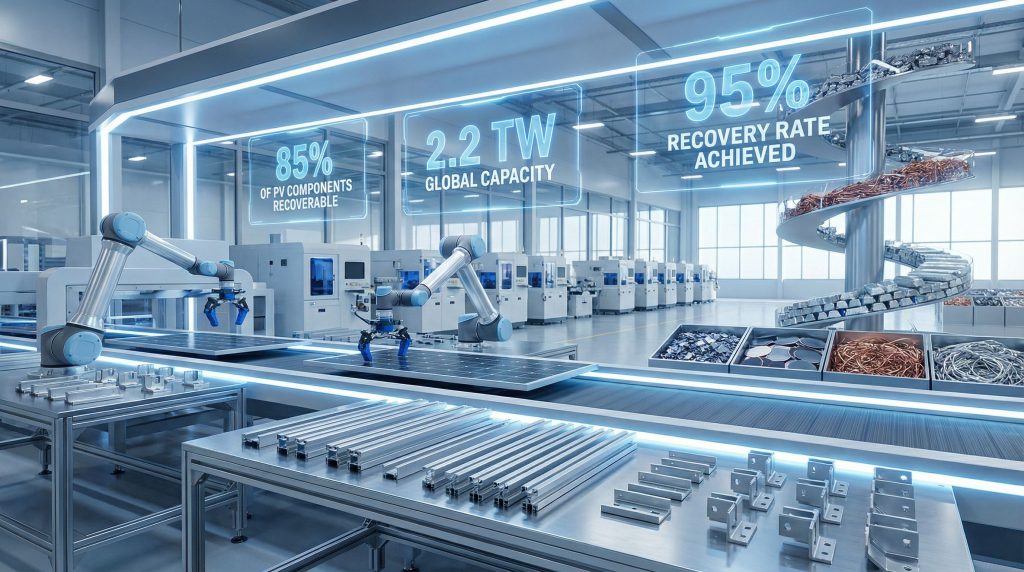
The photovoltaic industry has experienced unprecedented expansion over the past two decades, creating a substantial installed base that will require systematic decommissioning within the next decade. Global solar capacity reached 2.2 terawatts in 2024, with annual additions approaching 600 gigawatts, representing one of the fastest-growing industrial sectors in modern history.
The operational lifespan of photovoltaic systems typically ranges from 25 to 30 years, meaning installations from the early 2000s solar expansion are approaching retirement. Consequently, this creates a cascading effect where increasing volumes of panels will require processing through specialised recovery systems.
According to projections from the International Renewable Energy Agency, photovoltaic waste generation will reach between 1.7 and 8 million tonnes by 2030, escalating dramatically to 60-78 million tonnes by 2050. However, these figures represent not just environmental challenges but significant economic opportunities for material recovery operations.
Material Composition and Recovery Potential
The economic viability of solar panel recycling and aluminium usage stems largely from the substantial aluminium content within photovoltaic systems. Over 85% of recoverable materials in standard panels consist of aluminium components, primarily in frames and mounting structures. In addition, advanced recycling processes can extract up to 95% of panel value through systematic material separation and purification.
Recent developments in battery recycling breakthrough technologies demonstrate the broader potential for circular economy approaches across renewable energy sectors. Moreover, innovative waste management solutions are emerging that complement solar panel recovery efforts.
Key Material Recovery Metrics:
- Aluminium recovery rates: 90-95% through mechanical separation
- Glass recovery: 95% purity achievable
- Silicon wafer recovery: 85% through thermal processing
- Precious metals (silver, copper): 90%+ extraction efficiency
Aluminium's Strategic Role in Solar Infrastructure Architecture
Structural Applications and Manufacturing Requirements
Aluminium serves multiple critical functions within photovoltaic systems, extending beyond simple structural support to encompass thermal management, corrosion resistance, and electrical conductivity requirements. Furthermore, the industry primarily utilises 6-series aluminium alloys for frames and mounting systems due to their optimal strength-to-weight ratios and resistance to environmental degradation.
Manufacturing intensity data reveals that producing 1 megawatt of photovoltaic capacity requires approximately 21 tonnes of aluminium. For concentrating solar power systems, aluminium requirements increase substantially to 47 kilograms per kilowatt, reflecting the more complex tracking and concentration mechanisms required.
Regional Aluminium Consumption Patterns:
| Region | 2024 Consumption | Projected 2030 Demand |
|---|---|---|
| China | 4 million tonnes | 6-8 million tonnes |
| Europe | 1.2 million tonnes | 4-10 million tonnes |
| North America | 800,000 tonnes | 2.5-3.5 million tonnes |
| Rest of World | 2 million tonnes | 5-7 million tonnes |
Supply Chain Dependencies and Strategic Considerations
The photovoltaic industry's aluminium requirements create significant supply chain dependencies that influence both manufacturing costs and strategic planning. China's dominance in solar manufacturing corresponds with substantial domestic aluminium consumption, accounting for 4 million tonnes in 2024 alone.
European solar expansion plans project capacity increases to 750 gigawatts by 2030, requiring an additional 4-10 million tonnes of aluminium. Consequently, this demand surge necessitates either increased primary aluminium production or enhanced recycling capabilities to maintain supply chain stability.
Technical Processes Governing Solar Panel Material Recovery
Multi-Stage Disassembly and Separation Protocols
Effective solar panel recycling and aluminium usage employs sophisticated multi-stage processes designed to maximise material recovery whilst maintaining quality standards. The technical approach begins with mechanical disassembly, progresses through thermal treatment, and concludes with chemical purification.
Solar Panel Recycling Process Architecture:
| Stage | Technical Process | Target Materials | Recovery Efficiency |
|---|---|---|---|
| 1 | Mechanical frame removal | Aluminium frames, junction boxes | 100% separation |
| 2 | Thermal delamination (500°C) | Glass, silicon wafers | 95% glass, 85% silicon |
| 3 | Chemical extraction | Silver, copper, rare metals | 90%+ by weight |
| 4 | Purification and grading | All recovered materials | 98%+ purity levels |
Advanced Recovery Technologies and Quality Control
Modern recycling facilities employ thermal processing at 500°C to separate laminated layers without damaging recoverable materials. In addition, chemical extraction methods utilise specialised solvents to isolate precious metals whilst maintaining material integrity for remanufacturing applications.
Digital tracking systems integrate throughout the process to ensure material provenance and quality control. These systems enable lifecycle management capabilities that support circular economy principles and regulatory compliance requirements. The aluminium recycling industry in Australia is developing sophisticated frameworks to support these advanced recovery technologies.
Technical Specifications for Recovery Operations:
- Processing capacity: 50-200 tonnes per day for industrial facilities
- Energy consumption: 2-3 MWh per tonne of processed material
- Water usage: 500-800 litres per tonne with 90% recirculation
- Material purity standards: 99%+ for aluminium, 98%+ for glass
Regulatory Frameworks Shaping Industry Standards
European Union Extended Producer Responsibility Models
The European Union has integrated solar panel recycling into existing electronic waste regulations through Waste Electrical and Electronic Equipment (WEEE) directives. These regulations establish extended producer responsibility mandates requiring manufacturers to manage end-of-life costs and collection infrastructure.
Producer responsibility requirements include:
- Collection network establishment and maintenance
- Processing facility certification and compliance
- Material recovery rate targets and reporting
- Consumer education and awareness programs
Global Policy Evolution and Harmonisation Efforts
Regulatory approaches vary significantly across regions, creating complexities for multinational solar manufacturers and recycling operators. Some jurisdictions emphasise voluntary industry initiatives, whilst others implement mandatory collection and processing requirements.
Regional Regulatory Approaches:
- United States: State-level initiatives with federal guidance development
- Japan: Manufacturer voluntary programmes with government oversight
- China: Emerging regulations focusing on domestic waste management
- India: Early-stage policy development emphasising circular economy principles
Industry certification standards are evolving to ensure consistent quality and environmental performance across different regulatory frameworks. Furthermore, these standards address technological requirements, worker safety protocols, and environmental impact mitigation measures.
Economic Opportunities in Circular Material Systems
Value Chain Integration and Market Development
Solar panel recycling and aluminium usage creates new economic opportunities throughout the renewable energy value chain. Secondary material markets for recovered aluminium, glass, and silicon are developing pricing mechanisms that reflect both material quality and supply chain benefits.
The circular economy approach reduces dependence on primary material extraction whilst creating domestic processing capabilities. Consequently, this shift supports supply chain resilience and provides economic opportunities in regions with substantial solar installations approaching retirement.
The broader context of mining decarbonisation benefits illustrates how sustainable material recovery contributes to industry-wide environmental improvements. Similarly, renewable energy transformations across various sectors demonstrate the interconnected nature of sustainable technology adoption.
Economic Value Creation Mechanisms:
- Material recovery revenues: $150-300 per tonne for mixed materials
- Aluminium scrap value: $1,200-1,800 per tonne depending on grade
- Processing service fees: $50-150 per tonne for collection and processing
- Avoided disposal costs: $100-400 per tonne for hazardous waste management
Infrastructure Investment Requirements and Returns
Establishing comprehensive recycling infrastructure requires substantial capital investment but generates attractive returns through material recovery and processing fees. Regional processing hubs can serve multiple markets whilst achieving economies of scale necessary for economic viability.
Investment requirements vary based on processing capacity and automation levels. Facilities processing 100 tonnes per day typically require $15-25 million in initial capital, generating returns through material sales and processing contracts.
The next major ASX story will hit our subscribers first
Environmental Benefits and Sustainability Metrics
Hazardous Material Management and Environmental Protection
Solar panel recycling addresses environmental concerns related to hazardous materials including lead solder, cadmium compounds, and other potentially harmful substances. However, proper processing prevents soil and groundwater contamination whilst recovering valuable materials for reuse.
Environmental protection protocols include:
- Controlled atmosphere processing for hazardous material isolation
- Water treatment systems preventing contamination
- Air filtration systems managing particulate emissions
- Waste stream segregation and specialised disposal methods
Carbon Footprint Reduction Through Material Circularity
Recycled aluminium production requires 90% less energy than primary aluminium smelting, creating substantial carbon footprint reductions. Lifecycle assessments demonstrate that material recovery significantly improves the environmental profile of photovoltaic systems.
The Solar Quotes recycling analysis provides detailed insights into how these environmental benefits translate into practical recycling applications across Australia.
Environmental Impact Reductions:
- Carbon emissions: 75-85% reduction through aluminium recycling
- Energy consumption: 60-70% reduction in material production
- Water usage: 40-50% reduction compared to primary production
- Mining impact: Complete elimination for recovered materials
Current Limitations and Optimisation Opportunities
Infrastructure Gaps and Logistical Challenges
Limited processing facility distribution creates logistical challenges for efficient material recovery. Transportation costs can represent 20-30% of total processing expenses, particularly for installations in remote locations.
Collection network development requires coordination between installers, owners, and processing facilities. Furthermore, standardised collection protocols and transportation containers can reduce costs whilst improving safety and efficiency.
Logistical Optimisation Strategies:
- Regional consolidation centres for volume aggregation
- Specialised transportation equipment for safe handling
- Digital tracking systems for inventory management
- Coordinated collection schedules reducing transportation costs
Technical and Economic Viability Thresholds
Current recycling economics depend heavily on aluminium prices and processing volumes. Market fluctuations can impact facility viability, requiring flexible business models and diversified revenue streams.
Panel design modifications can significantly improve recyclability without compromising performance. Design for disassembly principles include standardised fasteners, material identification systems, and simplified layer structures.
Future Trajectory and Market Evolution by 2030
Technology Development and Automation Advancement
Recycling technology continues advancing toward higher automation levels and improved material recovery rates. Robotic disassembly systems, artificial intelligence-guided sorting, and advanced chemical processes promise increased efficiency and reduced costs.
Industry events such as the resources innovation expo are showcasing emerging technologies that will shape the future of material recovery across renewable energy sectors.
Technology Development Priorities:
- Automated disassembly systems reducing labour costs
- Advanced material identification improving sorting accuracy
- Chemical process optimisation increasing recovery rates
- Digital integration enabling predictive maintenance
Market Growth Projections and Industry Consolidation
The solar panel recycling industry projects substantial growth as installation volumes from the 2000s and 2010s approach retirement. Processing capacity requirements will increase dramatically, supporting specialised facility development and industry consolidation.
Regional hub strategies enable efficient material collection and processing whilst achieving economies of scale. Moreover, industry consolidation may create integrated service providers offering comprehensive end-of-life management solutions.
Market Development Indicators:
- Processing capacity growth: 300-500% increase by 2030
- Regional hub development: 50-75 facilities globally
- Industry consolidation: 10-15 major operators serving multiple regions
- Technology standardisation: Common protocols for material recovery
"The integration of advanced recycling technologies with robust supply chain networks will be critical for achieving the scale required to handle the growing volume of end-of-life solar panels whilst maximising the economic value of recovered materials."
This analysis is based on publicly available industry data, regulatory documents, and technical publications. Specific investment or operational decisions should involve consultation with qualified professionals and consideration of local conditions and requirements.
Looking to Capitalise on the Growing Solar Recycling Market?
Discovery Alert's proprietary Discovery IQ model delivers real-time alerts on significant ASX mineral discoveries, including companies developing advanced recycling technologies and sustainable material recovery solutions. With the solar panel recycling industry projected to grow by 300-500% by 2030, subscribers gain immediate access to emerging investment opportunities in this expanding circular economy sector through Discovery Alert's discoveries page. Begin your 14-day free trial today to position yourself ahead of this transformative market shift.