June 16, 2026
Industrial machinery sectors globally are experiencing unprecedented technological convergence as artificial intelligence capabilities transition from isolated software applications to embedded physical systems. This transformation fundamentally alters how heavy equipment manufacturers approach product development, operational efficiency, and market positioning within capital-intensive industries.
The integration of edge computing architectures into traditional manufacturing processes represents more than incremental innovation. These developments signal a strategic shift toward platform-based business models where equipment vendors must balance hardware capabilities with software ecosystems to maintain competitive relevance in evolving industrial markets.
Physical AI Integration Transforms Heavy Equipment Manufacturing
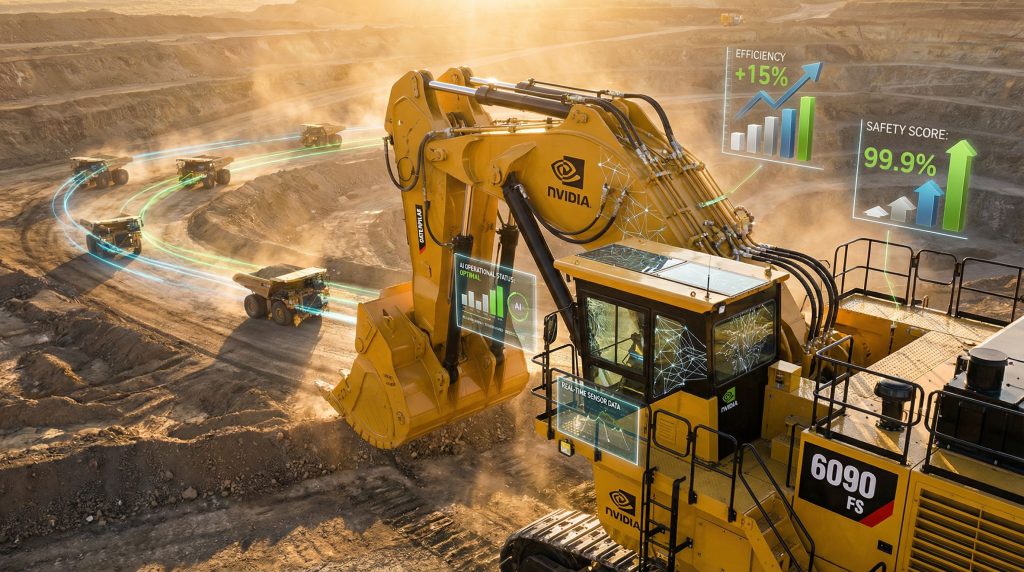
The Caterpillar and NVIDIA AI mining collaboration demonstrates how established machinery manufacturers are repositioning their offerings around intelligent automation capabilities. This partnership, announced at the Consumer Electronics Show in January 2026, establishes a comprehensive technology framework spanning autonomous equipment operations, predictive maintenance systems, and manufacturing optimisation processes.
Caterpillar's approach involves integrating NVIDIA's Jetson Thor platform directly into mining equipment, creating what industry analysts describe as distributed intelligence networks across operational sites. According to company specifications, these systems process billions of data points within milliseconds, enabling real-time decision-making capabilities that traditional centralised computing architectures cannot match.
The strategic significance extends beyond individual equipment upgrades. By embedding artificial intelligence at the machinery level, manufacturers create interconnected fleet networks where collective learning improves operational performance across entire mining operations. This transformation positions heavy equipment as data processing nodes rather than purely mechanical assets.
Key technological integration components include:
• Voice-activated operator assistance using NVIDIA Riva speech models
• Real-time sensor fusion for environmental awareness systems
• Predictive maintenance algorithms based on continuous equipment monitoring
• Local data processing capabilities addressing remote location connectivity challenges
Platform Economics Drive Equipment Vendor Strategy
The collaboration illustrates how traditional equipment manufacturers must adapt to platform-driven competitive dynamics. Caterpillar's integration with NVIDIA's AI infrastructure creates technological lock-in effects that influence purchasing decisions across multi-year equipment replacement cycles.
Mining operators investing in AI-enhanced machinery face switching costs that extend beyond initial capital expenditures. Training programmes, operational integration processes, and data platform dependencies create barriers to equipment vendor changes that fundamentally alter competitive positioning within the heavy machinery sector.
This strategic framework represents a departure from traditional transactional equipment sales models. Manufacturers increasingly generate revenue through ongoing software licensing, platform access fees, and data monetisation opportunities that provide more predictable income streams than cyclical equipment purchases.
When big ASX news breaks, our subscribers know first
Edge Computing Architecture Addresses Remote Operations Challenges
Mining environments present unique computational challenges that conventional cloud-based processing systems cannot adequately address. Remote locations, unreliable network connectivity, and harsh environmental conditions require computing architectures designed specifically for edge deployment scenarios.
The Caterpillar and NVIDIA AI mining collaboration addresses these constraints through localised processing capabilities embedded directly within mining equipment. The Jetson Thor platform enables autonomous decision-making systems that maintain functionality regardless of external connectivity limitations.
Technical implementation involves creating what Caterpillar describes as a digital nervous system across mining sites. Individual machines equipped with edge computing capabilities communicate through mesh networks, sharing operational data and coordinating autonomous actions without requiring constant external network access.
Processing capabilities deliver several operational advantages:
• Millisecond response times for safety-critical decision-making
• Continuous operation during network connectivity disruptions
• Reduced data transmission costs for remote mining locations
• Enhanced privacy and security for proprietary operational information
Sensor Fusion Creates Comprehensive Operational Awareness
Advanced mining equipment integrates multiple sensor types to create comprehensive environmental understanding capabilities. These systems combine visual, auditory, vibration, temperature, and chemical sensors to monitor equipment performance and surrounding conditions simultaneously.
Furthermore, the AI-powered mill optimization processes sensor data streams continuously, identifying patterns that indicate potential equipment failures, safety hazards, or operational inefficiencies. Machine learning algorithms improve prediction accuracy over time as systems process additional operational data from diverse mining environments.
Voice-activated operator interfaces, powered by NVIDIA Riva speech models, enable mining personnel to access system insights without diverting attention from critical operational tasks. This hands-free interaction capability proves particularly valuable in complex extraction environments where visual and manual attention must remain focused on immediate safety considerations.
Investment Framework Analysis for AI-Enhanced Mining Operations
Mining companies evaluating artificial intelligence integration face complex capital allocation decisions that extend significantly beyond traditional equipment procurement models. The Caterpillar and NVIDIA AI mining collaboration introduces ongoing technology platform costs that fundamentally alter operational expenditure structures.
Capital investment categories for AI-native mining operations:
| Investment Category | Traditional Model | AI-Integrated Model | Strategic Impact |
|---|---|---|---|
| Initial Equipment Cost | 100% hardware focus | 70% hardware, 30% software platform | Higher upfront complexity |
| Ongoing Platform Fees | Minimal software costs | 15-25% of operational budget | Predictable recurring expenses |
| Training and Integration | Basic operator certification | Comprehensive AI system management | Extended implementation timeline |
| Maintenance Framework | Reactive repair model | Predictive analytics-driven | Reduced emergency downtime costs |
Caterpillar indicates plans to increase research spending through 2030, suggesting sustained investment requirements for companies adopting these technological platforms. Mining operators must evaluate long-term technology roadmaps rather than isolated equipment purchase decisions, particularly when considering broader investment strategy components.
Competitive Positioning Through Technology Capabilities
AI integration creates competitive differentiation opportunities for mining companies willing to invest in advanced operational capabilities. Early adopters of autonomous mining systems may achieve cost advantages and safety improvements that prove difficult for competitors to match using conventional equipment.
The partnership model establishes technology ecosystems where mining operators benefit from collective learning across multiple sites and companies. Shared algorithmic improvements, developed through aggregated operational data, create network effects that increase platform value over time.
However, technology dependency introduces strategic risks. Mining companies must evaluate vendor stability, platform evolution roadmaps, and potential technology obsolescence scenarios when making long-term equipment investments.
Workforce Augmentation Through Intelligent Operator Support
The mining industry faces significant workforce challenges, including skills shortages, safety concerns, and training complexity for sophisticated equipment operations. AI-powered operator assistance systems address these issues through real-time guidance and automated safety monitoring capabilities.
Caterpillar's AI Assistant, launching in the first quarter of 2026, provides voice-activated support for equipment operators managing complex extraction tasks. In addition to traditional operational guidance, the system offers maintenance recommendations, parts guidance, and troubleshooting assistance based on real-time equipment data analysis.
Operator support capabilities include:
• Real-time coaching for complex operational procedures
• Predictive maintenance alerts preventing equipment failures
• Safety hazard detection beyond human perception capabilities
• Performance optimisation recommendations based on environmental conditions
Safety Enhancement Through Automated Decision-Making
Autonomous safety systems operate continuously, monitoring equipment performance and environmental conditions with capabilities that exceed human observation limitations. These systems detect potential hazards, initiate preventive actions, and alert operators to developing safety concerns before critical situations emerge.
The technology addresses human factor limitations in high-stress mining environments. Operator fatigue, distraction, and information overload scenarios benefit from AI systems that maintain consistent monitoring and decision-making capabilities throughout operational periods.
Machine learning algorithms improve hazard recognition accuracy through exposure to diverse operational scenarios across multiple mining sites. This collective learning approach enables safety systems to identify previously unknown risk patterns and develop appropriate response protocols.
Manufacturing Transformation Through Digital Twin Implementation
Caterpillar's deployment of NVIDIA AI Factory infrastructure transforms mining equipment manufacturing through comprehensive digital modelling systems. These virtual factory representations enable production optimisation, supply chain coordination, and quality control improvements that reduce equipment delivery timelines.
Digital twin technology utilises NVIDIA Omniverse libraries and OpenUSD standards to create physically accurate virtual models of manufacturing facilities. Engineering teams across multiple geographic locations collaborate within shared virtual environments, testing modifications and reviewing proposed changes without disrupting actual production processes.
Manufacturing optimisation capabilities include:
• Virtual production line testing before physical implementation
• Bottleneck identification through simulation modelling
• Supply chain coordination across global manufacturing networks
• Quality control enhancement via predictive analytics integration
Remote Collaboration Infrastructure
The digital twin framework enables simultaneous interaction by multiple stakeholders with unified virtual factory environments. Engineering teams can test equipment modifications, review proposed changes, and coordinate production schedules without requiring physical presence at manufacturing facilities.
This capability proves particularly valuable for mining equipment production, where specialised components and customisation requirements demand close coordination between engineering teams, suppliers, and customer technical representatives throughout the manufacturing process.
Virtual collaboration reduces travel requirements, accelerates decision-making timelines, and enables more frequent design iteration cycles that improve final product quality whilst reducing time-to-market for specialised mining equipment configurations.
Implementation Timeline and Scaling Strategy Analysis
The Caterpillar and NVIDIA AI mining collaboration follows a phased deployment approach beginning with operator assistance capabilities in the first quarter of 2026. This implementation strategy balances technology maturation requirements with operational validation across diverse mining environments.
Deployment phases and expected capabilities:
| Phase | Timeline | Core Capabilities | Integration Scope |
|---|---|---|---|
| Phase 1 | Q1 2026 | Voice-activated operator assistance | Individual equipment units |
| Phase 2 | 2026-2027 | Fleet-wide coordination systems | Site-level integration |
| Phase 3 | 2028-2030 | Autonomous mining operations | Multi-site network effects |
Caterpillar's commitment to increase research spending through 2030 indicates sustained technology development investment beyond initial deployment phases. Mining companies must evaluate long-term partnership strategies rather than isolated technology adoption decisions.
Legacy Equipment Integration Considerations
Existing mining operations face integration challenges when adopting AI-enhanced equipment alongside conventional machinery. Compatibility requirements, training needs, and operational coordination between AI-native and traditional equipment create implementation complexity that affects deployment timelines.
Retrofit capabilities for existing equipment may provide transition pathways that reduce total fleet replacement costs. However, the technological and economic feasibility of upgrading legacy mining equipment with AI capabilities requires careful evaluation on a case-by-case basis, particularly considering various capital raising methods that mining companies may utilise.
Mining operators must develop migration strategies that balance immediate operational efficiency gains with long-term technology platform benefits whilst managing capital expenditure requirements across multi-year implementation periods.
The next major ASX story will hit our subscribers first
Cross-Industry Technology Platform Implications
The partnership model established between Caterpillar and NVIDIA extends beyond mining applications to encompass autonomous construction fleets and broader industrial automation initiatives. This cross-sector approach creates technology platform economies of scale that benefit individual industry implementations.
Jensen Huang, NVIDIA's Founder and CEO, positions the collaboration as spanning the full spectrum from autonomous construction fleets to AI data centres powering the next industrial revolution. This comprehensive scope indicates technology development investments that serve multiple industrial sectors simultaneously.
Platform consolidation trends affecting heavy industries:
• Standardised AI hardware architectures across equipment types
• Shared algorithmic development benefiting multiple industrial applications
• Integrated supply chain optimisation spanning construction, mining, and agriculture
• Common operator training frameworks reducing workforce development costs
Regulatory Framework Development
Autonomous industrial operations require regulatory frameworks that address safety standards, liability considerations, and operational oversight requirements. The mining industry's adoption of AI-powered autonomous systems will likely influence regulatory development across other heavy industrial sectors.
Regulatory consistency across jurisdictions becomes increasingly important as mining companies operate across multiple countries with varying autonomous vehicle and industrial automation standards. Mining industry evolution suggests international coordination may emerge as AI-powered industrial equipment becomes more prevalent.
Companies investing in autonomous industrial systems must monitor regulatory developments and participate in standards development processes that affect long-term operational viability and competitive positioning within AI-enhanced industrial markets.
Strategic Investment Considerations for Mining Sector Transformation
Mining companies evaluating AI integration must assess technology adoption strategies within broader industry transformation contexts. The Caterpillar and NVIDIA AI mining collaboration represents one implementation approach, but alternative technology partnerships and development pathways may emerge as the sector evolves.
Critical evaluation frameworks for mining AI investment include:
• Technology vendor stability and long-term platform viability
• Integration complexity with existing operational systems
• Workforce transition requirements and training investment
• Competitive differentiation potential versus industry adoption rates
Early adopter advantages in operational efficiency and safety metrics may provide sustainable competitive benefits if implemented effectively. However, technology implementation risks, including integration challenges and workforce adaptation requirements, must be balanced against potential operational improvements.
Furthermore, developments in AI in drilling & blasting demonstrate how artificial intelligence applications extend beyond equipment automation to encompass core mining processes. This broader technological transformation requires comprehensive strategic planning rather than isolated technology implementations.
Strategic Implementation Approach: Mining operators should prioritise AI integration initiatives that address their most critical operational challenges rather than pursuing comprehensive technology transformation without clear performance objectives.
Partnership Evaluation Framework: Long-term competitive positioning depends on selecting technology platforms that provide ecosystem benefits and continuous improvement capabilities rather than isolated equipment upgrades.
The mining industry's transformation through artificial intelligence represents a fundamental shift in operational capabilities, competitive dynamics, and investment requirements. Companies that successfully navigate this transition will likely establish sustained advantages in safety performance, operational efficiency, and cost management within increasingly competitive global mining markets. According to industry analyses, this technological convergence will continue accelerating throughout the remainder of the decade.
Please note that predictions regarding future technology adoption rates, competitive outcomes, and investment returns involve inherent uncertainty. Mining companies should conduct comprehensive risk assessments and consult with industry specialists when evaluating AI integration strategies.
Ready to Capitalise on AI-Driven Mining Technology Investments?
Discovery Alert's proprietary Discovery IQ model delivers real-time notifications on significant ASX mineral discoveries, including breakthrough technologies transforming mining operations like AI-enhanced extraction systems. Begin your 30-day free trial today and gain immediate insights into actionable opportunities as revolutionary mining technologies create substantial market movements.