
May 22, 2026
What Drives Physical Silver Withdrawals from COMEX Warehouses?
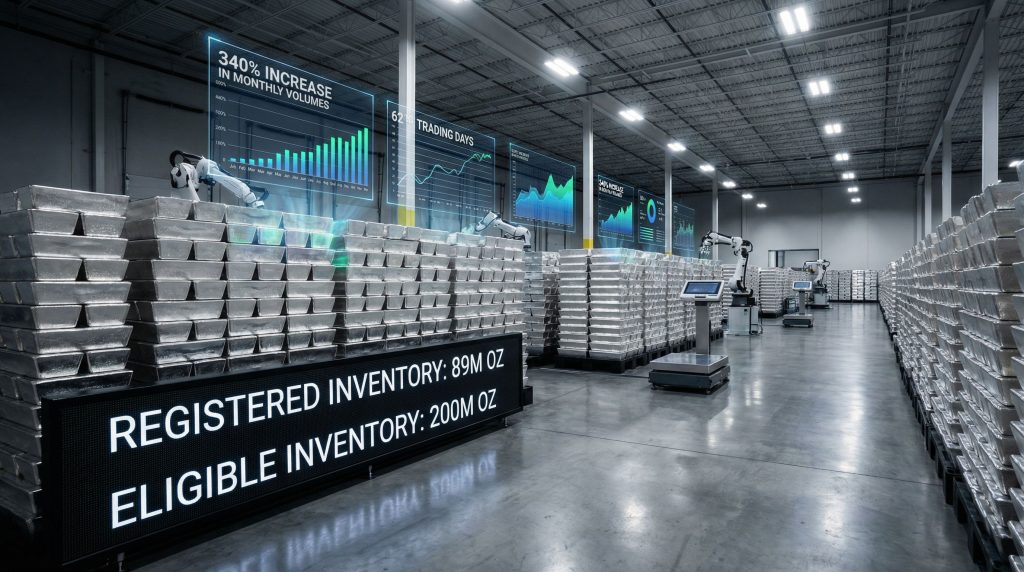
The silver market squeeze represents a complex phenomenon where various factors contribute to inventory movements within COMEX-approved facilities. Understanding why silver is leaving COMEX vaults requires examining multiple layers of decision-making that extend far beyond simple supply and demand fundamentals. Market participants often misinterpret these movements as indicating genuine scarcity when the underlying drivers tell a different story.
Institutional Demand for Physical Settlement Over Paper Contracts
Financial institutions increasingly prioritise tangible asset backing over paper settlements, driven by regulatory changes and risk management protocols. Large-scale investors now demand physical delivery to satisfy internal compliance requirements and portfolio diversification mandates. This shift reflects broader institutional scepticism toward derivative instruments following previous market disruptions.
The preference for physical settlement creates concentrated delivery demands during specific contract months, leading to apparent inventory depletion that may not reflect genuine market tightness. Major pension funds and sovereign wealth entities have restructured their precious metals exposure to emphasise direct ownership rather than futures-based strategies.
Corporate treasury departments now view physical silver holdings as essential components of supply chain security rather than speculative investments. This operational approach to precious metals accumulation generates steady withdrawal pressure that persists regardless of price movements, contributing to ongoing discussions about a potential silver squeeze transformation.
Geographic Arbitrage and International Price Differentials
Cross-border precious metals flows respond to persistent pricing inefficiencies between major trading centres. The Shanghai Gold Exchange frequently trades at premiums to COMEX pricing, creating profitable arbitrage opportunities for entities capable of executing international transfers. Furthermore, the tariffs impact on silver adds another layer of complexity to these international movements.
Transportation economics determine whether vault-to-vault transfers become economically viable. Current freight costs, insurance rates, and customs procedures establish minimum arbitrage thresholds that must be exceeded before physical movement occurs. These calculations involve specialised logistics providers who maintain secure supply chains between major financial centres.
Currency hedging strategies further complicate international arbitrage decisions. Entities executing cross-border trades must account for exchange rate volatility, hedging costs, and settlement timing differences between jurisdictions. The complexity of these calculations limits arbitrage activity to sophisticated market participants with established operational capabilities.
Industrial Supply Chain Reconfiguration
Manufacturing sectors increasingly bypass exchange-based procurement in favour of direct relationships with mining operations. This structural shift reduces industrial demand flowing through COMEX channels whilst maintaining overall market consumption levels. Additionally, examining silver vs gold trends reveals how industrial applications drive different demand patterns compared to purely investment-driven precious metals.
Critical mineral classifications have prompted strategic stockpiling initiatives across multiple industries. Solar panel manufacturers, automotive companies, and electronics producers now maintain larger inventory buffers to ensure production continuity during supply disruptions.
Just-in-time manufacturing models are being replaced with strategic stockpiling approaches that prioritise supply security over inventory optimisation. This transition creates sustained demand for physical silver that manifests as consistent exchange withdrawals without necessarily indicating market scarcity.
When big ASX news breaks, our subscribers know first
How Do COMEX Inventory Categories Actually Function?
The COMEX silver storage system operates through clearly defined categories that determine delivery eligibility and ownership documentation. Understanding these classifications prevents misinterpretation of inventory data and provides insight into actual market mechanics. However, analysing gold-silver ratio insights can provide additional context for understanding precious metals market dynamics.
Registered vs. Eligible Silver: Operational Distinctions
| Category | Warrant Status | Delivery Eligibility | Typical Volume |
|---|---|---|---|
| Registered | Active warrant attached | Immediately deliverable | Variable based on market conditions |
| Eligible | No warrant/withdrawn | Vault storage only | Larger proportion of total inventory |
Registered silver carries active warehouse warrants that enable immediate delivery against futures contracts. This classification requires specific documentation and legal structures that connect physical metal to exchange settlement systems. The registration process involves administrative procedures rather than physical metal movement.
Eligible silver meets COMEX quality standards but lacks the warrant documentation necessary for futures delivery. These holdings represent legitimate exchange-approved inventory that remains readily convertible to registered status when warrant attachment occurs.
The distinction between categories reflects administrative rather than physical differences. Silver bars can transition between classifications without leaving vault facilities, creating apparent inventory changes that mislead casual observers.
Warrant Transfer Mechanics and Ownership Changes
Digital warehouse receipt systems facilitate ownership transfers without requiring physical metal movement. Modern warrant systems utilise electronic documentation that enables rapid ownership changes whilst maintaining secure chain of custody protocols.
Settlement timing varies between immediate transfers and traditional T+2 clearing cycles depending on transaction structure and counterparty arrangements. Electronic systems enable same-day ownership transfers for entities with established clearing relationships.
Legal title transfers occur through warrant assignment rather than physical possession changes. This mechanism allows large-scale ownership changes to occur rapidly without the logistical complexities of physical movement.
Vault Operator Economics and Storage Incentives
Approved depositories operate on revenue models that balance storage fees against handling charges and administrative costs. Vault operators generate income from long-term storage arrangements rather than frequent metal movement.
Capacity utilisation rates across major facilities influence pricing structures and service availability. High utilisation periods create bottlenecks that can delay warrant processing and affect apparent inventory levels.
Insurance and security cost allocation varies based on storage duration, metal quantity, and client risk profiles. These operational expenses influence depositor behaviour and contribute to inventory concentration patterns.
Are Current Withdrawal Rates Historically Unprecedented?
Historical analysis reveals that COMEX silver inventory fluctuations follow cyclical patterns that often coincide with broader economic trends rather than supply-specific factors. Contemporary withdrawal rates, whilst notable, must be evaluated against long-term statistical baselines.
Quantitative Analysis of Depletion Patterns
Recent delivery activity reflects increased preference for physical settlement among institutional participants. However, these patterns align with historical precedents during periods of monetary policy uncertainty and currency volatility. COMEX silver supplies continue to shrink rapidly, yet this trend must be contextualised within broader market cycles.
Monthly withdrawal rates fluctuate significantly based on contract expiration schedules, seasonal industrial demand, and investment flow patterns. Sustained depletion requires analysis across multiple contract cycles to establish genuine trend significance.
Statistical analysis of inventory changes must account for seasonal adjustments, contract rollover effects, and administrative reclassifications that create apparent depletion without genuine supply constraints.
Comparative Historical Context: Previous Inventory Cycles
The 2011 silver price surge coincided with significant inventory changes, but subsequent analysis revealed complex relationships between physical holdings and price performance. During this period, inventory declines preceded, coincided with, and followed major price movements without consistent correlation.
Pandemic-era supply disruptions created genuine physical market tightness that manifested differently across various precious metals exchanges. COMEX inventory data during 2020-2021 reflected both genuine supply constraints and administrative adjustments that complicated interpretation.
Twenty-year statistical analysis reveals weak correlation between COMEX inventory levels and silver price performance. Extended periods show inventory increases accompanying price rises and inventory decreases coinciding with price declines, contradicting simple supply-demand interpretations.
Seasonal and Cyclical Factors in Vault Activity
Industrial demand seasonality creates predictable patterns in delivery requests and inventory flows. Electronics manufacturing cycles, solar panel production schedules, and automotive industry patterns generate recurring withdrawal pressures.
Investment calendar effects influence year-end portfolio rebalancing activities that affect precious metals positioning. Tax considerations, fiscal year closures, and regulatory reporting requirements create concentrated activity periods.
Options expiry correlation with physical delivery requests creates apparent demand surges that reflect settlement mechanics rather than genuine supply constraints. These technical factors require careful analysis to separate operational effects from market fundamentals.
What Role Do International Market Dynamics Play?
Global precious metals flows respond to complex interactions between exchange pricing, regulatory frameworks, and currency relationships that extend beyond domestic market considerations. International arbitrage opportunities create interconnected market dynamics that influence local inventory patterns.
Shanghai Gold Exchange Premium Analysis
Shanghai's consistent premium to COMEX pricing creates arbitrage incentives for entities capable of executing cross-border transfers. These differentials reflect Chinese import restrictions, local demand patterns, and currency hedging considerations.
Arbitrage execution involves sophisticated logistics networks that must navigate customs procedures, quality verification requirements, and settlement system differences. Only large-scale operators with established infrastructure can capitalise on these opportunities effectively.
Cross-exchange settlement mechanisms require coordination between different clearing systems and regulatory jurisdictions. These operational complexities limit arbitrage activity and sustain pricing differentials across geographic markets.
Asian Investment Demand Surge
Indian precious metals demand has intensified through exchange-traded fund accumulation and direct investment channels. This sustained buying pressure creates consistent demand for COMEX silver that manifests as delivery requests and inventory withdrawals.
Shanghai Futures Exchange operational changes have modified hedging requirements and position limits, altering traditional arbitrage relationships. These regulatory adjustments influence cross-border flow patterns and affect COMEX inventory dynamics.
Sovereign wealth fund allocation strategies increasingly emphasise precious metals exposure through direct ownership rather than derivative instruments. This institutional trend generates sustained physical demand across multiple exchange systems.
Currency and Monetary Policy Impacts
Dollar strength correlation with COMEX inventory levels reflects complex interactions between currency values, commodity pricing, and international capital flows. Stronger dollar periods typically coincide with reduced international arbitrage activity.
Central bank policy divergence creates currency volatility that influences precious metals arbitrage calculations. Interest rate differentials and quantitative easing programs affect the relative attractiveness of different geographic markets.
Real interest rate environments determine opportunity cost calculations for physical precious metals holdings. Negative real rates enhance gold and silver attractiveness regardless of inventory levels or exchange mechanics.
Do Inventory Changes Reliably Predict Silver Price Movements?
Statistical analysis of historical relationships between COMEX inventory data and silver price performance reveals weak predictive value across multiple time horizons. Market participants who rely primarily on inventory signals often misallocate attention from more significant price drivers.
Statistical Correlation Analysis: Inventory vs. Price Performance
| Period | Inventory Trend | Price Movement | Correlation Strength |
|---|---|---|---|
| 2020-2021 | Declining registered | Rising prices | Moderate positive |
| 2015-2016 | Increasing total | Declining prices | Weak negative |
| 2011-2012 | Volatile changes | Extreme volatility | Inconsistent |
Correlation analysis across different time periods reveals inconsistent relationships between inventory levels and price direction. Short-term correlations often reverse during extended periods, limiting practical forecasting applications.
Multiple regression analysis incorporating inventory data alongside macroeconomic variables shows minimal improvement in price prediction accuracy. Inventory changes contribute less explanatory power than monetary policy indicators and currency movements.
Macroeconomic Factors vs. Physical Market Signals
Federal Reserve policy decisions consistently demonstrate stronger influence on precious metals pricing than COMEX inventory fluctuations. Interest rate changes, quantitative easing announcements, and forward guidance create more significant price responses.
Industrial demand elasticity varies across economic cycles, creating complex relationships between physical consumption and exchange inventory levels. Economic growth periods can simultaneously increase industrial demand whilst reducing investment demand.
Investment demand volatility overwhelms physical supply constraints during periods of financial stress. Market participants seeking safe-haven assets generate price movements that occur independently of exchange inventory mechanics.
Market Efficiency and Information Asymmetry
Futures market price discovery mechanisms incorporate information from multiple sources beyond exchange inventory reports. Professional traders utilise diverse data streams that provide more comprehensive market insight.
Physical premium evolution and basis relationships offer superior insight into genuine supply-demand imbalances compared to vault inventory statistics. These pricing relationships reflect actual market tightness more accurately.
Algorithmic trading influence on inventory-price feedback loops creates technical relationships that may not reflect fundamental market conditions. High-frequency trading systems respond to inventory data releases in ways that can amplify or dampen price responses artificially.
What Are the Broader Supply Chain Implications?
Industrial users adapt procurement strategies to navigate perceived supply constraints and inventory fluctuations through operational adjustments that maintain production continuity. These adaptations often reduce exchange-based procurement whilst maintaining overall demand levels.
Industrial User Adaptation Strategies
Automotive sector manufacturers increasingly establish direct relationships with mining operations to secure long-term silver supplies for electric vehicle components. These bilateral arrangements bypass exchange mechanisms and reduce apparent industrial demand flowing through COMEX channels.
Solar panel production facilities maintain expanded inventory buffers to accommodate supply chain disruptions and price volatility. Strategic stockpiling initiatives reduce just-in-time procurement and create more predictable demand patterns.
Electronics manufacturing operations invest in substitute material research and alternative sourcing strategies that reduce silver intensity per unit of output. These technological adaptations modify long-term demand projections and exchange utilisation patterns.
Mining Industry Response to Delivery Demand
Primary silver producers increasingly offer direct sales arrangements that provide price premiums over exchange-based settlements. These marketing strategies reduce producer reliance on exchange delivery mechanisms whilst maintaining revenue optimisation.
Refining capacity constraints create bottlenecks that can delay delivery fulfilment and affect apparent inventory availability. Processing limitations rather than mining output often determine physical market tightness.
Secondary recovery and recycling operations respond to pricing incentives by increasing processing capacity and collection efficiency. These supply sources operate independently of exchange inventory systems whilst contributing to overall market supply.
Financial Market Structure Evolution
Alternative settlement mechanisms development includes blockchain-based ownership verification and digital asset integration with physical metals holdings. These technological advances may reduce traditional exchange utilisation over time.
Decentralised exchange protocols for precious metals trading enable direct peer-to-peer transactions that bypass centralised clearinghouses. These innovations could fundamentally alter traditional inventory concentration patterns.
Financial technology integration creates new methods for fractional ownership and settlement that may reduce physical delivery requirements whilst maintaining investment exposure.
The next major ASX story will hit our subscribers first
How Should Investors Interpret COMEX Data?
Investors benefit from sophisticated analytical frameworks that place inventory data within broader market context rather than treating these statistics as standalone indicators. Effective interpretation requires understanding of operational mechanics and statistical limitations.
Signal vs. Noise: Filtering Meaningful Indicators
Weekly inventory fluctuations often reflect administrative timing rather than fundamental market changes. Monthly trend analysis provides more reliable insight by smoothing temporary operational effects and contract settlement variations.
Seasonal adjustment techniques help distinguish between recurring patterns and genuine trend changes. Historical baselines enable investors to identify statistically significant deviations from normal operational patterns.
Leading versus lagging indicator classification requires understanding of market timing relationships and causation patterns. Inventory changes may follow rather than precede price movements, limiting their forecasting utility.
Portfolio Allocation Considerations
Physical versus paper silver exposure optimisation depends on investment objectives, storage capabilities, and liquidity requirements. Direct ownership provides different risk-return characteristics compared to exchange-traded instruments.
Geographic diversification of precious metals storage reduces concentration risk whilst potentially improving access during market stress periods. Multiple jurisdiction holdings provide operational flexibility and regulatory diversification.
Liquidity management during volatile periods requires understanding of bid-ask spreads, settlement timing, and market depth across different silver investment vehicles. Exchange-traded options may offer superior liquidity compared to physical holdings during stress periods.
Risk Management Framework for Silver Investments
Counterparty risk assessment involves evaluation of exchange operator financial strength, clearing system integrity, and regulatory oversight quality. Direct ownership eliminates some counterparty exposures whilst creating others.
Storage cost analysis and break-even calculations must incorporate insurance, security, and accessibility considerations that vary significantly across storage options. Total cost of ownership extends beyond simple storage fees.
Insurance and security considerations for physical holdings require evaluation of coverage limits, claim procedures, and loss recovery mechanisms that may not apply to paper-based investments.
What Does the Future Hold for COMEX Silver Markets?
Market structure evolution continues through technological advancement and regulatory adaptation that may fundamentally alter traditional exchange operations. These changes will likely reduce the significance of current inventory tracking methodologies.
Structural Reform Possibilities
Delivery mechanism modernisation could streamline settlement procedures and reduce administrative complexity that currently creates apparent inventory volatility. Electronic documentation and automated processing may eliminate many operational inefficiencies.
Enhanced margin requirements and position limits could reduce speculative activity whilst improving market stability. These regulatory changes might modify delivery patterns and inventory utilisation rates.
Increased transparency and reporting standards may provide market participants with more comprehensive data that reduces reliance on simplified inventory metrics. Better information quality should improve price discovery and market efficiency.
Technology Integration and Market Evolution
Digital asset convergence with physical metals creates hybrid instruments that combine ownership benefits with transactional efficiency. Tokenisation platforms may enable fractional ownership without traditional warehouse requirements.
Artificial intelligence applications in inventory management optimise storage allocation and predict demand patterns more accurately. Machine learning systems could reduce operational inefficiencies that create misleading inventory signals.
Quantum computing applications in price discovery and risk management may revolutionise derivative pricing and settlement systems. These technological advances could eliminate many current market structure limitations.
Geopolitical Scenarios and Market Resilience
Trade policy changes and international sanctions create risks for cross-border precious metals flows that currently support arbitrage activities. Regulatory fragmentation could reduce market integration and efficiency.
Strategic reserve accumulation by nation-states represents potential demand that operates independently of traditional market mechanisms. Government stockpiling initiatives could create sustained withdrawal pressure.
Energy transition metal demand projections incorporate silver requirements for renewable energy infrastructure that may exceed current production capacity. Industrial demand growth could fundamentally alter market dynamics regardless of exchange inventory levels.
Why do COMEX silver inventories fluctuate so dramatically?
Inventory variations primarily reflect administrative changes between registered and eligible categories rather than physical metal movement. Warrant attachment and removal procedures create apparent volatility without corresponding changes in actual silver locations.
What's the difference between registered and eligible silver at COMEX?
Registered silver carries active warehouse warrants enabling immediate delivery against futures contracts. Eligible silver meets quality standards but lacks delivery authorisation documentation. The same physical bars can transition between categories through administrative procedures.
Do falling COMEX inventories guarantee higher silver prices?
Historical analysis demonstrates weak correlation between inventory levels and price movements. Macroeconomic factors including monetary policy, currency strength, and industrial demand typically exert stronger influence on silver pricing than exchange inventory statistics.
How do international markets affect COMEX silver flows?
Price differentials between exchanges create arbitrage opportunities that drive physical metal movement between regions. Shanghai premiums, currency relationships, and regulatory restrictions influence cross-border flows that affect domestic inventory levels.
What should investors focus on instead of daily inventory reports?
Federal Reserve policy decisions, real interest rate trends, industrial demand growth, and currency movements provide more reliable signals for precious metals investment decisions. These macroeconomic factors demonstrate stronger historical correlation with silver price performance.
This analysis is for informational purposes only and does not constitute investment advice. Precious metals investments involve risks including potential loss of principal. Market conditions and regulatory frameworks may change significantly over time. Consult qualified financial advisors before making investment decisions.
Ready to Capitalise on the Next Major Silver Discovery?
Discovery Alert instantly alerts investors to significant ASX mineral discoveries using its proprietary Discovery IQ model, turning complex mineral data into actionable insights for both silver and broader precious metals opportunities. Begin your 14-day free trial today to position yourself ahead of the market and gain immediate access to real-time discovery alerts that could unlock substantial investment opportunities.