
June 7, 2026
How Pipeline Infrastructure Optimizes Australia's Gas Transport Economics
Australia's domestic energy landscape centers on sophisticated transmission systems that move natural gas across continental distances with remarkable efficiency. Understanding why pipelines are the key to domestic gas security becomes evident when examining these networks as critical infrastructure enabling energy independence through cost-effective transportation of abundant domestic resources to population centers and industrial facilities.
Modern pipeline systems operate through integrated networks of high-pressure steel conduits, strategically positioned compression facilities, and automated control systems that maintain optimal flow rates across thousands of kilometers. East coast transmission capacity currently exceeds 13,000 kilometers of interconnected pipelines, creating supply flexibility that reduces dependence on volatile international energy markets.
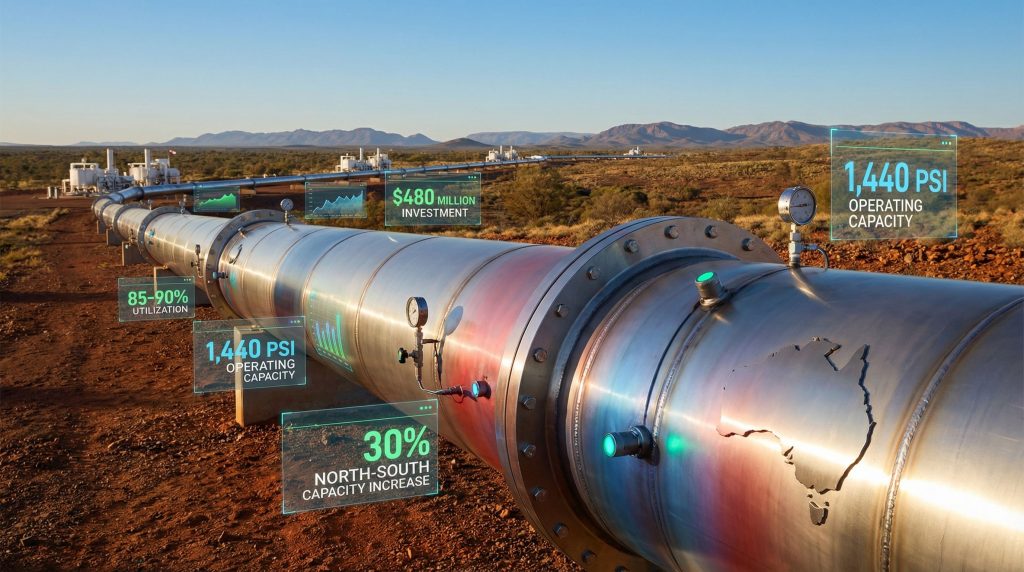
The technical specifications underlying these systems demonstrate engineering capabilities that support multi-decade energy security. Transmission pipelines typically operate between 1,200-1,440 psi under normal conditions, with advanced materials enabling safe operation at these pressures while minimising energy losses during transport.
Critical Infrastructure Components:
- High-pressure transmission lines with automated pressure regulation
- Compression stations maintaining optimal flow every 100-150 kilometres
- Multi-directional interconnectors linking regional supply sources
- Real-time monitoring systems optimising network performance
- Strategic storage facilities providing backup supply capacity
When big ASX news breaks, our subscribers know first
What Economic Advantages Drive Pipeline Investment Over Alternative Transport?
Economic modelling reveals substantial cost advantages for pipeline transport compared to alternative delivery methods across equivalent distances. Domestic pipeline delivery costs range from $1.50-2.20 per gigajoule, including infrastructure amortisation and operational expenses, whilst imported LNG alternatives typically cost $4.50-6.80 per gigajoule including regasification facilities.
Comparative Transport Economics:
| Method | Cost Range (AUD/GJ) | Key Limitations | Capacity (TJ/day) |
|---|---|---|---|
| Pipeline Network | $1.50-2.20 | Geographic routing | 1,000-3,000 |
| LNG Import Terminal | $4.50-6.80 | International pricing volatility | 500-1,500 |
| Truck Transport | $8.20-12.40 | Distance and volume constraints | 50-200 |
| Rail Systems | $5.60-8.90 | Limited route availability | 200-800 |
The cost efficiency of pipeline networks improves with higher utilisation rates, creating economies of scale unavailable through alternative transport methods. Current east coast pipeline utilisation approaches 85-90% during peak demand periods, indicating infrastructure operating near optimal efficiency whilst maintaining reserve capacity for emergency situations.
Industry analysis demonstrates that pipeline pricing remains relatively stable compared to international commodity markets. Furthermore, examining the natural gas price forecast reveals that international markets experience 200-400% price volatility between market cycles. This stability results from domestic cost-of-service regulatory frameworks that insulate consumers from global energy price shocks affecting imported alternatives.
Pipeline transport delivers domestic gas at costs 50-65% below imported LNG alternatives, generating billions in cumulative consumer savings whilst supporting industrial competitiveness and energy security objectives.
How Do Capacity Expansion Projects Address Regional Supply Constraints?
Strategic infrastructure investments target bottlenecks limiting north-to-south gas flows during peak demand periods. APA Group's East Coast Gas Grid Stage 3 program commits $480 million to expand transmission capacity by over 50% within a five-year development timeline.
Stage 3 Investment Breakdown:
- Stage 3A: $260 million for 30% north-south capacity increase (2026-2028)
- Stage 3B: $220 million for additional winter peak capacity (post-2028)
- Combined Impact: 50%+ total grid expansion addressing projected shortfalls
These expansions utilise proven engineering approaches including parallel pipeline installation (looping) over existing corridors, advanced compression technology, and upgraded materials specifications. Modern variable-speed compression systems increase throughput by 25-35% compared to legacy fixed-speed equipment whilst reducing operational energy consumption.
Technical improvements enable capacity optimisation without requiring entirely new pipeline corridors. X80 and X100 grade steel materials support higher operating pressures than historical pipeline installations, enabling 15-25% capacity increases through pressure debottlenecking on existing routes.
The expansion program addresses projected seasonal supply gaps identified by energy market modelling. East coast gas demand forecasts indicate 15-20% growth by 2035, with winter peak periods requiring additional 40-50 petajoules of transport capacity to prevent supply constraints.
Engineering Capacity Enhancement Methods:
- Loop installations adding parallel capacity over existing rights-of-way
- Compression station upgrades maintaining higher operating pressures
- Advanced materials enabling pressure rating improvements
- Real-time optimisation systems maximising throughput efficiency
What Role Do Multi-Source Supply Networks Play in Energy Security?
Geographic supply diversity through interconnected pipeline networks reduces vulnerability to localised production disruptions whilst enabling flexible sourcing from multiple basins. Queensland coal seam gas production exceeds 4,200 petajoules annually, complementing conventional sources from Bass Strait and emerging Northern Territory resources.
The Northern Gas Pipeline connecting Darwin to Queensland markets demonstrates successful integration of remote gas resources into eastern networks. This 1,359-kilometre transmission system operates at 1,200 psi with initial capacity of 120 petajoules annually, expandable through debottlenecking and looping installations.
Moreover, understanding why pipelines are the key to domestic gas security becomes apparent when examining their role in addressing supply challenges through comprehensive reforms and strategic planning.
Regional Supply Integration:
- Queensland CSG: 4,200+ PJ annual production capacity via Wallumbilla interconnector
- Northern Territory: 3.7-4.0 TCF reserves in McArthur Basin accessible through new pipelines
- Bass Strait: Conventional gas integrated with expanded east coast networks
- Future Sources: Beetaloo Basin development enabling additional northern supply
Network resilience benefits from multiple supply sources operating simultaneously, creating redundancy unavailable through single-source supply models. Automated valve systems respond to pressure changes within 15 seconds, maintaining system stability during production fluctuations or maintenance activities.
Strategic storage facilities at network nodes provide 7-14 days backup supply during emergency situations, whilst bi-directional flow capabilities enable gas movement from surplus to deficit regions based on real-time demand patterns.
How Do Advanced Technologies Enhance Pipeline Performance and Safety?
Digital infrastructure integration transforms pipeline operations through real-time monitoring, predictive maintenance, and automated optimisation systems. IoT sensor networks monitor pressure, temperature, and flow every 500 metres, generating continuous data streams enabling immediate response to operational anomalies.
Smart Pipeline Technologies:
- Predictive maintenance algorithms reducing unplanned outages by 60%
- Automated leak detection systems responding within 3-5 minutes
- SCADA systems managing multiple pipeline segments simultaneously
- Drone inspection programs cutting manual survey costs by 45%
Safety management systems incorporate multiple layers of protection including cathodic protection extending pipeline life beyond 50 years, inline inspection tools achieving 95% corrosion detection accuracy, and emergency response teams positioned at 200-kilometre intervals across the network.
Additionally, comprehensive gas pipeline safety measures demonstrate industry commitment to maintaining the highest operational standards across transmission networks.
Cybersecurity protocols protect critical infrastructure from external threats, whilst backup power systems maintain operations during grid outages. Annual integrity assessments using inline inspection tools ensure compliance with international safety standards and regulatory requirements.
Future technology roadmaps include hydrogen-ready pipeline materials testing, carbon capture integration at compression stations, and solar-powered compression for remote locations. These innovations position pipeline networks for energy transition mining insights whilst maintaining current operational efficiency.
What Strategic Investment Requirements Support Long-Term Energy Security?
Capacity planning projections indicate $2.5-3.8 billion investment needed for planned network expansions addressing forecast demand growth through 2035. Private sector financing typically covers 70-80% of project costs, with government infrastructure funds supporting strategic connections.
However, accessing capital for major infrastructure projects requires sophisticated funding mechanisms. Understanding ASX capital raising methods becomes crucial for pipeline companies seeking to finance expansion programs.
Investment Priority Framework:
- Northern Australia Gas Corridor: Connecting multiple basins to southern markets
- Cross-Continental Pipeline: Linking western and eastern transmission networks
- Underground Storage Expansion: Strategic reserves at key network nodes
- Hydrogen Integration: Preparing networks for future energy transition
Economic modelling demonstrates that infrastructure investments generate positive returns through reduced energy costs compared to import alternatives. Cumulative five-year savings from expanded domestic supply could reach $2.5-3.5 billion based on volume displacement and cost differentials.
Employment benefits include 3-5 job-years per million dollars of infrastructure investment during construction phases, supporting regional economic development in areas hosting pipeline expansions.
Future Demand Drivers:
- Industrial demand growth from manufacturing expansion
- Power generation requirements during renewable energy intermittency
- Export market opportunities through additional LNG facilities
- Population growth in major consumption centres
The next major ASX story will hit our subscribers first
How Do Regulatory Frameworks Support Infrastructure Development?
State and federal approval processes balance infrastructure development needs with environmental protection and community consultation requirements. Environmental impact assessments typically require 12-18 months for major pipeline expansions, with community engagement programs addressing local concerns.
Regulated returns encourage private infrastructure investment by providing revenue certainty over asset lifespans extending 40-50 years. Long-term capacity contracts between pipeline operators and gas suppliers create financial stability supporting project financing.
Regulatory Compliance Requirements:
- Environmental monitoring at river crossings and sensitive areas
- Safety management systems certified to international standards
- Regular integrity assessments using advanced inspection technologies
- Emergency response capabilities meeting prescribed response times
Strategic reserve obligations ensure domestic supply priority during shortage situations, whilst gas reservation policies under development could mandate minimum domestic allocations from new production projects.
What Future Scenarios Shape Pipeline Network Evolution?
Long-term planning scenarios account for changing energy demand patterns, renewable energy integration, and potential hydrogen economy development. Pipeline networks designed for hydrogen blending capability position infrastructure for energy transition requirements whilst maintaining natural gas service.
Demand modelling indicates continued growth in gas consumption for industrial applications and electricity generation backup during renewable energy intermittency periods. Manufacturing sector expansion particularly in regions with abundant gas resources creates additional transport requirements.
For investors considering exposure to this critical infrastructure sector, developing comprehensive investment strategy components becomes essential for capturing long-term value from energy security investments.
Scenario Planning Considerations:
- Renewable energy intermittency requiring gas-fired generation backup
- Industrial growth in gas-rich regions creating transport demand
- Export facility expansion accessing domestic transmission networks
- Hydrogen economy development utilising existing pipeline corridors
Network flexibility through bi-directional flow capabilities and modular expansion options enables adaptation to changing supply and demand patterns without requiring wholesale infrastructure replacement.
International investment partnerships accelerate development timelines by providing additional capital and technical expertise for large-scale infrastructure projects. These arrangements typically involve long-term gas purchase agreements creating revenue certainty for investors.
Australia's abundant conventional gas reserves estimated at 18.7 trillion cubic feet provide multi-decade supply security when combined with coal seam gas resources and emerging unconventional developments. This resource base supports continued infrastructure investment justification independent of global market conditions.
Consequently, why pipelines are the key to domestic gas security becomes clear through the combination of proven reserves, expanding transport infrastructure, and advanced operational technologies. These elements position domestic pipeline networks as the foundation for energy security extending through the 2040s, offering cost advantages and supply reliability superior to import-dependent alternatives regardless of international energy market volatility.
Looking to Capitalise on Energy Infrastructure Opportunities?
Discovery Alert's proprietary Discovery IQ model delivers real-time alerts on significant energy and mining discoveries across the ASX, instantly identifying actionable opportunities in the rapidly evolving infrastructure sector. Explore why historic discoveries can generate substantial returns by examining major mineral finds that have transformed market landscapes, then begin your 14-day free trial today to position yourself ahead of the market.