July 27, 2026
Understanding Production Ramp-Up Trajectories in Modern Mining Operations
The transition from development to operational excellence in Australia's mining sector follows predictable patterns, yet each project presents unique technical challenges. Modern polymetallic operations must navigate complex metallurgical processes while achieving consistent throughput targets that justify substantial capital investments. Furthermore, achieving Woodlawn mine steady-state production represents a critical milestone that demonstrates successful integration of data-driven operations with traditional mining methodologies.
Production ramp-up phases typically span 12-18 months, with nameplate capacity achievement marking a critical inflection point for project economics. The path involves systematic optimisation of extraction methods, processing circuit efficiency, and concentrate quality parameters that directly influence revenue realisation.
Table: Woodlawn Production Milestones vs Industry Standards
| Metric | December 2025 Achievement | Target Steady-State | Industry Benchmark |
|---|---|---|---|
| Monthly Throughput | 59,000 tonnes | 70,833 tonnes/month | 65,000-75,000 tonnes |
| Annual Capacity Utilisation | Ramping | 850,000 t/y nameplate | 800,000-900,000 t/y |
| Concentrate Production Growth | 36% (Cu), 43% (Zn) QoQ | Stabilised rates | 15-25% typical ramp |
The achievement of 850,000 tonnes per year nameplate capacity represents a significant operational milestone for Australia's base metals sector. This throughput level positions operations within the mid-scale tier, providing sufficient volume for major off-take agreements while maintaining operational flexibility during commodity cycles.
Processing efficiency gains during ramp-up reflect successful equipment commissioning and operator training programs. Record monthly throughput of 59,000 tonnes demonstrates that mechanical availability and metallurgical recovery rates have reached sustainable levels, indicating readiness for steady-state production. In addition, these developments align with broader industry evolution trends that emphasise operational excellence and technological advancement.
When big ASX news breaks, our subscribers know first
How Treatment Charges Impact Mine Economics During Ramp-Up
Net smelter return optimisation extends beyond simple commodity price exposure, incorporating complex treatment and refining charge structures that can dramatically impact project economics. During production ramp-up phases, declining treatment charges create dual benefits through simultaneous volume and margin expansion.
Revenue Enhancement Mechanisms:
- Net smelter return progression: A$470 per tonne represents 40% improvement over restart projections
- Treatment charge volatility: Ongoing declines support enhanced project economics
- Commodity price leverage: Silver at record levels amplifies polymetallic value streams
- Processing efficiency gains: Optimised recovery rates maximise concentrate output
The interplay between treatment charges and production volumes creates non-linear impacts on cash generation. As operations approach steady-state throughput, fixed cost absorption improves whilst declining treatment charges enhance revenue per tonne sold. However, these improvements must be viewed within the context of broader commodity price impact on mining operations.
"Market analysts note that the combination of increased production volumes and reduced smelting costs creates significant cash flow acceleration during the transition to steady-state operations."
Financial Performance Progression:
- Commissioning phase: Initial production establishment
- Ramp-up acceleration: Volume increases with margin improvement
- Steady-state achievement: Sustained throughput with optimised economics
- Expansion evaluation: Enhanced returns enable growth consideration
Strategic Positioning Through Mid-Scale Operations
The 850,000 tonnes per year nameplate capacity establishes strategic positioning within Australia's base metals hierarchy. This production scale provides operational advantages whilst avoiding the capital intensity and development timelines associated with mega-projects.
Competitive Scale Analysis Framework:
- Tier 1 Operations: 1M+ tonnes annually (major integrated miners)
- Tier 2 Mid-Scale: 500K-1M tonnes (Woodlawn target classification)
- Tier 3 Development: <500K tonnes (exploration/early production)
Mid-scale positioning delivers specific operational benefits that enhance project flexibility and market responsiveness. Operations of this scale can adjust production rates more readily than large-scale assets whilst maintaining sufficient volume for meaningful market participation. Consequently, the copper investment outlook remains particularly favourable for these mid-tier operations.
Strategic Advantages:
- Sufficient scale for major concentrate off-take agreements
- Enhanced operational flexibility during commodity price cycles
- Lower absolute capital requirements than mega-projects
- Faster response capabilities to changing market conditions
- Reduced regulatory complexity compared to major developments
What Makes Mid-Scale Mining Operations Competitive?
Mid-scale operations benefit from operational nimbleness whilst maintaining economic viability through proven processing technologies. These facilities can implement efficiency improvements more rapidly than larger operations, creating competitive advantages during volatile market conditions.
Technical Performance Indicators Driving Success
Modern underground mining methods enable efficient extraction from high-grade ore lenses whilst maintaining operational safety standards. The integration of top-down longhole open stoping with paste fill technology represents proven methodologies for polymetallic deposit extraction.
Operational Method Analysis:
- Extraction technique: Top-down longhole open stoping methodology
- Ground support: Paste fill systems for structural integrity
- Target zones: Kate, G&H, I&D high-grade mineralisation areas
- Processing integration: Polymetallic ore stream handling capabilities
Quarterly Performance Progression:
- Q2 2025: Commissioning completion – 164,000t processed, nameplate capacity testing
- Q4 2025: Production acceleration – 141,000t processed, 124,000t mined
- Q1 2026: Steady-state target – 850,000t/y sustained operational throughput
Underground development accessing multiple high-grade zones provides operational flexibility whilst maintaining consistent ore feed quality. The sequential extraction approach enables optimisation of mining sequences based on metallurgical characteristics and market conditions, as detailed in Mining Journal's comprehensive analysis.
Multiplier Effects on Regional Mining Services
Operational success at established mining operations creates cascading opportunities throughout the broader mining services ecosystem. The A$200-million contract secured during this operational ramp-up period demonstrates how proven performance attracts additional project opportunities.
Industry Ecosystem Development:
- Skills transfer mechanisms: Operational expertise deployment across multiple projects
- Regional competency clustering: Technical capabilities concentrated in proven operational areas
- Technology validation: Successful methodologies adapted for similar geological settings
- Equipment utilisation optimisation: Proven systems deployed efficiently across projects
The establishment of operational excellence creates a foundation for expanded mining services capabilities. Demonstrated performance in complex polymetallic operations provides credentials for securing additional contracts in similar geological environments.
Polymetallic Production and Supply Chain Resilience
Diversified metal production streams provide enhanced project economics whilst contributing to critical minerals supply chain security. The combination of base metals with precious metal by-products creates multiple revenue streams that reduce single-commodity exposure risks.
Revenue Stream Diversification Analysis:
- Primary metals: Copper (12,000 t/y target), Zinc (36,000 t/y target)
- Precious metals: Silver (900,000 oz life-of-mine), Gold (4,000 oz life-of-mine)
- Secondary recovery: Lead (12,000 t/y processing potential)
- Processing efficiency: Integrated recovery from single ore stream
This diversified production profile provides multiple benefits for project economics and strategic positioning:
- Reduced exposure to individual commodity price volatility
- Enhanced project economics during varying metal price cycles
- Strategic alignment with critical minerals supply chain requirements
- Improved financing and off-take agreement opportunities
How Does Polymetallic Production Enhance Economic Resilience?
Multiple metal recovery from single ore streams creates natural hedging against commodity price volatility. For instance, when copper prices decline, zinc or silver price strength can offset revenue impacts, maintaining cash flow stability during market cycles.
The next major ASX story will hit our subscribers first
Market Timing and Steady-State Achievement
The convergence of favourable market conditions with operational readiness creates optimal timing for steady-state production achievement. Multiple commodity price environments and infrastructure readiness factors align to support enhanced project returns.
Market Convergence Analysis:
Commodity Price Environment:
- Copper supply constraints supporting sustained higher pricing levels
- Zinc market fundamentals indicating continued medium-term strength
- Silver reaching record price levels amplifying by-product value contribution
Infrastructure and Operational Readiness:
- Processing plant fully commissioned and performance-optimised
- Underground development providing access to high-grade mineralisation zones
- Concentrate logistics systems established with off-take agreements confirmed
The synchronisation of technical readiness with favourable market conditions maximises the economic benefits of achieving Woodlawn mine steady-state production. This timing advantage enhances cash generation potential during the critical early operational period.
Cash Flow Transformation at Steady-State Production
The transition to sustained operational throughput creates dramatic changes in project cash generation profiles. Fixed cost absorption combined with optimised revenue per tonne produces non-linear improvements in financial performance.
Financial Performance Framework:
Quarterly Revenue Progression:
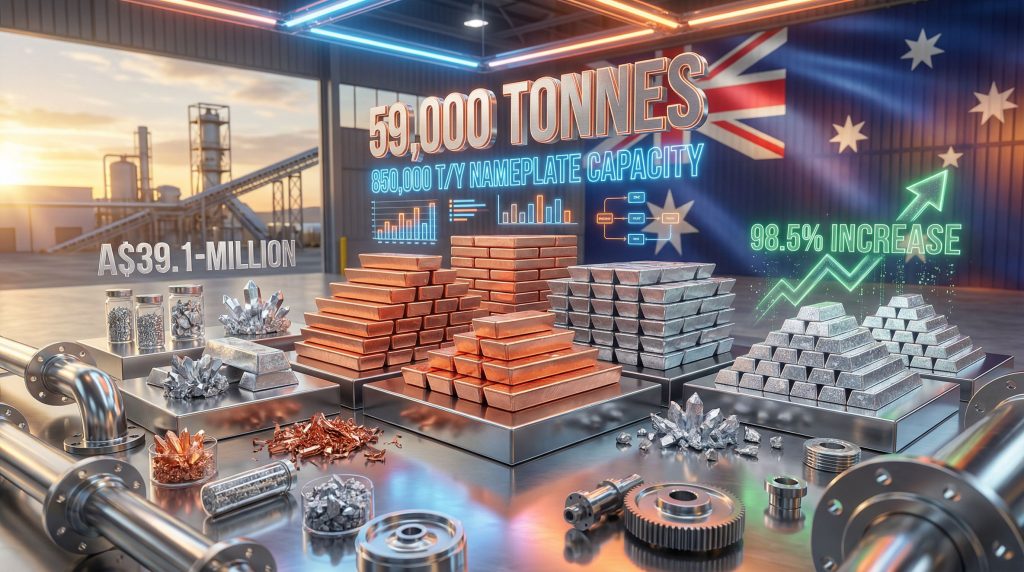
- Q4 2025 revenue achievement: A$39.1-million (98.5% quarterly increase)
- Group revenue milestone: A$94.6-million quarterly record achievement
- Cash position strengthening: A$179.9-million (December 2025)
"Industry observers note that rapidly increasing production profiles combined with commodity price improvements and treatment cost declines create cash flow acceleration effects that exceed initial market expectations."
The compound effect of volume increases, margin improvements, and operational efficiency gains produces cash generation rates that support accelerated growth strategies and enhanced shareholder returns. Furthermore, comprehensive project development reports confirm the positive trajectory towards sustained production levels.
What Factors Drive Non-Linear Cash Flow Growth?
Operating leverage creates exponential cash flow improvements as production approaches nameplate capacity. Fixed costs remain relatively stable whilst revenue increases substantially, resulting in disproportionate margin expansion during the final ramp-up phase.
Portfolio Development and Expansion Opportunities
Operational success provides the foundation for multi-asset development strategies that leverage proven capabilities across diverse commodity exposures. The combination of established operations with development-stage projects creates a balanced growth platform.
Multi-Asset Growth Strategy:
Near-term Development Opportunities:
- Sulphur Springs project: Silver-rich copper-zinc development opportunity
- Pioneer Dome lithium: Direct shipping ore production potential (6-month development timeline)
- Mining services expansion: Contract capabilities validated through operational success
Capital Allocation Framework:
- Pioneer Dome DSO development: A$35-40 million estimated capital expenditure
- Sulphur Springs advancement: Funding and off-take agreement discussions progressing
- Mining services growth: Organic expansion through additional contract opportunities
The sequential development approach enables efficient capital deployment whilst maintaining operational focus on achieving sustained performance at established operations. Consequently, this strategy positions the company favourably for capitalising on emerging opportunities.
Industry Benchmarking and Performance Validation
Operational excellence indicators provide measurable validation of steady-state achievement against established industry benchmarks. Consistent performance across multiple operational metrics demonstrates sustainable operational capability.
Performance Validation Metrics:
- Throughput consistency: Monthly processing records indicating sustainable capacity
- Recovery optimisation: Concentrate grade improvements through process optimisation
- Cost management: Treatment charge benefit realisation through market conditions
- Safety performance: Zero-harm operational standards maintenance
Operational Excellence Framework:
- Technical performance: Equipment availability and processing efficiency
- Production consistency: Sustained throughput levels meeting design specifications
- Quality standards: Concentrate specifications satisfying off-take requirements
- Cost management: Operating expense optimisation through efficiency improvements
What Metrics Define Successful Steady-State Achievement?
Sustained throughput at nameplate capacity represents the primary indicator, supported by consistent recovery rates, concentrate quality specifications, and operating cost performance within design parameters. These metrics validate operational readiness for long-term production.
Global Competitiveness and Strategic Industry Impact
The achievement of Woodlawn mine steady-state production at modern polymetallic operations enhances Australia's competitive position in global base metals markets. Technical expertise development and operational success create exportable capabilities that strengthen the broader mining sector.
Strategic Industry Positioning Benefits:
- Domestic processing capability: Enhanced local value-addition opportunities
- Export market development: Technical services and expertise exportability
- Technology advancement: Innovation deployment across similar geological environments
- Regional development: Mining hub establishment supporting broader industry growth
The demonstration of operational excellence at complex polymetallic projects creates a template for similar developments whilst building industry capabilities that extend beyond individual project success. Moreover, achieving sustained production levels validates Australia's technical capabilities in modern mining operations.
Woodlawn mine steady-state production achievement represents a convergence of technical excellence, market timing, and strategic positioning that creates value extending well beyond individual project returns. The combination of proven operational capabilities, favourable commodity markets, and diversified production streams establishes a foundation for sustained success in Australia's evolving base metals sector.
Disclaimer: This analysis is based on publicly available information and industry observations. Commodity prices, operational performance, and market conditions are subject to change. Investment decisions should be made based on comprehensive due diligence and professional financial advice.
Want to Capitalise on Australia's Next Major Mining Discovery?
Discovery Alert's proprietary Discovery IQ model delivers real-time alerts on significant ASX mineral discoveries, instantly empowering subscribers to identify actionable opportunities ahead of the broader market. Begin your 14-day free trial today and secure your market-leading advantage.