June 14, 2026
The Hidden Mechanics of Aluminum Joint Ventures and Why They Break Down
Most commodity markets operate through a web of commercial agreements that are invisible to end-users but critical to the functioning of global supply chains. In the aluminum sector, one of the most consequential of these structures is the joint venture marketing agreement. When Qamco terminates Hydro aluminum marketing deal arrangements, the consequences ripple through downstream industries with surprising speed.
The decision by Qamco to terminate Norsk Hydro's role as marketing agent for the Qatalum aluminum smelter represents precisely this kind of structural rupture. It is not merely a bilateral commercial dispute. It is a case study in how geopolitical shocks, operational curtailments, and governance breakdowns can converge to destabilise even the most established industrial partnerships.
When big ASX news breaks, our subscribers know first
Understanding the Qatalum Partnership and Its Commercial Architecture
A Smelter Built on Sovereign and Industrial Capital
Qatalum was established in 2006 as an equal joint venture between Norsk Hydro, the Norwegian aluminum and energy giant, and Qatar Petroleum, which has since been rebranded as QatarEnergy. The smelter sits at the heart of Qatar's industrial diversification strategy, converting cheap domestic natural gas into high-value primary aluminum.
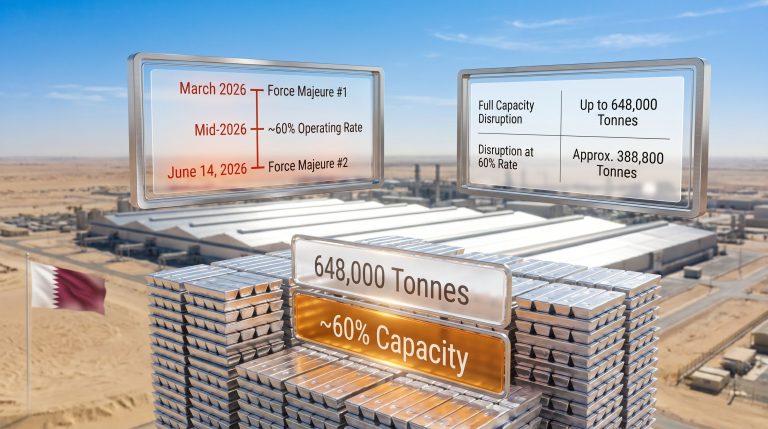
With a nameplate capacity of 648,000 metric tonnes per year, Qatalum ranks among the largest single-site aluminum smelters in the Middle East. QatarEnergy holds a 51% controlling stake in Qamco, the publicly listed vehicle through which Qatar's interest in the venture is managed, giving the Qatari state ultimate commercial authority over the asset.
What made this arrangement structurally unusual was that Hydro's role extended well beyond equity ownership. The Norwegian company served as the exclusive offtake and marketing agent for the entire smelter's output, managing every dimension of commercial activity from customer contracts through to logistics and delivery scheduling. In exchange, Hydro gained privileged access to a major primary aluminum supply stream it could direct toward its global customer base.
How Aluminum Marketing Agreements Create Hidden Leverage
In major smelter joint ventures, marketing agreements function as a second layer of commercial control that sits above the equity structure. The partner holding the marketing mandate effectively controls pricing discovery, customer relationships, and delivery timing even if it holds only a minority equity position.
This creates an asymmetric dependency. The producing entity, in this case Qatalum, relies on its marketing partner's distribution network, customer relationships, and commercial infrastructure. Simultaneously, the marketing partner becomes the public face of the product for downstream buyers, accumulating institutional knowledge and loyalty that is difficult to transfer quickly.
Furthermore, this dynamic is not unique to Qatalum. Similar tensions have emerged across other aluminium joint venture structures globally, where the division between production ownership and commercial control creates friction over time.
"When this relationship breaks down, neither party escapes cleanly. The producer faces an immediate commercial vacuum, while the marketing partner loses a significant supply stream it may have structured downstream commitments around."
Key responsibilities typically held by the marketing partner include:
- Managing long-term offtake agreements with industrial end-users
- Coordinating physical delivery logistics across international routes
- Conducting spot market sales and premium negotiations
- Issuing force majeure notices to customers when production is disrupted
- Maintaining confidentiality protocols around production data and commercial terms
How the Decision to Terminate Hydro's Role Unfolded
A Crisis Built in Layers
The termination of Hydro's marketing role did not emerge from a single event. It was the product of compounding pressures that made the commercial relationship untenable. Understanding the sequence is essential to assessing who bears legal and commercial responsibility.
-
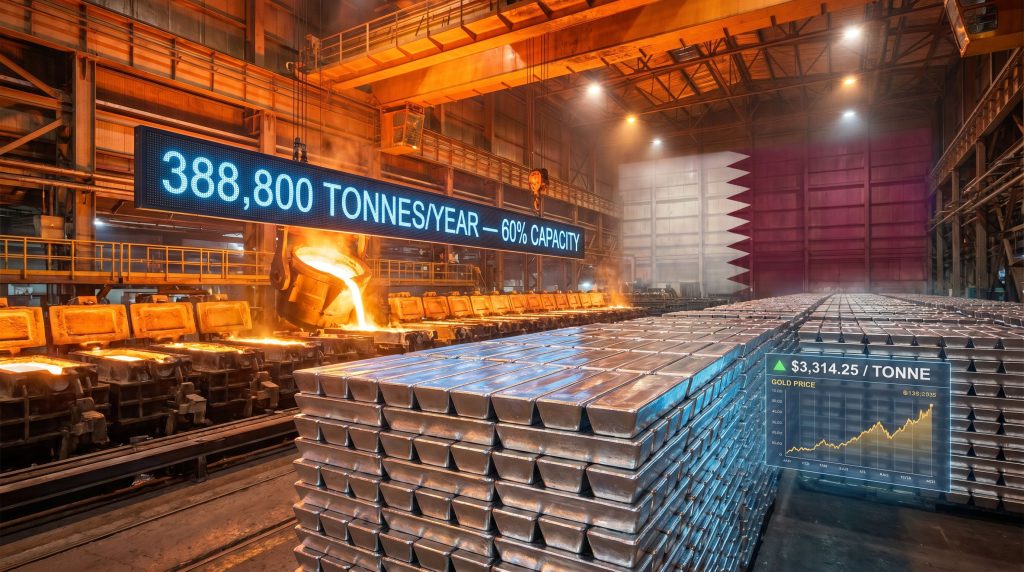
March 2026: Qatalum reduced operations to approximately 60% of its annual nameplate capacity following disruptions tied to the Iran war. At this operating rate, effective output fell to roughly 388,800 metric tonnes per year, removing an estimated 259,200 tonnes of annual supply from the market.
-
Prior to June 2026: Norsk Hydro issued force majeure notices to its downstream customers, indicating that it may be unable to fulfil aluminum delivery commitments. This public signal indicated that the commercial relationship had already deteriorated before any formal termination occurred.
-
June 13, 2026: Reuters reported that Qatalum had cancelled the commercial supply agreement with Hydro, marking the first public disclosure of the termination.
-
June 15, 2026: Qamco issued a formal confirmation stating that Qatalum would assume direct marketing responsibility on a provisional basis while engaging with Hydro on transition arrangements.
-
Dispute escalation: Hydro contested the legal validity of the termination. Qatalum refused to withdraw the notice, setting the stage for a potential arbitration process.
The Force Majeure Dimension: What Does It Signal to the Market?
Force majeure notices are not issued casually. In commodity markets, they represent a formal declaration that circumstances beyond the notifying party's control have made contractual performance impossible or impractical. Hydro's decision to issue these notices to customers before any public announcement of the termination carries significant implications.
It suggests that Hydro's internal assessment of its delivery obligations had already shifted materially, likely because the reduced production at Qatalum had created supply volumes insufficient to honour existing customer commitments. The force majeure notices effectively transferred commercial risk to Hydro's customers, who then faced their own exposure to spot market pricing.
At the time of the termination confirmation, aluminum futures were trading at approximately $3,314.25 per tonne, reflecting a market already sensitive to supply disruptions across the Gulf region. These aluminium market pressures — driven by aluminium market pressures from multiple directions — had already primed buyers for volatility before this dispute became public.
Qamco's Transition to Direct Marketing: Operational Realities
What Changes Immediately and What Takes Years
Qamco's stated intention to have Qatalum assume direct marketing responsibility on a provisional basis understates the operational complexity of the transition. Building an independent commercial capability for a smelter producing nearly 400,000 tonnes per year under curtailed conditions is a substantial undertaking.
| Operational Dimension | Under Hydro Marketing Model | Under Qamco Direct Model |
|---|---|---|
| Customer relationships | Managed by Hydro globally | Qatalum assumes direct ownership |
| Pricing and contract negotiation | Hydro-led with established benchmarks | Requires independent market positioning |
| Logistics and delivery | Hydro's existing distribution network | Needs independent infrastructure |
| Force majeure exposure | Hydro held customer-facing liability | Qatalum bears direct risk |
| Transition timeline | Immediate requirement | Structurally undefined |
The risks during this provisional phase are substantial:
- Customer continuity uncertainty: Buyers with established commercial relationships through Hydro face ambiguity around contract validity and counterparty identity
- Pricing pressure: Without established direct trading relationships, Qatalum may be forced to accept below-market premiums to secure near-term sales
- Legal overhang: Hydro's challenge to the termination's legality creates uncertainty that may deter long-term offtake partners from signing new agreements with Qatalum
- Institutional knowledge gap: The commercial expertise, customer data, and pricing history accumulated by Hydro during its marketing tenure cannot be replicated quickly
The Confidentiality Breach Allegation: A Governance Fault Line
Qamco's public statement that it was investigating the circumstances of Hydro's disclosure carries significant legal weight. Joint venture agreements typically include strict provisions governing the external communication of operational and commercial data, requiring both partners to coordinate on any public release.
Hydro's decision to issue force majeure notices to customers and allow those communications to become part of the public record — before Qamco had confirmed the termination — appears to have violated these protocols. If Qamco can substantiate a confidentiality breach, it strengthens its legal position in any subsequent dispute proceedings considerably.
This is not a peripheral governance issue. In international commercial arbitration, breach of confidentiality provisions can influence the allocation of damages and affect the credibility of the breaching party's broader contractual claims.
The Broader Market Context: What Does This Dispute Mean for Aluminum Supply?
Regional Supply Removal and Its Downstream Effects
The Qatalum curtailment did not occur in isolation. The Iran war created energy supply vulnerabilities across the Gulf region that affected multiple industrial operations dependent on natural gas feedstock. For aluminum smelting, which is extraordinarily energy-intensive, even modest disruptions to gas supply can translate into significant capacity reductions.
The removal of approximately 259,200 tonnes per year of effective Qatalum capacity from the market at a time of already-elevated aluminum futures pricing amplified the commercial sensitivity of the marketing dispute. European industrial consumers, particularly those in automotive manufacturing, packaging, and construction, have historically relied on Middle Eastern primary aluminum to supplement domestic production.
This dispute is also notable because it represents the second aluminium supply crisis affecting Hydro within a concentrated timeframe, compounding pressure on the company's ability to service its European and global customer base reliably. Consequently, the broader market is watching to see whether this pattern signals a structural weakness in Hydro's supply positioning.
Three Scenarios for Resolution
| Scenario | Key Driver | Market Impact |
|---|---|---|
| Negotiated transition | Rapid legal settlement between Hydro and Qamco | Minimal long-term disruption; market absorbs change |
| Prolonged arbitration | Hydro pursues its contractual claim aggressively | Extended buyer uncertainty; potential spot price pressure |
| Partnership restructure | Relationship irreparably damaged; Hydro exits commercial role | Structural shift in Gulf aluminum marketing dynamics |
Legal Architecture of the Dispute: Who Has the Stronger Position?
Contractual Rights in Resource Joint Ventures
Marketing agreements in major joint ventures are typically governed by separate commercial contracts distinct from the underlying equity joint venture agreement. This means the termination rights, notice periods, and remedies available to each party are defined by the marketing agreement's own terms rather than the broader joint venture structure.
Hydro's position that Qamco did not have the legal right to unilaterally terminate the marketing agreement suggests that the contract may not have contained a straightforward termination-for-convenience clause, or that any termination trigger requires specific conditions that Qamco has not demonstrably met.
The likely resolution pathways, in ascending order of escalation, are:
- Bilateral negotiation resulting in an agreed transition timeline and commercial settlement
- International commercial arbitration under an agreed institutional framework, most likely the International Chamber of Commerce or the London Court of International Arbitration
- Emergency court applications seeking injunctive relief to preserve the status quo while arbitration proceeds
QatarEnergy's sovereign backing of Qamco provides the Qatari side with substantial financial resources to sustain a prolonged legal process, while Hydro faces the dual pressure of the dispute and its ongoing obligation to manage customer relationships in the absence of reliable supply.
The next major ASX story will hit our subscribers first
Strategic Outlook: Qatar's Longer-Term Commercial Ambitions
This dispute may ultimately prove to be less about a single marketing agreement and more about the direction of Qatar's industrial strategy. The decision to assume direct marketing responsibility, even provisionally, signals an intention to capture greater value-chain control over Qatalum's output rather than continuing to channel it through a European partner.
Building an independent global aluminum trading capability requires years of relationship development, logistics investment, and market credibility. However, QatarEnergy's financial strength and Qatar's existing relationships with major Asian and European industrial buyers provide a foundation that a state-backed entity can leverage more effectively than a private company starting from scratch.
In addition, this shift mirrors broader trends seen across the sector, where major aluminium operations shift toward greater vertical integration and national ownership of commercial functions. Even the most established aluminium industry leaders are navigating this changing landscape, as state-backed producers seek to capture more of the value chain directly.
For the aluminum market more broadly, the decision by Qamco to terminate Hydro's aluminum marketing deal marks a potential inflection point in how Gulf region primary metal reaches global consumers. If Qatalum successfully establishes a direct marketing operation, it could serve as a template for other state-backed smelter ventures reassessing the value of marketing partnerships with Western industrial companies.
Furthermore, ongoing trade policy dynamics — including the impact of steel and aluminum tariffs on global supply chains — are likely to further complicate the transition, adding another layer of uncertainty to an already volatile commercial environment.
Disclaimer: This article is intended for informational purposes only and does not constitute financial or investment advice. All figures cited reflect market data and reported information available at the time of writing. Forward-looking scenarios involve inherent uncertainty and should not be relied upon as predictions of future outcomes.
Want to Capitalise on Major Commodity Discoveries Before the Broader Market Does?
The structural shifts reshaping global aluminium supply chains — from joint venture breakdowns to regional curtailments — underscore how rapidly commodity markets can reprice around supply disruptions; Discovery Alert's proprietary Discovery IQ model scans ASX announcements in real time, delivering instant alerts on significant mineral discoveries across 30-plus commodities so subscribers can act on actionable opportunities ahead of the crowd. Explore historic examples of major discovery returns and begin a 14-day free trial to secure a market-leading edge.