May 15, 2026
The comprehensive strategic partnership between major consuming nations and critical mineral producers represents a fundamental shift from traditional commodity procurement models. As global manufacturing industries increasingly depend on critical minerals energy security, the recent extension of Japan's rare earth agreement through 2038 demonstrates how Lynas locks Japanese rare earths deal structures can reshape entire commodity markets while addressing national security concerns.
Recent developments in rare earth supply agreements demonstrate how extended partnerships can restructure entire commodity markets while addressing national security concerns. These arrangements move beyond simple buyer-seller relationships to create integrated supply chains that support technological advancement, manufacturing capacity expansion, and geopolitical positioning among allied nations.
Understanding Japan's Critical Mineral Security Framework
Japan's approach to critical mineral security operates through sophisticated risk management mechanisms that integrate governmental oversight with private sector execution. The Japan Organisation for Metals and Energy Security (JOGMEC) coordinates with commercial entities like Sojitz Corporation through special purpose vehicles designed to secure long-term supply agreements outside traditional commodity markets.
This institutional framework recognizes that rare earth elements form the foundation of Japan's industrial competitiveness across multiple sectors. Neodymium and praseodymium serve as core components in permanent magnets essential for electric vehicle motors, while heavy rare earth oxides including dysprosium and terbium enable high-performance applications in wind turbines and advanced electronics manufacturing.
The strategic model prioritises supply reliability over short-term cost optimisation, reflecting lessons learned from previous disruptions to critical material flows. Japan's experience with supply constraints has influenced the development of partnership structures that guarantee minimum volumes while providing flexibility for demand variations.
Institutional Risk Management Architecture
JARE (Japan Australia Rare Earths) exemplifies this integrated approach as a special purpose company combining JOGMEC's governmental authority with Sojitz Corporation's commercial expertise. This dual structure enables long-term commitment mechanisms that pure private sector agreements cannot achieve while maintaining commercial flexibility that government-to-government arrangements often lack.
Furthermore, these partnerships address defence critical minerals requirements across multiple risk categories simultaneously:
- Volume security: Guaranteed minimum annual procurement commitments
- Price stability: Floor pricing mechanisms protecting against market volatility
- Quality assurance: Specification standards maintained across extended timeframes
- Strategic allocation: Priority access to heavy rare earth production
When big ASX news breaks, our subscribers know first
What Makes Extended Supply Agreement Structures Unique?
The recent extension of Japan's rare earth partnership through 2038 introduces contractual innovations that differentiate it from conventional commodity agreements. As Reuters reports, the structure combines guaranteed volume commitments with sophisticated price risk management mechanisms designed to benefit both supplier stability and buyer predictability.
Volume Commitment Architecture
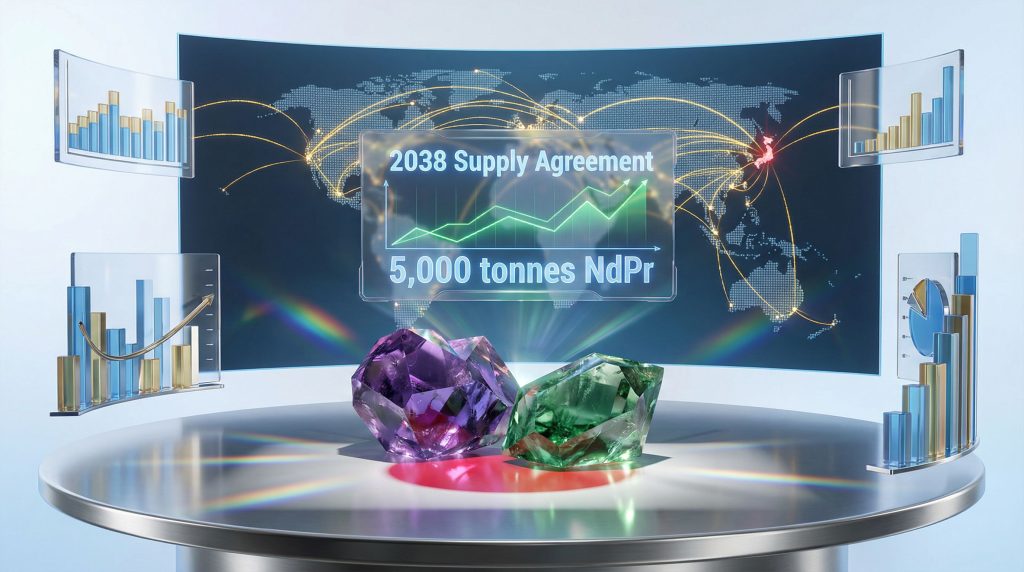
The agreement establishes a foundation of 5,000 tonnes annual neodymium-praseodymium procurement with potential scaling to 7,200 tonnes through existing marketing arrangements. This tiered approach provides suppliers with guaranteed revenue streams while offering buyers flexibility to accommodate demand variations without renegotiating primary contracts.
The heavy rare earth component addresses Japan's most critical supply vulnerabilities through structural allocation mechanisms. 75% of heavy rare earth oxide production becomes available to Japanese industry, with JARE committed to purchasing equivalent to 50% of all heavy rare earth oxides produced. This creates substantial but not exclusive supply access, maintaining market participation while securing strategic materials.
Advanced Price Risk Management
The pricing structure employs a sophisticated collar mechanism rather than fixed or purely market-linked arrangements:
| Price Level | Mechanism | Annual Cap |
|---|---|---|
| Below $110/kg USD | Floor price protection | N/A |
| $110-$150/kg USD | Market pricing | N/A |
| Above $150/kg USD | 30% upside sharing | $10M maximum |
This asymmetric participation structure protects suppliers during market downturns while addressing buyer concerns about unlimited cost escalation. The upside sharing mechanism above $150/kg demonstrates recognition that both parties benefit from market strength while maintaining cost predictability for manufacturing planning.
Strategic Flexibility Provisions
The agreement incorporates "mutual agreement" language for sales above minimum commitments, creating mechanisms for demand accommodation without formal contract amendments. This flexibility proves essential when technology evolution drives changing material requirements or when market conditions create opportunities for volume optimisation.
How Long-Term Partnerships Transform Market Dynamics
Extended supply agreements fundamentally alter commodity market structure by removing substantial volumes from spot market circulation while creating predictable pricing environments for downstream manufacturers. The impact extends beyond immediate parties to influence global supply chain organisation and investment patterns.
Supply Chain Diversification Impact
Long-term agreements create structural changes in global material flows through several mechanisms. As the Lynas locks Japanese rare earths deal demonstrates, removing guaranteed volumes from spot markets creates more stable pricing environments.
Reduced Spot Market Volatility
The base commitment of 5,000 tonnes annually through 2038 represents 60,000 tonnes of material flows allocated outside traditional commodity exchanges, reducing price volatility for remaining spot market participants.
Processing Investment Justification
Guaranteed offtake agreements enable capital expenditure in separation and refining facilities outside dominant producing regions. Supply certainty justifies investment in processing capacity where spot market uncertainty would discourage such commitments, supporting geographic diversification of value-added manufacturing.
Strategic Buffer Development
Predictable supply flows enable systematic stockpiling strategies that create resilience against geopolitical disruptions or export restrictions. This buffer capacity reduces systemic risks to critical technology sectors while supporting coordinated strategic reserve policies among allied nations.
Market Structure Evolution Patterns
The transition from spot market dependency to strategic partnership models creates fundamental changes in how critical minerals flow through global supply chains:
- Price discovery mechanisms: Long-term floors and ceilings replace pure market-based pricing
- Volume allocation: Guaranteed minimums reduce uncertainty for manufacturing planning
- Geographic distribution: Processing investment follows secure supply relationships
- Technology development: Supply certainty encourages R&D investment in advanced applications
Geopolitical Implications of Strategic Resource Partnerships
The extension of Japan's rare earth partnership through 2038 reflects broader trends toward allied coordination in critical mineral supply chains. This model demonstrates how democratic nations can reduce dependency on dominant suppliers while maintaining competitive access to essential materials.
Allied Critical Mineral Framework Development
The partnership structure supports emerging coordination mechanisms among allied nations through several pathways. In addition to traditional supply agreements, these frameworks often incorporate critical minerals recycling initiatives that enhance overall supply security.
Technology Transfer Integration
Long-term supply relationships often include provisions for joint development programs and technology sharing arrangements. These accelerate innovation in processing techniques while supporting alternative material development that reduces overall supply vulnerabilities.
Coordinated Strategic Stockpiling
Extended agreements enable synchronised stockpiling strategies among allied nations, creating collective buffer capacity against supply disruptions. This coordination multiplies individual nation resilience while distributing storage and financing costs across partner countries.
Supply Chain Redundancy Creation
Multiple long-term partnerships with different suppliers create redundant supply paths that maintain material flows even when individual sources experience disruption. This network effect strengthens entire alliance systems rather than individual bilateral relationships.
Competitive Positioning Implications
Strategic partnerships influence global competitive dynamics by creating preferential access to critical materials. According to the Financial Times, these arrangements support advanced manufacturing capabilities while potentially limiting competitor nations' access to equivalent supply security.
"The 12-year extension positions Japan's industrial base with predictable input costs and reliable material flows, enabling long-term investment commitments in electric vehicle production, renewable energy systems, and advanced electronics manufacturing."
Electric Vehicle Supply Chain Integration Requirements
The guaranteed neodymium-praseodymium supply directly addresses Japan's automotive manufacturers' requirements for electric vehicle production scaling. Permanent magnet motors require substantial rare earth content, making supply predictability essential for production planning and capacity investment decisions.
Manufacturing Planning Certainty Mechanisms
The agreement structure provides multiple layers of planning security while supporting broader EV supply chain integration strategies:
Volume Predictability
- Minimum annual commitments enable production target setting
- Flexible scaling accommodates demand variations
- Heavy rare earth allocation supports high-performance motor development
Cost Predictability
- Floor pricing protects against budget disruption from cost escalation
- Upside sharing mechanisms provide benefit participation during favourable markets
- Multi-year visibility enables capital allocation optimisation
Technology Development Support Framework
Stable rare earth supply enables investment in advanced motor technologies and efficiency improvements that enhance Japanese automotive competitiveness. Supply certainty reduces input cost risks for research and development programs focused on:
- Advanced permanent magnet designs optimising rare earth content per unit performance
- Motor efficiency improvements reducing total material requirements per vehicle
- Alternative material integration developing hybrid magnet systems with reduced critical mineral dependency
- Recycling technology advancement creating circular supply chains for end-of-life vehicle components
Investment Opportunities Emerging from Partnership Structures
Secure rare earth supply creates justification for specialised processing facilities that convert raw oxides into finished magnet materials. The guaranteed heavy rare earth allocation particularly supports investment in separation technologies that produce high-purity materials for advanced manufacturing applications.
Downstream Processing Expansion Opportunities
The partnership's volume commitments and price stability create several investment categories that align with broader mining trends and innovation developments:
Value-Added Manufacturing Development
- Precision magnet production facilities requiring consistent feedstock quality
- Specialised alloy development for aerospace and defence applications
- Advanced separation technologies producing ultra-high purity materials
- Integrated recycling systems processing end-of-life products
Technology Innovation Incentives
Long-term supply certainty reduces input cost risks for development programs across multiple categories:
- Advanced permanent magnet designs optimising performance per unit of rare earth content
- Recycling technology development creating circular supply chains
- Alternative material research reducing dependency on critical minerals
- Efficiency optimisation in existing applications and manufacturing processes
Regional Processing Hub Development
The partnership supports investment in regional processing capabilities that serve broader market areas beyond bilateral trade relationships. Secure feedstock supply enables facility development that processes materials for multiple consumer markets while maintaining strategic supply allocation for Japanese industry.
The next major ASX story will hit our subscribers first
Scaling Strategic Partnership Models Across Critical Minerals
The rare earth partnership framework provides a template applicable to other critical mineral categories essential for advanced technology manufacturing. Similar structures could address lithium, cobalt, nickel, and other materials where supply security influences national industrial competitiveness.
Replication Framework Components
Key elements adaptable to other critical minerals include:
Institutional Structure
- Government-private sector partnership entities
- Long-term commitment mechanisms
- Flexible volume allocation systems
- Price risk management frameworks
Contract Innovation
- Floor pricing with upside participation
- Guaranteed minimum volumes with scaling provisions
- Quality specification maintenance across extended timeframes
- Technology transfer and joint development integration
Multi-Mineral Integration Potential
Future agreements might bundle multiple critical minerals into comprehensive supply packages, creating administrative efficiency and economies of scale. Integrated partnerships could address:
- Battery metal packages including lithium, cobalt, and nickel for energy storage manufacturing
- Technology metal bundles combining rare earths with other speciality materials
- Regional supply networks connecting multiple producers with consuming nation partnerships
Operational and Market Evolution Challenges
Extended partnerships face several categories of challenges that could affect long-term success and require ongoing management attention throughout agreement lifecycles. However, the Lynas locks Japanese rare earths deal structure incorporates mechanisms to address many of these potential issues.
Production Capacity and Quality Maintenance
Meeting guaranteed volume commitments requires consistent operational performance and capacity expansion capability as demand grows. Key operational considerations include:
Capacity Scaling Requirements
- Infrastructure expansion to meet maximum volume commitments
- Quality control systems maintaining specifications across production increases
- Environmental compliance during capacity additions
- Workforce development supporting expanded operations
Technology Evolution Accommodation
- Product specification updates reflecting downstream application advances
- Processing technique improvements maintaining competitive positioning
- Alternative product development addressing market evolution
- Integration of recycling feedstock into production systems
Market Evolution and Technology Substitution Risks
Long-term agreements must accommodate potential changes in demand patterns and competitive materials:
Demand Pattern Shifts
- Electric vehicle motor technology evolution affecting rare earth requirements
- Renewable energy system design changes influencing material specifications
- Industrial application development creating new demand categories
- Consumer electronics trends impacting permanent magnet requirements
Substitution Technology Development
- Alternative materials reducing rare earth dependency in existing applications
- Recycling technology advancement changing primary material demand
- Manufacturing process improvements reducing material intensity
- Competitive magnet technologies using different material combinations
Strategic Partnership Evolution and Future Outlook
The rare earth partnership model demonstrates potential for evolution into more sophisticated frameworks addressing broader strategic objectives beyond simple material procurement. Future developments may incorporate additional elements that enhance mutual benefit and strategic coordination.
Next-Generation Agreement Features
Advanced partnerships may include:
Sustainability Integration
- Carbon footprint tracking and reduction targets across supply chains
- Environmental performance standards for production facilities
- Circular economy principles incorporating recycling requirements
- Community development commitments in producing regions
Innovation Collaboration
- Joint research and development funding mechanisms
- Technology sharing agreements beyond material supply
- Intellectual property development coordination
- Workforce exchange and training programs
Regional Network Development Potential
The bilateral model could evolve into multilateral frameworks connecting multiple producer and consumer nations, creating more resilient and diversified supply networks. Regional partnerships might include:
- Allied nation coordination through shared strategic reserves and emergency allocation mechanisms
- Producer nation collaboration optimising processing capacity across geographic regions
- Technology development networks accelerating innovation through coordinated research programs
- Market integration systems creating larger, more liquid critical mineral markets among partner nations
Consequently, the Lynas locks Japanese rare earts deal represents a significant evolution in strategic mineral procurement that could influence global supply chain structures for decades. As nations increasingly recognise the critical importance of secure access to essential materials, such partnership models may become the standard approach for ensuring industrial competitiveness and national security in an interconnected global economy.
Investment and strategic planning decisions should consider the evolving nature of critical mineral markets and the potential for continued partnership model innovation. This analysis provides educational information and should not be considered as specific investment advice or recommendations.
Searching for the Next Major Rare Earth Discovery?
Discovery Alert's proprietary Discovery IQ model delivers real-time alerts on significant ASX mineral discoveries, instantly empowering subscribers to identify actionable opportunities in the critical minerals sector ahead of the broader market. Begin your 14-day free trial today at Discovery Alert and secure your market-leading advantage in this rapidly evolving sector.