May 9, 2026
Understanding India's Rare Earth Magnet Strategy Through Market Dynamics
Global supply chains for critical minerals are experiencing unprecedented shifts as nations reassess their strategic dependencies. The geopolitical landscape surrounding rare earth elements has transformed dramatically, with countries recognising the vulnerabilities inherent in concentrated supply networks. India's approach to rare earth permanent magnets represents a calculated response to these evolving dynamics, positioning the nation to capture greater value from its domestic mineral resources whilst reducing exposure to external supply disruptions.
The significance of rare earth permanent magnets extends far beyond their technical applications. These materials form the backbone of modern technological infrastructure, from wind turbines generating clean energy to electric vehicles reshaping transportation sectors. As global economies transition toward renewable energy mining systems and electrification initiatives gain momentum, the strategic importance of controlling magnet production capabilities becomes increasingly apparent.
When big ASX news breaks, our subscribers know first
India's Critical Minerals Independence Framework
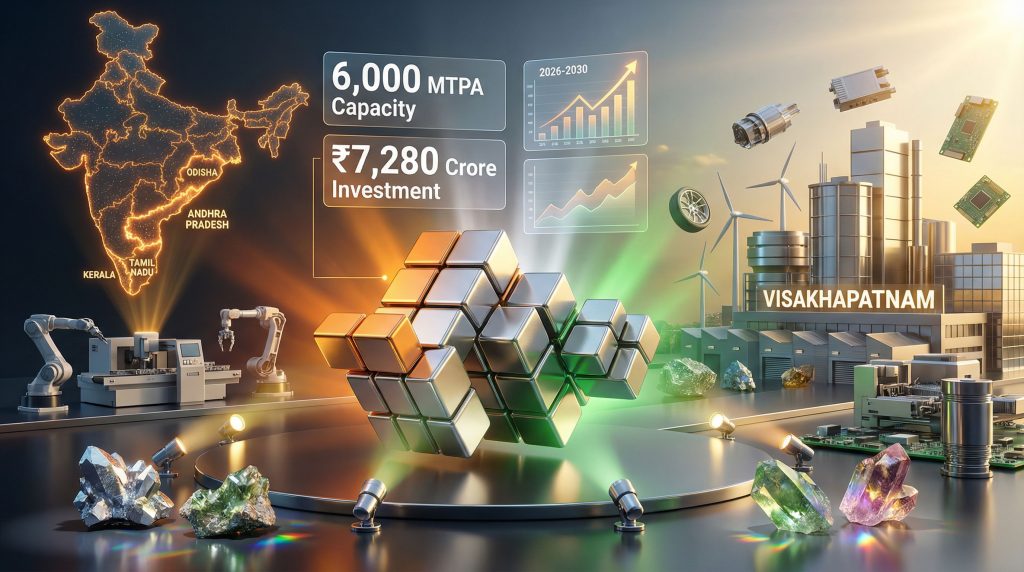
India plans to scale rare earth magnet production through a comprehensive strategy that targets both supply security and industrial capability development. The government's ₹7,280 crore investment scheme represents a systematic effort to establish domestic manufacturing capacity across multiple technological pathways, addressing current import dependencies that leave critical industries vulnerable to supply chain disruptions.
Rare earth permanent magnets encompass several distinct categories, each with specific performance characteristics and application requirements. Neodymium-iron-boron magnets offer exceptional magnetic strength for applications requiring compact, high-performance solutions, whilst samarium-cobalt variants provide superior temperature resistance and stability in demanding environments. This technological diversity requires different manufacturing approaches and raw material inputs, necessitating India's multi-pronged production strategy.
Current market dynamics reveal significant imbalances in global magnet supply chains. China's dominance in rare earth processing and magnet manufacturing creates concentration risks that affect pricing, availability, and technological development across consuming industries. India's position within these supply chains reflects broader patterns seen among emerging economies, where valuable raw materials are exported for processing elsewhere, limiting domestic value capture and industrial development opportunities.
The strategic framework underlying India's magnet production initiative extends beyond simple import substitution. By developing integrated capabilities spanning from mineral extraction through finished product manufacturing, India aims to establish a complete value chain that can support both domestic consumption and potential export opportunities. This approach aligns with broader critical minerals & energy transition objectives focused on manufacturing competitiveness and technological self-reliance.
Production Targets and Technological Pathways
India's scaling roadmap for rare earth magnet production follows a phased approach designed to build capabilities incrementally whilst managing technical and financial risks. The timeline extending from 2026 through 2030 reflects the complexity of establishing world-class manufacturing facilities and developing skilled workforce capabilities required for precision magnetic materials production.
The Visakhapatnam facility represents the operational foundation of India's samarium-cobalt magnet production capabilities, starting with an initial capacity of 500 tonnes annually. This facility's expansion trajectory, progressing to 2,000 tonnes and ultimately reaching 5,000 tonnes by 2030, demonstrates a systematic approach to capacity building that allows for operational learning and process optimisation at each stage.
| Production Phase | Timeline | Capacity (Tonnes) | Technology Focus |
|---|---|---|---|
| Initial Operation | 2026 | 500 | Samarium-Cobalt |
| Phase 1 Expansion | 2027-2028 | 2,000 | Process Optimisation |
| Full Scale Production | 2030 | 5,000 | Integrated Manufacturing |
Neodymium-iron-boron magnet development follows a parallel track, with pilot projects currently underway to establish production methodologies and quality standards. The technical challenges associated with neodymium-iron-boron manufacturing differ significantly from samarium-cobalt processes, requiring distinct expertise in alloy composition, sintering parameters, and magnetic field alignment procedures.
Integration with IREL's rare earth oxide production capabilities represents a critical component of the overall strategy. The availability of domestically produced neodymium-praseodymium oxide provides raw material security for downstream magnet manufacturing, reducing dependence on imported intermediates whilst ensuring supply chain control over critical inputs.
Market Impact and Supply Chain Transformation
India's domestic market for rare earth permanent magnets reflects the country's growing industrial sophistication and expanding clean energy sector. Current annual demand of approximately 4,000 tonnes is projected to reach nearly 8,000 tonnes by 2030, driven by accelerating adoption of electric vehicles, renewable energy infrastructure development, and advancing electronics manufacturing capabilities.
This demand trajectory presents both opportunities and challenges for domestic production planning. The projected 5,000 tonne production capacity would meet a significant portion of domestic requirements whilst leaving room for continued imports in specialised applications or during demand surges. Furthermore, the balance between domestic production and import flexibility allows for market responsiveness whilst building strategic autonomy.
Economic Analysis of Production Economics
The financial implications of establishing domestic rare earth magnet production extend beyond the initial ₹7,280 crore investment commitment. Production economics for magnetic materials involve complex considerations including raw material costs, energy requirements, technical expertise development, and quality assurance systems necessary to compete with established international suppliers.
Import substitution benefits accumulate across multiple dimensions:
• Foreign exchange savings from reduced magnet imports
• Price stability through reduced exposure to international market volatility
• Supply security eliminating dependency on external suppliers
• Industrial development supporting downstream manufacturing capabilities
• Technology transfer building domestic expertise in advanced materials
The cost structure for domestic magnet production reflects India's comparative advantages in skilled technical labour and energy availability, balanced against the need for significant capital investment in specialised manufacturing equipment and quality control systems. Achieving cost competitiveness with established suppliers requires operational excellence across all production phases.
Integration with Clean Energy and Industrial Applications
Electric vehicle sector growth represents the largest single driver of increased magnet demand in India's domestic market. Each electric vehicle requires multiple permanent magnets for motor systems, with consumption varying based on vehicle size, performance requirements, and motor design specifications. India's expanding EV manufacturing base creates direct demand for locally produced magnetic materials.
Wind energy infrastructure development presents another substantial application area for rare earth magnets. Modern wind turbines utilise permanent magnet generators that require significant quantities of high-performance magnetic materials. India's renewable energy capacity expansion goals directly translate into increased magnet consumption requirements.
"India's strategic positioning in clean energy supply chains depends critically on controlling access to essential materials like rare earth permanent magnets."
Defence and aerospace applications, whilst representing smaller volumes compared to automotive and energy sectors, require magnets meeting exceptionally stringent performance and reliability standards. Domestic production capabilities in these sectors contribute to national security considerations beyond purely economic factors.
Regional Development and Mining Infrastructure
India's rare earth corridor development strategy recognises the geographic distribution of mineral resources and existing industrial infrastructure across multiple states. Tamil Nadu, Odisha, Andhra Pradesh, and Kerala each offer distinct advantages for different aspects of the rare earth value chain, from initial mineral extraction through finished product manufacturing.
State-Level Competitive Advantages
Tamil Nadu benefits from established mineral processing infrastructure and coastal access facilitating raw material transportation and finished product distribution. The state's industrial base provides workforce expertise and supporting infrastructure that reduces development costs for new rare earth facilities.
Odisha's extensive mining heritage and mineral processing capabilities create natural synergies with rare earth development. Existing infrastructure for handling and processing mineral concentrates can be adapted to support rare earth operations with appropriate modifications and expansions.
Andhra Pradesh offers strategic geographic positioning and existing chemical industry capabilities that complement rare earth processing requirements. The state's coastal location provides access to international markets whilst supporting domestic supply chain development.
Kerala possesses natural mineral deposits and coastal infrastructure supporting both mineral extraction and value-added processing operations. Consequently, the state's educational institutions provide technical expertise relevant to advanced materials development.
Mining Development and Resource Assessment
Exploration activities in Rajasthan's Degana region and Jammu & Kashmir's Reasi district represent critical components of India's broader critical minerals strategy. Whilst these initiatives focus on lithium extraction rather than rare earths specifically, they contribute to overall strategic mineral security and demonstrate government commitment to domestic resource development.
The integration of mining operations with downstream processing requires careful coordination of transportation infrastructure, environmental management systems, and workforce development programmes. Regional development approaches must balance economic opportunities with environmental protection and community engagement requirements.
Geological surveys and resource assessments form the foundation for long-term production planning. Understanding the grade, accessibility, and processing characteristics of domestic rare earth deposits enables optimised facility design and operational planning that maximises resource utilisation efficiency.
Policy Framework and Regulatory Evolution
Amendments to India's atomic energy legislation represent fundamental shifts in the country's approach to strategic mineral development. The expansion of private sector participation in mineral exploration creates opportunities for increased investment and technological innovation whilst maintaining government intervention in mining oversight over strategic resources.
Regulatory Balance and Strategic Control
The distinction between minerals open to private sector participation and those remaining under strict government control reflects careful consideration of national security implications and strategic value. Uranium continues to face stringent controls due to its nuclear applications, whilst rare earth elements receive more flexible treatment recognising their primarily industrial applications.
This regulatory evolution enables greater capital mobilisation for exploration and development activities whilst ensuring strategic resources remain under appropriate oversight. Private sector expertise and financial resources can accelerate development timelines whilst government coordination ensures alignment with national strategic objectives.
Sales-linked incentive structures and capital subsidies within the ₹7,280 crore scheme provide market-responsive support that encourages operational excellence and commercial viability. These mechanisms create incentives for efficient production whilst supporting the development of internationally competitive capabilities.
International Cooperation and Technology Transfer
India's approach to rare earth magnet development involves selective engagement with international technology providers and research institutions. Technology transfer agreements enable access to established production methodologies whilst building domestic expertise for future innovation and development.
Quality standards alignment with international requirements ensures Indian-produced magnets can compete in global markets whilst meeting the demanding specifications required for advanced applications. Certification processes and quality management systems development represent critical investments in long-term competitiveness.
Risk Assessment and Implementation Challenges
Technical challenges associated with rare earth magnet manufacturing encompass multiple dimensions requiring sustained attention and resource commitment. Precision control of alloy composition, sintering parameters, and magnetic field alignment demands sophisticated equipment and highly skilled personnel.
Manufacturing and Quality Considerations
Achieving consistent quality standards requires comprehensive process control systems and continuous monitoring capabilities throughout all production phases. Variations in raw material characteristics, processing parameters, or environmental conditions can significantly impact final product performance.
Environmental compliance represents an ongoing challenge for rare earth processing operations due to the complex chemistry involved in mineral separation and purification. Waste management systems and emissions control require significant investment and ongoing operational attention.
Global market competition from established suppliers creates pressure for cost competitiveness whilst maintaining quality standards. Building market acceptance for Indian-produced magnets requires demonstrating performance reliability and supply consistency over extended periods.
Market and Supply Chain Risk Factors
Raw material supply security extends beyond rare earth elements themselves to include supporting materials and chemicals required for processing operations. Dependence on imported processing chemicals or specialised equipment creates potential vulnerabilities that must be addressed through supply chain diversification.
Demand volatility in key application sectors could impact capacity utilisation and financial returns on magnet production investments. Economic cycles affecting automotive, renewable energy, or electronics sectors directly influence magnet consumption patterns.
Price competition from international suppliers, particularly during periods of excess global capacity, requires flexible cost structures and operational efficiency to maintain profitability. In addition, long-term contracts with domestic consumers can provide some stability against market fluctuations.
The next major ASX story will hit our subscribers first
Strategic Outcomes and Future Implications
Success metrics for India's rare earth magnet strategy encompass both quantitative production targets and qualitative capability development measures. Capacity utilisation rates, quality consistency, and cost competitiveness provide measurable indicators of operational success.
Integration with National Industrial Strategy
Alignment with Make in India and Atmanirbhar Bharat initiatives creates synergies across multiple mining industry trends programmes. Rare earth magnet capabilities support broader objectives of technological self-reliance and advanced manufacturing competitiveness.
The contribution to Net Zero 2070 goals through clean energy supply chain development demonstrates the connection between industrial development and environmental objectives. Domestic magnet production supports renewable energy deployment whilst building strategic industrial capabilities.
Long-term Technological Leadership
Building domestic expertise in rare earth magnet technology creates foundations for future innovation and product development. Research and development capabilities developed through current initiatives can support next-generation magnetic materials and applications.
Export potential for Indian-produced magnets depends on achieving cost competitiveness and quality standards that meet international requirements. However, success in domestic market development can provide the foundation for eventual expansion into global markets where India plans to scale rare earth magnet production beyond domestic consumption needs.
The strategic importance of rare earth magnet production capacity extends beyond immediate economic benefits to encompass broader technological sovereignty and supply chain resilience. For instance, India's systematic approach to capacity building represents a model for strategic mineral development that other emerging economies may adopt in their pursuit of industrial self-reliance.
Investment Disclaimer: This analysis is for informational purposes only and should not be considered as investment advice. Rare earth markets involve significant technical, operational, and market risks that require careful evaluation. Investors should conduct their own due diligence and consult qualified professionals before making investment decisions.
Looking to Capitalise on Critical Minerals Investment Opportunities?
Discovery Alert's proprietary Discovery IQ model delivers real-time alerts on significant critical minerals discoveries across the ASX, instantly empowering subscribers to identify actionable opportunities ahead of the broader market. Explore Discovery Alert's discoveries page to understand why historic mineral discoveries can generate substantial returns, then begin your 14-day free trial to position yourself ahead of the market.