August 4, 2026
Understanding the Complex Chemistry of Advanced Rare Earth Processing
In the intricate landscape of critical materials processing, metallurgical innovations continue to reshape how industries approach mineral extraction and refinement. The transformation of raw geological materials into high-purity industrial intermediates represents a convergence of established chemical principles and cutting-edge engineering solutions. This evolution becomes particularly significant when examining the production pathways that convert rare earth-bearing ores into breakthrough mixed oxide Halleck Creek compounds suitable for downstream applications.
The development of robust processing technologies for critical mineral resources demands comprehensive understanding of precipitation chemistry, thermal treatment protocols, and purification methodologies. These technical foundations support the creation of intermediate products that bridge the gap between raw concentrates and final separated compounds required for modern manufacturing applications.
When big ASX news breaks, our subscribers know first
Fundamentals of Mixed Rare Earth Oxide Technology
Chemical Composition and Industrial Applications
Mixed rare earth oxides represent a critical intermediate stage in the rare earth value chain, containing the complete suite of lanthanide elements in a chemically stable, anhydrous form. These compounds maintain the elemental distribution characteristics of their source materials while achieving purity levels exceeding 90% total rare earth oxide content.
The global rare earth elements market, valued at approximately USD 7.4 billion in 2024, is projected to reach USD 12.8 billion by 2030, representing a compound annual growth rate of 9.8%. This growth trajectory reflects increasing demand from electric vehicle manufacturing, renewable energy infrastructure, and defense applications.
Furthermore, a comprehensive rare earth reserves analysis reveals the strategic importance of diversifying processing capabilities. Mixed oxide production serves multiple strategic purposes within industrial processing chains:
• Chemical stability for transportation and storage applications
• Reduced handling complexity compared to hydrated salt forms
• Compatibility with downstream solvent extraction systems
• Elimination of water content that can complicate subsequent processing stages
• Standardised product specifications for industrial customers
Distinctions Across Rare Earth Product Categories
The rare earth processing spectrum encompasses several distinct product categories, each serving specific industrial requirements and commanding different market valuations:
| Product Type | Typical Purity | Market Position | Processing Complexity |
|---|---|---|---|
| Raw Concentrates | 40-60% TREO | Commodity pricing | Minimal processing |
| Mixed Oxides | 90%+ TREO | Intermediate value | Moderate processing |
| Separated Oxides | 99%+ individual | Premium pricing | Complex separation |
| Metal Products | 99%+ metallic | Highest value | Advanced reduction |
Mixed oxides occupy a strategic position within this hierarchy, offering significant processing advantages over concentrate materials while avoiding the substantial cost premiums associated with full elemental separation. Market pricing typically reflects 30-50% premiums for oxide products compared to concentrate materials, reflecting both processing costs and purity improvements.
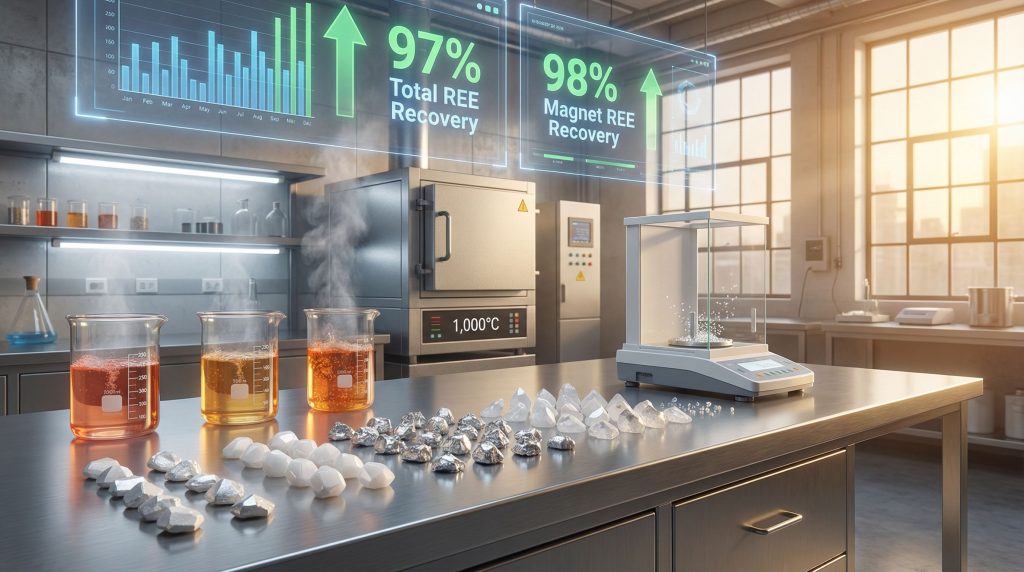
Recent breakthrough mixed oxide production from Halleck Creek ore demonstrates the technical feasibility of converting Wyoming rare earth deposits into oxide intermediates, achieving approximately 97% total REE recovery and 98% recovery for magnet rare earths including neodymium, praseodymium, samarium, terbium, and dysprosium.
Metallurgical Science Behind Advanced Precipitation Chemistry
Oxalic Acid Precipitation Mechanisms
The selective precipitation of rare earth elements using oxalic acid represents a well-established methodology that leverages the distinct solubility characteristics of rare earth oxalates. This process operates through controlled chemical reactions that preferentially isolate lanthanide elements from solution while minimising co-precipitation of contaminant species.
Stoichiometric Optimisation Parameters:
• 110% theoretical stoichiometric dosing achieves optimal recovery efficiency
• Precipitation selectivity varies by individual rare earth element
• Crystal morphology control affects downstream calcination performance
• Particle size distribution influences filtration and handling characteristics
The chemical mechanism involves formation of sparingly soluble rare earth oxalates through the reaction: 3H₂C₂O₄ + 2REE³⁺ → 2REEC₂O₄ + 6H⁺. This selective chemistry enables efficient separation of rare earth elements from complex pregnant leach solutions containing various dissolved ions.
Recovery efficiency demonstrates element-specific variations based on individual hydrolysis constants and solubility products. The approximately 98% recovery achieved for magnet-critical elements (Nd, Pr, Sm, Tb, Dy) indicates specific optimisation toward these elements' precipitation characteristics, which differ significantly from light rare earths (Ce, La) and medium/heavy rare earths (Gd-Lu).
Thermal Processing and Cerium Oxidation Control
Calcination represents the critical transformation stage where rare earth oxalates undergo thermal decomposition to form stable oxide compounds. Operating at 1,000°C, this process achieves complete organic matter removal while inducing beneficial chemical transformations.
Key Thermal Processing Characteristics:
• Controlled heating profiles ensure complete oxalate decomposition
• Oxidising atmosphere conditions promote selective cerium oxidation
• Temperature uniformity across processing equipment
• Residence time optimisation for complete conversion
• Energy recovery systems for thermal efficiency
The selective oxidation of cerium from Ce³⁺ to Ce⁴⁺ during calcination provides significant downstream processing advantages. This oxidation state transformation prevents cerium dissolution in solvent extraction reagents, improving process efficiency and reducing chemical consumption in subsequent separation stages.
Thermal decomposition follows the reaction pathway: 2REEC₂O₄ → REE₂O₃ + 2CO + CO₂, requiring precise temperature control to achieve complete conversion while maintaining product quality specifications. Under oxidising calcination atmospheres, cerium preferentially oxidises to the +4 oxidation state while other lanthanides remain in the +3 state, creating chemically distinct behaviour.
Advanced Purification Technologies
Ion Exchange Systems for Uranium Removal
The selective removal of uranium from rare earth-bearing solutions represents a critical purification requirement for both regulatory compliance and product quality standards. Ion exchange technology provides an efficient methodology for achieving the stringent uranium reduction levels required for commercial rare earth oxide products.
Performance Specifications Achieved:
• 97% uranium removal in single-step processing
• 99% cumulative removal across full neutralisation sequence
• Selective uranium binding while preserving rare earth elements
• Regulatory compliance for radioactive material handling
Ion exchange systems utilise specialised chelating resins designed specifically for uranium capture. These resins selectively bind uranium species through functional groups that demonstrate high affinity for uranium ions while allowing rare earth elements to pass through in solution. The achievement of 97% single-step removal followed by 99% cumulative removal indicates optimised resin selection and operational parameters.
However, the neutralisation sequence incorporates multiple processing stages including pH adjustment, ion exchange column operations, and controlled rinse cycles. This systematic approach progressively reduces uranium concentration to acceptable limits while maintaining high recovery of valuable rare earth elements.
Process Integration and Quality Control
Pregnant leach solution quality directly impacts downstream oxide production efficiency, requiring comprehensive quality control protocols to ensure consistent processing performance. The integration of purification technologies with precipitation and calcination stages demands careful attention to chemical composition and purity specifications.
Critical Quality Parameters:
• Total rare earth oxide concentration in feed solutions
• Impurity ion levels including iron, aluminium, and thorium
• pH optimisation for selective precipitation
• Solution clarity and suspended solids content
• Temperature control throughout processing stages
The production of mixed rare earth oxide from purified pregnant leach solution demonstrates successful integration of upstream impurity removal with downstream precipitation chemistry. This integrated approach ensures that quality parameters established during leaching and purification stages support optimal performance in oxide production.
Process Engineering and Commercial Implementation
Scale-Up Considerations and Equipment Design
The transition from laboratory-scale demonstrations to commercial production requires comprehensive evaluation of equipment specifications, process control systems, and operational protocols. Industrial-scale oxide production demands robust engineering solutions that maintain product quality while achieving economic efficiency targets.
Engineering Design Requirements:
• Precipitation vessel sizing for industrial throughput rates
• Filtration systems for oxalate separation and washing
• Calcination equipment with precise temperature control
• Material handling systems for powder processing
• Environmental controls for dust and emissions management
Consequently, data-driven mining operations represent the future of industrial mineral processing, enabling optimisation of operating conditions and equipment specifications before commercial implementation. These modelling approaches support solvent extraction design and cost estimation for integrated processing facilities.
The integration of mixed oxide production with broader rare earth processing flowsheets requires careful consideration of mass balance requirements, energy consumption patterns, and waste stream management. Successful commercial implementation depends on achieving consistent product specifications while maintaining competitive operating costs.
Quality Assurance and Product Specifications
Commercial mixed oxide production demands stringent quality control protocols to ensure product consistency and customer satisfaction. Analytical testing procedures must verify chemical composition, particle size distribution, and physical characteristics that affect downstream processing performance.
Product Specification Categories:
• Chemical composition including individual rare earth element content
• Total rare earth oxide purity exceeding industry standards
• Impurity levels for uranium, thorium, and other contaminants
• Physical properties including particle size and bulk density
• Moisture content and loss on ignition characteristics
The achievement of consistent product quality requires implementation of comprehensive sampling protocols, analytical testing procedures, and statistical process control methodologies. These quality systems support certification requirements and enable development of long-term customer relationships in competitive rare earth markets.
Strategic Market Positioning and Supply Chain Implications
North American Supply Chain Development
The development of domestic rare earth processing capabilities represents a strategic priority for North American supply chain security. Mixed oxide production facilities provide critical intermediate processing capacity that reduces dependence on overseas separation and refining operations.
Currently, approximately 85-90% of global rare earth separation occurs in China, creating supply chain vulnerabilities for North American manufacturers. In addition, the critical minerals energy transition underscores the importance of domestic mixed oxide production capabilities that enable regional processing of rare earth concentrates while supporting downstream separation infrastructure development.
Strategic Advantages of Domestic Processing:
• Reduced transportation costs for bulky concentrate materials
• Enhanced supply chain security for critical mineral resources
• Technology development and intellectual property retention
• Workforce development in advanced materials processing
• Environmental compliance under North American regulatory frameworks
The Halleck Creek project's location on Wyoming State land provides streamlined permitting pathways and access to existing infrastructure. This positioning supports potential large-scale, low-strip mining operations alongside integrated processing and separation facilities, as American Rare Earths achieves a major processing breakthrough with breakthrough mixed oxide Halleck Creek production.
Economic Analysis and Investment Considerations
Mixed oxide production economics depend on multiple cost factors including raw material inputs, energy consumption, labour requirements, and capital equipment amortisation. Successful commercial operations require optimisation across all cost categories while maintaining competitive product pricing.
| Cost Category | Impact Level | Optimisation Strategies |
|---|---|---|
| Reagent consumption | High | Process efficiency improvements |
| Energy requirements | Medium | Heat recovery and integration |
| Labour costs | Medium | Automation and digitalisation |
| Waste management | Low | Circular economy approaches |
| Capital amortisation | High | Scale optimisation and financing |
The market positioning of mixed oxide products within the rare earth value chain provides opportunities for value capture while supporting downstream processing development. Revenue potential depends on successful customer relationship development and long-term supply contract establishment.
The next major ASX story will hit our subscribers first
Technological Innovation and Future Development Pathways
Next-Generation Processing Technologies
The rare earth processing industry continues to evolve through incorporation of advanced technologies including digitalisation, automation, and sustainability improvements. These innovations support enhanced operational efficiency while reducing environmental impacts and production costs.
Emerging Technology Applications:
• Process automation and real-time monitoring systems
• Advanced analytics for predictive maintenance and optimisation
• Energy integration with renewable power sources
• Circular economy approaches for waste minimisation
• Advanced separation techniques under development
The integration of Industry 4.0 technologies enables optimisation of processing parameters through real-time data analysis and machine learning applications. Furthermore, mining industry innovation supports improved product consistency while reducing operating costs and environmental impacts.
Sustainability metrics increasingly influence investment decisions and customer preferences within the rare earth industry. Life cycle assessment methodologies, carbon footprint reduction strategies, and comprehensive ESG reporting requirements drive continuous improvement in processing technologies and operational practices.
Regulatory Framework Evolution
Environmental permitting and compliance requirements continue to evolve as regulatory agencies develop specialised frameworks for critical mineral processing operations. These regulatory developments influence facility design, operational protocols, and long-term investment strategies.
Key Regulatory Considerations:
• Environmental impact assessment requirements for new facilities
• Waste management protocols for radioactive and chemical wastes
• Water usage optimisation and treatment system specifications
• Air quality management including dust and emissions control
• Community engagement and social licence maintenance
The development of specialised regulatory frameworks for rare earth processing reflects growing recognition of these materials' strategic importance while maintaining environmental protection standards. Successful project development requires early engagement with regulatory agencies and comprehensive compliance planning.
Technical Validation and Commercial Readiness Assessment
Process Demonstration and Scale-Up Validation
The successful production of mixed rare earth oxide from Halleck Creek ore represents significant technical validation of integrated processing methodologies. This achievement demonstrates the feasibility of converting Wyoming rare earth deposits into high-value intermediate products suitable for North American supply chains.
Technical Milestones Achieved:
• Precipitation chemistry optimisation with 97% total REE recovery
• Selective uranium removal achieving 99% efficiency levels
• Thermal processing validation at industrial-relevant temperatures
• Product quality demonstration meeting commercial specifications
• Process integration across multiple metallurgical stages
These technical achievements provide the foundation for detailed feasibility studies and commercial development planning. The validation of key processing steps reduces technical risk and supports investment decision-making for full-scale facility development.
The demonstration of breakthrough mixed oxide Halleck Creek production establishes technical credibility while supporting market positioning efforts. This technical validation enables engagement with potential customers and strategic partners throughout the rare earth value chain, as detailed in a comprehensive analysis of this major technical breakthrough.
Market Entry Strategy and Commercial Development
The transition from technical demonstration to commercial operations requires comprehensive market analysis, customer development, and operational planning. Successful market entry depends on establishing competitive advantages while building sustainable customer relationships.
Commercial Development Priorities:
• Customer qualification and product specification alignment
• Long-term supply contracts with strategic partners
• Operational efficiency optimisation for cost competitiveness
• Quality systems implementation for consistent performance
• Technology protection and intellectual property development
The strategic importance of domestic rare earth processing capabilities creates opportunities for government support and strategic partnerships. Moreover, Australia's critical minerals strategy enables technology advancement while supporting national supply chain objectives.
Market timing considerations favour rapid development of domestic processing capabilities as geopolitical tensions highlight supply chain vulnerabilities. The convergence of technical validation, market demand, and strategic importance creates favourable conditions for commercial development of mixed oxide production facilities.
This analysis represents educational content regarding rare earth processing technologies and market dynamics. Readers should conduct independent research and consult qualified professionals before making investment or business decisions. All technical data and market projections are subject to change based on evolving industry conditions and regulatory requirements.
Want to Stay Ahead of Critical Minerals Market Movements?
Discovery Alert's proprietary Discovery IQ model delivers real-time alerts on significant ASX mineral discoveries, instantly empowering subscribers to identify actionable opportunities in rare earths, lithium, and other critical minerals ahead of the broader market. Understand why major mineral discoveries can lead to substantial market returns by exploring Discovery Alert's dedicated discoveries page, showcasing historic examples of exceptional outcomes, then begin your 30-day free trial today to position yourself ahead of the market.