June 11, 2026
The global minerals landscape stands at an unprecedented inflection point, where decades of supply chain concentration have created vulnerabilities that nations can no longer ignore. Within this transformation, rare earth processing in the US represents perhaps the most critical bottleneck requiring immediate strategic attention. Understanding how America approaches this challenge reveals fundamental shifts in industrial policy, technological innovation, and geopolitical risk management that extend far beyond mining itself.
Strategic Framework for Understanding US Processing Independence
America's pursuit of rare earth processing independence operates across multiple dimensions that traditional supply chain analysis often overlooks. The concept extends beyond simple domestic production quotas to encompass technological sovereignty, workforce development, and strategic material reserves that can withstand prolonged international disruptions.
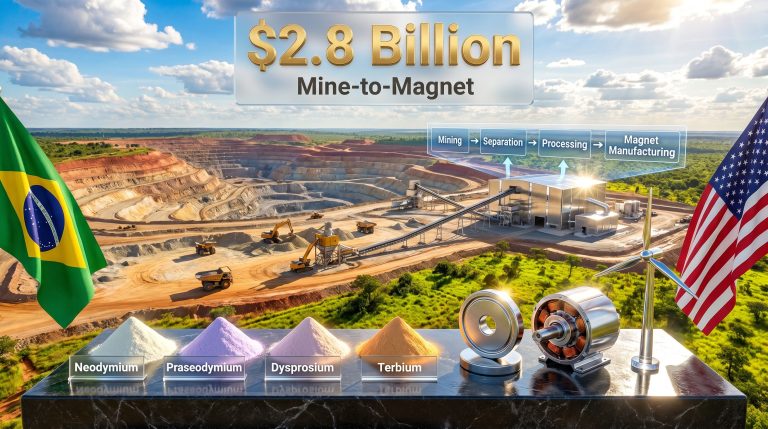
The mine-to-magnet supply chain represents a complex web of interdependent processes where control at any single stage can influence the entire ecosystem. Processing independence specifically targets the separation, refining, and initial manufacturing stages where China currently maintains approximately 80% global market share. This dominance creates chokepoints that affect everything from electric vehicle production to advanced defence systems.
Critical Processing Stages and Their Strategic Importance
The rare earth value chain consists of distinct phases, each requiring specialised infrastructure and technical expertise:
- Ore beneficiation and concentration at mining sites
- Chemical separation of individual rare earth elements
- Metal and alloy production for industrial applications
- Permanent magnet manufacturing for end-use products
Current US capabilities remain heavily concentrated in the initial processing phases, with significant gaps in downstream manufacturing. Mountain Pass Mine in California processes approximately 15% of global rare earth concentrates, yet the majority requires shipment overseas for final separation and refinement.
Light rare earth elements, including neodymium and praseodymium, present different processing challenges compared to heavy rare earth elements like dysprosium and terbium. Heavy rare earths require more sophisticated separation techniques and generate greater environmental compliance challenges, explaining why domestic processing capabilities lag significantly in this segment.
Furthermore, the critical minerals energy security implications of these processing gaps have become increasingly apparent as global supply chains face unprecedented stress.
When big ASX news breaks, our subscribers know first
Geographic Distribution of America's Processing Infrastructure
Regional specialisation has emerged as a defining characteristic of America's rare earth processing strategy, with distinct hubs developing complementary capabilities rather than competing directly. This geographic distribution reflects underlying advantages in workforce, logistics, regulatory environment, and proximity to end-use markets.
California's Foundation Role in Domestic Processing
Mountain Pass Mine operates as the cornerstone of American rare earth processing, providing the feedstock that supports downstream facility development across multiple states. The facility's bastnaesite ore processing capabilities produce concentrated rare earth carbonate that serves as input material for separation facilities nationwide.
MP Materials has systematically expanded processing capabilities at Mountain Pass, with light rare earth separation operations restarting after extended closure periods. The company's $700 million investment programme targets complete vertical integration from mining through permanent magnet production, representing the most ambitious single-company processing strategy in the domestic market.
Heavy rare earth processing at Mountain Pass received significant support through Department of Defence funding mechanisms, though the timeline for full commercial production extends through 2027. This development addresses one of the most critical gaps in domestic processing capabilities, as heavy rare earths remain essential for high-performance permanent magnet applications.
Texas as the Emerging Processing Centre
Texas has attracted multiple rare earth processing investments due to its industrial infrastructure, skilled workforce, and established chemical processing expertise. The state's Gulf Coast region provides deep-water port access for international feedstock imports while offering proximity to domestic demand centres.
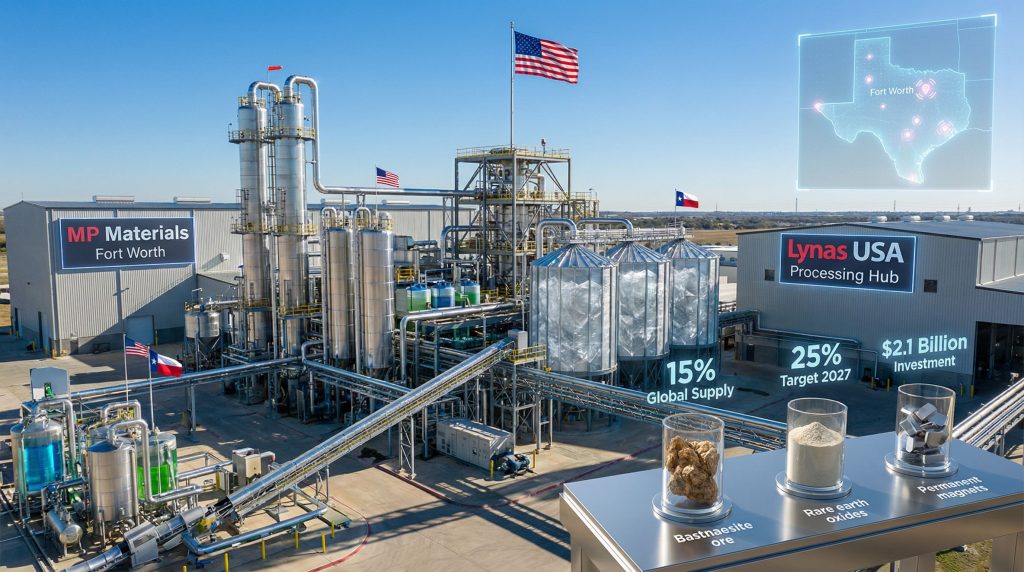
Lynas USA operates dual facilities in Texas, with the Hondo location focusing on light rare earth separation and the Seadrift facility targeting heavy rare earth processing. This geographic separation allows specialised optimisation of processing conditions and environmental compliance protocols for different rare earth categories.
| Facility | Location | Processing Focus | Annual Capacity | Investment Amount |
|---|---|---|---|---|
| Lynas Hondo | Texas | Light REE Separation | 5,000 tonnes | $450 million |
| Lynas Seadrift | Texas | Heavy REE Processing | 2,500 tonnes | $650 million |
| MP Materials Fort Worth | Texas | Magnet Manufacturing | 1,000 tonnes | $200 million |
| Noveon San Marcos | Texas | Permanent Magnets | 500 tonnes | $150 million |
MP Materials established its Fort Worth facility to complement California operations, focusing on metal, alloy, and permanent magnet manufacturing using processed materials from Mountain Pass. This geographic diversification reduces operational risk whilst positioning final products closer to automotive and industrial demand centres.
Noveon Magnetics selected San Marcos for specialised permanent magnet production, targeting high-performance applications in aerospace and defence sectors. The facility emphasises custom alloy development and precision manufacturing techniques that differentiate American products from mass-market Chinese alternatives.
Regional Processing Development Beyond Major Hubs
Georgia's heavy mineral sands operations provide potential rare earth byproducts, though processing limitations currently restrict commercial extraction. These deposits contain monazite and xenotime that could supplement domestic rare earth supplies with appropriate investment in separation infrastructure.
Ramaco has pioneered on-site processing concepts that integrate rare earth extraction with coal mining operations. This approach reduces transportation costs and environmental impacts whilst providing diversified revenue streams for traditional mining companies facing market transitions.
Wyoming and Montana contain significant rare earth deposits that remain undeveloped due to processing infrastructure limitations. These resources could support future processing facility development as domestic demand expands and processing technologies advance.
Financial Architecture Supporting Processing Development
Government investment in rare earth processing in the US reflects strategic priorities that extend beyond traditional market mechanisms. The $439 million in Department of Defence funding since 2020 represents targeted support for critical supply chain resilience rather than broad industrial development programmes.
Department of Defence Strategic Investment Framework
DOD's $400 million equity investment in MP Materials includes price support mechanisms designed to de-risk private capital deployment in processing infrastructure. These arrangements guarantee minimum purchase prices for specified quantities of processed rare earths, providing revenue stability during market volatility periods.
Offtake guarantee structures have emerged as critical tools for financing processing facility development. By committing to purchase predetermined quantities at established prices, government agencies reduce investment risk for private companies whilst ensuring domestic supply availability for strategic applications.
The timeline for achieving China-independent supply chains by 2027 requires sustained investment beyond current government commitments. Industry estimates suggest $12-15 billion in total capital expenditure across all processing stages to achieve meaningful supply chain independence.
Policy Framework Enabling Investment Growth
Critical materials designation provides processing facilities with accelerated environmental permitting and enhanced access to government financing programmes. This classification reduces regulatory uncertainty that has historically deterred private investment in domestic processing capabilities.
Research and development funding targets processing technology innovations that could reduce costs and environmental impacts compared to current methods. These programmes support everything from advanced separation techniques to automated processing systems that improve operational efficiency.
International partnership strategies focus on allied nation processing capabilities that complement domestic infrastructure development. Arrangements with Australia, Canada, and European Union partners provide supply diversity whilst reducing dependence on Chinese processing facilities.
However, the US uranium import ban demonstrates how geopolitical tensions continue to reshape global mineral supply chains and processing strategies.
Technological Innovations Transforming Processing Capabilities
Advanced processing technologies represent perhaps the most significant opportunity for American companies to compete effectively with established Chinese facilities. Innovation in separation, refining, and manufacturing processes can offset labour cost disadvantages whilst improving environmental performance.
Revolutionary Separation and Refining Methods
The REMAFS fluoride salt process developed by Ames Laboratory eliminates hydrofluoric acid from rare earth separation, addressing both safety concerns and operational complexity that have limited domestic processing development. This innovation reduces facility construction costs whilst simplifying environmental compliance requirements.
Traditional rare earth separation relies on solvent extraction processes that require extensive infrastructure and generate significant waste streams. Next-generation technologies focus on reducing chemical inputs and improving element recovery rates through advanced process control and automation systems.
Bioleaching represents an emerging technology for processing rare earth-containing tailings and lower-grade ores. This approach uses specialised bacteria to extract rare earths from materials that traditional processing methods cannot handle economically, potentially expanding domestic resource availability.
Processing Efficiency and Environmental Performance
Water usage reduction has become a critical focus area for processing facility design, as traditional methods require substantial freshwater inputs for cooling and chemical processing. Closed-loop systems and water recycling technologies can reduce consumption by 60-80% compared to conventional approaches.
Waste stream minimisation addresses one of the most significant challenges facing domestic processing development. Innovative approaches focus on converting processing byproducts into useful materials rather than requiring permanent disposal, improving project economics whilst reducing environmental liability.
Energy efficiency improvements target the high-temperature processing stages that consume substantial electricity. Integration with renewable energy systems and waste heat recovery can reduce operating costs whilst supporting corporate sustainability commitments.
Automation and digitalisation enable processing facilities to operate with smaller workforces whilst maintaining consistent product quality. Advanced process control systems can optimise separation efficiency and reduce material losses that impact overall facility economics.
Corporate Leadership in Processing Transformation
The landscape of American rare earth processing in the US involves both established mining companies expanding downstream and specialised processors entering the domestic market. These companies employ different strategies for achieving scale and competitiveness in a market dominated by Chinese producers.
Major Processing Facility Operators
MP Materials has pursued the most comprehensive vertical integration strategy, controlling every stage from mining through permanent magnet production. This approach provides supply chain security and captures value across multiple processing stages, though it requires substantial capital investment and technical expertise across diverse operations.
Lynas USA leverages Australian parent company expertise whilst adapting processing technologies for American regulatory and market conditions. The company's dual-facility approach allows specialised optimisation for different rare earth categories whilst providing operational redundancy.
Noveon Magnetics focuses exclusively on high-performance permanent magnet manufacturing, targeting applications where performance requirements justify premium pricing. This strategy avoids direct competition with Chinese mass-market producers whilst serving critical domestic demand segments.
Ramaco has developed innovative on-site processing concepts that integrate rare earth extraction with existing mining operations. This approach reduces infrastructure requirements whilst providing diversified revenue streams for companies operating in transitioning coal markets.
Technology and Support Service Providers
Processing equipment manufacturers have adapted international technologies for American facility requirements, focusing on environmental compliance and operational efficiency improvements. These companies provide critical technical support for facility development and ongoing operations.
Separation technology providers offer specialised expertise in rare earth chemistry and process optimisation. Their involvement reduces technical risk for processing facility operators whilst accelerating facility startup and optimisation timelines.
Environmental remediation specialists address the complex regulatory requirements associated with rare earth processing. These companies provide essential services for facility permitting, waste management solutions, and long-term environmental compliance.
Economic Analysis of Processing Development
The economics of domestic rare earth processing involve complex tradeoffs between capital investment, operating costs, and strategic value that traditional financial analysis often underestimates. Processing facilities generate economic benefits that extend beyond direct financial returns to include supply chain security and technological capabilities.
Investment Requirements and Financial Performance
Capital expenditure estimates for complete processing facility development range from $500 million to $2 billion depending on capacity, technology selection, and environmental compliance requirements. Heavy rare earth processing facilities typically require higher investment due to more complex separation processes and specialised equipment needs.
Operating cost comparisons between American and Chinese processing facilities show significant differences in labour, energy, and regulatory compliance expenses. American facilities typically operate at 20-40% higher costs but can justify premium pricing through supply chain security and quality advantages for specific applications.
Revenue potential from domestic processing versus raw material export demonstrates the value-added potential of downstream development. Processed rare earth products command 300-500% higher prices compared to concentrate exports, though this requires substantial investment in processing infrastructure and technical capabilities.
Return on investment timelines for processing facility development typically extend 8-12 years including construction and ramp-up periods. Government support mechanisms and long-term offtake agreements can improve project economics whilst reducing investment risk for private capital providers.
Regional Economic Impact and Job Creation
High-skilled manufacturing jobs represent a significant component of processing facility economic impact, with average wages 25-40% above regional manufacturing averages. These positions require specialised training in chemistry, metallurgy, and advanced manufacturing processes.
Regional economic multiplier effects from processing hub development extend beyond direct employment to include supporting industries, logistics services, and research institutions. Studies suggest each processing facility job supports 2.5-3.5 additional positions in the regional economy.
Supply chain job creation occurs throughout the supporting industry ecosystem, including mining equipment manufacturers, transportation providers, and technical service companies. This indirect employment often exceeds direct processing facility employment by substantial margins.
Research and development employment in processing innovation provides high-value jobs whilst supporting continued technological advancement. These positions contribute to regional knowledge clusters that attract additional investment and talent.
The next major ASX story will hit our subscribers first
Environmental Considerations and Regulatory Challenges
Environmental factors represent both the most significant challenge and potential opportunity for American rare earth processing development. Innovative approaches to environmental compliance can provide competitive advantages whilst addressing legitimate regulatory concerns.
Regulatory Compliance and Development Timelines
Permitting timeline challenges have historically averaged 7-10 years for rare earth processing facilities, though recent policy changes target significant reductions for strategic projects. Environmental impact assessments require comprehensive evaluation of water usage, waste generation, and air emissions throughout facility lifecycles.
Environmental impact mitigation strategies focus on advanced waste treatment, water recycling, and emission control technologies that exceed current regulatory requirements. These investments increase capital costs but can provide operational advantages and community acceptance benefits.
Water usage and waste management requirements for rare earth processing demand sophisticated treatment systems that can handle complex chemical mixtures and radioactive materials. Advanced treatment technologies can achieve environmental performance levels that support facility approval and ongoing operations.
Community acceptance factors increasingly influence facility development success, as local opposition can delay or prevent project advancement regardless of regulatory approval. Proactive community engagement and transparent environmental monitoring help build support for processing facility development.
Sustainable Processing Technology Integration
Reduced environmental footprint processing technologies offer opportunities to differentiate American facilities from international competitors whilst meeting stringent domestic environmental standards. Innovation in this area can provide both competitive and compliance advantages.
Waste stream utilisation and circular economy approaches convert traditional disposal challenges into revenue opportunities. Processing byproducts can serve as inputs for construction materials, fertilisers, and other industrial applications, improving overall project economics.
Energy source considerations for processing facility operations increasingly favour renewable integration to meet corporate sustainability commitments and reduce operating costs. Solar and wind energy can provide significant portions of processing facility electricity requirements in favourable locations.
Carbon footprint reduction strategies in processing operations support broader corporate and policy objectives whilst potentially qualifying facilities for carbon credit revenues and green financing options.
Strategic Challenges and Risk Assessment
The path toward domestic rare earth processing in the US independence faces substantial challenges that require coordinated responses across industry, government, and research institutions. Understanding these challenges enables more effective strategy development and risk mitigation planning.
Supply Chain Vulnerabilities and Mitigation Strategies
Feedstock supply security for processing facilities remains dependent on both domestic mining expansion and reliable international sources. Diversification strategies must balance supply security with economic efficiency whilst maintaining processing facility utilisation rates.
Skilled workforce development for specialised processing operations requires substantial investment in training programmes and educational partnerships. The technical expertise needed for rare earth processing differs significantly from traditional mining or chemical processing, necessitating targeted workforce development initiatives.
Technology transfer and intellectual property considerations affect access to proven processing technologies whilst supporting domestic innovation development. Licensing arrangements with international technology providers must balance access with long-term strategic independence.
International supply chain disruption scenarios require contingency planning for various levels of import restriction or embargo. Processing facilities must maintain operational flexibility to handle different feedstock sources and quality specifications.
Competitive Positioning and Market Development
Cost competitiveness with Chinese processing facilities requires ongoing innovation in technology, operations, and supply chain management. American facilities must identify value propositions beyond simple cost competition to justify higher pricing structures.
Quality standards and customer acceptance for domestically processed materials demand consistent demonstration of product specifications and performance characteristics. Building customer confidence requires sustained quality performance and reliable delivery capabilities.
Scale economies and learning curve advantages for new facilities require patience and sustained investment as operations optimise performance and reduce costs over time. Initial operating periods typically involve higher costs and lower yields that improve with experience.
Market access and customer relationship development prove critical for new processing facilities seeking to establish market presence. Long-term supply agreements and strategic partnerships help secure revenue streams whilst facilities achieve operational maturity.
Future Scenarios for Processing Capability Evolution
Multiple pathways exist for achieving American rare earth processing independence, each involving different timelines, investment levels, and strategic tradeoffs. Scenario analysis helps identify critical decision points and resource requirements for successful implementation.
Processing Capacity Development Scenarios
Optimistic scenario projections assume sustained government support, successful technology implementation, and favourable market conditions enabling full supply chain independence by 2027. This timeline requires accelerated facility construction and rapid operational ramp-up across multiple processing stages.
Realistic scenario modelling incorporates typical construction delays, technology learning curves, and market volatility resulting in 60% processing independence by 2030. This projection reflects more conservative assumptions about facility development timelines and operational performance.
Conservative scenario analysis considers potential setbacks including permitting delays, technology challenges, and market disruptions leading to continued reliance on allied nation processing partnerships beyond 2030. This outcome emphasises international cooperation over domestic independence.
Disruptive scenario possibilities include breakthrough technologies that accelerate development timelines or geopolitical events that necessitate emergency capacity expansion. These scenarios require flexible planning and rapid response capabilities.
Technology Integration and Innovation Pathways
Next-generation separation technologies promise significant improvements in processing efficiency and environmental performance. Implementation timelines depend on successful pilot testing and scale-up demonstration at commercial facilities.
Artificial intelligence and machine learning applications in processing optimisation offer opportunities to improve yields and reduce operating costs. These technologies require substantial data collection and algorithm development specific to rare earth processing applications.
Modular processing facility designs enable more rapid capacity expansion as demand grows and technology advances. This approach provides flexibility to respond to changing market conditions whilst reducing initial capital requirements.
Integration with renewable energy systems supports sustainability objectives whilst potentially reducing operating costs. Processing facilities require substantial electricity inputs that renewable integration can supply in favourable locations.
Investment Opportunities in Processing Development
The transition toward domestic rare earth processing in the US independence creates multiple investment opportunities across the value chain. Understanding these opportunities requires evaluation of risk levels, return potential, and strategic positioning within the broader industry transformation.
Direct Processing Facility Investment
Equity investment opportunities in established processing companies provide exposure to industry growth whilst benefiting from operational expertise and existing infrastructure. These investments offer more predictable returns compared to greenfield facility development.
Joint venture possibilities with international processing technology providers combine American market access with proven technical capabilities. These partnerships can accelerate facility development whilst sharing investment risk and operational expertise.
Private-public partnership structures for processing facility development leverage government support whilst maintaining private sector operational efficiency. These arrangements provide risk mitigation and enhanced project economics for private investors.
Regional development fund participation in processing hub creation offers broader exposure to industry growth whilst supporting regional economic development objectives. These funds typically invest across multiple projects and industry segments.
Supporting Infrastructure and Technology Investments
Processing equipment manufacturing and technology development provide essential services for facility operators whilst maintaining exposure to industry growth. These companies often enjoy higher margins and lower capital requirements compared to processing facility operations.
Environmental services and compliance consulting represent growing market opportunities as processing facilities address complex regulatory requirements. Specialised expertise in rare earth environmental compliance commands premium pricing and enjoys sustained demand.
Logistics and transportation infrastructure supporting processing operations include specialised equipment and facilities for handling rare earth materials safely and efficiently. These investments provide essential services whilst avoiding direct processing operational risks.
Research and development partnerships with processing technology innovators offer exposure to breakthrough technologies whilst supporting continued industry advancement. These investments typically involve higher risk but potentially transformative returns.
In addition, the broader context of mining industry evolution and global trade tensions including US-China trade war effects continue to shape investment opportunities and strategic considerations across the sector.
Investment Disclaimer: This analysis is for informational purposes only and does not constitute investment advice. Rare earth processing investments involve substantial risks including commodity price volatility, regulatory changes, and technological uncertainties. Potential investors should conduct thorough due diligence and consult qualified financial advisors before making investment decisions.
The transformation of American rare earth processing capabilities represents one of the most significant strategic industrial initiatives of the current decade. Success requires coordination across multiple sectors, sustained investment, and continued innovation in processing technologies and business models. The companies and regions that effectively navigate these challenges will establish positions in a strategically critical industry whilst supporting broader national security and economic independence objectives.
Want to Capitalise on America's Rare Earth Processing Revolution?
Discovery Alert instantly alerts investors to significant ASX mineral discoveries using its proprietary Discovery IQ model, turning complex mineral data into actionable insights whilst America's rare earth processing independence creates new investment opportunities across the critical minerals sector. Understand why historic discoveries can generate substantial returns by exploring major breakthrough moments, then begin your 14-day free trial today to position yourself ahead of the market in this strategically crucial industry.