June 11, 2026
Global Rare Earth Supply Chain Transformation Through Strategic Production Scaling
The critical minerals landscape faces unprecedented challenges as traditional supply architectures encounter growing pressure from defense procurement requirements, renewable energy expansion, and electric vehicle manufacturing demands. Within this evolving ecosystem, Lynas rare earth oxide production increase represents more than operational achievement—it signifies fundamental shifts in industrial supply security frameworks that underpin modern technology sectors.
Recent developments in rare earth oxide production demonstrate how specialized mining operations can reshape global material flows through targeted capacity expansion and technological advancement. The strategic importance of alternative processing capabilities becomes particularly evident when examining production volumes, revenue generation patterns, and market positioning dynamics within an industry characterised by concentrated supply chains and complex separation technologies.
When big ASX news breaks, our subscribers know first
Strategic Infrastructure Development in Critical Minerals Processing
Geographic Distribution and Operational Architecture
The rare earth elements sector operates through sophisticated processing networks that separate mining operations from advanced chemical separation facilities. This operational model creates strategic flexibility while maintaining cost efficiency through specialised facility design and geographic optimisation.
Integrated Production Systems:
- Mining and concentration facilities positioned near high-grade ore deposits
- Advanced separation plants located in regions with established chemical processing infrastructure
- Quality control systems ensuring consistent product specifications
- Supply chain monitoring capabilities tracking consumables and logistics networks
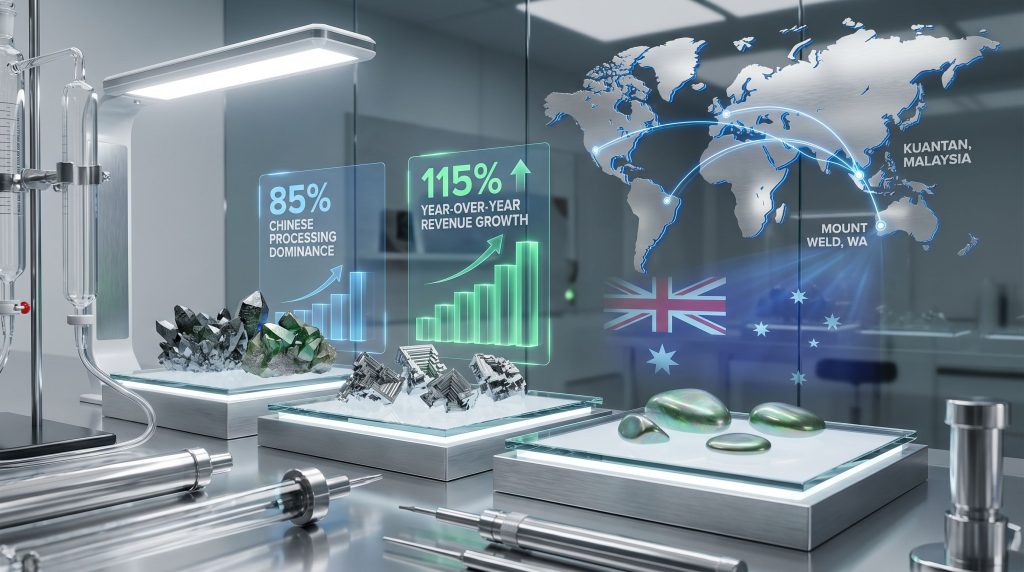
Mount Weld operations in Western Australia exemplify strategic positioning within established mining jurisdictions, while separation facilities in Malaysia demonstrate the industry's reliance on specialised chemical processing expertise. This geographic separation enables operators to optimise extraction costs while maintaining access to advanced separation technologies.
Production Volume Analysis and Market Positioning
Current operational data reveals significant production scaling capabilities within established rare earth processing networks. Q3 2026 production reached 3,200 tonnes of rare earth oxides, representing substantial year-over-year growth compared to 1,911 tonnes in the corresponding quarter of 2025. This 67% production increase demonstrates the scalability of existing processing infrastructure and market responsiveness to demand patterns.
Quarterly Production Progression:
| Quarter | REO Production (tonnes) | Quarter-over-Quarter Change |
|---|---|---|
| Q3 2025 | 1,911 | — |
| Q2 2026 | 2,383 | — |
| Q3 2026 | 3,200 | +34.3% |
Revenue generation patterns reflect both volume expansion and strategic pricing positioning. Q3 2026 revenue totalled A$265 million, achieved through sales of 3,100 tonnes at an average selling price of A$84.6 per kilogram. This pricing level indicates premium market positioning relative to commodity-grade materials and suggests successful product mix optimisation toward higher-value applications.
Element-Specific Production Capabilities and Market Applications
Light Rare Earth Elements: Volume Drivers
Neodymium and praseodymium production comprised 1,996 tonnes in Q3 2026, representing approximately 62% of total rare earth oxide output. These elements serve as primary components in permanent magnet manufacturing for wind turbine generators, electric vehicle motors, and industrial automation systems.
Market Applications for Light REE:
- Wind Energy Infrastructure: High-strength permanent magnets enabling efficient power generation
- Electric Vehicle Powertrains: Motor magnets providing superior torque-to-weight ratios
- Industrial Automation: Precision motor applications requiring consistent magnetic field strength
- Consumer Electronics: Miniaturised magnet components for mobile devices and audio equipment
The substantial production volumes for these elements reflect growing demand from renewable energy installations and automotive electrification initiatives across developed markets. Furthermore, the energy transition security considerations drive strategic planning for these essential materials.
Heavy Rare Earth Elements: Premium Value Positioning
Dysprosium and terbium production reached 8 tonnes during the reporting quarter, representing a smaller volume percentage but commanding premium pricing due to limited global supply and specialised applications. These heavy rare earth elements enable high-temperature magnetic performance essential for aerospace systems, defence applications, and advanced manufacturing processes.
Strategic Applications for Heavy REE:
- Aerospace Systems: Temperature-resistant magnets for engine control systems
- Defence Technologies: Precision guidance systems requiring stable magnetic fields
- Medical Devices: MRI systems and diagnostic equipment magnets
- Advanced Manufacturing: Robotics and automated production line components
Technological Advancement: Samarium Oxide Production
The achievement of first-time samarium oxide production in March 2026 represents significant technological advancement and operational diversification. Samarium oxide applications span high-performance electronics, aerospace components, optical systems, catalyst technologies, and medical equipment manufacturing.
"This first production of samarium oxide sets Lynas apart as a commercial producer and supplier of both light and heavy rare earths."
This capability expansion demonstrates successful resource utilisation optimisation and creates additional revenue streams from previously underutilised ore components. The achievement positions the operation as an integrated supplier capable of serving diverse industrial applications requiring specialised rare earth formulations.
Financial Performance Metrics and Strategic Value Creation
Revenue Growth Trajectory Analysis
The 115% year-over-year revenue increase significantly outpaced Lynas rare earth oxide production increase of 67%, indicating successful average selling price optimisation and product mix enhancement. This performance differential suggests strategic focus on higher-margin applications and customer segments willing to pay premium pricing for supply security.
Key Performance Indicators:
- Production Efficiency: 3,200 tonnes REO production in Q3 2026
- Sales Volume: 3,100 tonnes REO sold during the quarter
- Revenue Generation: A$265 million quarterly revenue
- Pricing Strategy: A$84.6/kg average selling price achievement
- Year-over-Year Growth: 115% revenue increase, 67% production increase
Operational Cost Management and Infrastructure Investment
Future operational planning includes transitioning Mount Weld's power plant from diesel-driven systems to hybrid renewable energy solutions. This infrastructure investment addresses both environmental considerations and long-term cost optimisation objectives as energy costs represent significant operational expenses in mining and processing operations.
The renewable energy transition initiative demonstrates strategic planning for sustainable operational models while potentially reducing fuel consumption and associated supply chain risks. Active monitoring of consumables supply chains, including fuel procurement, indicates comprehensive risk management protocols addressing potential operational disruptions.
Competitive Positioning and Market Structure Analysis
Industry Barriers and Competitive Advantages
The rare earth processing industry presents substantial barriers to new entrants through regulatory complexity, technical expertise requirements, and significant capital investment needs. Successful operations require specialised knowledge in chemical separation processes, radioactive material handling protocols, and environmental compliance systems.
Sustainable Competitive Factors:
- Technical Expertise: Advanced separation chemistry capabilities
- Regulatory Compliance: Established environmental and safety protocols
- Infrastructure Investment: Specialised processing equipment and facilities
- Customer Relationships: Long-term supply agreements with industrial users
- Geographic Diversification: Risk mitigation through operational separation
Supply Chain Security and Customer Base Development
Industrial customers increasingly prioritise supply chain diversification and delivery reliability over pure cost considerations. This trend creates opportunities for non-traditional suppliers to establish market position through consistent quality delivery and technical support capabilities.
The ability to produce both light and heavy rare earth elements from integrated operations provides customer convenience and supply chain simplification compared to sourcing from multiple specialised producers. Moreover, developments in European CRM facility insights highlight the growing importance of diverse supply sources.
Technology Innovation and Process Enhancement Strategies
Advanced Separation Technologies
Successful samarium oxide production demonstrates sophisticated separation capabilities enabling value extraction from complex ore compositions. This technological achievement indicates potential for additional element recovery and product diversification as market opportunities develop.
Process Innovation Benefits:
- Resource Utilisation: Maximising value extraction from ore inputs
- Product Diversification: Expanding addressable market segments
- Technical Differentiation: Demonstrating advanced processing capabilities
- Revenue Optimisation: Creating additional income streams from existing operations
Sustainability Integration and Environmental Stewardship
The planned renewable energy transition addresses growing environmental, social, and governance considerations while potentially reducing long-term operational costs. This infrastructure investment positions operations for enhanced sustainability credentials attractive to environmentally conscious customers and investors.
Hybrid renewable energy systems can provide operational cost stability and reduce exposure to fuel price volatility while supporting corporate environmental objectives and regulatory compliance requirements. Additionally, the broader mining industry innovation trends emphasise sustainable practices across the sector.
The next major ASX story will hit our subscribers first
Investment Implications and Future Growth Vectors
Capacity Expansion Economics and Scalability
Current production scaling demonstrates the expandability of existing processing infrastructure without proportional capital investment increases. The ability to achieve 67% production growth indicates operational leverage and scalability within current facility configurations.
Growth Pathway Options:
- Incremental Capacity Additions: Optimising existing facility throughput
- Process Efficiency Improvements: Enhancing separation yields and recovery rates
- Product Mix Optimisation: Focusing on higher-margin element categories
- Customer Base Expansion: Developing relationships with new industrial segments
Valuation Considerations for Resource Sector Investors
Rare earth processing operations command premium valuations compared to traditional commodity mining due to technological barriers, supply chain strategic importance, and limited alternative sources. The combination of mining assets and processing capabilities creates integrated value propositions attractive to investors seeking exposure to critical materials sectors.
Revenue growth significantly exceeding production volume increases demonstrates pricing power and market positioning advantages that support higher valuation multiples relative to volume-driven commodity operations. According to Lynas Rare Earths shares, investors are closely monitoring these performance metrics alongside new supply agreements that strengthen market position.
Risk Assessment and Operational Resilience
Supply Chain Risk Management
Active monitoring of consumables supply chains indicates comprehensive risk management protocols addressing potential disruptions in fuel, chemicals, and other operational inputs. The geographic separation of mining and processing operations provides operational flexibility while maintaining cost competitiveness.
Key Risk Factors:
- Regulatory Environment: Changes in environmental or operational regulations
- Technical Challenges: Process optimisation and equipment reliability
- Market Volatility: Demand fluctuations and pricing pressures
- Geopolitical Factors: Trade policies and international relations impacts
Strategic Risk Mitigation Approaches
The integrated operational model spanning multiple jurisdictions provides risk distribution while maintaining operational synergies. Customer diversification across multiple industrial applications reduces concentration risk compared to single-sector exposure.
Long-term supply relationships with industrial customers provide revenue stability and demand visibility supporting operational planning and investment decisions. Furthermore, the development of a strategic minerals reserve framework enhances supply security considerations.
Future Outlook and Industry Transformation Drivers
Macroeconomic Trends Supporting Demand Growth
Multiple industrial trends support continued rare earth element demand expansion across defence, renewable energy, automotive electrification, and advanced manufacturing sectors. The convergence of environmental policies, technology advancement, and infrastructure development creates sustained growth drivers for critical minerals sectors.
Demand Acceleration Factors:
- Energy Transition Policies: Government mandates supporting renewable energy adoption
- Electric Vehicle Scaling: Automotive industry electrification commitments
- Defence Modernisation: Military technology advancement requiring advanced materials
- Industrial Automation: Manufacturing efficiency improvements through precision equipment
Strategic Response Framework and Competitive Positioning
Successful scaling of production capabilities while maintaining premium pricing demonstrates effective strategic execution and market positioning. The Lynas rare earth oxide production increase provides operational flexibility and customer value proposition enhancement through serving both light and heavy rare earth element markets.
Continued technological advancement and process improvement create sustainable competitive advantages and barriers to competitive entry in specialised processing applications. As reported by Reuters, the company's ability to more than double quarterly revenue reflects strong execution of its strategic initiatives.
How Will Industry Dynamics Shape Future Supply Patterns?
The demonstrated production scaling capabilities and technological advancement represent more than operational success—they indicate the viability of alternative supply chain architectures for strategic materials. As geopolitical considerations increasingly emphasise supply security, diversified processing capabilities become essential infrastructure for industrial competitiveness.
In addition, the implementation of comprehensive critical minerals strategy frameworks supports the development of resilient supply chains outside traditional monopolistic structures. This strategic shift enables industrial nations to reduce dependency risks while maintaining access to essential materials.
What Are the Long-term Implications for Investors and Policymakers?
For investors, policymakers, and industry participants, successful Lynas rare earth oxide production increase demonstrates feasible pathways for supply chain diversification in critical mineral sectors. The combination of technological capability, operational scaling, and market positioning creates templates for strategic resource development in essential materials industries.
Furthermore, the financial performance metrics indicate that alternative supply sources can achieve commercial viability while serving strategic objectives. This dual benefit of profitability and supply security makes rare earth processing operations particularly attractive for both private investment and government policy support.
The evolving landscape of critical minerals processing demonstrates that successful scaling operations can command premium pricing while delivering consistent supply security. These developments have significant implications for industrial policy, investment allocation, and strategic resource planning across developed economies seeking to reduce supply chain vulnerabilities.
Disclaimer: This analysis is based on publicly available operational data and industry information. Investors should conduct independent research and consider professional advice before making investment decisions. Forward-looking statements and projections involve inherent risks and uncertainties that may cause actual results to differ materially from expectations.
What's Your Next Strategic Move in Critical Minerals Investing?
The rare earth sector's remarkable transformation demonstrates how strategic production scaling can reshape global supply chains, but identifying emerging opportunities requires sophisticated market intelligence. Discovery Alert's proprietary Discovery IQ model delivers real-time alerts on significant ASX mineral discoveries, instantly empowering subscribers to capitalise on actionable opportunities ahead of the broader market and secure their competitive advantage through immediate access to critical investment insights.