June 2, 2026
The Supply Chain Fault Line That Rare Earths Investors Cannot Ignore
Permanent magnets are invisible to most consumers, yet they sit at the physical heart of every electric vehicle motor and every utility-scale wind turbine generator on the planet. The neodymium-iron-boron (NdFeB) magnets that make these technologies work require a precise cocktail of rare earth elements, most critically neodymium, praseodymium, dysprosium, and terbium. What is less widely understood is just how narrow the global supply base for these materials truly is. China accounts for roughly 85 to 90 percent of global rare earth separation and processing capacity, and an even higher share of the heavy rare earths dysprosium and terbium that give high-performance magnets their thermal stability.
This concentration is not merely a trade statistic. It represents a structural vulnerability embedded within the rare earth supply chains of the electric vehicle industry, the wind energy sector, and defence manufacturing simultaneously. As the energy transition accelerates demand for NdPr oxide and the heavy rare earths Dy and Tb, the gap between what non-Chinese producers can supply and what global industry requires is widening in real time. It is against this backdrop that the Viridis rare earths project in Brazil is attracting serious attention from project financiers, critical minerals strategists, and mining investors alike.
When big ASX news breaks, our subscribers know first
Understanding Why Ionic Clay Deposits Are Geologically Unique
Most rare earth projects discussed in the financial press involve carbonatite-hosted deposits, the geological category that includes operations like Lynas Corporation's Mount Weld mine in Western Australia. Carbonatite systems tend to carry high total rare earth grades but are dominated by light rare earths such as lanthanum and cerium, which have comparatively limited commercial demand. Furthermore, processing carbonatite ore also requires energy-intensive cracking circuits, typically involving concentrated sulphuric acid at elevated temperatures, which drives capital intensity and operating costs.
Ionic adsorption clay deposits work on an entirely different mechanism. These deposits form through deep lateritic weathering of rare earth-bearing parent rocks, typically over millions of years in tropical or subtropical environments. During this weathering process, rare earth ions are released from the primary minerals and adsorbed onto the surface of clay minerals, particularly kaolinite and halloysite.
Because the rare earth ions are loosely bound to clay surfaces rather than locked within a crystalline mineral lattice, they can be extracted using a simple leaching process, typically with ammonium sulphate or magnesium sulphate solution. The rare earth processing challenges associated with hard-rock deposits are consequently far less pronounced in ionic clay operations.
Why Processing Simplicity Matters
The processing implication is profound. There is no need for high-temperature roasting or aggressive acid cracking. The leach solution percolates through the clay material, displacing the adsorbed rare earth ions and concentrating them in solution. This is why ionic clay operations, particularly in southern China's Jiangxi province where the deposit type was first commercialised, have historically operated at comparatively low capital costs relative to their hard-rock counterparts.
A less commonly appreciated characteristic of ionic clay profiles is their tendency to concentrate heavy and magnet rare earths relative to the original parent rock composition. The weathering and adsorption process is selective. Light rare earths, particularly lanthanum and cerium, are more mobile and tend to be partially leached away, while the heavier rare earth elements and those in the magnetic category — specifically NdPr, dysprosium, and terbium — are preferentially retained in the clay horizon.
This natural upgrading effect means that well-developed ionic clay profiles can carry a magnetic rare earth oxide percentage that significantly exceeds that of the parent rock and, critically, exceeds that of many carbonatite deposits.
"The selective adsorption behaviour of clay minerals toward heavier rare earth ions is a natural concentration mechanism that effectively pre-sorts the ore toward the most commercially valuable elements, before any processing has begun."
What the Colossus Resource and Reserve Numbers Actually Mean
The Viridis rare earths project in Brazil, specifically the Colossus deposit within the Poços de Caldas Alkaline Complex in Minas Gerais state, spans a licence area of 228.62 km², making it one of the largest ionic clay rare earth footprints documented outside of southern China. The Poços de Caldas complex is geologically significant because it represents one of the world's largest alkaline intrusive bodies, a geological environment particularly conducive to rare earth mineralisation through deep weathering.
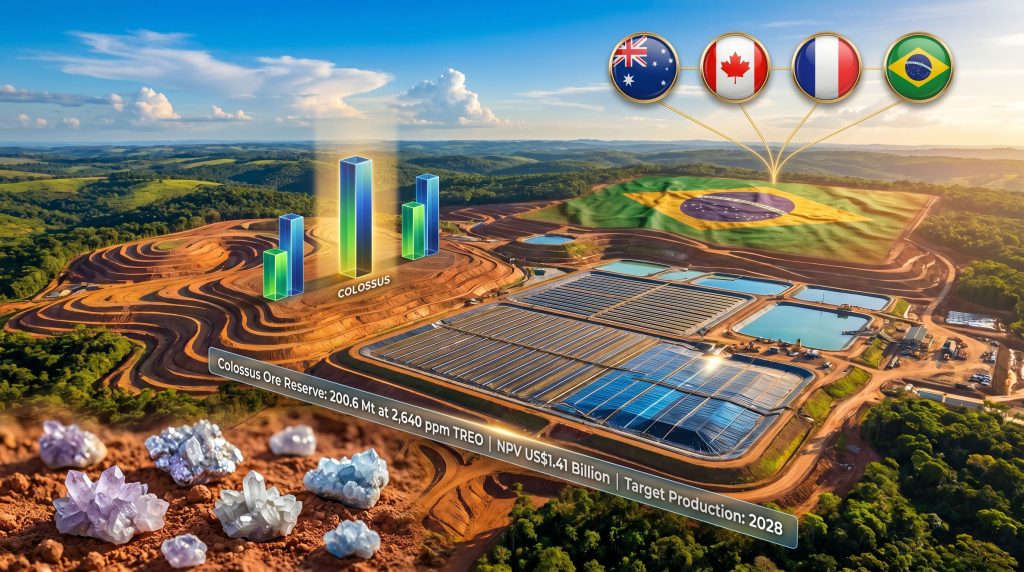
The January 2025 mineral resource estimate established a resource of 493 million tonnes at 2,508 ppm total rare earth oxide (TREO), including a magnetic rare earth oxide (MREO) component of 601 ppm. These figures alone are substantial. However, the subsequent maiden ore reserve announcement carries additional significance: 200.6 million tonnes at 2,640 ppm TREO and 740 ppm MREO.
Breaking Down the Key Technical Points
Several technical points embedded in these numbers deserve unpacking:
- The reserve-to-resource conversion reflects a meaningful proportion of the resource base meeting the economic and geotechnical criteria required for declared reserves, which signals geological confidence and reduces the probability of future grade disappointments.
- The upgrade in MREO grade from resource to reserve (601 ppm rising to 740 ppm) indicates that the highest-quality material within the resource envelope is being prioritised in mine planning — a strategically sound approach given that NdPr, Dy, and Tb command the strongest market premiums.
- 740 ppm MREO places the Colossus reserve in competitive territory relative to southern Chinese ionic clay deposits that have historically underpinned global magnetic rare earth supply.
| Deposit Type | Processing Route | Typical MREO% of TREO | Capex Intensity | Key Examples |
|---|---|---|---|---|
| Ionic Adsorption Clay | Heap leach / in-situ leach | High (15–30%) | Low–Medium | Colossus (Brazil), Jiangxi (China) |
| Carbonatite-Hosted | Flotation + cracking | Low–Medium (2–8%) | High | Mount Weld (Australia), Bayan Obo (China) |
| Monazite Placer | Gravity + chemical separation | Variable (5–15%) | Medium | Brazil coastal, India |
Pre-Feasibility Economics: Capital, Returns, and the NdPr Price Question
The Pre-Feasibility Study for the Colossus project establishes a base capital cost of US$286 million, rising to approximately US$356 to 360 million once contingency provisions are incorporated. For a project of this resource scale, this capital efficiency ratio is noteworthy. Many comparable-stage rare earth projects in hard-rock categories have published feasibility-level capital requirements exceeding US$1 billion, often without achieving the magnetic rare earth weighting that Colossus demonstrates.
The project NPV, calculated at approximately US$1.41 billion, is underpinned by NdPr pricing assumptions of roughly US$90 per kilogram. Understanding what this means requires historical context. NdPr oxide pricing has been highly volatile over the past decade, ranging from below US$40/kg during the trough years of 2015 to 2016, surging above US$130/kg during the supply-demand tightening of 2021 to 2022, and subsequently retreating. A US$90/kg assumption consequently sits in the middle portion of the historically observed range, which is neither aggressively optimistic nor deeply conservative.
The co-product contribution of dysprosium and terbium is a dimension of the project economics that deserves particular attention. Dysprosium oxide has traded at price levels many multiples above NdPr, and terbium oxide commands an even higher premium. Because Colossus carries a meaningful proportion of both heavy rare earths within its MREO profile, these elements function as significant economic credits that improve project returns even in NdPr price downside scenarios. In addition, the critical minerals demand surge driven by clean energy deployment continues to underpin the long-term price outlook for these materials.
Disclaimer: NPV figures and production targets presented here are derived from pre-feasibility level studies and are subject to change as project development advances. They are not a guarantee of future financial performance. Investors should conduct independent due diligence.
The Multi-ECA Financing Structure and What It Signals
The financing architecture being assembled around the Colossus project is unusually complex for a project still at the pre-feasibility to permitting transition stage. Viridis Mining and Minerals has engaged four institutions in the financing dialogue:
- Export Finance Australia (EFA) — reflecting Australia's strategic interest in diversifying critical mineral supply chains.
- Export Development Canada (EDC) — extending Canada's mandate to support allied-nation supply chain security investments.
- Bpifrance Assurance Export — representing European supply chain security interests, particularly relevant given European automakers' exposure to rare earth magnet supply.
- Brazil's BNDES (Banco Nacional de Desenvolvimento Econômico e Social) — anchoring domestic development finance and in-country value creation.
The simultaneous engagement of export credit agencies from four separate jurisdictions is a structurally unusual feature that carries important signalling value. Export credit agencies do not routinely co-finance pre-production mining projects unless the strategic supply chain rationale is sufficiently compelling to satisfy their mandates. When multiple ECAs converge on a single project, it typically indicates that each agency's respective government has independently assessed the project as material to its critical minerals supply security objectives.
For commercial lenders and potential equity co-investors, ECA involvement functions as a form of due diligence validation and risk sharing. ECAs bring their own technical and legal assessment processes, and their willingness to participate effectively raises the floor on project credibility. This dynamic — where blended finance structures combining ECAs, development banks, and private capital reduce the all-in cost of debt for critical mineral projects — has been observed in lithium and cobalt project financing in recent years and is now extending into rare earths.
Separately, the project's inclusion in Brazil's Climate and Ecological Transformation Investment Platform positions it within a curated pipeline of climate-transition investments. This broadens access to ESG-aligned capital pools that increasingly seek exposure to clean energy supply chain infrastructure rather than conventional extractive industry alone.
Brazil's Environmental Licensing Process: Three Gates to Production
The receipt of a preliminary environmental licence from Minas Gerais state authorities marks the first formal regulatory milestone in Brazil's three-stage environmental approval sequence:
- Licença Prévia (LP) — confirms that the project's location and conceptual design are environmentally viable and establishes the conditions for the subsequent installation phase.
- Licença de Instalação (LI) — authorises construction to begin, subject to the environmental management programmes and mitigation commitments defined at the LP stage.
- Licença de Operação (LO) — permits commercial production to commence upon verification that installation-phase environmental conditions have been satisfied.
Minas Gerais is Brazil's most active mining state by output, hosting operations ranging from iron ore to gold and niobium. However, the state's regulatory environment has tightened considerably following high-profile tailings dam failures in recent years, which have elevated environmental scrutiny across all new project applications.
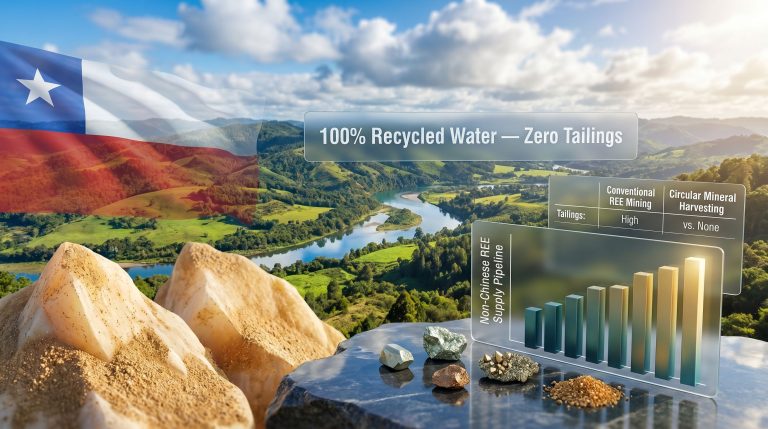
Ionic clay rare earth projects, which typically involve heap leach or in-situ recovery methods rather than conventional tailings storage infrastructure, may carry a structurally lower environmental risk profile in this context, though this will ultimately be determined through the licensing process itself.
The next major ASX story will hit our subscribers first
Competitive Benchmarking: Where Colossus Sits Among Peer Projects
| Project | Country | Stage | TREO Grade (ppm) | Capex (US$M) | Target Production |
|---|---|---|---|---|---|
| Colossus (Viridis) | Brazil | PFS / Permitting | 2,640 (reserve) | ~356–360 | 2028 |
| NioCorp Elk Creek | USA | Feasibility | N/A (Nb-REE complex) | 1,000+ | TBD |
| Songwe Hill | Malawi | Development | ~1,500 | ~400 | TBD |
| Dubbo (ASM) | Australia | Feasibility | ~7,000 (Zr-REE complex) | 1,000+ | TBD |
Note: Comparative figures are indicative, sourced from publicly available feasibility disclosures. Project status and estimates should be independently verified.
The capital efficiency differential between Colossus and its hard-rock peer projects is striking. Projects requiring US$1 billion or more in upfront capital face substantially higher financing hurdles and longer payback periods, even when their in-ground grades appear higher. Grade alone is not the relevant metric; what matters for project economics is the cost per tonne of magnetic rare earth oxide delivered to a separation facility, which is where ionic clay's processing simplicity creates a structural cost advantage.
Key Risks That Investors Should Understand
The Viridis rare earths project in Brazil carries a set of risks that are material to any investment assessment:
- Commodity price risk: NdPr oxide prices have historically shown multi-year volatility cycles. A sustained return to sub-US$60/kg pricing would materially compress project returns, whilst prices above US$100/kg would significantly enhance them.
- Development timeline risk: The 2028 production target requires completing a bankable definitive feasibility study, financing close, regulatory approvals, and construction mobilisation within a compressed window. Historically, the transition from pre-feasibility to production for projects of this scale adds 18 to 36 months beyond initial estimates.
- Financing execution risk: Whilst multi-ECA engagement is a positive signal, ECA involvement does not guarantee financing close. Each institution maintains its own credit approval processes, and the blended finance structure must ultimately satisfy commercial lenders as well.
- Chinese supply response risk: Chinese rare earth producers have historically demonstrated an ability to selectively increase supply to suppress pricing in response to emerging ex-China competition. These rare earth geopolitics have affected multiple previous rare earth development cycles.
"The transition from a pre-feasibility study to a fully bankable definitive feasibility study remains the most consequential de-risking step in the development pathway. Capital cost estimates at the PFS stage carry an accuracy range that typically widens before it narrows."
Brazil's Rare Earths Ambition and the Broader Supply Chain Architecture
Brazil holds one of the world's largest estimated in-ground rare earth endowments, yet has historically been a marginal participant in global rare earth supply. The combination of underexplored geology, historically weak commodity prices, and complex environmental regulation created conditions where this endowment remained largely undeveloped. What has changed is the convergence of supply chain security urgency among Western industrial nations with Brazil's own strategic ambition to position critical minerals as a high-value export category.
A fully operational Colossus project would represent one of the first large-scale ionic clay rare earth operations anywhere outside of China. The downstream multiplier potential is significant. Rare earth oxide separation, followed by alloy production, followed by magnet manufacturing, each represents a step up the value chain. Furthermore, the logic of Brazil developing not merely a raw material export operation but a vertically integrated rare earth processing hub is aligned with the country's broader industrial development objectives.
For the allied-nation critical minerals architecture being assembled across Australia, Canada, the European Union, and the United States, a reliable Brazilian magnetic rare earth supply source would represent a material addition to the non-Chinese supply portfolio. This is particularly relevant given energy transition minerals demand projections and Brazil's Atlantic coast positioning, which offers advantageous shipping access to both European and North American markets. According to Reuters reporting, Viridis has indicated its intention to sell to US and European buyers rather than China, underscoring the project's strategic alignment with Western supply chain priorities.
Project Summary at a Glance
| Metric | Detail |
|---|---|
| Project Name | Colossus |
| Location | Poços de Caldas Alkaline Complex, Minas Gerais, Brazil |
| Licence Area | 228.62 km² |
| Mineral Resource (Jan 2025) | 493 Mt at 2,508 ppm TREO / 601 ppm MREO |
| Ore Reserve (2025) | 200.6 Mt at 2,640 ppm TREO / 740 ppm MREO |
| PFS Capex (base) | US$286 million |
| PFS Capex (incl. contingency) | ~US$356–360 million |
| Project NPV | US$1.41 billion (at ~US$90/kg NdPr) |
| Target Production Start | 2028 |
| Key Financing Partners | Export Finance Australia, EDC, Bpifrance, BNDES |
| Environmental Status | Preliminary licence received (Minas Gerais) |
| Strategic Platform | Brazil's Climate and Ecological Transformation Investment Platform |
The Viridis rare earths project in Brazil occupies an increasingly rare position in the global critical minerals landscape: large enough in resource scale to matter at a supply chain level, differentiated enough in deposit type to offer genuine processing cost advantages, and sufficiently advanced in its financing architecture to be taken seriously by institutional capital. Whether it reaches production on its targeted timeline will depend on execution across multiple parallel workstreams, but the structural case for why the world needs projects of exactly this kind has rarely been clearer.
This article is intended for informational purposes only and does not constitute financial or investment advice. All financial metrics, resource estimates, and timelines are sourced from publicly available project disclosures and are subject to change. Readers should conduct independent due diligence before making any investment decisions.
Want To Be First When The Next Major Rare Earth Discovery Hits The ASX?
Discovery Alert's proprietary Discovery IQ model delivers real-time alerts on significant ASX mineral discoveries — instantly cutting through complex data to surface actionable opportunities in critical minerals like rare earths before the broader market reacts. Explore historic discoveries and their extraordinary returns, then start your 14-day free trial at Discovery Alert to position yourself ahead of the next major find.