Redcastle Resources Ltd
- ASX Code: RC1
- Market Cap: $16,814,231
Redcastle Resources Moves Closer to First Gold Revenue as Mining Ramps Up Across Two Deposits
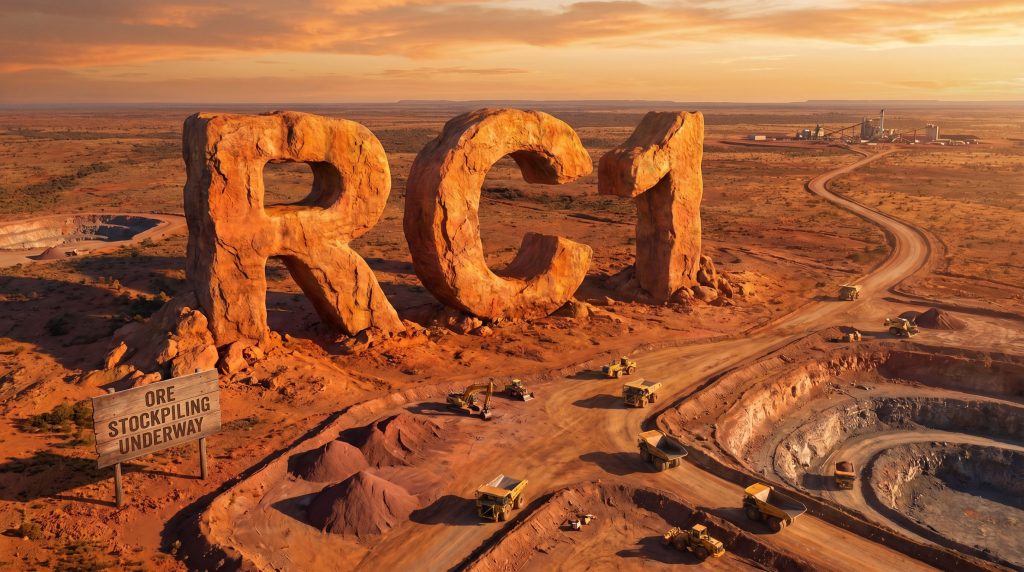
Redcastle Resources starts gold mining at Redcastle Reef and Queen Alexandra, marking a significant operational milestone for the ASX-listed company (ASX: RC1). Mining activities are now progressing at both the Redcastle Reef (RR) and Queen Alexandra (QA) deposits within the Redcastle Gold Project in Western Australia's Eastern Goldfields. According to the 6 July 2026 ASX announcement, ore is being mined and stockpiled at RR, surface clearing has been completed at QA, and concurrent open pit mining is now underway across the two deposits.
Mining is being delivered through the Redcastle‑BML Ventures Joint Venture (RB JV), with BML Ventures as operator and funding 100% of mining and working capital requirements through to first revenues for RR and QA. This arrangement is reported to materially reduce the upfront funding burden on Redcastle Resources Ltd and to preserve capital for exploration and resource growth.
Initial ore haulage is reported to be on target to commence shortly, ahead of a planned inaugural toll‑milling campaign at the Wiluna processing facility.
When big ASX news breaks, our subscribers know first
Two Mines, One Focused Strategy
The current operational phase at the Redcastle Gold Project is centred on a dual‑site mining strategy, with Redcastle Resources Ltd positioning itself as both an explorer and an emerging producer.
According to the announcement:
- Ore stockpiling at Redcastle Reef is continuing as part of the planned open pit sequence.
- Mining to date has focused on the near‑surface oxide mining phase within the approved activity envelope.
- Surface clearing at Queen Alexandra is complete, and concurrent mining operations are now underway at QA and RR.
- The RR and QA deposits are approximately 700 metres apart, which is reported to be delivering operational efficiencies through shared infrastructure, equipment and site‑based activities.
- Initial ore haulage from site is expected to commence shortly, ahead of the inaugural toll‑milling programme at Wiluna.
This move from single‑deposit to dual‑deposit operations marks a practical step in Redcastle Resources Ltd shifting from a pure exploration focus to what the company describes as an integrated gold mining and exploration model.
Why Concurrent Mining Matters for Project Delivery
Running two shallow open pits in very close proximity can assist with:
- Smoothing ore supply for processing.
- Improving utilisation of mining equipment.
- Allowing flexibility if conditions or grades vary between pits.
For investors, this dual‑pit approach can support more consistent ore movement and stockpile management compared with reliance on a single small deposit. Furthermore, the company has indicated that further updates on the mining sequence, haulage and processing schedule will be provided as operations progress.
Understanding the Capital‑Light Joint Venture Model
A central feature of the update is the capital‑light funding and processing structure being applied through the RB JV and the toll‑milling arrangement.
What Is Toll‑Milling and Why Is Redcastle Using It?
Toll‑milling is a processing arrangement where mined ore is transported to a third‑party processing plant, which treats the ore for a fee per tonne. In this case:
- Ore from RR and QA is expected to be trucked to the Wiluna processing facility.
- Redcastle Resources Ltd does not need to construct its own processing plant.
- Capital that would otherwise be tied up in processing infrastructure can be directed to exploration, drilling and studies.
For small and mid‑tier gold companies, toll‑milling is often used to accelerate production from near‑surface deposits while deferring, or potentially avoiding, large processing capital expenditure.
How the Redcastle‑BML Ventures JV Is Structured
Under the Redcastle‑BML Ventures Joint Venture:
- BML Ventures is the operator, managing day‑to‑day mining activities.
- BML is responsible for funding 100% of mining and working capital requirements through to first revenues at RR and QA.
- Redcastle Resources Ltd is reported to benefit through reduced upfront funding requirements and the ability to retain its cash for exploration and resource‑growth activities.
From an investor perspective, this type of earn‑in and funding structure can:
- Reduce the need for near‑term equity raisings.
- Limit balance sheet risk during the early stages of mining.
- Provide exposure to production without the same funding load typically required of a sole‑funded developer.
"With RB JV mining operations expected to generate cash flow in the coming months, the Company remains focused on its evolution from a pure explorer into an integrated gold mining and exploration company," the Board of Redcastle Resources Ltd stated in the ASX announcement.
Glossary of Key Terms
To clarify some of the mining and corporate terminology used in the update:
| Term | Explanation |
|---|---|
| Toll‑milling | Sending ore to a third‑party processing plant, which charges a fee per tonne for treating the material. |
| Open pit mining | Surface mining method where rock and ore are extracted from a pit excavated at ground level. Typically used for shallow deposits. |
| Oxide ore | Near‑surface ore that has been altered by weathering. It is often easier and cheaper to process than deeper, fresh rock. |
| Ore stockpile | A controlled pile of mined material stored on site before it is hauled or processed. Used to manage feed to the plant and blend ore types. |
| Joint venture operator | The party within a joint venture responsible for running daily operations and activities. |
| Earn‑in | A type of agreement where a company can gain a stake in a project by funding agreed exploration or development spending. |
| JORC Code | The Australasian standard for public reporting of Mineral Resources and Ore Reserves. It sets the rules for how resource estimates are prepared and reported. |
Operational Efficiency: Proximity Pays Off
The RR and QA deposits are located approximately 700 metres apart within the Redcastle Project Area. The announcement highlights that this proximity is already delivering operational efficiencies.
From a mining operations standpoint, short distances between deposits can:
- Allow shared mobile equipment, such as trucks, excavators and drills.
- Reduce duplication of site infrastructure, including access roads, offices and water management.
- Minimise mobilisation and demobilisation costs when equipment is moved between working areas.
- Simplify logistics for ore haulage and stockpile management, as trucks travel shorter distances on site.
For a company at the scale of Redcastle Resources Ltd, these efficiencies can influence early cash margins, particularly while ore volumes and grade profiles are being established. In addition, having two deposits within the same operating footprint can provide more flexibility in scheduling if one pit encounters operational delays.
Educational Section: How Near‑Surface Gold Mining and Toll‑Treating Work
To place the Redcastle update in context, it is useful to outline the basic steps of a near‑surface gold operation that uses toll‑treating.
1. Open Pit Mining of Oxide Ore
At RR and QA, mining is focused on near‑surface oxide ore. This type of ore:
- Lies relatively close to the surface.
- Has been altered by long‑term exposure to air and water.
- Typically has softer rock and different chemistry compared with deeper, unweathered rock.
Open pit mining usually involves:
- Removing topsoil and waste rock (overburden).
- Drilling and blasting the rock to break it.
- Loading broken material into trucks.
- Hauling ore to stockpiles and waste rock to dedicated waste dumps.
Oxide material is often suited to conventional processing methods such as carbon‑in‑leach or heap leach, depending on the project and plant.
2. Ore Stockpiling and Grade Control
Before ore is trucked to a processing plant, it is generally:
- Sampled and tested for gold content.
- Classified into different stockpiles based on grade or ore type.
Maintaining accurate stockpiles helps to ensure consistent grade to the mill, blend higher‑ and lower‑grade ore, and optimise the value recovered from the ore. Redcastle Resources Ltd has reported that ore material continues to be mined and stockpiled on site at RR as part of a planned mining sequence.
3. Haulage to a Toll‑Treatment Facility
When transport commences, ore is loaded onto road trains or haul trucks and taken to a third‑party processing facility. Costs to consider typically include:
- Loading and haulage costs per tonne.
- Toll‑milling fee per tonne processed.
- Any additional charges, such as for storage or handling.
The Redcastle announcement states that initial ore haulage is on target to commence shortly ahead of the inaugural toll‑milling at the Wiluna processing facility.
4. Processing and Gold Production
At the processing plant, the key steps usually involve:
- Crushing and grinding the ore.
- Using physical and chemical methods to separate gold from the rock.
- Recovering gold into doré bars or concentrate.
Under a toll‑milling agreement, the plant operator typically returns the recovered product — or proceeds from its sale — to the ore owner, less agreed fees and charges. The specific terms of the Redcastle‑Wiluna arrangement have not been detailed in the announcement.
5. Why This Model Is Used by Junior Miners
For companies at the scale of Redcastle Resources Ltd, a toll‑treat and JV‑funded model can:
- Reduce the upfront capital needed to reach production.
- Shorten the time between discovery and initial revenue.
- Allow the company to allocate internal funds to drilling and project evaluation rather than plant construction.
However, investors often monitor toll fees, haulage distances and grade control to assess the potential margins and cash generation.
Exploration Pipeline Builds Behind the Production Ramp‑Up
While the current focus is on mining at RR and QA, Redcastle Resources Ltd has indicated that it intends to progress an exploration and discovery pipeline across its broader Eastern Goldfields portfolio as its funding position improves.
According to the ASX announcement, planned activities include:
| Activity | Indicative Timeframe |
|---|---|
| Near‑mine exploration across the Redcastle Project Area | H2 2026 |
| Targeted exploration drilling in the TBone Belt | H2 2026 |
| Field activities in the Kilkenny Belt as a prelude to drilling | H2 2026 |
| Planned drilling campaign in the Kilkenny Belt | H1 2027 |
These programmes are aimed at both near‑mine and regional targets, with the objective of adding Mineral Resources and extending the project pipeline over time.
Kilkenny Belt Earn‑In and Regional Optionality
The Eastern Goldfields portfolio of Redcastle Resources Ltd currently comprises:
- The Redcastle Project Area (host to RR and QA).
- The TBone Belt.
- The recently expanded Kilkenny Belt, subject to an earn‑in agreement.
Under the Kilkenny earn‑in:
- Redcastle Resources Ltd has secured a pathway to earn a 60% equity interest in the Kilkenny Belt Package.
- This is subject to satisfaction of applicable earn‑in requirements, which typically involve staged expenditure or work commitments.
The company has specifically stated that no decision to proceed to production at Kilkenny, or at any new project area beyond current RR and QA mining activities, has been made. Any such decision will require further technical, regulatory, heritage, commercial and funding assessments.
Within the existing Redcastle Project Area, additional targets cited in the announcement include Morgan's Castle East, Sligo, Coronation, South Queen and Battery Lode. These areas provide further near‑mine exploration opportunities for drilling and evaluation, subject to funding and prioritisation.
Scale of the Eastern Goldfields Portfolio
Following completion of the Kilkenny Belt earn‑in and subject to grant of pending applications, Redcastle Resources Ltd reports that its Eastern Goldfields portfolio of interests will comprise:
- 67 Prospecting Licences
- 4 Mining Leases
- 3 Exploration Licences
- 12 Mining Lease Applications
This equates to approximately 15,072 hectares (150.72 km²) of ground, including around 2,026.38 hectares of pending tenement applications that remain subject to grant. For investors, this landholding provides both current mining exposure at RR and QA and a pipeline of exploration targets that may be advanced as cash flow and results allow.
The Investment Thesis: A Junior Miner at an Operational Inflection Point
The 6 July 2026 announcement positions Redcastle Resources Ltd at a point where mining activities are expected to start generating cash flow while exploration planning continues across multiple belts.
Key elements that may be relevant for investors assessing the company include:
1. Progress Towards First Revenues from Mining
- Ore stockpiling is underway at RR.
- Surface works and mining are in progress at QA.
- Initial ore haulage is reported to be imminent, ahead of toll‑milling at Wiluna.
If operations proceed as described, Redcastle Resources Ltd may consequently transition from pre‑revenue status to generating operating income from gold production at RR and QA.
2. Capital‑Light Development Structure
- BML Ventures is funding 100% of mining and working capital requirements at RR and QA through to first revenues.
- This funding structure is reported to materially reduce the upfront funding burden for Redcastle Resources Ltd.
- The company has indicated that this allows it to preserve capital for broader exploration and resource‑growth work.
For small‑capitalisation issuers, limiting equity dilution and debt during the early production phase is often a central consideration for shareholders.
3. Operational Efficiencies from Co‑Located Deposits
- RR and QA are approximately 700 metres apart.
- Shared equipment, infrastructure and site‑based activities are already reported to be generating operational efficiencies.
This proximity may support lower unit mining costs and more flexible mine scheduling than if the deposits were remote from each other.
4. Parallel Exploration Across Multiple Belts
- Near‑mine exploration at Redcastle is targeted for H2 2026.
- Drilling at the TBone Belt and field activities at the Kilkenny Belt are also planned for H2 2026.
- A drilling campaign in the Kilkenny Belt is planned for H1 2027, subject to ongoing assessment and funding.
This parallel focus means that as mining at RR and QA advances, there is also potential for new targets to be tested that could extend or complement the current mining inventory, subject to results.
The next major ASX story will hit our subscribers first
A Company to Monitor as It Advances Mining and Exploration
The current ASX update on mining at RR and QA outlines a set of near‑term operational milestones alongside a broader exploration and tenement growth story across the Eastern Goldfields. Notably, Redcastle Resources starts gold mining at Redcastle Reef and Queen Alexandra at a time when the company is simultaneously building out its regional exploration pipeline.
Redcastle Resources Ltd is progressing concurrent open pit mining at two closely spaced deposits, a capital‑light toll‑milling and joint venture funding model through BML Ventures, and a staged exploration programme across the Redcastle Project Area, TBone Belt and Kilkenny Belt.
For investors following junior gold equities, the upcoming period — including initial ore haulage, toll‑milling at Wiluna and the commencement of scheduled exploration programmes — provides a series of events that will contribute further data on both operational performance and project potential.
Ready to Follow Redcastle Resources' Journey From Explorer to Gold Producer?
With concurrent mining underway at two deposits, a capital-light joint venture structure funding operations through to first revenues, and a growing Eastern Goldfields exploration pipeline, Redcastle Resources (ASX: RC1) is approaching a significant operational inflection point. To learn more about the company, its projects, and what the coming months may hold for investors, visit the official Redcastle Resources website at redcastle.net.au.