June 5, 2026
The Industrial Logic of Aluminium's Green Reinvention
Few industrial transformations carry as much strategic weight as what is currently unfolding in primary aluminium production. Rio Tinto automation and low-carbon aluminium production sit at the intersection of two of the most powerful forces reshaping global manufacturing: the race to decarbonise heavy industry and the push to automate dangerous, labour-intensive processes. For producers willing to invest at scale, these forces are not competing priorities but compounding advantages.
Understanding how one of the world's largest mining companies is positioning itself within this convergence reveals something important about where the aluminium industry is headed and what that means for investors, industrial buyers, and policymakers alike.
When big ASX news breaks, our subscribers know first
How Automation Is Reshaping Rio Tinto's Mining and Smelting Operations
Rio Tinto automation and low-carbon aluminium production are increasingly inseparable components of a single industrial philosophy. The company has moved well beyond pilot programmes, embedding intelligent systems across both its surface mining operations and its smelting infrastructure. Furthermore, as leading aluminium producers intensify their own technology investments, the competitive bar for operational efficiency continues to rise.
Automated Drilling: Precision at the Source
In open-cut mining environments, Rio Tinto has developed automated drill rigs in partnership with Sandvik, a move that reflects a broader industry shift toward data-driven extraction. These systems reduce reliance on manual input while improving the consistency and precision of drilling cycles. The operational benefit is not purely mechanical: fewer human touchpoints in high-risk environments directly reduces workplace incident exposure while simultaneously raising throughput predictability.
The integration of sensors, processing layers, modelling tools, and automated control systems under what Rio Tinto describes as a "4.0 smelter" framework represents a significant architectural shift. Rather than optimising individual steps in isolation, the approach treats the entire production chain as a single intelligent system.
MAX: Autonomous Vehicles Inside the Smelter
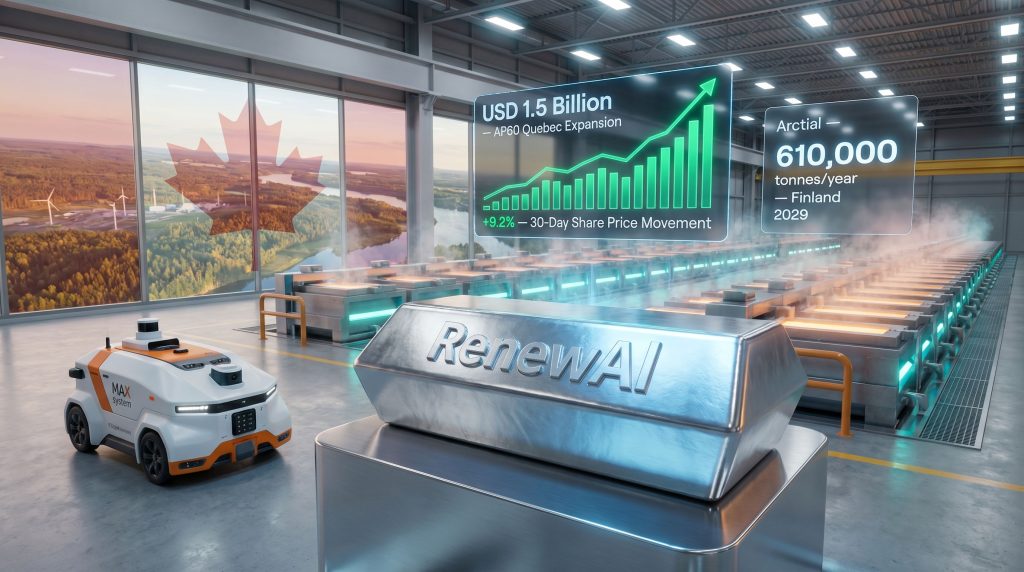
Perhaps the least widely understood element of Rio Tinto's automation programme is its deployment of autonomous vehicles inside operating smelters. The MAX system is an unmanned autonomous vehicle platform designed specifically for the extreme thermal and chemical environment of aluminium smelting. Managed through a fleet supervision architecture that monitors vehicle routing, inventory status, and operational readiness in real time, MAX removes human workers from some of the most hazardous areas of a smelter floor.
The significance of this goes beyond safety metrics. Consistent autonomous throughput inside a smelter reduces process variability, which in turn supports more stable energy consumption profiles and better pot-line performance. These are not marginal gains in an industry where electricity typically represents 30 to 40 percent of total smelting costs.
AP Technology: The Intelligence Layer Connecting It All
AP Technology is Rio Tinto's comprehensive suite of smelter intelligence tools, encompassing sensor networks, predictive modelling systems, and automated operational controls. It functions as the connective tissue between physical smelting infrastructure and data-driven optimisation. By continuously analysing pot-line performance and intervening before inefficiencies compound, AP Technology reduces energy waste and narrows the variance between theoretical and actual output.
Automation in aluminium smelting is not simply about replacing labour. It is about achieving a level of process consistency that human-operated systems structurally cannot sustain across 24-hour production cycles in high-temperature environments.
Rio Tinto's Low-Carbon Aluminium Technology Stack
Automation alone does not explain Rio Tinto's competitive positioning. The more structurally distinctive element is its portfolio of low-carbon smelting technologies, which collectively represent one of the most advanced decarbonisation programmes in primary metals production. In addition, the Rio Tinto decarbonisation push extends well beyond aluminium, signalling a company-wide commitment to emissions reduction across multiple industrial fronts.
ELYSIS: Eliminating Emissions at the Process Level
Developed through a joint venture between Rio Tinto and Alcoa, ELYSIS replaces conventional carbon anodes in the aluminium electrolysis process with inert-anode technology. The practical result is the elimination of direct carbon dioxide and perfluorocarbon emissions from smelting. What makes ELYSIS particularly notable from an environmental chemistry standpoint is its byproduct: the process generates oxygen rather than greenhouse gases, inverting the emissions profile of conventional smelting entirely.
ELYSIS remains in industrial trial phase, but its progression marks a meaningful inflection point. No other commercially advancing inert-anode technology has achieved comparable demonstration at industrial scale, giving Rio Tinto a first-mover position in what could become the defining process technology of next-generation aluminium production. For further context on this approach, Rio Tinto's AP60 low-carbon aluminium programme illustrates how these technologies are being integrated at the commercial smelter level.
RenewAl: Certifying Low-Carbon Output for Premium Markets
RenewAl is Rio Tinto's certified low-carbon primary aluminium brand, produced at its Atlantic Operations smelters running on hydroelectric power. Its reported greenhouse-gas intensity is less than one-fifth of the global industry average, positioning it as one of the lowest-carbon primary aluminium products available at commercial scale today.
The commercial logic here is straightforward. As procurement frameworks in automotive, aerospace, and energy infrastructure increasingly require verified emissions data, certified products like RenewAl shift from a marketing differentiator to a contractual prerequisite. Industrial buyers who cannot source certified low-carbon aluminium risk exclusion from green supply chains. Rio Tinto's early establishment of a certified brand creates switching costs that are difficult for competitors to overcome quickly.
AP60 Technology: Quantifying the Performance Gap
The AP60 smelting process, operating on Quebec's hydroelectric grid, represents the current commercial benchmark for low-emissions primary aluminium. The performance differential relative to industry averages is substantial.
| Metric | AP60 Hydro-Powered | Industry Average | Adjacent Arvida Smelter |
|---|---|---|---|
| GHG Emissions Intensity | ~1/6 of industry average | Baseline | ~2x AP60 |
| Fine Particulate Matter | Up to 90% lower | Baseline | Higher |
| Post-Expansion Annual Output | 220,000 tonnes/year | N/A | N/A |
| New Capacity Added | ~160,000 tonnes/year | N/A | N/A |
The particulate matter reduction figure is rarely highlighted in mainstream coverage but carries significant regulatory and community licence-to-operate implications, particularly as smelters in developed markets face tightening air quality standards.
The Prysmian Partnership: Low-Carbon Aluminium Enters the Data Centre Supply Chain
A 2026 industrial trial with Prysmian involves using low-carbon aluminium sourced from Rio Tinto's hydropowered Alma smelter for cables serving data centres and energy transmission infrastructure. ELYSIS-derived metal is being evaluated within this context, marking the first tangible step toward integrating certified zero-process-emission aluminium into the technology sector's supply chain.
This development matters beyond its immediate commercial scale. Data centres are among the fastest-growing consumers of electrical infrastructure globally, and their operators face mounting pressure to demonstrate emissions accountability across their entire supply chain, including the metals in their physical infrastructure. Rio Tinto's positioning here suggests an understanding that the next wave of low-carbon aluminium demand will not come from traditional industrial sectors alone.
Capital Deployment: The Scale of Rio Tinto's Infrastructure Commitment
Quebec AP60 Expansion: USD 1.5 Billion Bet on Green Primary Metal
The expansion of the AP60 smelter in Jonquière, Quebec represents a USD 1.5 billion commitment to adding approximately 160,000 tonnes per year of new primary aluminium capacity, bringing the facility's total annual output to around 220,000 tonnes. Powered entirely by Quebec's hydroelectric grid, the expanded facility will operate at the lowest achievable emissions intensity for primary smelting under currently deployed commercial technology.
The Quebec investment also benefits from an implicit geographic advantage. Canada's hydroelectric infrastructure is among the most mature and cost-stable renewable energy systems in the world, providing long-term electricity cost predictability that few smelting jurisdictions can match. This is not a trivial consideration: electricity price volatility has driven several European smelters to curtailment or closure in recent years. Consequently, renewable energy in mining more broadly is increasingly recognised as a structural competitive advantage rather than merely an environmental commitment.
Arctial and Europe's Aluminium Supply Deficit
The Arctial project, backed by Rio Tinto, is targeting the launch of Finland's first new aluminium smelter in more than three decades. With a planned annual production capacity of 610,000 tonnes, a 2029 commissioning target, and the potential to increase Europe's total aluminium output by approximately 20 percent, Arctial represents a significant structural intervention in a market defined by chronic supply deficiency.
Three interconnected dynamics make this project strategically significant:
- Europe's aluminium supply disruptions are compounded by ongoing geopolitical instability affecting global metal flows
- Despite a potential 20 percent production increase from Arctial alone, Europe is projected to remain a net aluminium importer after 2029
- The project positions Rio Tinto as a critical supplier within European industrial supply chains at a moment when self-sufficiency in strategic materials is receiving sustained political attention
Even at full Arctial capacity, Europe's structural aluminium deficit is not resolved. The project reduces strategic import dependency without eliminating it, which means ongoing demand pressure will continue to support regional pricing premiums for domestically produced metal.
What This Means for Investors: Valuation, Risk, and the Low-Carbon Premium
Current Market Positioning
| Metric | Value |
|---|---|
| Rio Tinto Share Price (GBP) | £80.72 |
| Rio Tinto Share Price (USD) | USD 109.70 |
| Analyst Consensus Target (GBP) | £74.92 |
| Analyst Consensus Target (USD) | USD 101.80 |
| Premium to Analyst Consensus | ~7.7% above target |
| 30-Day Share Price Movement | +9.2% |
The 30-day momentum of +9.2 percent reflects genuine investor enthusiasm for Rio Tinto's strategic repositioning. However, shares trading approximately 7.7 percent above analyst consensus warrant careful consideration, particularly given that independent valuation estimates suggest a substantially larger premium to intrinsic fair value.
The Low-Carbon Premium as a Revenue Variable
One underappreciated element of Rio Tinto's aluminium strategy is the emerging price premium for certified low-carbon metal. Industrial buyers in automotive manufacturing, aerospace, and energy infrastructure are increasingly willing to pay above-market rates for aluminium with verified emissions credentials. This creates a revenue dynamic that sits outside conventional commodity pricing models and is therefore not fully captured in most analyst valuation frameworks.
The development of a certified premium market for primary aluminium is structurally analogous to what occurred in renewable energy certificates and sustainably certified timber over the previous two decades: a niche premium product gradually becomes a mainstream procurement standard, at which point producers without certification face market access restrictions rather than merely price disadvantages.
Key Investor Watch Points
- AP60 expansion delivery schedule and whether the Quebec build remains within the USD 1.5 billion budget amid construction cost inflation
- Arctial 2029 commissioning milestone and the pace of regulatory and construction progress in Finland
- ELYSIS commercialisation trajectory from current industrial trial status toward full-scale deployment timelines
- Low-carbon aluminium demand adoption rates among industrial buyers and the pace at which certified emissions intensity becomes a contractual requirement rather than a voluntary preference
- Prysmian trial outcomes and whether the data centre cable application leads to commercial-scale supply agreements
Disclaimer: The financial figures and analyst targets referenced in this article reflect data available at the time of writing. They do not constitute financial advice. Investors should conduct independent due diligence and consider their own risk tolerance before making investment decisions. Past share price performance is not indicative of future returns.
Three Pathways to Low-Carbon Aluminium and Where Rio Tinto Positions Itself
The decarbonisation of aluminium production is not a single-track problem. Three distinct technological pathways are being pursued across the industry, each with different cost profiles, timelines, and scalability characteristics.
- Renewable energy-powered smelting: Using hydroelectric, wind, or solar power to eliminate Scope 2 emissions from the electricity-intensive electrolysis process. This is Rio Tinto's primary commercial approach today, underpinning both its RenewAl brand and its AP60 operations in Quebec.
- Inert-anode technology: Eliminating Scope 1 process emissions by replacing carbon anodes with inert alternatives that do not combust during electrolysis. ELYSIS is the furthest-advanced commercial programme pursuing this pathway globally.
- Recycled aluminium scaling: Using secondary production to bypass smelting emissions entirely. While industry-wide adoption of recycling is accelerating, this pathway does not directly address the growing demand for new primary aluminium production.
Rio Tinto's distinctive advantage is its simultaneous pursuit of pathways one and two, with pathway one generating current revenue and pathway two representing a long-duration technology option with asymmetric upside if ELYSIS achieves commercial scale. Furthermore, complementary initiatives such as the low-carbon aluminium venture emerging from other major industry players signal that this technological race is intensifying across the sector as a whole.
The next major ASX story will hit our subscribers first
Strategic Summary: Rio Tinto's Position Across the Aluminium Value Chain
| Strategic Pillar | Technology or Initiative | Current Status |
|---|---|---|
| Smelter Automation | MAX autonomous vehicle system, AP Technology | Operational and expanding |
| Mining Automation | Sandvik automated drill rigs | Active deployment |
| Low-Carbon Smelting | AP60 Quebec, ELYSIS joint venture | Operational and trial phase |
| Certified Green Product | RenewAl brand | Commercially active |
| European Supply Expansion | Arctial Finland smelter | Planned commissioning 2029 |
| Industrial Application Trial | Prysmian cable project | 2026 trial phase |
Near-Term Catalysts and the Long-Term Structural Shift
Between 2025 and 2029, several developments will determine whether Rio Tinto automation and low-carbon aluminium production delivers on its strategic ambitions or encounters the execution friction that characterises large-scale capital programmes in primary metals. The near-term catalysts include the first output from the expanded AP60 facility, the outcome of the Prysmian cable trial, and measurable progress on Arctial's construction schedule.
However, the longer-term structural dynamic is more consequential. Automation and decarbonisation are converging into a unified operational model for the sector's most advanced producers. For instance, Gladstone aluminium repowering demonstrates how Rio Tinto is applying this same integrated logic across geographically distinct operations. Producers that cannot demonstrate certified emissions intensity, consistent throughput, and predictable energy consumption will face progressive exclusion from the premium industrial supply chains that increasingly define margin in the sector.
What Rio Tinto is building is not simply a more efficient smelter or a greener product line. It is an end-to-end production architecture that integrates extraction intelligence, process automation, renewable energy sourcing, and certified output into a single competitive system. The question for investors is not whether this architecture creates value. It is whether current market pricing already reflects that value in full.
Want to Track the Next Major ASX Mineral Discovery Before the Market Does?
Discovery Alert's proprietary Discovery IQ model scans ASX announcements in real time, instantly identifying high-potential mineral discoveries across more than 30 commodities — from aluminium to rare earths — and delivering actionable insights directly to subscribers. Explore historic discoveries and the substantial returns they generated, then begin your 14-day free trial to position yourself ahead of the broader market.