July 21, 2026
The global shift toward renewable energy has created unprecedented demand for specialized materials that were once considered mere byproducts of traditional mining operations. Within this evolving landscape, certain mineral extraction facilities are discovering that their waste streams contain the exact components needed to power the clean energy infrastructure of tomorrow. When Rio Tinto expands solar power capacity at Kennecott, this convergence of industrial necessity and resource optimization represents a fundamental transformation in how mining operations approach sustainability, supply chain resilience, and operational efficiency.
Advanced materials processing technologies have enabled mining companies to extract value from previously discarded materials, creating circular supply chains that reduce waste whilst supporting critical manufacturing sectors. The integration of renewable energy in mining systems at extraction sites demonstrates how traditional industries can leverage their own byproducts to achieve decarbonisation goals whilst strengthening domestic supply chains for essential materials.
Technical Engineering Behind Integrated Solar-Mining Operations
The successful deployment of large-scale photovoltaic systems at active mining facilities requires sophisticated engineering coordination between extraction operations, materials processing, and power generation infrastructure. When Rio Tinto expands solar power capacity at Kennecott, the technical complexity extends far beyond conventional solar installations due to the unique operational requirements of continuous mining activities and the integration of specialised materials produced on-site.
Advanced Materials Recovery from Copper Refining Processes
Tellurium extraction during copper refining operations involves sophisticated metallurgical processes that separate trace elements from primary metal streams. The recovery process begins during the electrolytic refining stage, where tellurium concentrates in anode slimes alongside other precious metals. These slimes undergo additional processing through roasting, leaching, and precipitation procedures to isolate tellurium compounds suitable for semiconductor applications.
The technical specifications for semiconductor-grade tellurium require purity levels exceeding 99.99%, achieved through multiple purification cycles involving chemical treatment and recrystallisation. This material then undergoes conversion into cadmium telluride compounds specifically engineered for thin-film photovoltaic applications. The manufacturing process transforms raw tellurium into semiconductor wafers that form the active layer in solar cells, where photon absorption generates electron-hole pairs that produce electrical current.
Kennecott's tellurium production capacity, initiated in 2022, represents a strategic shift from waste disposal to value creation. The facility processes copper concentrates containing approximately 150-200 grams of tellurium per metric ton of copper, making tellurium recovery economically viable when integrated with existing refining infrastructure.
Bifacial Panel Technology and Performance Optimisation
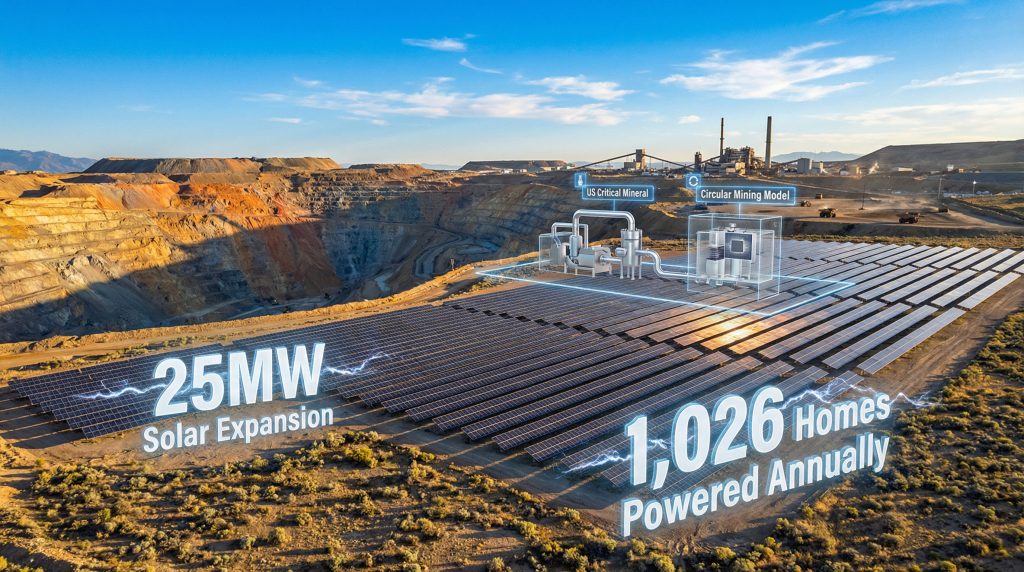
The installation of over 71,000 bifacial solar panels across a 210-acre footprint demonstrates advanced photovoltaic system design optimised for Utah's specific environmental conditions. Bifacial panels capture solar radiation on both front and rear surfaces, with the rear side utilising reflected light from ground surfaces and surrounding structures.
Ground albedo in Utah's high-desert environment typically ranges from 0.25 to 0.35, providing significant reflected irradiance that bifacial panels can convert to additional electrical output. The 25-megawatt capacity addition achieved through this installation demonstrates how geographical and technical factors combine to maximise energy yield per unit area.
Performance characteristics of cadmium telluride thin-film panels differ substantially from conventional silicon technologies:
- Temperature coefficient: CdTe panels maintain higher efficiency at elevated operating temperatures
- Low-light performance: Superior energy generation during cloudy conditions and early morning/late afternoon periods
- Spectral response: Optimised absorption across wavelengths prevalent in Utah's solar resource
- Degradation rates: Typically 0.4-0.5% annually, providing 25-year performance warranties
Furthermore, the bifacial configuration increases total energy yield by approximately 15-20% compared to monofacial installations, contributing to the system's ability to power 1,026 average American homes annually.
Strategic Supply Chain Integration for Critical Minerals Security
The establishment of vertically integrated supply chains for critical minerals represents a fundamental shift in how nations approach energy security and manufacturing resilience. Domestic production of both copper and tellurium at Kennecott creates strategic advantages that extend beyond simple cost considerations to encompass geopolitical risk mitigation and supply chain sovereignty.
North American Critical Minerals Ecosystem Development
The United States currently maintains limited domestic production capacity for many minerals classified as critical for clean energy infrastructure. Kennecott's position as one of only two domestic tellurium producers highlights the strategic importance of byproduct recovery programmes in reducing import dependency for specialised materials.
Current U.S. tellurium production capacity remains concentrated amongst a small number of facilities, with Kennecott representing approximately 50% of domestic output since production commenced in 2022. This concentration creates both opportunities and vulnerabilities within the national supply chain for thin-film solar manufacturing.
The processing partnership with 5N Plus in Canada maintains the tellurium supply chain within allied North American jurisdictions, avoiding exposure to potential supply disruptions from geopolitically sensitive regions. This geographic proximity reduces transportation costs, minimises carbon emissions from materials movement, and provides contractual certainty for both suppliers and manufacturers.
However, the critical raw materials transition faces ongoing challenges from complex global supply networks that require careful strategic planning to ensure resilience.
Supply Chain Resilience Metrics and Strategic Value Assessment
| Supply Chain Stage | Location | Strategic Classification | Risk Mitigation Value |
|---|---|---|---|
| Raw Material Extraction | Kennecott, Utah | Domestic controlled | High geopolitical stability |
| Materials Processing | 5N Plus, Canada | Allied jurisdiction | Moderate political risk |
| Panel Manufacturing | First Solar facilities | North American capacity | Supply chain proximity |
| End-use Installation | Kennecott operations | Circular integration | Operational efficiency |
The vertical integration model demonstrates how strategic resource planning can create multiple layers of supply chain protection. Domestic tellurium production reduces reliance on global markets where price volatility and availability constraints could impact renewable energy deployment timelines.
Critical mineral designation by the U.S. Department of the Interior reflects the essential role these materials play in clean energy infrastructure, national defence applications, and advanced manufacturing sectors. Both copper and tellurium appear on the critical minerals list due to their concentrated global production, limited substitution options, and essential applications in emerging technologies.
Environmental Performance and Economic Impact Analysis
The integration of renewable energy systems at major mining operations generates measurable environmental benefits whilst creating substantial economic activity in regional communities. When Rio Tinto expands solar power capacity at Kennecott, it demonstrates how industrial decarbonisation strategies can simultaneously achieve emissions reduction targets and support local economic development.
Quantified Carbon Footprint Reduction Achievement
The 30-megawatt total solar capacity now installed at Kennecott delivers significant Scope 2 emissions reductions through substitution of grid-sourced electricity with on-site renewable generation. The 6% reduction in Scope 2 emissions translates to approximately 20,000 metric tons of CO₂ equivalent annually, representing measurable progress toward Rio Tinto's net-zero emissions commitments.
This emissions reduction calculation derives from the displacement of electricity that would otherwise be sourced from Utah's regional grid, which maintains a carbon intensity of approximately 0.7-0.8 metric tons CO₂ per megawatt-hour. Consequently, the solar installation's annual generation capacity provides clean electricity equivalent to removing 4,400 passenger vehicles from operation, based on EPA estimates of 4.6 metric tons CO₂ equivalent per vehicle annually.
Economic Development and Workforce Creation Impact
The construction phase generated 200 local employment opportunities during the development period, demonstrating how renewable energy infrastructure projects can deliver immediate economic benefits to mining-dependent communities. The two-month ahead-of-schedule completion achieved through partnership with Bechtel indicates that experienced engineering, procurement, and construction providers can accelerate project timelines whilst maintaining workforce stability.
Regional economic multiplier effects from large-scale construction projects typically generate additional indirect employment in supporting industries including transportation, materials supply, accommodation, and services. The concentrated timeline for construction activity maximises local spending within the surrounding communities whilst minimising disruption to ongoing mining operations.
The circular integration model creates multiple value streams that traditional mining operations cannot achieve through conventional approaches. Simultaneous byproduct recovery, renewable energy generation, and supply chain positioning deliver compound returns that justify advanced infrastructure investments whilst supporting long-term operational sustainability.
Comparative Analysis of Mining-Integrated Renewable Energy Systems
Large-scale industrial operations present unique opportunities and challenges for renewable energy integration compared to utility-scale or distributed generation projects. Mining facilities offer several advantages including existing electrical infrastructure, large available land areas, and consistent baseload demand that can optimise solar system utilisation rates.
Technical Advantages of Mining-Solar Integration
Mining operations maintain continuous electricity demand throughout 24-hour cycles, creating optimal conditions for solar-plus-storage system deployment. The consistent daytime demand profile aligns well with peak solar generation periods, maximising the economic value of renewable electricity production.
Existing electrical infrastructure at mining sites reduces interconnection costs and permitting complexity compared to greenfield solar developments. High-voltage transmission lines, switching equipment, and grid connections necessary for mining operations can often accommodate additional renewable generation capacity with minimal modifications.
The availability of large, relatively flat land areas adjacent to mining facilities provides ideal conditions for utility-scale solar installations. Mine sites typically maintain clear sight lines with minimal shading obstacles, optimising solar resource capture throughout daily and seasonal cycles.
Operational Integration Challenges and Solutions
Dust generation from mining activities presents ongoing maintenance challenges for photovoltaic systems, requiring specialised cleaning protocols and panel surface treatments. The Kennecott installation likely incorporates anti-soiling coatings and automated cleaning systems to maintain optimal performance in the high-particulate environment of active copper mining operations.
Furthermore, electrical load balancing becomes more complex when integrating variable renewable generation with continuous mining processes that cannot tolerate power interruptions. Advanced power management systems coordinate solar output with grid backup and potentially energy storage systems to ensure reliable electricity supply for critical mining equipment.
Future Implications for Critical Minerals and Renewable Energy Manufacturing
The successful demonstration of circular supply chains connecting mining byproducts to renewable energy manufacturing establishes a framework that could be replicated across multiple commodities and geographical regions. This model addresses fundamental challenges in clean energy deployment by creating domestic sources for essential materials whilst generating renewable electricity at the point of mineral extraction.
How Can Alternative Mining Operations Scale This Model?
Other copper mining and refining facilities could implement similar tellurium recovery programmes, particularly operations that currently treat tellurium-bearing concentrates as waste products. The economic viability depends on several factors:
- Tellurium content in copper concentrates (typically 100-300 grams per metric ton)
- Processing volume sufficient to justify recovery infrastructure investment
- Market access to semiconductor materials processors and solar manufacturers
- Regulatory environment supporting critical minerals development
Alternative byproduct recovery opportunities exist across the mining sector, including rare earth elements from phosphate operations, lithium from geothermal brines, and gallium from aluminium production. Each requires specialised extraction technologies and established downstream markets to achieve commercial viability.
Technology Development Roadmap for Advanced Materials Recovery
Emerging technologies could expand the range of valuable materials recoverable from mining waste streams. Advanced separation techniques including selective precipitation, solvent extraction, and membrane technologies enable recovery of trace elements previously considered uneconomical to extract.
Research into alternative solar cell technologies may create demand for additional byproduct materials currently produced at mining facilities. For instance, perovskite solar cells, organic photovoltaics, and quantum dot technologies each require different specialised materials that could potentially be recovered from existing mining operations.
In addition, automation and digitalisation technologies enable more precise control over materials recovery processes, potentially improving recovery rates and reducing processing costs. Machine learning algorithms can optimise extraction parameters to maximise byproduct yield whilst maintaining primary metal production efficiency.
What Are the Market Outlook and Investment Considerations?
The global critical minerals energy transition continues to drive demand growth for critical minerals used in solar panels, wind turbines, and energy storage systems. The International Energy Agency projects that critical mineral demand could increase by 300-500% by 2030 under aggressive clean energy scenarios, creating substantial market opportunities for integrated mining-energy operations.
Investment capital increasingly flows toward projects that demonstrate environmental, social, and governance benefits alongside financial returns. The circular supply chain model at Kennecott positions Rio Tinto favourably for ESG-focused investors whilst creating competitive advantages through vertical integration and supply chain control.
However, geopolitical tensions around critical mineral supply chains are likely to increase government support for domestic production initiatives. Policy frameworks including the Critical Materials Institute, Department of Energy loan programmes, and tax incentives for critical mineral processing could improve project economics for similar developments.
Risk Factors and Competitive Landscape Evolution
Technology substitution represents a primary risk factor for specialised material recovery programmes. Alternative solar technologies that do not require tellurium could reduce long-term demand for CdTe panels, potentially impacting the economic justification for tellurium recovery infrastructure.
Market concentration amongst solar panel manufacturers creates customer dependency risks for material suppliers. The success of Rio Tinto's tellurium programme depends partly on First Solar's continued market position and technology roadmap, highlighting the importance of diversified customer bases.
Nevertheless, regulatory changes affecting mining operations, environmental standards, or trade policies could impact the viability of integrated mining-energy projects. Operations spanning multiple jurisdictions face additional complexity from varying regulatory frameworks and potential policy conflicts. These challenges reflect broader US-China trade dynamics that continue to influence global supply chains.
Moreover, the importance of mine reclamation innovations becomes increasingly critical as these integrated operations must balance renewable energy generation with responsible land stewardship and environmental restoration.
Disclaimer: This analysis contains forward-looking statements regarding technology development, market demand, and policy frameworks that involve inherent uncertainties. Actual results may differ materially from projections due to technological changes, market conditions, regulatory developments, and other factors beyond current visibility. Investment decisions should incorporate comprehensive due diligence and professional consultation appropriate to individual circumstances.
Looking to Capitalise on Critical Minerals and Renewable Energy Integration?
Discovery Alert's proprietary Discovery IQ model delivers real-time alerts on significant ASX mineral discoveries, including companies involved in critical minerals and renewable energy technologies that power tomorrow's green infrastructure. Begin your 30-day free trial today to position yourself ahead of the market as these sectors continue their rapid transformation.