August 6, 2026
The mining sector witnessed a significant development in February 2026 when the Rio Tinto-Glencore merger abandoned sent ripples through the industry, highlighting the complex challenges facing modern mining consolidation efforts. This failure represents more than a simple corporate disagreement; it demonstrates the fundamental tensions between traditional mining operations and evolving stakeholder expectations in an era of accelerated environmental transition. Furthermore, the breakdown offers valuable mining consolidation insights that extend far beyond the immediate parties involved.
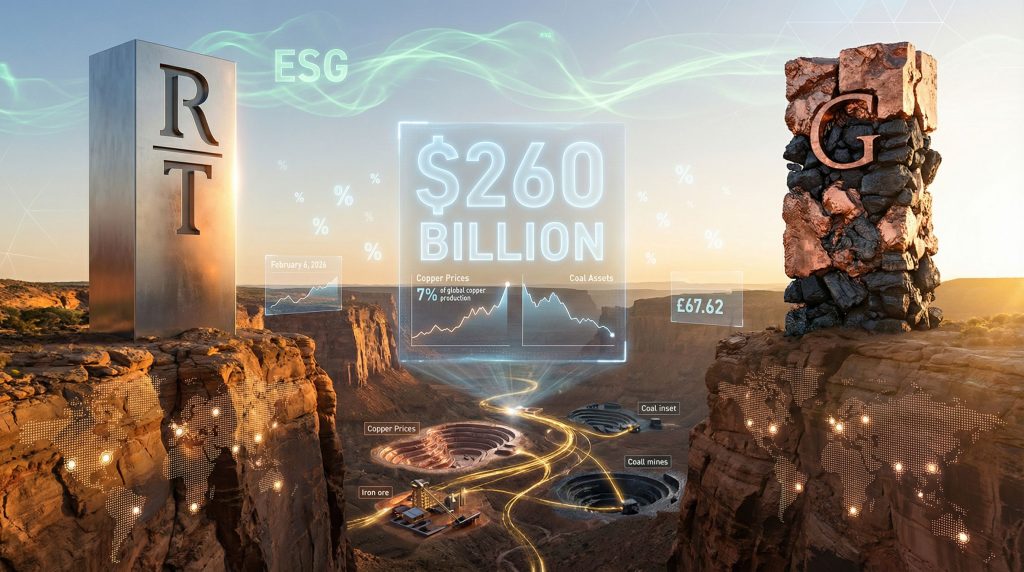
The US$75 billion proposed transaction would have created a combined entity with approximately $260 billion in market capitalisation, positioning the merged company as the world's largest mining operation. However, the breakdown revealed structural incompatibilities that extend beyond traditional valuation disagreements to encompass governance models, asset portfolios, and long-term strategic positioning in a rapidly transitioning global economy.
Contemporary mining mega-mergers face three critical convergence points: operational integration complexity, environmental, social, and governance (ESG) alignment requirements, and institutional investor mandate compatibility. In addition, the Rio Tinto-Glencore merger abandoned collapsed precisely because these convergence points created irreconcilable structural tensions rather than complementary strategic advantages.
Core Valuation Disagreements That Derailed Negotiations
Ownership Structure and Control Mechanisms
The primary negotiation breakdown centred on Glencore's demand for approximately 40% ownership in the combined entity, reflecting their assessment of diversified portfolio value and integrated trading capabilities. Rio Tinto's counter-proposal maintained traditional mining company leadership structures while offering ownership levels that Glencore considered insufficient compensation for their sophisticated commodity marketing operations and global logistics network.
This disagreement revealed fundamental differences in business model valuation methodologies. Glencore operates as an integrated mining and trading company, generating significant margins through commodity marketing, logistics optimisation, and end-customer relationship management. These trading spreads, typically representing 8-15% of gross profit on traded volumes, cannot be replicated by traditional production-focused mining companies lacking comparable infrastructure and market relationships.
Asset Valuation Methodology Conflicts
The valuation dispute encompassed multiple asset categories where the companies applied divergent methodological approaches:
| Asset Category | Rio Tinto Approach | Glencore Approach | Estimated Gap |
|---|---|---|---|
| Copper Operations | Standard DCF mining multiples | Trading-enhanced valuations | 15-25% |
| Coal Assets | ESG transition discount applied | Full cash flow valuation | 20-40% |
| Trading Operations | Minimal strategic premium | Core competitive advantage | 30-50% |
| Geographic Portfolio | Limited diversification value | Supply chain optimisation premium | 10-15% |
Rio Tinto's valuation methodology prioritised traditional discounted cash flow analysis incorporating current commodity prices, proven reserve life, and capital expenditure requirements. This approach includes modern ESG risk adjustments, particularly for carbon-intensive assets like thermal coal operations that face regulatory pressure and institutional investor divestment mandates.
Consequently, Glencore's valuation incorporated trading spreads and marketing premiums that reflect their ability to optimise commodity sales timing, manage counterparty risk, and capture value through logistics coordination. These capabilities generate consistent profit margins above base commodity prices, creating additional value that pure production companies cannot independently replicate.
Coal Asset Valuation Divergence
Glencore's coal operations generated 35% of 2024 EBITDA, creating fundamental valuation conflicts with Rio Tinto's publicly committed net-zero objectives. The disagreement encompassed three overlapping discount mechanisms:
Regulatory Discount Analysis:
• Carbon pricing mechanisms (EU ETS, UK carbon floor price) directly increase coal production costs
• Forward carbon price curves show systematic cost increases through 2030-2050 periods
• Coal operation cash flows decline systematically as carbon prices rise
Institutional Investor Discount Impact:
• Major institutional investors with over $10 trillion combined assets under management have adopted ESG screening criteria
• Coal exposure eliminates companies from investable universe for sustainability-focused funds
• Reduced shareholder base typically depresses valuations by 15-30%
Financing Cost Premium:
• Mining companies with coal exposure face higher debt financing costs
• Restricted access to ESG-linked credit facilities increases weighted average cost of capital
• Higher WACC reduces net present value calculations for coal cash flows
When big ASX news breaks, our subscribers know first
ESG Concerns Reshaping Mining Merger Dynamics
The Carbon Transition Incompatibility
The coal asset dilemma represents structural incompatibility between Glencore's diversified, cash-generative coal portfolio and Rio Tinto's institutional commitment to net-zero emissions targets. This extends beyond temporary valuation adjustments to fundamental business strategy misalignment affecting long-term stakeholder relationships and market positioning.
Rio Tinto's institutional investors and stakeholder base have endorsed specific net-zero commitments, making a 35% EBITDA contribution from thermal coal operationally and reputationally incompatible with disclosed sustainability objectives. The company faces increasing pressure from:
• Climate-focused shareholder resolutions requiring detailed transition planning
• ESG rating agency assessments that directly impact cost of capital
• Regulatory compliance requirements in multiple jurisdictions implementing carbon border adjustments
Moreover, the critical minerals transition continues to reshape investor expectations around mining portfolios.
Regulatory Policy Evolution Impact
Multiple jurisdictions have accelerated coal phase-out timelines, creating documented regulatory risk affecting asset valuations:
Germany's Accelerated Coal Phase-Out:
Germany announced complete coal power elimination by 2030, accelerated from the previous 2038 timeline. This policy directly affects seaborne thermal coal export markets, including volumes supplied by Glencore's Australian and African operations.
European Union Emissions Trading System Expansion:
The EU ETS has tightened cap levels consistently since 2005, with carbon prices reaching €80-90 per metric ton in 2024-2025. Forward curves indicate continued price increases through 2030, systematically increasing coal operation marginal costs.
UK Carbon Price Floor Mechanism:
Implemented in 2013, the UK maintains a carbon price floor incentivising fuel switching from coal to natural gas and renewable sources. This policy creates documented cost pressure on coal-fired power generation, reducing demand for thermal coal imports.
Institutional Investment Mandate Evolution
Major asset managers have implemented comprehensive coal divestment policies affecting the available investor base for companies with significant coal exposure:
BlackRock Coal Divestment Implementation:
BlackRock divested thermal coal investments in multiple tranches between 2022-2024, reducing exposure across actively managed and index funds. This divestment affects companies with over 25% revenue from thermal coal operations.
State Pension Fund Coal Restrictions:
• CalPERS (California Public Employees' Retirement System) established coal divestment commitments
• Ontario Teachers' Pension Plan implemented voting policies restricting coal investments
• Norway Government Pension Fund divested coal holdings exceeding specific revenue thresholds
Projected Combined Entity Strategic Advantages
Market Position and Scale Analysis
The proposed Rio Tinto-Glencore merger would have created unprecedented market positioning across critical mineral supply chains essential for global energy transition:
Combined Production Scale:
• 7% of global copper production – Critical for electric vehicle manufacturing and renewable energy infrastructure
• Dominant iron ore market position – Essential for steel production supporting infrastructure development
• Integrated battery materials portfolio – Strategic positioning for electric vehicle supply chain capture
• Sophisticated trading capabilities – Unique among major mining companies for margin optimisation
Vertical Integration Competitive Advantages
The merger would have unified Rio Tinto's production excellence with Glencore's market access capabilities, creating a comprehensive vertical integration model:
The combination would have merged Rio Tinto's low-cost, large-scale production capabilities with Glencore's sophisticated trading operations and commodity marketing expertise, creating unprecedented vertical integration across critical mineral supply chains.
Production Level Integration:
Rio Tinto's operational strengths include large-scale, low-cost copper, iron ore, and lithium mining operations with proven efficiency metrics and reserve replacement capabilities. Their Australian iron ore operations represent among the world's lowest-cost production with integrated rail and port infrastructure.
Trading and Marketing Integration:
Glencore's trading division handles marketing and logistics for both internal production and third-party merchant operations. This generates consistent trading margins through:
• Optimised sales timing capturing commodity price volatility
• Counterparty risk management across diverse customer base
• Working capital optimisation through inventory management
• End-customer relationship leverage for premium pricing
Battery Supply Chain Strategic Positioning
According to the International Energy Agency, global copper demand is projected to increase 60-80% by 2050 under net-zero scenarios, with electric vehicle production representing the fastest-growing demand sector. A combined Rio Tinto-Glencore would have controlled critical supply chain elements:
Copper Mining and Processing:
• Rio Tinto's Kennecott operation (Utah) – Large-scale copper production with expansion potential
• Glencore's African copper belt operations – Geographic diversification and processing capabilities
• Combined production optimisation reducing supply chain coordination costs
Lithium and Battery Materials:
• Rio Tinto's Jadar project (Serbia) – One of Europe's largest lithium deposits with integrated processing
• Combined logistics network enabling battery material supply chain integration
• Trading capabilities for battery material price optimisation and customer relationship management
However, these industry evolution trends continue to reshape how mining companies approach strategic partnerships.
Historical Context of Failed Mining Mega-Mergers
Pattern Analysis of Consolidation Attempts
The Rio Tinto-Glencore merger abandoned represents the fourth failed attempt since 2008, revealing consistent structural barriers preventing successful mining industry mega-mergers:
Timeline of Failed Negotiations:
-
2008-2010: Cultural integration concerns and operational philosophy conflicts
-
2014-2016: Leadership philosophy disagreements and geographic strategy misalignment
-
2022-2024: Premium valuation disputes during commodity price volatility
-
2025-2026: ESG alignment failures and control structure incompatibility
What Made This Attempt Different?
Unlike previous negotiations, the 2025-2026 discussions occurred against a backdrop of accelerated ESG adoption and regulatory changes. The failure was reported across major Australian financial media, with detailed coverage in The Sydney Morning Herald highlighting the complexity of modern mining mergers.
Regulatory Framework Complexity
UK takeover regulations created artificial constraints on negotiation duration and restart protocols, contributing to the February 2026 breakdown. The regulatory framework imposes:
Six-Month Cooling-Off Period:
UK regulations prevent renewed discussions between Rio Tinto and Glencore for six months following the February 6, 2026 termination announcement. This cooling-off period creates structured timeline constraints for potential future reconsideration.
Multiple Jurisdiction Approval Requirements:
• Australian Foreign Investment Review Board approval for Rio Tinto asset control changes
• UK Competition and Markets Authority assessment for market concentration impacts
• European Commission review under EU Merger Regulation for operations affecting European markets
• Various national mining regulatory approvals across operational jurisdictions
Shareholder Approval Complexity
Mining mega-mergers face unprecedented complexity in achieving shareholder approval across diverse investor bases with conflicting priorities:
Institutional Investor Heterogeneity:
• ESG-focused funds requiring coal divestment commitments before approval
• Value-oriented investors prioritising short-term cash flow optimisation
• Index funds with specific mandate restrictions on company concentration
• Sovereign wealth funds with geopolitical considerations affecting voting decisions
Market Impact and Alternative Strategic Pathways
Immediate Market Response Analysis
February 6, 2026 Trading Results:
• Rio Tinto: Declined 1% to £67.62 (London Stock Exchange)
• Glencore: Experienced profit-taking pressure amid sector-wide uncertainty
• Broader mining sector: Mixed reactions reflecting uncertainty about future consolidation possibilities
The limited market reaction indicates that investors had already discounted the probability of successful merger completion, suggesting that structural barriers were apparent throughout the negotiation process.
Rio Tinto Strategic Alternatives
Following the merger collapse, Rio Tinto faces several alternative pathways for achieving growth and diversification objectives:
Organic Copper Expansion Focus:
• Kennecott expansion (Utah) – Potential production increase through additional processing capacity
• Oyu Tolgoi optimisation (Mongolia) – Underground development completion and production ramp-up
• Resolution copper development (Arizona) – Subject to regulatory approval and stakeholder agreement
Selective Battery Materials Acquisitions:
• Lithium project acquisitions in stable jurisdictions (Australia, Canada, Chile)
• Nickel operation purchases supporting stainless steel and battery demand
• Rare earth element exploration partnerships for supply chain diversification
Enhanced ESG Positioning:
• Accelerated net-zero commitments attracting climate-focused institutional investment
• Renewable energy integration across mining operations reducing operational carbon intensity
• Community partnership enhancement improving social licence to operate
Glencore Strategic Response Options
Glencore's strategy following the merger collapse centres on leveraging their unique integrated trading model while addressing ESG concerns:
Copper Production Expansion to 1.6 Million Tons by 2035:
• African copper belt optimisation (Democratic Republic of Congo, Zambia)
• Technology upgrades improving recovery rates and reducing environmental impact
• Exploration investment for resource replacement and expansion
Trading Operation Enhancement:
• Digital operations improvements for commodity trading efficiency
• Customer relationship expansion in emerging markets
• Risk management sophistication through derivatives and hedging strategies
Selective Coal Asset Divestiture Strategy:
• ESG-compliant coal operation retention meeting institutional investor criteria
• Non-core coal asset disposal focusing on highest-margin operations
• Transition metal exploration replacing coal revenue with battery materials
Future Mining Consolidation Implications
Regulatory Environment Evolution
The Rio Tinto-Glencore merger abandoned demonstrates that regulatory frameworks have not adapted to accommodate the complexity of modern mining mega-mergers incorporating ESG considerations and multi-jurisdictional operations.
Required Regulatory Innovation:
• ESG integration frameworks for merger approval processes
• Cross-jurisdictional coordination reducing duplication and timeline uncertainty
• Stakeholder engagement protocols incorporating Indigenous and community perspectives
• Carbon transition compatibility assessments for long-term regulatory approval
Deal Structure Innovation Requirements
Future mining mega-mergers require innovative approaches addressing the structural barriers that prevented Rio Tinto-Glencore success:
Dual-Track Portfolio Approaches:
• ESG-compliant asset separation allowing different investor bases and regulatory treatment
• Traditional asset continuation maintaining cash flow during transition periods
• Staged integration models reducing cultural friction and operational complexity
Trading Operation Valuation Evolution:
• Sophisticated trading premium recognition reflecting commodity marketing capabilities as core strategic assets
• Risk-adjusted valuation models incorporating trading margin volatility and customer relationship sustainability
• Technology platform valuations recognising digital infrastructure competitive advantages
Lessons for Future Consolidation Attempts
Mining companies considering mega-merger strategies must address enhanced due diligence requirements across multiple dimensions:
Carbon Transition Pathway Compatibility:
• Detailed net-zero transition planning alignment between merger parties
• Coal asset phase-out coordination with institutional investor mandates
• Renewable energy integration strategies supporting operational decarbonisation
Stakeholder Alignment Assessment:
• Institutional investor mandate compatibility across ESG screening criteria
• Regulatory approval probability modelling incorporating multi-jurisdictional complexity
• Community and Indigenous consultation ensuring social licence continuation
Cultural Integration Planning:
• Leadership philosophy reconciliation between production-focused and trading-integrated approaches
• Operational integration sequencing minimising disruption during transition periods
• Technology platform consolidation optimising digital infrastructure capabilities
The next major ASX story will hit our subscribers first
Strategic Outlook and Market Implications
The collapse of the Rio Tinto-Glencore merger abandoned reflects broader industry tensions between traditional mining economics and evolving stakeholder expectations. Future consolidation success will depend on innovative deal structures that reconcile operational synergies with ESG requirements while addressing complex valuation challenges posed by diversified commodity portfolios in a transitioning global economy.
Critical Success Factors for Future Mining Mergers:
• ESG compatibility frameworks ensuring institutional investor mandate alignment
• Regulatory coordination mechanisms reducing approval timeline uncertainty
• Innovative valuation methodologies incorporating trading capabilities and transition asset risks
• Stakeholder engagement protocols addressing community and Indigenous perspectives
Market Structure Evolution Expectations:
The failed mega-merger indicates that mining industry consolidation will likely proceed through smaller-scale, strategic acquisitions rather than comprehensive combinations. Companies will focus on:
• Geographic diversification through targeted regional acquisitions
• Commodity specialisation in critical minerals supporting energy transition
• Technology integration partnerships rather than full corporate mergers
• ESG-aligned portfolio development attracting sustainability-focused investment
This analysis is based on publicly available information and industry reporting. Merger discussions and valuations involve complex proprietary analysis not fully disclosed by the companies involved. Readers should consult additional sources and professional advice for investment decisions related to mining sector consolidation.
Ready to Identify the Next Major Mineral Discovery?
Discovery Alert provides instant notifications on significant ASX mineral discoveries, powered by its proprietary Discovery IQ model, ensuring subscribers can capitalise on transformative opportunities before the broader market reacts. Explore how major mineral discoveries can generate substantial returns by visiting Discovery Alert's discoveries page and begin your 14-day free trial today to position yourself ahead of the market.