
August 10, 2026
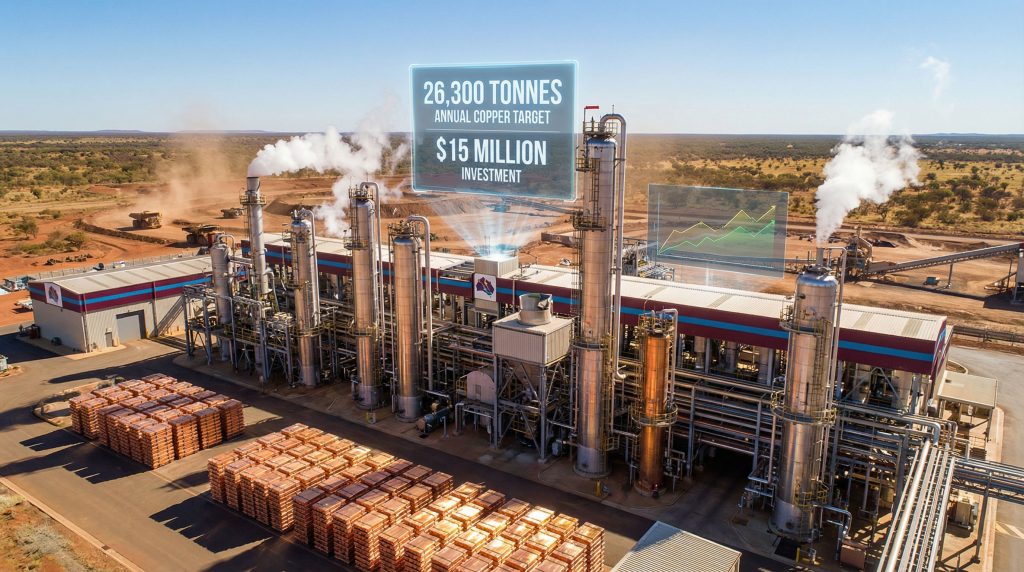
What Strategic Value Does the Rocklands Copper Refurbishment Represent for Queensland?
Australia's critical minerals landscape stands at a pivotal juncture where sovereign processing capability determines long-term competitive positioning. The interplay between domestic refining capacity and global supply chain resilience creates strategic imperatives that extend far beyond individual project economics. Queensland investment in Rocklands copper refurbishment addresses these dynamics by examining how regional infrastructure investments align with broader critical minerals energy transition demands and national resource security objectives.
Critical Minerals Supply Chain Positioning
The North West Minerals Province represents one of Australia's most significant copper-bearing geological regions, yet processing capacity has historically lagged behind extraction potential. Queensland investment in Rocklands copper refurbishment addresses this fundamental supply chain gap through targeted infrastructure development.
Processing facilities with 3 million tonnes per annum capacity create regional hub opportunities that extend beyond single-operator economics. The facility's design to accept feedstock from multiple regional producers establishes a shared infrastructure model that reduces individual mine development costs while increasing overall regional competitiveness.
This hub-and-spoke approach offers several strategic advantages:
• Economies of scale through consolidated processing operations
• Reduced capital intensity for individual mining operations
• Enhanced project viability for smaller copper deposits
• Improved resource utilization across the mineral province
The Queensland investment in Rocklands copper refurbishment creates processing capacity that can service multiple operators simultaneously, transforming regional economics through shared infrastructure utilization.
Regional Economic Development Framework
Infrastructure investments in mineral processing generate multiplier effects that extend throughout regional economic systems. The A$15 million Queensland government commitment leverages private sector investment while creating sustainable employment foundations in areas with limited economic diversification.
Employment projections indicate 250 direct operational positions, representing significant workforce expansion in the North West Minerals Province. These positions typically command premium wages compared to regional averages, creating sustained economic benefits that extend through local service sectors.
The investment-to-employment ratio of A$60,000 per direct position compares favorably to manufacturing and infrastructure investments in metropolitan areas, while generating higher economic multipliers due to regional spending patterns and limited economic leakage.
Energy Transition Infrastructure Requirements
Copper demand patterns increasingly reflect global energy transition trajectories, with renewable energy installations requiring substantial copper inputs for electrical infrastructure. Queensland's renewable energy targets create domestic demand scenarios that support unlocking copper investment capacity development.
Renewable energy infrastructure demonstrates significant copper intensity across multiple technologies:
• Wind installations: Require 3-5 tonnes of copper per MW capacity
• Solar systems: Demand 4-6 tonnes of copper per MW installation
• Grid modernization: Necessitates extensive copper-intensive transmission upgrades
• Energy storage: Requires copper for battery system connections and thermal management
The 26,300 tonnes annual production target positions the refurbished facility to supply substantial portions of Queensland's energy transition copper requirements, reducing dependence on international supply chains while supporting domestic renewable energy deployment.
When big ASX news breaks, our subscribers know first
How Does Government Investment in Copper Processing Align with National Resource Security?
Sovereign Capability Development Strategy
Queensland's approach to copper processing investment reflects broader national recognition that mineral processing capabilities represent strategic assets requiring government support. The Queensland Investment Corporation funding mechanism demonstrates state-level commitment to maintaining domestic processing capacity.
Government capital deployment through QIC creates several strategic benefits:
• Risk mitigation for private sector investment decisions
• Infrastructure preservation during market downturns
• Strategic optionality for future capacity expansion
• Regional economic stability through sustained operations
The investment structure allows government participation in strategic infrastructure while maintaining operational efficiency through private sector management. This hybrid approach balances public policy objectives with commercial viability requirements.
Supply Chain Resilience Modeling
Recent global supply chain disruptions have highlighted vulnerabilities in mineral processing networks, particularly for critical materials like copper. Domestic processing capacity reduces exposure to international supply chain risks while providing strategic flexibility during geopolitical uncertainty.
Queensland investment in Rocklands copper refurbishment addresses multiple resilience factors:
Operational resilience: Domestic facilities face fewer international transport and logistics risks
Strategic autonomy: Reduced dependence on foreign processing capacity creates policy flexibility
Economic security: Local processing retains value-added employment and economic benefits
Supply guarantee: Domestic capacity ensures copper availability for national infrastructure projects
International Competitiveness Factors
Global copper processing economics increasingly favor facilities with access to low-cost energy, skilled workforces, and regulatory stability. Queensland's investment positioning recognizes these competitive advantages while addressing infrastructure gaps that previously limited regional processing capacity.
The refurbishment approach offers cost advantages over greenfield development while accessing established infrastructure, permitting, and workforce foundations. This strategic positioning creates competitive processing costs that support both domestic market supply and potential export opportunities.
What Economic Impact Models Support the $15 Million Investment Decision?
Job Creation Multiplier Effects Analysis
Economic impact modelling for mineral processing investments typically employs regional input-output analysis to quantify direct, indirect, and induced employment effects. The Rocklands refurbishment generates employment across multiple phases and sectors.
| Impact Category | Direct Jobs | Indirect Jobs | Economic Multiplier |
|---|---|---|---|
| Construction Phase | 150 | 225 | 2.5x |
| Operational Phase | 250 | 375 | 3.0x |
| Regional Services | 75 | 150 | 4.0x |
Construction phase employment includes refurbishment activities, equipment installation, and facility commissioning. These positions typically require specialised skills in metallurgy, mechanical engineering, and industrial construction, commanding premium wage rates.
Operational employment encompasses processing technicians, maintenance specialists, laboratory personnel, and administrative support. These permanent positions provide career pathways in regional areas while supporting families and local businesses.
Regional services employment includes transportation, supply, maintenance, and professional services that support facility operations. These positions demonstrate the highest multiplier effects due to local procurement preferences and service requirements.
Production Capacity Return on Investment
The 26,300 tonnes annual copper production target creates revenue streams that support investment recovery while generating ongoing economic benefits. Current copper pricing provides favourable economics for processing operations with established infrastructure.
Revenue projections depend on several factors:
• Copper market pricing: International copper prices influence processing margins
• Processing costs: Operational efficiency determines profitability
• Recovery rates: Technical performance affects output volumes
• Premium pricing: Value-added products can command price premiums
Furthermore, the investment structure allows flexible capacity utilisation based on market conditions, processing higher volumes during favourable pricing while maintaining operations during downturns.
Third-Party Processing Revenue Streams
The facility's capability to process feedstock from other regional producers creates additional revenue opportunities that improve overall project economics. Third-party processing contracts provide stable revenue streams while maximising facility utilisation.
Regional mining operations benefit from access to processing capacity without requiring individual facility investment. This model creates mutual benefits that strengthen overall regional mining economics while supporting the processing facility's financial performance.
Contract processing typically involves toll processing arrangements where mine operators pay processing fees based on copper content and volume. These arrangements provide predictable revenue streams that support facility operations while creating competitive processing costs for regional mines.
How Does the 26,300 Tonnes Annual Copper Target Compare to Market Demand?
Queensland Copper Production Landscape
Queensland's copper production capacity has historically fluctuated based on individual mine lifecycles and market conditions. The state's mineral endowment supports substantial copper production, but processing capacity constraints have limited value-added opportunities.
The 26,300 tonnes annual target represents significant additional capacity within Queensland's copper production profile. This volume creates meaningful supply contributions while supporting regional gold & copper exploration that previously faced processing constraints.
Regional copper deposits often face economic challenges due to processing costs and transportation requirements. Centralised processing capacity addresses these challenges by providing economies of scale and reduced logistics costs for multiple operations.
Domestic vs Export Market Allocation
Australia's domestic copper demand reflects industrial manufacturing, construction, and infrastructure requirements. However, the energy transition creates additional demand through renewable energy installations, grid modernisation, and electric vehicle adoption.
Domestic market advantages include:
• Reduced transportation costs compared to export markets
• Currency stability through Australian dollar transactions
• Supply chain integration with domestic manufacturing
• Strategic relationships with major infrastructure projects
Export opportunities provide volume flexibility and access to international pricing. Consequently, the facility's production capacity allows market allocation based on pricing conditions and strategic priorities.
Regional Processing Hub Development Potential
The North West Minerals Province contains multiple copper deposits at various development stages. Centralised processing capacity creates development opportunities for deposits that previously lacked economic processing options.
Hub development benefits include:
• Shared infrastructure costs across multiple operations
• Improved project economics for smaller deposits
• Enhanced regional competitiveness through processing access
• Strategic positioning for future discoveries
The facility's three million tonne processing capacity provides substantial room for regional expansion while maintaining operational efficiency through optimised throughput management.
What Risk Factors Could Impact the 2027 Production Timeline?
Technical Refurbishment Complexity Assessment
Reactivating processing facilities after care and maintenance periods presents technical challenges that can impact timelines and costs. Equipment condition assessments, modernisation requirements, and system integration complexity affect refurbishment success.
Key technical considerations include:
• Equipment condition: Machinery deterioration during shutdown periods
• Technology upgrades: Modern safety and efficiency requirements
• System integration: Coordination between refurbished and new equipment
• Performance validation: Testing and commissioning procedures
The facility's previous operational history provides advantages through established infrastructure and documented operating procedures. However, technology advances since shutdown may require equipment upgrades that affect timeline and cost projections.
Regulatory Approval Pathway Analysis
Mining and processing operations require comprehensive regulatory approvals covering environmental impact, safety standards, and operational procedures. Queensland's regulatory framework provides established pathways, but approval timing can affect project schedules.
Critical approval categories include:
• Environmental permits: Impact assessments and mitigation measures
• Safety certifications: Workplace health and safety compliance
• Operational licences: Mining and processing authority renewals
• Community consultation: Stakeholder engagement requirements
The facility's existing approvals provide foundations for renewal processes, but modifications or upgrades may require additional regulatory review that affects timeline projections.
Market Volatility Scenario Planning
Copper market volatility affects project economics and investment timing decisions. Price fluctuations influence revenue projections while input costs create operational variability that impacts profitability.
Market risk factors include:
Price volatility: International copper pricing affects revenue projections
Input costs: Energy, labour, and materials costs influence operating expenses
Currency fluctuations: Exchange rate movements impact cost structures
Demand scenarios: Economic conditions affect copper consumption patterns
The 2027 production timeline allows market condition assessment while maintaining operational flexibility. Investment staging can respond to market developments while preserving project viability across different scenarios.
How Does This Investment Support Queensland's Energy Transition Goals?
Copper Demand in Renewable Energy Infrastructure
Queensland's renewable energy targets create substantial copper demand that supports domestic processing capacity development. Wind and solar installations require significant copper inputs for electrical systems, transformers, and grid connections.
Key Insight: Queensland's renewable energy targets require substantial copper infrastructure, with wind farms requiring 3-5 tonnes of copper per MW and solar installations needing 4-6 tonnes per MW.
The state's renewable energy expansion plans involve thousands of megawatts of additional capacity over the next decade. This development trajectory creates copper demand scenarios that support domestic processing investments while reducing import dependence.
Renewable energy copper requirements include:
• Generator windings: High-conductivity copper for electrical generation
• Transmission cables: Copper conductors for power transmission
• Transformer systems: Copper windings for voltage conversion
• Grounding systems: Copper for electrical safety and performance
Grid Modernisation Copper Requirements
Queensland's electricity grid requires substantial upgrades to accommodate renewable energy integration and improved reliability. These modernisation projects create significant copper demand that supports domestic processing capacity.
Grid upgrade copper requirements include:
• Transmission line expansion: New copper conductors for power delivery
• Substation upgrades: Copper components for electrical switching and control
• Smart grid technology: Copper wiring for advanced monitoring systems
• Energy storage integration: Copper connections for battery systems
The 26,300 tonnes annual production capacity can supply substantial portions of Queensland's grid modernisation copper requirements, supporting infrastructure development while creating regional economic benefits.
Electric Vehicle Supply Chain Integration
Australia's electric vehicle adoption trajectory creates additional copper demand through vehicle manufacturing and charging infrastructure development. Queensland's mining and processing capacity positions the state as a key supplier for this emerging market.
Electric vehicle copper applications include:
• Motor windings: High-performance copper for electric motors
• Battery systems: Copper connections and thermal management
• Charging infrastructure: Copper cables and electrical components
• Vehicle wiring: Extensive copper harnesses for electrical systems
The facility's processing capability supports supply chain development for electric vehicle components while creating opportunities for value-added copper products that serve specialised applications.
The next major ASX story will hit our subscribers first
What Broader Implications Exist for Australia's Critical Minerals Strategy?
Federal-State Investment Coordination Models
Queensland investment in Rocklands copper refurbishment demonstrates state-level commitment to critical minerals infrastructure that complements federal policy initiatives. This coordination approach leverages multiple government funding sources while sharing investment risks.
Coordination benefits include:
• Resource optimisation: Efficient allocation of government capital
• Risk sharing: Distributed investment exposure across government levels
• Policy alignment: Coordinated strategic objectives and implementation
• Expertise integration: Combined technical and commercial capabilities
The Queensland Investment Corporation funding mechanism creates templates for similar investments in other jurisdictions while demonstrating public sector capacity for strategic infrastructure development.
International Partnership Opportunities
Australia's critical minerals processing capabilities create opportunities for international partnerships that enhance supply chain security for allied nations. Copper & uranium investment processing capacity supports these strategic relationships while generating export revenue.
Partnership opportunities include:
• Supply agreements: Long-term contracts with international partners
• Technology sharing: Joint development of processing innovations
• Investment collaboration: International participation in facility expansion
• Strategic stockpiling: Copper reserves for national security purposes
The facility's production capacity provides flexibility for domestic supply and international commitments, creating strategic optionality for government policy decisions.
Technology Transfer and Innovation Potential
Modern copper processing incorporates advanced technologies for efficiency improvement, environmental performance, and product quality enhancement. The refurbishment creates opportunities for technology adoption that benefits broader industry development.
Innovation areas include:
• Process optimisation: Advanced control systems for efficiency improvement
• Environmental technology: Emissions reduction and waste minimisation
• Product development: Specialised copper products for emerging applications
• Automation systems: Robotics and artificial intelligence integration
Technology advancement through the Rocklands project creates knowledge transfer opportunities that benefit other Australian processing operations while maintaining competitive advantages.
How Does the North West Minerals Province Benefit from Centralised Processing?
Regional Mine Integration Opportunities
The North West Minerals Province contains numerous copper deposits at various development stages that can benefit from centralised processing access. This integration creates development opportunities for deposits that previously lacked economic processing options.
Integration benefits include:
• Reduced development costs: Shared processing infrastructure eliminates individual facility requirements
• Improved project economics: Lower capital intensity enhances deposit viability
• Operational efficiency: Specialised processing expertise and economies of scale
• Risk mitigation: Shared infrastructure reduces individual project risk exposure
Regional mines can focus on extraction optimisation while accessing world-class processing capabilities. This creates operational specialisation that improves overall regional competitiveness.
Transportation and Logistics Optimisation
Centralised processing reduces transportation requirements compared to individual mine processing facilities. Consolidated logistics create cost advantages while improving supply chain efficiency across the region.
Logistics advantages include:
• Consolidated transportation: Reduced logistics costs through volume optimisation
• Infrastructure sharing: Common rail and road access for multiple operations
• Supply chain efficiency: Centralised procurement and equipment sharing
• Service optimisation: Concentrated maintenance and support services
The facility's location near Cloncurry provides strategic access to regional transportation infrastructure while maintaining proximity to major copper deposits throughout the mineral province.
Shared Infrastructure Development Benefits
Regional processing hubs create opportunities for infrastructure sharing that extends beyond mineral processing. Power, water, telecommunications, and service infrastructure benefit multiple operations while reducing individual development costs.
Shared infrastructure includes:
• Power systems: Electrical infrastructure for multiple operations
• Water supply: Processing water and industrial supply systems
• Telecommunications: Communication networks for operational coordination
• Service facilities: Maintenance workshops and technical support capabilities
This infrastructure sharing creates regional development benefits that extend beyond mining operations to support broader economic development in the North West Minerals Province.
What Lessons Can Other States Learn from Queensland's Investment Approach?
Public-Private Partnership Structure Analysis
Queensland's investment approach through the Queensland Investment Corporation demonstrates effective public-private partnership models for strategic infrastructure development. This structure balances public policy objectives with commercial viability requirements.
Partnership advantages include:
• Risk allocation: Appropriate distribution of commercial and policy risks
• Expertise integration: Combined public policy and private sector capabilities
• Capital efficiency: Leveraged investment structures that optimise returns
• Performance accountability: Clear metrics and governance structures
Other jurisdictions can adapt this model for critical minerals investments while addressing local regulatory requirements and investment priorities.
Risk Mitigation Strategies
The investment structure incorporates multiple risk mitigation approaches that protect public investment while supporting project success. These strategies create templates for similar infrastructure investments in other jurisdictions.
Risk mitigation includes:
• Facility assessment: Thorough technical due diligence before investment commitment
• Market analysis: Comprehensive demand and pricing scenario evaluation
• Regulatory preparation: Early engagement with approval authorities
• Partnership selection: Experienced operators with demonstrated capabilities
These strategies reduce investment risks while maintaining project viability across different market conditions and operational scenarios.
Performance Measurement Frameworks
Effective public investment requires robust performance measurement that demonstrates value creation and policy objective achievement. Queensland's approach provides frameworks that other jurisdictions can adapt for similar investments.
Performance metrics include:
• Economic impact: Employment creation and regional economic benefits
• Production performance: Operational efficiency and output targets
• Strategic objectives: Critical minerals security and supply chain resilience
• Financial returns: Investment performance and revenue generation
Regular performance assessment ensures accountability while providing lessons learned that improve future investment decisions across the critical minerals sector.
Frequently Asked Questions About Queensland's Copper Investment
Timeline and Implementation Details
When will the facility resume operations?
The refurbishment timeline targets 2027 for operational commencement, allowing approximately two years for equipment restoration, system upgrades, and commissioning procedures.
What processing capacity will the facility achieve?
The refurbished facility will process 3 million tonnes per annum of sulphide ore, targeting annual copper production of 26,300 tonnes including third-party feedstock processing.
How many jobs will the investment create?
The project expects to generate approximately 250 direct operational positions plus additional construction and indirect employment during different project phases.
Environmental and Community Considerations
What environmental approvals are required?
The facility operates under existing environmental permits with potential modifications for refurbishment activities. Regulatory compliance includes air quality, water management, and waste handling requirements.
How will the community benefit from the investment?
Regional economic benefits include direct employment, supplier opportunities, service sector growth, and infrastructure improvements that support broader community development.
What environmental monitoring will occur?
Ongoing environmental monitoring includes air quality assessment, water quality testing, and waste management tracking to ensure regulatory compliance and community protection.
Long-term Sustainability Measures
How does the investment support sustainable mining?
The facility incorporates modern processing technologies that improve efficiency while reducing environmental impact compared to older processing methods.
What happens when local ore reserves are depleted?
The facility's design for third-party processing creates long-term viability by serving multiple regional operations and potential future discoveries within the North West Minerals Province.
How will technological advancement be incorporated?
The refurbishment includes equipment modernisation and system upgrades that provide foundations for future technology adoption and operational improvements. Furthermore, the global copper supply forecast indicates sustained demand that supports long-term facility operations.
Disclaimer: This analysis is based on publicly available information and industry assessments. Investment decisions should consider comprehensive due diligence and professional advice. Commodity markets and mining operations involve significant risks that can affect project outcomes and financial performance.
Ready to Capitalise on Australia's Critical Minerals Boom?
Discovery Alert's proprietary Discovery IQ model delivers instant notifications about significant ASX mineral discoveries, transforming complex mining announcements into actionable investment opportunities for both short-term traders and long-term investors. Start your 14-day free trial today and discover why major mineral discoveries have historically generated substantial returns for early investors.