
July 21, 2026
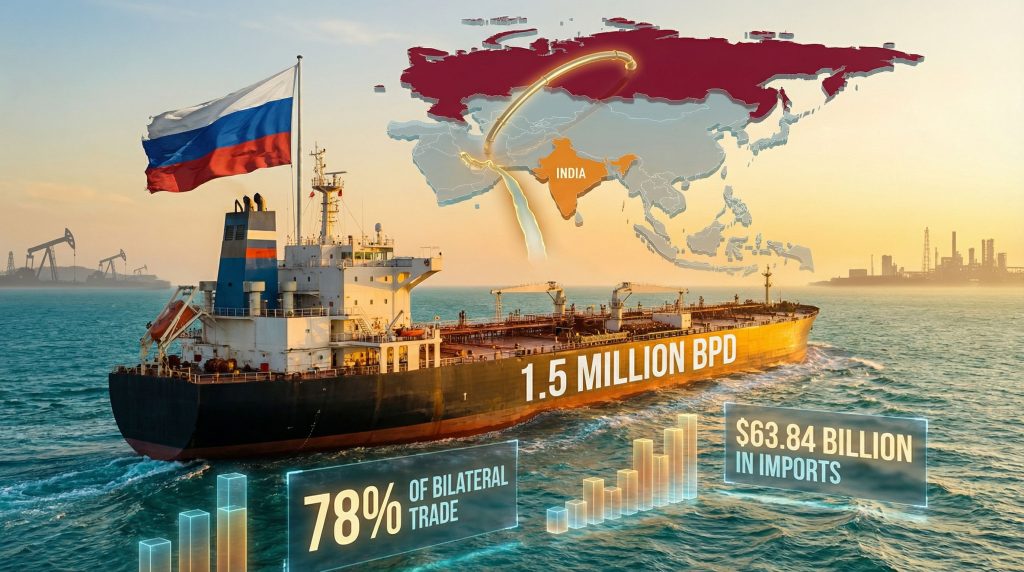
Russia's expanding energy relationship with India represents a critical component of global supply chain adaptation amid escalating Middle Eastern tensions. The Russia oil supply to India has become increasingly strategic as traditional supply routes face disruption, creating opportunities for alternative sourcing arrangements that reshape international energy markets. Furthermore, these developments occur against a backdrop of broader geopolitical realignments affecting energy security calculations worldwide.
Strategic Foundations of Russia's Energy Export Expansion
Russia's positioning as a flexible crude supplier stems from fundamental shifts in global energy architecture following 2022. Moscow's pivot toward Asian markets represents more than tactical adaptation; it reflects long-term strategic reorientation driven by sanctions-induced market restructuring. The country's willingness to expand oil deliveries to India builds on established infrastructure and proven logistical capabilities that can accommodate increased volumes without significant lead times.
Current supply arrangements demonstrate this flexibility in practice. Russia delivers approximately 1.5 million barrels per day of crude to Indian refineries, establishing it as India's second-largest supplier after traditional Middle Eastern sources. This volume represents substantial market penetration achieved within a compressed timeframe, indicating both Russian production capacity and Indian refinery compatibility with Russian crude grades.
The strategic value extends beyond immediate commercial transactions. Russian Deputy Prime Minister Alexander Novak's confirmation of readiness to increase supplies underscores Moscow's commitment to Asian market development. This positioning offers Russia revenue diversification away from European markets while providing Asian buyers with alternative supply sources during regional disruptions.
Infrastructure capabilities support expanded delivery scenarios. Nearly 9.5 million barrels of Russian crude currently transit waters near Indian facilities, positioned for rapid deployment to refineries within weeks rather than months. This proximity advantage reduces transportation costs and delivery risks compared to alternative suppliers operating from greater distances.
Economic Incentives Behind Supply Flexibility
Russian crude pricing strategies create compelling economic incentives for expanded Indian imports. Market dynamics following sanctions implementation typically show Russian grades trading at discounts to international benchmarks, though specific spreads fluctuate based on shipping constraints, payment mechanisms, and demand patterns from available buyers.
In addition, currency arrangements add another layer of economic attraction. Rupee-ruble settlement mechanisms reduce foreign exchange exposure for Indian buyers while providing Russia with alternative currency revenues. These bilateral payment structures circumvent traditional dollar-denominated transactions, offering both parties insulation from Western financial system restrictions.
Transportation economics favor northern routes for Russian deliveries. Shipping distances from Russian export terminals to Indian ports compare favorably against traditional Middle Eastern routes, particularly when factoring in potential chokepoint delays or routing diversions. These logistics advantages translate into reduced per-barrel transportation costs that enhance overall supply economics.
Refinery compatibility represents a crucial technical factor. Indian processing facilities have demonstrated ability to handle Russian crude grades including Urals and ESPO varieties. This compatibility eliminates costly refinery modifications or blending requirements that might otherwise constrain supply relationships.
When big ASX news breaks, our subscribers know first
Middle Eastern Chokepoint Vulnerabilities and Supply Chain Impacts
The Strait of Hormuz emerges as the critical vulnerability in India's energy security equation. Approximately 40% of India's crude imports transit this narrow waterway, creating concentrated exposure to disruption risks that extend far beyond regional political tensions. Iranian capacity to restrict vessel passage directly impacts Indian energy costs and supply reliability.
Current blockade activities demonstrate these vulnerabilities in real-time. Iranian authorities reportedly restrict passage for vessels associated with the United States, Israel, and European nations, creating selective barriers that complicate global shipping patterns. These restrictions force cargo diversions, extend delivery timelines, and increase transportation insurance costs.
Table: India's Chokepoint Exposure Analysis
| Route | Import Volume (%) | Primary Risk Factors | Alternative Options |
|---|---|---|---|
| Strait of Hormuz | 40% | Iranian blockades, military conflict | Cape of Good Hope routing |
| Suez Canal | 15% | Egyptian policy, canal capacity | Red Sea alternatives |
| Direct Atlantic | 25% | Weather, piracy | Multiple routing options |
| Northern Routes | 20% | Seasonal ice, infrastructure | Year-round availability |
Supply chain adaptation requires fundamental restructuring of import logistics. Alternative routing through the Cape of Good Hope adds approximately 14-21 days to delivery schedules while increasing per-barrel transportation costs by $2-4 depending on vessel type and charter rates. These extensions strain inventory management systems and increase working capital requirements for refineries.
Strategic petroleum reserves become critical buffers during extended disruptions. India's current reserve capacity covers approximately 9.5 days of imports, requiring careful management during prolonged chokepoint closures. Reserve utilisation must balance immediate supply needs against potential longer-term disruption scenarios.
Regional Diversification Imperatives
Geographic diversification emerges as the primary risk mitigation strategy for sustained energy security. Russian supplies offer northern routing options that bypass traditional Middle Eastern chokepoints entirely, reducing exposure to Hormuz-related disruptions while maintaining competitive pricing structures. For instance, these patterns align with broader Saudi exploration licenses developments that reshape regional supply dynamics.
American export capacity represents another diversification option, though with different risk-reward characteristics. Current US crude exports to India total approximately 10.55 million tonnes annually, with potential for expansion based on domestic production levels and export infrastructure capacity. However, US supplies typically command premium pricing compared to discounted Russian alternatives.
Venezuelan production adds complexity to hemispheric supply calculations. Combined US-Venezuela export potential reaches approximately 13.53 million tonnes maximum, though Venezuelan contributions remain constrained by domestic infrastructure limitations and sanctions considerations that affect financing and technology access.
African suppliers present additional diversification opportunities through Atlantic Basin routing. Nigerian, Angolan, and other West African crudes offer quality characteristics suited to Indian refinery specifications while avoiding Middle Eastern political risks entirely.
What Economic Drivers Shape India's Energy Import Strategy?
India's energy procurement decisions reflect sophisticated cost-benefit analysis that balances immediate price advantages against longer-term supply security considerations. The bilateral trade relationship with Russia illustrates these dynamics, with energy imports dominating commercial exchanges between the two countries.
Trade balance data reveals energy import dominance:
- Russian imports to India: $63.84 billion (2024-25)
- Indian exports to Russia: $4.88 billion (2024-25)
- Energy's share of bilateral trade: Approximately 78%
These figures demonstrate India's substantial financial commitment to Russian energy purchases while highlighting limited export reciprocity. The trade imbalance reflects India's position as an energy consumer rather than a balanced commercial partner, creating potential political economy tensions that require diplomatic management.
Consequently, the Russia oil supply to India becomes a central element in this economic relationship. As reported by The Hindu, recent developments include strategic waivers allowing continued energy cooperation despite international sanctions pressures.
Refinery Economics and Processing Margins
Indian refinery operations benefit from crude slate optimisation that maximises processing margins through strategic feedstock selection. Russian crude compatibility with existing refinery configurations eliminates costly infrastructure modifications while enabling efficient production of petroleum products suited to domestic demand patterns.
Processing margin analysis incorporates multiple variables including crude acquisition costs, product yield patterns, domestic pricing structures, and export opportunities for surplus production. Russian crude's discount pricing historically provided margin advantages that offset any quality differentials compared to traditional Middle Eastern supplies.
Refinery utilisation rates respond to crude availability and pricing dynamics. Facilities processing Russian crude demonstrate operational efficiency metrics comparable to those handling Middle Eastern feedstocks, indicating minimal technical constraints that might limit expanded Russian imports during supply disruptions elsewhere.
Transportation cost differentials significantly impact delivered crude economics. Northern routing for Russian supplies reduces shipping distances compared to Middle Eastern alternatives, particularly when accounting for potential Hormuz transit delays or alternative routing requirements during regional tensions.
US-India Energy Partnership Competitive Dynamics
American energy diplomacy positions US crude exports as superior alternatives to Russian supplies, emphasising reliability, quality, and strategic partnership benefits. US Deputy Secretary of State Christopher Landau's advocacy for American energy sources reflects broader competition for Indian energy market share among global suppliers.
Current US export capacity to India demonstrates significant growth potential from existing levels. American crude deliveries of 10.55 million tonnes annually represent substantial volume but remain below theoretical maximum capacity based on US production levels and export infrastructure availability.
America First policy implications create nuanced dynamics for energy trade relationships. Landau's clarification that the approach involves mutual benefit rather than isolationism suggests potential for expanded energy cooperation while maintaining competitive commercial terms rather than concessionary pricing.
Strategic Partnership Considerations
Technology transfer opportunities accompany traditional energy trade relationships, particularly in renewable energy development and upstream exploration technologies. US companies offer advanced extraction techniques, environmental management systems, and digital optimisation platforms that enhance long-term energy sector development.
Investment frameworks enable capital deployment beyond immediate commodity transactions. American energy companies can contribute to Indian upstream exploration projects, refinery modernisation programs, and renewable energy infrastructure development through direct investment or technology licensing arrangements.
Bilateral trade negotiations address broader economic relationships beyond energy commodities alone. Comprehensive trade agreements can incorporate energy security provisions alongside intellectual property protections, market access improvements, and investment facilitation measures that strengthen overall commercial ties.
Price competitiveness remains a fundamental challenge for US energy exports competing against discounted Russian alternatives. American crude typically trades at premium levels compared to sanctions-affected Russian supplies, requiring value proposition arguments based on reliability, quality, and strategic partnership benefits rather than pure cost advantages.
How Do Geopolitical Implications Affect Energy Alliance Shifts?
Regional power dynamics evolve as energy trade patterns adapt to sanctions frameworks and political alignments. China's substantial Russian crude imports of approximately 1.86 million barrels per day seaborne demonstrate large-scale energy relationship development that parallels India's own procurement strategies from Russian sources.
India's strategic autonomy approach enables energy procurement decisions based primarily on economic and security considerations rather than political alignment requirements. This flexibility allows simultaneous engagement with Russian, American, and Middle Eastern suppliers while avoiding exclusive dependency on any single source or political bloc.
BRICS energy cooperation mechanisms provide institutional frameworks for alternative energy trade arrangements among member countries. These platforms can facilitate payment system development, technical cooperation programs, and coordinated responses to external sanctions pressure that affects member country energy security.
However, these developments occur within broader market contexts, including OPEC production impact considerations and oil price easing trends that influence global energy pricing structures.
Alternative Payment System Development
Financial system innovations enable energy trade outside traditional Western-controlled banking networks. Rupee-ruble settlement mechanisms demonstrate bilateral payment alternatives that reduce dollar dependency while maintaining commercial transaction efficiency for large-volume energy trades.
Currency diversification strategies extend beyond bilateral arrangements to include multilateral payment systems among emerging market economies. These mechanisms provide insulation against sanctions pressure while enabling continued energy commerce based on commercial rather than political criteria.
Central bank coordination facilitates alternative payment infrastructure development through technical cooperation and regulatory alignment. Joint development of clearing mechanisms, settlement procedures, and foreign exchange risk management tools supports expanded energy trade outside traditional financial frameworks.
Sanctions Impact and Market Structure Adaptations
Regulatory compliance challenges create complex operational requirements for companies involved in Russian energy trade. EU sanctions on Russian oil products affect Indian refineries processing Russian crude into refined products potentially destined for European markets, requiring careful supply chain management and documentation procedures.
US secondary sanctions targeting Russian energy companies create additional compliance layers that affect financing, insurance, and shipping arrangements for crude oil transactions. These restrictions require alternative service providers and financing mechanisms that can operate outside sanctioned entity networks.
Furthermore, these sanctions intersect with broader trade war oil impacts that complicate international energy commerce. According to Times of India, recent supply disruptions have highlighted the strategic importance of diversified energy relationships amid ongoing geopolitical tensions.
Shadow Fleet Operations and Market Adaptations
Maritime shipping adaptations enable continued Russian crude exports despite Western sanctions on traditional shipping and insurance providers. Alternative vessel operators, insurance arrangements, and port facilities accommodate Russian crude movements while maintaining commercial viability for energy transactions.
Price discovery mechanisms adapt to constrained market conditions through alternative trading platforms and pricing benchmarks. Traditional price reporting agencies adjust methodologies to account for sanctions-affected trade flows while maintaining market transparency and price formation efficiency.
Quality differentials and blending strategies enable refineries to optimise crude slate management despite supply source limitations. Technical expertise in crude blending allows processing of varied feedstock combinations while maintaining product quality standards and production efficiency metrics.
Storage and inventory management strategies accommodate supply uncertainty through strategic reserve accumulation and flexible delivery scheduling. Extended storage capacity provides operational buffers that enable continued refinery operations during temporary supply disruptions or transport delays.
The next major ASX story will hit our subscribers first
Investment Opportunities in Energy Infrastructure Development
Port capacity expansion requirements support diversified crude import strategies through enhanced receiving facilities for multiple supplier sources. Investment in specialised crude handling equipment, storage tank capacity, and pipeline connectivity enables operational flexibility for varied supply scenarios.
Pipeline infrastructure development connects import terminals with inland refineries through dedicated crude transportation systems. These investments reduce transportation costs while providing supply security benefits through redundant routing options and reduced dependence on coastal processing facilities.
In addition, these infrastructure developments must consider broader energy export challenges that affect regional energy trade patterns and investment priorities.
Technology Integration and Digital Optimisation
Digital supply chain management systems optimise crude procurement decisions through real-time market analysis, logistics coordination, and inventory management. Advanced analytics platforms enable dynamic sourcing strategies that respond to price fluctuations, supply availability, and geopolitical developments affecting energy markets.
Alternative energy integration complements fossil fuel supply security through diversified energy portfolio development. Renewable energy investments reduce overall fossil fuel dependency while providing long-term energy cost stability and environmental compliance benefits.
Refinery modernisation programs enhance processing flexibility through advanced conversion technologies that maximise product yield from varied crude feedstock sources. These investments improve economic returns while reducing environmental impact through improved efficiency and emissions control systems.
Future Energy Trade Pattern Evolution
Demand projection analysis indicates continued growth in Indian crude import requirements driven by economic expansion and industrial development. Projected import needs of 5.5 million barrels per day by 2030 require substantial supply source diversification and infrastructure development to maintain energy security during periods of regional instability.
Economic growth correlation with energy consumption suggests sustained crude import growth despite renewable energy development and efficiency improvements in transportation and industrial sectors. Petrochemical feedstock demand provides additional consumption drivers beyond traditional fuel requirements.
Supply Source Optimisation Strategies
Optimal supplier mix balances cost, reliability, and political risk considerations through diversified sourcing arrangements with multiple regional suppliers. Portfolio management approaches enable dynamic adjustment of supply source percentages based on market conditions, political developments, and infrastructure availability.
Contract structure flexibility accommodates market volatility through hybrid arrangements combining long-term supply agreements with spot market purchases. These structures provide price stability benefits while maintaining procurement flexibility during periods of market disruption or unusual supply availability.
Strategic reserve optimisation determines appropriate inventory levels for different supply disruption scenarios while balancing storage costs against security benefits. Reserve management strategies incorporate multiple crude grades and storage locations to maximise operational flexibility during supply emergencies.
Risk Management Framework for Energy Security
Supply diversification frameworks establish systematic approaches to supplier evaluation, contract negotiation, and relationship management across multiple energy sources. These frameworks incorporate quantitative risk assessment methodologies that evaluate political risk, transportation security, and commercial reliability factors for each potential supplier.
Financial risk mitigation encompasses currency hedging strategies, price volatility management, and alternative payment mechanism development. Comprehensive risk management addresses both short-term market fluctuations and longer-term structural changes in global energy trade patterns resulting from geopolitical developments.
Key Risk Management Components:
- Currency exposure hedging through forward contracts and swap arrangements
- Price volatility management via derivatives and physical inventory strategies
- Transportation risk mitigation through multiple routing options and insurance coverage
- Political risk assessment incorporating scenario planning and contingency preparation
- Infrastructure redundancy development for critical import and processing facilities
Alternative energy development acceleration provides long-term risk mitigation through reduced fossil fuel dependency and domestic energy resource utilisation. Renewable energy investments create energy security benefits while supporting environmental objectives and reducing exposure to volatile fossil fuel markets.
Trade finance optimisation enables continued energy imports despite banking sector constraints through alternative financing mechanisms, payment systems, and credit arrangements that operate independently of traditional Western financial infrastructure.
Consequently, the Russia oil supply to India represents more than a simple commercial transaction; it embodies strategic adaptation to evolving global energy architecture. These arrangements demonstrate how emerging economies navigate complex geopolitical pressures while maintaining energy security through diversified sourcing strategies and innovative financial mechanisms.
This analysis reflects current market conditions and geopolitical developments as of March 2026. Energy market dynamics and political relationships evolve continuously, requiring ongoing assessment and strategic adaptation. Investment and policy decisions should incorporate comprehensive risk evaluation and professional advisory input.
Ready to capitalise on global energy market disruptions?
Discovery Alert's proprietary Discovery IQ model provides instant notifications on significant ASX mineral discoveries, including energy and critical commodity sectors that benefit from geopolitical supply chain shifts. Subscribers gain immediate access to actionable trading opportunities as market dynamics reshape resource valuations, positioning themselves ahead of broader market recognition. Begin your 14-day free trial today to secure your competitive advantage in rapidly evolving commodity markets.