June 2, 2026
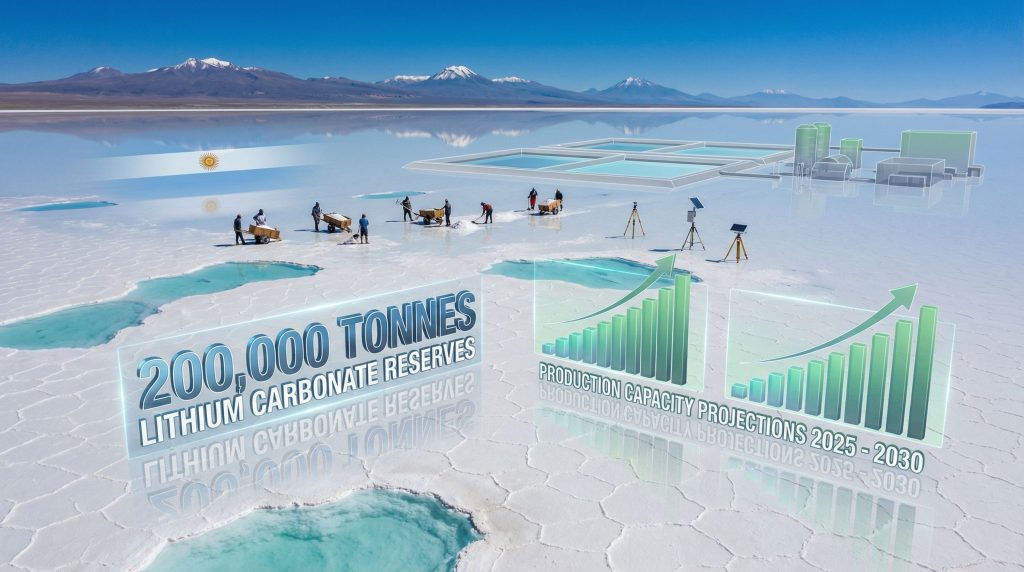
The Salinas Grandes Salt Flat mining project represents a critical component within Argentina's expanding lithium sector, driven by unprecedented global demand for electric vehicle batteries. Furthermore, the intersection of geopolitical supply chain vulnerabilities, environmental constraints, and indigenous land rights creates complex investment scenarios across South America's mineral-rich regions. Within this dynamic landscape, Argentina lithium insights reveal both extraordinary opportunities and multifaceted challenges for strategic resource development.
Geographic Positioning Within Argentina's Lithium Triangle
The Salinas Grandes Salt Flat mining project occupies a strategically vital position within Argentina's portion of the Lithium Triangle, spanning portions of both Jujuy and Salta provinces at elevations between 3,400-3,450 meters above sea level. This positioning places the project within one of the world's most concentrated lithium resource corridors, where Argentina holds approximately 19 million tonnes of lithium carbonate equivalent reserves according to United States Geological Survey assessments.
The project benefits from proximity to National Route 52, providing direct access to established transportation networks connecting the region to Chile's port of Antofagasta approximately 700 kilometers away. This infrastructure advantage reduces logistics costs compared to greenfield operations requiring new road construction through remote terrain.
Argentina's position as the world's second-largest lithium reserve holder positions Salinas Grandes within a broader national strategy to capture value from global lithium market demand growth. The International Energy Agency projects lithium demand could increase sixfold by 2040 under stated policy scenarios, creating substantial upside potential for strategically positioned projects.
Resource Scale and Processing Infrastructure
The Lithium Triangle, encompassing parts of Argentina, Bolivia, and Chile, contains approximately 58% of the world's identified lithium resources. Within this concentration, Salinas Grandes benefits from proximity to existing processing infrastructure in Jujuy province, where established operations demonstrate commercial viability at similar elevations and geological conditions.
Benchmark operations in the region, including Orocobre Limited's Olaroz-Cauchari project, produce approximately 40,000 tonnes of lithium carbonate annually, providing proof-of-concept for high-altitude lithium extraction in comparable geological settings. This operational precedent reduces technical risk and demonstrates market acceptance of Argentine lithium products.
When big ASX news breaks, our subscribers know first
Water Resource Dependencies and Operational Constraints
High-altitude lithium extraction faces significant water availability challenges that directly impact project economics and environmental sustainability. The Salinas Grandes region operates within an arid climate receiving 100-300mm of annual precipitation, creating tight water budgets for both industrial operations and existing agricultural activities.
Traditional evaporation-based lithium extraction requires approximately 500,000-2,000,000 gallons of water per tonne of lithium produced, depending on brine concentration and recovery efficiency. At 3,400+ meter elevations, evaporation rates increase due to lower atmospheric pressure and higher solar radiation intensity, but operational complexity increases due to extreme temperature variability and seasonal weather disruptions.
Alternative Extraction Technologies
Direct Lithium Extraction (DLE) technologies present compelling alternatives to traditional evaporation methods, using 80-90% less water than conventional pond-based systems. These technologies operate through solvent-based, adsorbent-based, or ion-exchange processes that function year-round regardless of seasonal weather variations.
| Technology Type | Water Usage Reduction | Operational Continuity | Capital Intensity |
|---|---|---|---|
| Traditional Evaporation | Baseline | Seasonal | Lower |
| DLE Solvent-Based | 80-85% | Year-round | Higher |
| DLE Ion-Exchange | 85-90% | Year-round | Highest |
The implementation of DLE systems requires higher upfront capital investment but provides operational flexibility and reduced environmental impact. Projects incorporating these technologies demonstrate better alignment with environmental regulations and community acceptance frameworks.
Indigenous Community Rights and Traditional Land Use
The Salinas Grandes region encompasses ancestral territories of Kolla and Atacama peoples, with approximately 9,500-15,000 community members maintaining traditional activities within the immediate project area. These communities operate continuous salt harvesting cooperatives producing 3,000-5,000 tonnes of natural rock salt annually for regional markets.
Argentina's ratification of ILO Convention 169 establishes legal requirements for Free, Prior, and Informed Consent (FPIC) in projects affecting indigenous territories. However, practical FPIC implementation presents challenges due to:
- Multiple community leadership structures requiring separate consultation processes
- Historical land tenure documentation gaps
- Insufficient consultation timelines in standard mining codes
- Complex overlapping land use patterns including communal holdings, individual parcels, and sacred sites
Tourism Economy Integration
The salt flat attracts approximately 40,000-60,000 tourists annually, generating $2.5-4 million USD in regional economic activity through guide services, accommodation, and food vendors. Tourism represents high-value economic activity per hectare, with per-visitor spending averaging $40-80 USD for guided tours.
Academic research on mining-tourism coexistence identifies potential conflicts when industrial operations alter landscape visibility, reduce water levels affecting aesthetic appeal, or create community revenue disparities between tourism and mining beneficiaries.
Successful coexistence models require early stakeholder engagement, transparent revenue-sharing mechanisms, and operational designs that preserve landscape integrity while enabling resource extraction.
Provincial and Federal Regulatory Frameworks
Salinas Grandes spans two provincial jurisdictions, requiring coordination between Jujuy and Salta mining codes and environmental regulations. This dual-jurisdiction structure creates complexity in permitting timelines but also provides regulatory diversification that can reduce political risk exposure.
Argentina's National Climate Action Law (Law 27,621) now mandates climate adaptation plans for mining projects, particularly operations at extreme elevations where temperature variability creates operational challenges. Environmental Impact Assessment processes incorporate mandatory water management protocols and ecosystem protection measures.
Water Rights and Allocation Procedures
Water rights allocation in high-altitude regions requires coordination between mining operations, agricultural users, and ecosystem preservation requirements. Regional Water Authorities implement allocation frameworks balancing industrial development with downstream agricultural dependencies.
The interconnected nature of groundwater systems in the Puna ecosystem means extraction impacts extend beyond immediate project boundaries. Hydrogeological studies document that evaporative lithium extraction can reduce aquifer recharge rates by 5-15% annually in adjacent zones, with cumulative effects developing over 10-20 year operational timespans.
Global Lithium Market Positioning and Demand Trajectory
Electric vehicle adoption rates directly influence lithium pricing and project economics. Major automotive manufacturers' production targets suggest sustained demand growth through 2030, with particular emphasis on supply chain diversification away from concentrated sources.
Argentina's lithium exports benefit from established trade relationships and investment protection agreements that reduce political risk compared to emerging producing regions. The country's position within the Lithium Triangle provides geological advantages while maintaining stable investment frameworks.
Capital Requirements and Financing Models
Lithium project development requires substantial upfront capital for infrastructure construction, processing facilities, and environmental management systems. High-altitude operations face additional costs for cold-weather equipment, remote logistics, and specialised construction techniques.
ESG (Environmental, Social, Governance) compliance requirements increasingly influence investor decisions and financing availability. Battery metals outlook projections indicate that projects demonstrating strong community relationships, environmental stewardship, and operational transparency access lower-cost capital and longer-term financing commitments.
Technical Challenges at Extreme Elevation
Operations at 3,400+ meter elevations create unique technical requirements affecting equipment selection, operational schedules, and maintenance protocols. Lower atmospheric pressure reduces equipment efficiency while extreme temperature variations stress mechanical systems and infrastructure.
Brine Quality and Processing Optimisation
Lithium brine quality varies significantly between salt flat locations, affecting processing requirements and product grade achievement. High-quality deposits typically contain 400-700 mg/L lithium, while standard deposits range 200-400 mg/L. Impurity management, particularly boron, potassium, and magnesium removal, influences final product specifications and market pricing.
Weather-related operational disruptions include frost damage to equipment, hail impacts on evaporation ponds, and seasonal access limitations during extreme weather events. Successful operations implement redundant systems and seasonal operational adjustments to maintain production continuity.
The next major ASX story will hit our subscribers first
Development Strategy Options and Risk Assessment
Phased development strategies allow operators to validate technical assumptions while building community relationships and regulatory compliance frameworks. Small-scale pilot operations provide operational data and environmental impact validation before full-scale investment commitments.
Environmental and social considerations are increasingly central to project viability, as green transition challenges require comprehensive stakeholder engagement and sustainable development practices.
Investment Timeline and Exit Strategy Considerations
Lithium project development typically requires 7-12 years from initial exploration to commercial production, depending on regulatory complexity and infrastructure requirements. Political risk mitigation through diversified ownership structures and international investment protection agreements reduces exposure to policy changes.
Asset valuation methodologies for undeveloped lithium resources incorporate reserve certainty, infrastructure access, regulatory stability, and market timing factors. Recent merger and acquisition activity in Argentina's lithium sector provides valuation benchmarks for strategic planning purposes.
Competitive Analysis and Strategic Positioning
The Salinas Grandes Salt Flat mining project competes with established operations offering proven production capabilities and emerging projects providing potentially higher returns. The project's competitive advantages include proximity to processing infrastructure, established transportation networks, and favourable geological conditions.
Disadvantages include complex stakeholder dynamics, environmental constraints, and the need for significant capital investment in uncertain market conditions. First-mover opportunities in specific technological approaches or community engagement models could provide competitive differentiation.
Long-Term Strategic Implications and Market Evolution
Resource nationalism trends across Latin America create both opportunities and risks for foreign investment in lithium projects. Argentina's historical approach to mining investment has been relatively stable, but global supply chain security concerns may influence future policy directions.
Technology evolution, particularly in DLE systems and automation, could fundamentally alter project economics and environmental impacts. Early adoption of advanced technologies provides operational advantages but requires higher capital commitments and technical risk acceptance.
Geopolitical Considerations and Supply Security
Regional lithium cartel formation possibilities create market structure risks for both producers and consumers. Understanding indigenous land rights becomes crucial as supply security considerations drive downstream manufacturers toward diversified sourcing strategies, potentially favouring projects with strong ESG credentials and operational reliability.
Carbon footprint reduction requirements in global supply chains increasingly influence project selection and development approaches. Operations demonstrating lower environmental impacts and community benefits may command premium pricing in evolving market structures.
Disclaimer: This analysis involves forecasts, speculation, and financial projections based on current market conditions and publicly available information. Investment decisions should incorporate independent technical, legal, and financial due diligence appropriate to specific circumstances and risk tolerances.
Looking to Capitalise on Argentina's Lithium Boom?
Discovery Alert's proprietary Discovery IQ model delivers real-time alerts on significant lithium and battery metals discoveries across the ASX, instantly empowering subscribers to identify actionable opportunities ahead of the broader market. Begin your 30-day free trial today and secure your market-leading advantage in the rapidly evolving battery metals sector.