
May 16, 2026
Understanding the Current Market Correction in Context
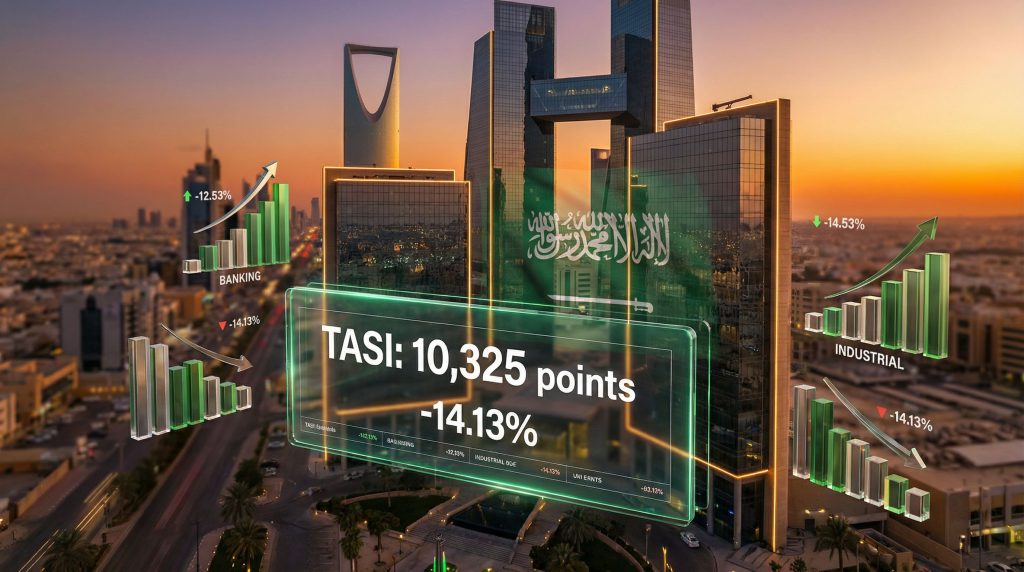
Saudi Arabia's stock market experienced a notable downturn, with the Tadawul All Share Index settling at 10,325.20 points on January 5, 2026, representing a fall of 0.37 percent in a single trading session. Over the year, investor sentiment has been challenged by a sustained decline, reaching levels not seen for over two years. Recent trading sessions saw turnover at SR4.02 billion ($1.07 billion), while the breadth of declining stocks—191 out of 252—highlighted a broad-based retrenchment.
While specific figures for long-term trading volume contraction, such as the cited shrinkage from SAR 1.86 trillion to SAR 1.30 trillion, require independent verification, the sharp reduction in liquidity is consistent with phases of market uncertainty. Comparing the present environment with historic market troughs since 2006, the current correction stands out for its combination of external pressures and internal transformation.
Structural Factors Behind the 26-Month Low Performance
The Saudi stock market downturn reflects a complex interplay of regional tensions and economic restructuring challenges. Furthermore, global investors have been reassessing emerging market allocations amid concerns over tariffs impact on markets and shifting geopolitical dynamics.
Saudi Arabia's position as a key energy producer means its financial markets remain sensitive to commodity price fluctuations. In addition, the ongoing energy transition trends globally have prompted investors to recalibrate their expectations for traditional oil-dependent economies.
When big ASX news breaks, our subscribers know first
Sectoral Performance Divergence Patterns
Despite the market correction, sectoral differentiation has emerged as a defining characteristic of current trading patterns. Banking groups have shown notable resilience, buffered by diversified revenue streams and robust capital reserves. Certain industrial development firms, for instance, Saudi Industrial Development Co., outpaced the broader market with a 6.32 percent single-day jump to SR12.44.
Energy stocks faced turbulence as oil price volatility persisted; however, collateral damage was less severe compared to transport sectors. The National Shipping Co. of Saudi Arabia, pivotal in logistics and maritime trade, saw its share price retreat by 5.87 percent to SR26.64, reflecting investor scepticism over cost structures and cyclical demand.
Conversely, Al Yamamah Steel Industries Co. climbed 6.06 percent, signalling optimism around construction demand spurred by national infrastructure projects. These divergent performance patterns highlight the importance of understanding sector-specific fundamentals when navigating market volatility.
What Economic Forces Are Driving Market Volatility?
Vision 2030 Diversification Impact on Market Dynamics
The transformation agenda under Vision 2030 continues to reshape the structural landscape of the Saudi economy. Non-oil sector contributions have become more pronounced, mitigating—but not fully overturning—the traditional weighting towards hydrocarbons in market valuations.
A surge in government-backed infrastructure and manufacturing investments has accelerated industrial indicators. In November 2025, 151 new industrial licences were granted, tied to over SR26.98 billion (about $7.19 billion) in capital commitments, alongside the operational launch of 93 factories. These projects are expected to add more than 1,370 new jobs, reinforcing the effectiveness of the Vision 2030 blueprint.
Infrastructure project launches and regulatory adjustments have also influenced foreign investor flows. However, global recession trends continue to impact risk appetite across emerging markets, creating additional headwinds for Saudi equities.
Regional Economic Integration Effects
Capital flows extend beyond domestic borders, influenced by broader Middle Eastern developments. For instance, recent Saudi exploration licences initiatives have garnered international attention, yet market sentiment remains cautious about execution timelines and potential returns.
Geopolitical stability across the GCC helps anchor investor confidence, but episodic tensions or trade policy changes can amplify local market volatility. The synchronisation—or divergence—of Saudi market performance with GCC peers serves as an important barometer for portfolio strategists.
Which Sectors Present Strategic Investment Opportunities?
Industrial Expansion and Manufacturing Growth
Saudi Arabia's industrial engine is gathering momentum despite the broader Saudi stock market downturn. November 2025 saw 151 new manufacturing licences, corresponding with over SR26.98 billion in announced capital outlays and the creation of approximately 1,370 jobs.
The Ministry of Industry and Mineral Resources, via real-time industrial indicators, reported that 93 new factories started production during the same month. A breakdown reveals:
- 151 new industrial licences (November 2025)
- SR26.98 billion in new investment commitments
- 1,370+ projected jobs from licensed projects
- 93 factories commenced production (SR1.76 billion in new investments; 2,642 jobs)
Industrial development companies are at the forefront of this movement. Stocks like Saudi Industrial Development Co. outperformed on strong speculation of order backlog linked to government infrastructure outlays.
Logistics and Supply Chain Infrastructure Development
Logistics represents another strategic pillar amid the current market correction. SAL Saudi Logistics Services Co. recently pursued the issuance of riyal-denominated sukuk to fund future expansion, a move signalling both capital market depth and corporate ambition.
Transportation sector growth projections remain robust, driven by both internal infrastructure investments and external trade gateway ambitions. Nevertheless, gold market volatility has prompted some investors to seek safe-haven assets, temporarily reducing capital flows to growth sectors.
How Do Corporate Earnings Reflect Economic Transformation?
Aggregate Profit Analysis Excluding Oil Giants
Corporate performance outside the oil sector reveals a mix of earnings growth and margin pressures. While estimates place non-Aramco profits at SAR 125.5 billion, marking roughly 5 percent year-over-year expansion, these figures require further validation and breakdown by segment.
The pattern of sectoral differentiation persists, with industrials and select manufacturers reporting better profitability on the back of capital inflows and government support contracts. However, logistics, consumer staples, and energy-intensive sectors face compressed margins.
Cost Structure Changes and Operational Efficiency
One of the clearest signals of economic adjustment is the impact of diesel price hikes implemented in January 2026. Almarai, Saudi Arabia's leading dairy products firm, announced an anticipated SR70 million increase in direct costs for the year.
This development has prompted a renewed focus on operational streamlining, supply chain optimisation, and broader technological adoption across energy-intensive industries. Companies operating in logistics and food processing face similar pressures, particularly where energy costs constitute a major input.
What Market Valuation Opportunities Exist Post-Correction?
Comparative Valuation Analysis Framework
The correction has reset sector valuation metrics across the Saudi equities universe. While direct calculations for price-to-earnings ratios and book value multiples post-decline are not publicly disclosed, market participants generally recognise that corrections often improve the risk-reward balance for long-term investors.
Dividend yields have in many cases become more attractive following price falls. Historical precedent suggests that periods of subdued prices often coincide with future outperformance, particularly in segments like industrials and construction materials.
| Sector | Indicative Recent Return | Notable Stock | Short-term Valuation Trend |
|---|---|---|---|
| Industrial Development | +6.32% | Saudi Industrial Development Co. | Premium |
| Steel/Construction | +6.06% | Al Yamamah Steel Industries | Premium |
| Transport/Shipping | -5.87% | National Shipping Co. (Bahri) | Discount |
| Dairy/Food | -3.5% | Almarai | Neutral/Discount |
Foreign Ownership Limit Reforms and Capital Access
Structural reforms aimed at increasing foreign investor participation have started to bear fruit. The expansion of cross-border quotas, alignment with MSCI guidelines, and new sovereign wealth fund strategies are gradually boosting passive capital flows.
However, the full impact remains pending stronger global risk sentiment and further regulatory enhancements. Consequently, the Saudi stock market downturn may persist until these reforms demonstrate measurable effects on international capital allocation.
The next major ASX story will hit our subscribers first
How Does Market Performance Align with Economic Diversification Goals?
Non-Oil GDP Growth Correlation with Market Trends
A key performance metric for the Saudi economy is the pace at which non-oil sectors contribute to overall GDP. Cross-referencing industrial licence growth and job creation from new manufacturing facilities reveals a gradual but meaningful shift in economic composition.
This ongoing diversification supports the case for re-rating select non-oil sector equities in the medium term. Sectors benefiting from tourism, renewable energy, and technology investments are slowly increasing their presence on the exchange.
Infrastructure Investment Translation to Market Value
Giga-projects and large-scale urban initiatives, such as those comprising the NEOM and Qiddiya portfolios, are translating infrastructure investment into tangible increments in corporate revenues. This particularly benefits construction, logistics, and real estate developers.
Transportation network expansion continues to support underlying demand across the logistics value chain. Furthermore, these investments provide a foundation for long-term economic growth that may eventually offset current market headwinds.
What Forward-Looking Indicators Suggest Market Recovery Potential?
Earnings Growth Projections for 2026-2027
Analyst consensus remains cautiously optimistic regarding an earnings rebound through 2026-2027. Sectors tied closely to national development priorities—manufacturing, logistics, and construction—are projected to lead profit recoveries, provided input price volatility subsides.
Key success metrics will include the sustainability of revenue diversification and adaptation to evolving cost structures. In addition, the execution of Vision 2030 initiatives will play a crucial role in determining sector-specific recovery timelines.
Liquidity Enhancement Mechanisms
Monetary policy remains targeted at balancing liquidity with inflation control. As the central bank maintains an accommodative stance and government spending is deployed strategically for economic stimulus, private sector credit growth is expected to accelerate.
This, in turn, should foster improved market sentiment and provide a platform for recovery from the current Saudi stock market downturn. However, external factors such as global risk appetite and oil price stability will significantly influence the pace of any potential rebound.
Frequently Asked Questions About Saudi Market Dynamics
Why has the Saudi stock market underperformed despite economic growth?
A fundamental driver is the maturing nature of the Saudi market, which is shifting from oil-dominated valuations to a more balanced, diversified ecosystem. As investors adjust portfolios towards growth sectors, transitional volatility remains likely.
In addition, global risk aversion in emerging markets may amplify local corrections even amidst positive domestic fundamentals. The Saudi equity markets have faced multiple headwinds that have contributed to sustained underperformance.
Which companies demonstrate strongest fundamentals during the downturn?
- Industrial development companies with long-term government exposure and project pipelines
- Banking groups resilient to sector shocks thanks to diversified business models
- Logistics and transportation operators positioned to benefit from regional trade flow expansion
How do current valuations compare to historical averages?
Market corrections typically result in metrics dipping below long-term averages, presenting enhanced entry opportunities for risk-tolerant investors. According to recent analysis, Saudi stocks have experienced their worst year in a decade, creating potential value opportunities for patient investors.
Strategic Investment Framework for Market Recovery
Portfolio Construction Considerations
- Diversified sector exposure: Emphasise a blend of industrials, logistics, banks, and select consumer plays to mitigate sector-specific shocks
- Risk management: Utilise stop-loss disciplines and sector rotation strategies to navigate ongoing volatility
- Currency and geopolitical hedges: For international investors, employ hedging where feasible given regional tensions and currency fluctuations
Timing Considerations for Market Entry
- Technical indicators: Monitor index support and resistance levels, with buying points typically emerging following confirmation of reversal patterns
- Fundamental catalysts: Track announcements on giga-project progress, regulatory reforms, or major foreign investment inflows
- Macroeconomic calendar: Stay alert to central bank actions, fiscal stimulus updates, and global risk sentiment cues
Disclaimer: The perspectives and forward-looking statements included in this article are for informational purposes only and do not constitute investment advice. Market scenarios and forecasts are subject to substantial uncertainty based on macroeconomic, policy, and geopolitical developments. Independent due diligence is recommended for all investment decisions.
Ready to Navigate Market Volatility with Precision?
Discovery Alert's proprietary Discovery IQ model delivers real-time alerts on significant ASX mineral discoveries, providing traders and investors with actionable insights precisely when market opportunities emerge. While global markets experience corrections, positioning yourself ahead of major mineral discoveries ensures you're prepared to capitalise on the next breakthrough announcement.