June 26, 2026
Why Silver's Structural Demand Story Is Rewriting the Mining IPO Playbook
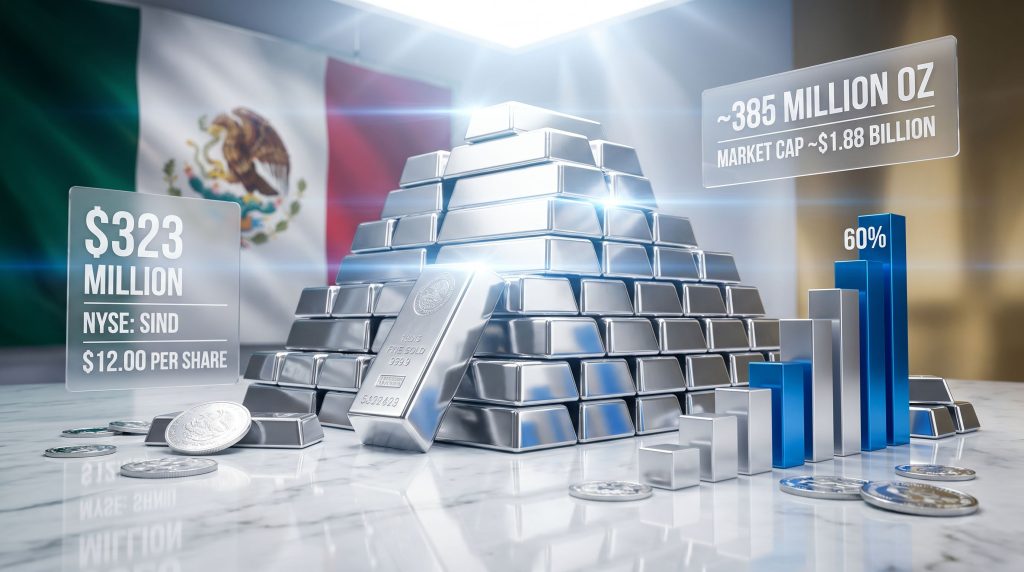
For much of the past decade, precious metals capital raises were dominated by gold-focused vehicles, with silver treated largely as a secondary consideration in diversified resource portfolios. That dynamic has shifted materially. A confluence of monetary uncertainty, accelerating industrial transformation, and a reassessment of silver's strategic value has created a window in capital markets that sophisticated resource investors are actively exploiting. The Sinda US IPO and private placement, which collectively raised $323 million on the New York Stock Exchange in late June 2026, offers a revealing case study in how that window is being used.
Understanding the structural forces behind this deal requires looking beyond the headline figure. The Sinda transaction is not simply a capital raise — it is a signal about where institutional money believes silver pricing, demand fundamentals, and development-stage project valuations are heading over the next five to ten years.
When big ASX news breaks, our subscribers know first
The Silver Market Conditions That Made This IPO Possible
Spot silver prices have appreciated approximately 60% over the preceding twelve months, a rally driven by three converging forces that are structurally distinct from prior silver bull cycles.
The first force is classic monetary hedging. Geopolitical fragmentation and persistent inflation expectations have reignited interest in hard assets across institutional and retail portfolios. The second is concentrated buying from Chinese institutional and retail participants, which has added a demand layer with characteristics more similar to strategic accumulation than speculative trading.
The third force is arguably the most durable: industrial consumption growth tied to the global energy transition. Silver is a critical input in photovoltaic solar panels, and the acceleration of utility-scale solar deployment across multiple continents has created structural demand that is less price-sensitive than financial buying. Beyond solar, the buildout of AI-driven data centre infrastructure has generated demand for silver in cooling and electrical systems, a use case that was marginal five years ago but is now measurable at scale.
Silver's dual role as both a monetary metal and an industrial commodity makes it uniquely compelling as an investment thesis. Unlike gold, which derives almost all of its demand from financial and jewellery channels, silver carries a structural industrial demand floor that provides price support even during risk-off periods when financial buyers retreat. This characteristic makes silver miners increasingly attractive to a broader investor universe, including ESG-aligned funds that might otherwise avoid pure commodity exposure.
Furthermore, the ongoing silver supply deficits compound these demand dynamics, tightening the market further and reinforcing the bullish case for development-stage silver assets.
Silver's position at the intersection of monetary hedging and green energy infrastructure is what distinguishes its current demand cycle from historical precedents. The industrial demand component is not cyclical in the traditional sense — it is policy-backed and capacity-constrained.
Understanding the Sinda US IPO and Private Placement Structure
The Sinda US IPO and private placement was executed through a dual-track structure, combining a public offering on the NYSE with a concurrent institutional placement. This architecture is deliberately engineered to achieve two objectives simultaneously: price discovery through the public market and anchor credibility through committed institutional capital.
| Capital Raise Component | Details |
|---|---|
| Total Capital Raised | $323 million |
| IPO Shares Offered | 17.75 million shares |
| Final IPO Price | $12.00 per share |
| Original Price Range | $11.25 to $13.25 per share |
| NYSE Ticker Symbol | SIND |
| Market Capitalisation at IPO Price | ~$1.88 billion |
| Original Expected Pricing Date | June 30, 2026 |
| Actual Pricing Date | June 26, 2026 (accelerated) |
The acceleration of the pricing timeline from June 30 to June 26 is a detail that deserves more attention than it typically receives in deal coverage. In IPO mechanics, an accelerated book close almost universally reflects oversubscription or strong institutional order book coverage. When underwriters and issuers have confidence that demand is sufficient and stable, there is little incentive to keep the book open — doing so only introduces execution risk from market volatility.
The final price of $12.00 per share sitting within the original range of $11.25 to $13.25 reflects disciplined price discovery rather than either a distress discount or speculative overreach. An IPO that prices at the absolute ceiling of its range can suggest demand was so concentrated that it could not be more precisely calibrated; a mid-range outcome often indicates that a broader, more diversified investor base participated in the book.
The Conditional Mechanics of the Private Placement
The concurrent institutional private placement carried specific structural conditions that are worth understanding in detail. The placement was only binding if the public IPO generated gross proceeds of at least $199 million at a minimum share price of $11.25 per share. This floor mechanism protects institutional placees from acquiring shares in a deal where public market demand proved insufficient to validate the pricing.
From an investor psychology perspective, these conditional thresholds serve a secondary signalling function: they communicate to the market that the institutional anchors have confidence the IPO will clear at acceptable levels, while simultaneously protecting themselves if it does not.
The Strategic Investors Anchoring the Deal
The composition of the institutional investor base in the Sinda US IPO and private placement is one of the most analytically interesting dimensions of this transaction.
Fresnillo Plc, one of the world's largest primary silver producers, committed to purchasing up to $110 million in shares through the concurrent private placement at the IPO price. Fresnillo's participation is particularly significant given that the company operates in Mexico and has extensive experience with Mexican silver mineralisation. Consequently, its commitment cannot be interpreted as uninformed enthusiasm. When a strategic peer with deep technical expertise in the same commodity and jurisdiction writes a cheque of this scale, it carries a qualitatively different signal than financial investor participation.
Franco-Nevada Corp., a leading royalty and streaming company, expressed interest in acquiring up to $10 million of shares. The royalty sector's participation warrants specific explanation for investors unfamiliar with the streaming model. Royalty companies acquire rights to a percentage of future production or revenue in exchange for upfront capital. Their business model requires rigorous geological and technical due diligence before deployment. Franco-Nevada's expressed interest signals that at least one sophisticated royalty analyst viewed the Sinda resource as credible enough to warrant financial exposure, even at the equity level rather than through a royalty structure.
Electrum Group, the controlling sponsor, is expected to retain approximately 78% of shareholder voting power following the completion of the IPO and private placement. Electrum is a natural resources-focused investment firm, and its deliberate strategy of sequential silver IPOs in mid-2026 is a textbook example of a portfolio manager timing market windows. The firm's earlier listing of Sunshine Silver Mining and Refining Co. raised $270 million and saw shares appreciate 27% on the first trading day, establishing meaningful precedent for Sinda's reception.
When a major silver producer, a leading royalty company, and a specialist resource investment firm all converge on the same pre-production asset, the convergence itself becomes a data point about perceived resource quality and development potential.
Guanajuato: The Geological and Jurisdictional Context
Sinda holds rights to five contiguous mining concessions in Guanajuato state, located northwest of Mexico City. The geological significance of this location extends well beyond its administrative description.
Guanajuato sits within the Mexican Silver Belt, a metallogenic province with silver mineralisation that has been exploited continuously since the colonial period. The region's primary ore deposits are associated with epithermal vein systems, which are characterised by high-grade silver and gold mineralisation formed at relatively shallow crustal depths through hydrothermal fluid processes. Historically, Guanajuato produced some of the highest-grade silver ore ever recorded in Latin America during the colonial and early industrial eras, making the region's geological prospectivity well-documented.
The resource inventory that Sinda has delineated is substantial in scale:
| Resource Category | Silver-Equivalent Ounces |
|---|---|
| Inferred Mineral Resources | ~369 million oz |
| Indicated Mineral Resources | ~16 million oz |
| Total Resource Base | ~385 million oz |
A critical distinction for investors evaluating this resource inventory is the difference between inferred and indicated classifications under standard resource reporting conventions.
- Inferred resources represent geological potential supported by limited sampling and drilling. They carry the highest uncertainty and cannot be used as the basis for economic feasibility studies. They represent where the resource could be, not where it is confirmed to be.
- Indicated resources carry substantially higher geological confidence, supported by more systematic drilling and sampling. They can be incorporated into preliminary economic assessments and prefeasibility studies.
The overwhelming proportion of Sinda's resource base sitting in the inferred category (~369 million of the ~385 million total ounces) signals that significant drilling investment will be required to upgrade resource confidence. For context, interpreting drill results accurately is essential for investors tracking the company's progress toward resource conversion milestones. The IPO proceeds are specifically earmarked for this drilling programme, among other development activities.
What Silver-Equivalent Ounces Actually Means
The resource is reported in silver-equivalent ounces, a convention that aggregates multiple metals present in the deposit by converting non-silver metals (such as gold, lead, or zinc) into a silver equivalent based on prevailing commodity prices and metallurgical recovery rates. This presentation method allows investors to compare deposits with different metal compositions on a single scale, but it is important to recognise that the actual mix of metals in the deposit, and the relative recoveries achievable through processing, materially affect the economic value of the resource.
Financial Profile: Reading the Pre-Production Numbers
Sinda is a pre-production, pre-revenue company. No silver has been mined, processed, or sold. The financial statements reflect only costs, not returns, and this characteristic defines the risk profile of the investment.
| Financial Metric | Value |
|---|---|
| Net Loss Q1 2026 (Jan-Mar 2026) | $11.6 million |
| Net Loss Q1 2025 (Jan-Mar 2025) | $2.6 million |
| Year-on-Year Loss Increase | ~4.5x |
| Revenue | Nil |
| Production Status | Pre-production |
| Target Production Commencement | 2031 |
The 4.5x year-on-year acceleration in quarterly losses is a characteristic pattern for a development-stage mining company approaching an IPO. As a project advances from early-stage exploration toward resource delineation and feasibility work, expenditure on drilling contractors, geological consultants, environmental studies, and corporate infrastructure expands rapidly. This spending is not evidence of financial mismanagement — it is the expected cost structure of advancing a project toward production.
However, the multi-year cash burn profile between now and the 2031 production target represents a significant capital requirement that extends well beyond the $323 million raised in this offering. Investors should therefore expect additional capital raises during the development phase. In addition, the pathway to production will ultimately require definitive feasibility studies that validate the project's economic viability before major construction commitments can be made.
Pre-production mining investments are fundamentally long-duration, high-uncertainty instruments. The return thesis depends on resource conversion success, permitting timelines, construction execution, and commodity prices remaining supportive across a five-to-seven year horizon.
The next major ASX story will hit our subscribers first
Electrum's Sequential IPO Strategy and What It Reveals
One of the less-discussed but analytically significant aspects of the Sinda US IPO and private placement is what it reveals about Electrum Group's portfolio management approach. Within a matter of weeks in mid-2026, Electrum brought two separate silver-focused companies to the US public markets:
- Sunshine Silver Mining and Refining Co. raised $270 million, with shares rising 27% on the first trading day.
- Sinda Ltd. raised $323 million at a $1.88 billion market capitalisation.
This sequential strategy is consistent with a portfolio monetisation approach that is deliberately timed to the current silver price cycle. By floating two assets during a period of elevated silver prices and strong investor appetite, Electrum locks in public market valuations that are likely to reflect a commodity price premium relative to long-run average prices.
The retention of 78% voting control in Sinda post-IPO means that Electrum has achieved partial liquidity and validation of its investment thesis while retaining the ability to direct the company's strategic direction. This structure is common among resource-focused private equity sponsors that choose to list portfolio companies rather than pursue full trade sales.
The NYSE as the Preferred Silver Mining Capital Market
Both Electrum-backed listings targeted the New York Stock Exchange rather than the Toronto Stock Exchange or London Stock Exchange, which have historically been the primary venues for resource sector capital raises. This choice reflects the deepening of US institutional capital pools oriented toward silver and green energy transition themes. Broader gold and silver supply trends have also reinforced US investor appetite for large-scale development assets in primary silver jurisdictions.
The lead underwriting syndicate of Morgan Stanley, Bank of Nova Scotia (Scotiabank), and Bank of Montreal (BMO Capital Markets) reflects the cross-border nature of mining finance. The two Canadian institutions bring deep expertise in resource sector structuring and a pre-existing investor distribution network concentrated in resource-oriented fund managers, while Morgan Stanley provides access to the broadest US institutional and sovereign wealth fund channels.
Key Risks Every Investor Should Assess
The Sinda US IPO and private placement presents a compelling large-scale silver development thesis, but the risk architecture is substantial and warrants careful evaluation.
- Development execution risk: A five-year runway to production involves engineering, procurement, construction, and commissioning phases, each carrying schedule and cost risk.
- Resource conversion risk: With ~96% of the resource in the inferred category, the outcome of future drilling campaigns will materially affect whether the project achieves feasibility-level economic studies.
- Commodity price risk: The investment thesis is predicated on silver prices remaining supportive through 2031 and beyond. Silver is a volatile commodity, and a reversal of the current 60% rally could impair project economics.
- Concentrated ownership: Electrum's 78% voting control concentrates strategic decision-making and limits minority shareholder recourse.
- Mexico regulatory environment: While Guanajuato has a long mining history, Mexico's evolving regulatory framework for foreign-controlled mining assets is an ongoing consideration that requires monitoring.
- Escalating cash burn: The trajectory from $2.6 million to $11.6 million in quarterly losses within one year signals a cash consumption rate that will require ongoing capital management discipline.
Summary of Key Metrics
| Metric | Value |
|---|---|
| Total Capital Raised | $323 million |
| IPO Price | $12.00 per share |
| Market Cap at IPO | ~$1.88 billion |
| Total Resource Base | ~385 million silver-equivalent oz |
| Controlling Shareholder Voting Power | 78% (Electrum Group) |
| Production Target | 2031 |
| NYSE Ticker | SIND |
| Lead Underwriters | Morgan Stanley, Scotiabank, BMO Capital Markets |
| Anchor Placement Investor | Fresnillo Plc ($110 million) |
| Secondary Placement Interest | Franco-Nevada Corp. (up to $10 million) |
The Sinda US IPO and private placement represents one of the most consequential silver-focused capital raises in recent memory, combining an institutional-grade anchor structure, credible strategic investor participation, and a large-scale resource inventory in one of the world's most historically significant silver jurisdictions. The transaction is a direct product of the current silver market environment, and its long-term success will depend on how effectively the company converts geological potential into confirmed, economically viable production.
For investors seeking pure-play exposure to silver development at scale, Sinda offers a clearly structured thesis with meaningful institutional validation. The trade-off is a multi-year development horizon, a predominantly inferred resource base, and a commodity price dependency that cannot be hedged away. As with all pre-production mining investments, the prospective reward is calibrated against risks that are inherent to the asset class rather than specific to any single company's execution. Reuters reporting on the IPO confirmed the scale of institutional interest at launch, underscoring the broader market significance of this transaction.
This article is intended for informational purposes only and does not constitute financial or investment advice. Investing in pre-production mining companies involves substantial risk, including the possible loss of the entire investment. Readers should conduct their own due diligence and consult a qualified financial adviser before making investment decisions.
Want to Know When the Next Major Silver Discovery Hits the ASX?
Discovery Alert's proprietary Discovery IQ model scans ASX announcements in real time, instantly identifying significant mineral discoveries across silver and more than 30 other commodities — so subscribers can act before the broader market catches on. Explore historic discovery returns to understand what major finds have delivered for early investors, then begin a 14-day free trial at Discovery Alert to position yourself ahead of the next significant announcement.