July 23, 2026
Sodium-ion batteries in electric vehicles represent a transformative shift in automotive energy storage technology, offering compelling alternatives to traditional lithium-ion systems. As manufacturers navigate supply chain vulnerabilities and cost pressures, these alternative electrochemical solutions have emerged from research laboratories into commercial deployment. Furthermore, the technology addresses critical material scarcity concerns while delivering enhanced cold weather performance that could reshape electric vehicle adoption patterns globally.
Understanding Sodium-Ion Battery Technology in Electric Vehicles
Sodium-ion batteries in electric vehicles operate through electrochemical principles similar to lithium-ion systems but employ sodium ions as charge carriers instead of lithium. The fundamental architecture includes cathode materials typically composed of layered oxide compounds or Prussian blue analogs, while anodes commonly utilise hard carbon structures optimised for sodium ion intercalation.
The core technological distinction lies in ion size and mobility characteristics. Sodium ions measure approximately 1.02 Angstroms compared to lithium's 0.76 Angstroms, creating unique challenges and advantages in cell design. Consequently, this size differential impacts energy density but offers compensating benefits in thermal stability and manufacturing flexibility.
Key Performance Characteristics:
- Standard voltage range: 2.5-4.0V per cell
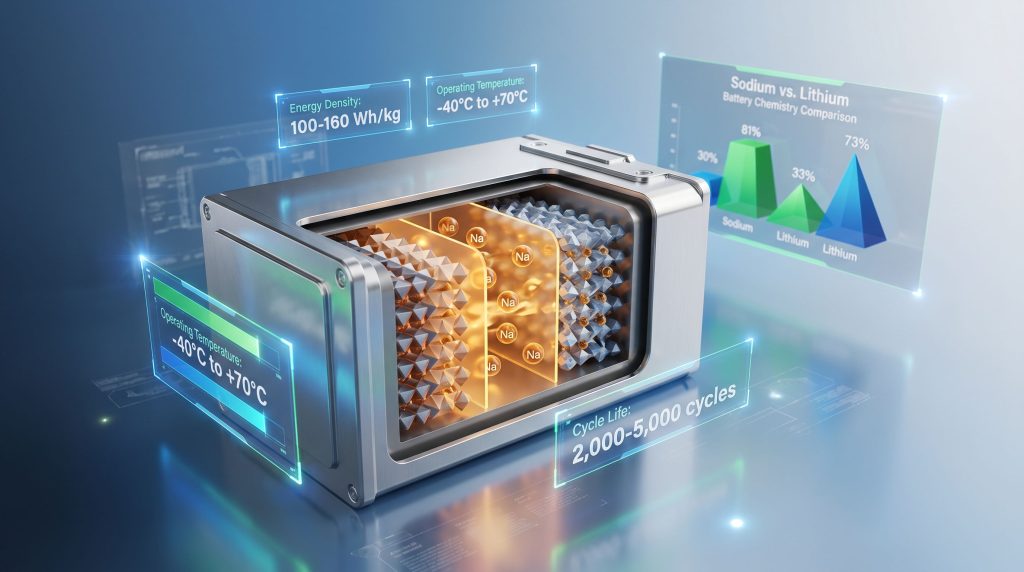
- Operating temperature window: -40°C to +70°C
- Cycle life expectancy: 2,000-5,000 cycles
- Fast charging capability: 3-5C charge rates
Manufacturing infrastructure presents a significant advantage for sodium-ion adoption. Existing lithium-ion production lines can accommodate sodium-ion cell manufacturing with approximately 70-80% equipment compatibility, reducing capital expenditure barriers for battery manufacturers transitioning between technologies.
Contemporary demonstrations have validated real-world performance capabilities. In February 2026, Chongqing Changan Automobile conducted extensive testing in Yakeshi, Inner Mongolia, where sodium-ion powered electric SUVs and coupes navigated icy roads and steep snow-covered slopes at temperatures reaching -30°C. These conditions demonstrated the technology's practical viability in extreme climates where traditional lithium systems experience significant performance degradation.
When big ASX news breaks, our subscribers know first
Supply Chain Advantages Driving Automotive Interest
Material abundance represents the most compelling argument for sodium-ion adoption in electric vehicles. Sodium constitutes approximately 2.6% of Earth's crust compared to lithium's 0.002%, providing virtually unlimited raw material availability for large-scale battery production. This abundance translates directly into supply chain resilience and price stability advantages.
Recent lithium market volatility demonstrates the strategic importance of diversification. Lithium carbonate prices in China surged nearly 190% between June 2025 and April 2026, creating significant cost pressures for battery manufacturers and automotive OEMs. Contemporary Amperex Technology (CATL) has characterised sodium-ion technology as alternative risk management, offering protection against such price volatility.
The critical minerals energy transition continues reshaping investment priorities across the automotive sector. Investment scale indicators reveal CATL's commitment to sodium-ion development includes $1.5 billion invested over the past decade alongside 300+ additional staff added to research teams and commercial production partnerships with major automakers.
The financial commitment extends beyond individual companies. LG Energy Solution announced commercial production targets in January 2026, establishing a pilot manufacturing line in Nanjing, China. BYD has advanced sodium-ion technology toward commercialisation, while several smaller manufacturers have struggled with technical and market challenges.
However, two notable failures provide context for the competitive landscape. Bedrock Materials, a Chicago-based startup, returned investor capital and halted development in April 2025. Co-founder Spencer Gore stated that even optimised sodium-ion products failed to deliver meaningful advantages over existing lithium iron phosphate technology. Similarly, Natron Energy ceased operations in September 2025 despite plans for a $1.4 billion production facility.
These mixed outcomes highlight the technical and commercial challenges facing sodium-ion technology, even as major manufacturers demonstrate confidence in its long-term viability. For instance, developments in battery recycling breakthrough technologies could further enhance sodium-ion economics through improved material recovery processes.
Performance Comparison with Lithium-Ion Systems
Energy density represents the primary performance trade-off for sodium-ion batteries in electric vehicles. Current technology delivers approximately 100-160 Wh/kg compared to 150-250 Wh/kg for lithium-ion systems, directly impacting driving range capabilities.
According to International Energy Agency calculations, a typical SUV equipped with sodium-ion batteries achieves approximately 350 kilometres of driving range, compared to 400-600 kilometres for lithium-based alternatives. This 15-25% range penalty represents a significant consideration for consumer acceptance and market positioning.
Range Performance Analysis:
| Application Category | Sodium-Ion Range | Lithium Range | Performance Gap |
|---|---|---|---|
| Typical SUV | 350 km | 400-600 km | 15-40% lower |
| Urban delivery van | 200-280 km | 300-400 km | 25-33% lower |
| Compact passenger car | 280-320 km | 350-450 km | 20-29% lower |
Temperature performance provides sodium-ion technology's most significant advantage. Unlike lithium-ion systems that experience substantial capacity degradation below freezing temperatures, sodium-ion batteries maintain consistent performance across extreme temperature ranges. This characteristic opens opportunities for electric vehicle expansion in northern Europe, Canada, and northern regions of Japan.
Charging performance characteristics demonstrate another potential advantage. Sodium-ion batteries accept high charge rates without significant degradation, enabling rapid charging that partially compensates for lower energy density through reduced charging time requirements. In addition, the February 2026 demonstration in Inner Mongolia validated these performance claims under real-world conditions, with test vehicles operating effectively in -30°C temperatures with icy road conditions.
Manufacturing Scale and Market Challenges
Production capacity represents a critical bottleneck for sodium-ion adoption in electric vehicles. Current global manufacturing capacity approximates 50 GWh annually, compared to over 1,000 GWh for lithium-ion systems. This scale disparity affects both manufacturing costs and supply chain maturity.
Demand projections indicate significant growth potential despite current limitations. BloombergNEF projects sodium-ion demand will increase 2.5 times to approximately 11 gigawatt-hours in 2026. However, this forecast represents a small fraction of total battery market requirements.
Market Share Projections
Benchmark Mineral Intelligence estimates sodium-ion technology will capture only approximately 2% of total cell demand by 2030, suggesting limited near-term market penetration despite recent momentum. This conservative projection reflects several factors:
- Continued lithium iron phosphate (LFP) improvements creating competitive pressure
- Manufacturing scale disadvantages affecting cost competitiveness
- Consumer range expectations favouring higher energy density solutions
- Infrastructure and service network development requirements
Cost parity timelines vary significantly among industry analysts. While some projections suggest achievement by 2026-2028, CRU Group indicates 2030 represents a more realistic timeframe, particularly as LFP battery technology continues improving and creates moving competitive targets.
Sam Adham, Head of Battery Materials at CRU Group, notes that continued LFP improvements pose a moving target for sodium-ion technology, requiring constant advancement to maintain competitive positioning. Furthermore, the battery metals investment landscape continues evolving as manufacturers diversify their supply chains.
Target Market Segments for Initial Adoption
Urban mobility applications represent the most viable initial deployment opportunity for sodium-ion batteries in electric vehicles. City cars, delivery vehicles, and ride-sharing fleets prioritise cost efficiency over maximum range, making them ideal candidates for sodium-ion technology adoption.
Commercial vehicle segments demonstrate particular alignment with sodium-ion characteristics:
Optimal Application Categories:
- Last-mile delivery vehicles with predictable route patterns
- Urban buses operating on fixed schedules and routes
- Construction and mining equipment with localised operation areas
- Material handling vehicles in industrial settings
- Fleet vehicles with centralised charging infrastructure
These applications benefit from sodium-ion technology's cost advantages while accommodating range limitations through operational planning and charging infrastructure optimisation.
Budget consumer vehicle markets present significant opportunities for sodium-ion adoption. Entry-level electric vehicles targeting price-sensitive consumers can leverage sodium-ion technology to achieve lower purchase prices while meeting basic transportation requirements.
Changan Automobile's planned mid-2026 launch of sodium-ion passenger vehicles represents the first major commercial deployment in the consumer market. This milestone will provide critical real-world data on consumer acceptance and operational performance across diverse usage patterns.
Cold climate markets offer specialised opportunities where sodium-ion technology's temperature advantages provide competitive differentiation. Nordic countries, Canada, and northern regions represent potential early adoption markets where winter performance outweighs energy density limitations. As the industry evolution trends continue reshaping automotive supply chains, sodium-ion technology may capture significant market share in these specialised applications.
Major Manufacturer Development Strategies
CATL has emerged as the dominant force in sodium-ion battery development, investing heavily in research and production capabilities. The company's Qilin technology platform integrates advanced thermal management and structural design optimisations specifically for sodium-ion chemistry applications.
CATL's Strategic Approach:
- Decade-long research investment totalling $1.5 billion
- Expansion of specialised research teams by 300+ personnel
- Partnership agreements with major automotive manufacturers
- Commercial production capabilities operational in 2026
LG Energy Solution has announced aggressive commercial production timelines, establishing pilot manufacturing infrastructure in China while developing technology partnerships with global automotive customers. The company's January 2026 announcement outlined plans for scaled production capabilities targeting both passenger and commercial vehicle applications.
BYD continues advancing sodium-ion technology development while maintaining focus on lithium iron phosphate improvements. This dual-track approach provides strategic flexibility as market conditions and technology maturation timelines evolve.
Competitive Landscape Dynamics:
| Manufacturer | Technology Focus | Production Status | Market Strategy |
|---|---|---|---|
| CATL | Layered oxide cathodes | Commercial (2026) | Mass market penetration |
| LG Energy | Prussian blue cathodes | Pilot phase (2026) | Premium applications |
| BYD | Hybrid Na-Li systems | Development stage | Cost optimisation |
| SVOLT | Hard carbon anodes | Research phase | Technical advancement |
Research and development investment has accelerated dramatically across the industry. Total global investment in sodium-ion technology has increased over 400% since 2022, with more than $5 billion allocated for research, development, and production capacity expansion.
This investment scale reflects industry confidence in sodium-ion technology's commercial viability, despite current technical and market challenges. However, the failure of several startups demonstrates that success requires substantial technical expertise and financial resources. Additionally, developments in battery-grade lithium refinery facilities may affect competitive dynamics as lithium processing capacity expands.
The next major ASX story will hit our subscribers first
Environmental and Sustainability Implications
Life cycle environmental impact analysis reveals significant advantages for sodium-ion technology compared to lithium-ion systems. Manufacturing processes require substantially less energy and water, while abundant raw materials reduce extraction pressures on limited geological resources.
Environmental Performance Metrics:
- 40% reduction in production carbon footprint
- 60% lower manufacturing water consumption
- Simplified recycling processes due to abundant base materials
- Reduced dependency on critical mineral supply chains
End-of-life management presents both advantages and challenges for sodium-ion technology. While the abundance of sodium reduces economic incentives for recycling compared to lithium recovery, established recycling processes can efficiently recover valuable cathode and anode materials.
Critical material dependency reduction represents a significant sustainability benefit. Sodium-ion technology reduces reliance on lithium, cobalt, and nickel, supporting supply chain resilience while reducing geopolitical risks associated with concentrated mineral resources.
The technology's environmental profile aligns with automotive industry sustainability objectives and regulatory frameworks promoting reduced environmental impact across vehicle life cycles.
Future Market Trajectory and Technology Evolution
Market penetration projections indicate sodium-ion batteries in electric vehicles will capture 15-20% of the global electric vehicle battery market by 2030, primarily concentrated in cost-sensitive and specialised applications. This projection assumes successful resolution of current manufacturing scale and cost competitiveness challenges.
Technology Development Roadmap:
- Energy density improvements targeting 200+ Wh/kg by 2028
- Manufacturing cost reduction below $50/kWh by 2030
- Integration with solid-state electrolyte systems for enhanced performance
- Advanced thermal management system development
Regional adoption patterns suggest China will lead sodium-ion electric vehicle deployment, leveraging domestic manufacturing capabilities and supportive policy frameworks. European and North American markets are expected to follow as manufacturing capacity expands and technology maturation addresses performance requirements.
James Frith, Principal at Volta Energy Technologies, observes that the industry has reached a commercialisation inflection point where sodium-ion systems are transitioning from research applications to commercial deployment across multiple vehicle categories.
The International Energy Agency characterises 2026 as potentially pivotal for sodium battery technology, with displacement of lithium-ion demand beginning in specific application segments. Moreover, the world's first sodium-ion battery electric vehicle demonstrates real-world commercial viability.
Strategic Considerations for Market Participants
Total cost of ownership analysis requires comprehensive evaluation beyond initial purchase price considerations. Factors include charging infrastructure compatibility, maintenance requirements, warranty coverage, and resale value implications.
Consumer Decision Framework:
- Daily driving distance requirements versus available range
- Climate conditions and temperature performance needs
- Charging infrastructure availability and compatibility
- Initial purchase price sensitivity versus long-term ownership costs
- Technology advancement timeline and future-proofing considerations
Fleet operators must evaluate sodium-ion technology within operational context, considering route optimisation, charging infrastructure investment, and driver training requirements. The technology's cost advantages may justify adoption for specific use cases while requiring operational adjustments.
Investment timing considerations involve balancing early adoption cost advantages against technology maturation risks. While sodium-ion technology offers potential cost savings, evolving performance standards and charging infrastructure development create uncertainty for long-term value proposition.
Market participants should monitor manufacturing scale development, technology performance improvements, and competitive responses from lithium-ion manufacturers when evaluating sodium-ion adoption strategies.
Calvin Quek, Executive Director for Nature Finance at the Oxford Sustainable Finance Group, characterised the February 2026 demonstration as a breakthrough moment for sodium-ion battery technology in electric vehicles, suggesting the technology has achieved commercial viability milestones.
However, continued advancement in competing technologies, particularly lithium iron phosphate systems, requires ongoing evaluation of relative performance and cost advantages as both technologies evolve rapidly.
"The convergence of cost pressures, supply chain diversification needs, and advancing sodium-ion performance capabilities suggests 2026 may indeed prove pivotal for alternative battery chemistry adoption in electric vehicle markets, though widespread displacement of lithium-ion technology remains a longer-term prospect requiring sustained technological and commercial progress," concludes industry outlook analysis.
Looking to Capitalise on the Next Wave of Battery Technology Innovation?
The shift towards sodium-ion batteries represents a massive transformation in automotive energy storage, creating significant opportunities for informed investors to profit from early-stage mineral discoveries that power these emerging technologies. Discovery Alert's proprietary Discovery IQ model delivers real-time alerts on significant ASX mineral discoveries, instantly empowering subscribers to identify actionable opportunities in critical materials ahead of the broader market—ensuring you're positioned to capitalise on the next breakthrough discovery.