July 17, 2026
The Institutional Credibility Gap That Defines African Energy Investment
Across sub-Saharan Africa, the single most consistent barrier to sustained foreign direct investment in the energy sector is not geology, infrastructure, or crude pricing. It is institutional credibility. International oil companies allocating multi-decade capital commitments evaluate national oil companies not merely as operational partners, but as proxies for the entire governance environment of a host country. When a state oil company simultaneously regulates access to acreage and competes for that same acreage, the signal to international investors is unambiguous: the rules of engagement are structurally compromised.
This is the foundational context for understanding why the Sonangol overhaul in Angola represents something genuinely significant in African energy history. The transformation that has unfolded since 2019 is not a cosmetic rebranding exercise. It is a systematic dismantling and reconstruction of how Angola's most strategically important institution relates to capital, competition, and commercial accountability.
When big ASX news breaks, our subscribers know first
How Sonangol's Dual-Role Problem Suppressed Investment Potential
For decades, Sonangol occupied an unusual and commercially distorting position within Angola's oil economy. As both the country's primary upstream operator and the entity responsible for awarding and administering oil concessions, it functioned simultaneously as player and referee. This structural arrangement created implicit advantages for Sonangol in licensing processes and imposed an invisible ceiling on the competitive attractiveness of Angola relative to peer producers.
Nigeria, Mozambique, and Gabon each developed their own institutional challenges, but the specific combination of regulatory capture and commercial operation within a single entity gave Angola a distinctive governance risk profile that sophisticated investors could not easily price or manage. The result was a licensing environment that inflated effective operating costs and reduced the transparency that international majors require when justifying capital allocation to their own boards.
The foundational reform that made all subsequent changes possible was the February 2019 transfer of concessionaire powers and exploration licensing authority to the National Oil, Gas and Biofuels Agency (ANPG). This single structural decision separated the regulatory function from the commercial function in a way that had not previously existed in Angola's oil governance architecture. From that point forward, Sonangol would compete for acreage on equal terms with international operators rather than controlling the terms of access to it.
The Organisational Restructuring in Numbers
The internal transformation that accompanied regulatory separation was equally significant in scope. The following table illustrates the before-and-after dimensions of Sonangol's restructuring:
| Reform Dimension | Before Restructuring | After Restructuring |
|---|---|---|
| Departmental structure | 21 departments | 12 departments |
| Business unit model | Integrated conglomerate | 5 core strategic units + holding company |
| Non-core asset exposure | Broad (aviation, banking, real estate, logistics) | ~50% privatised |
| Regulatory role | Concessionaire + operator | Operator only |
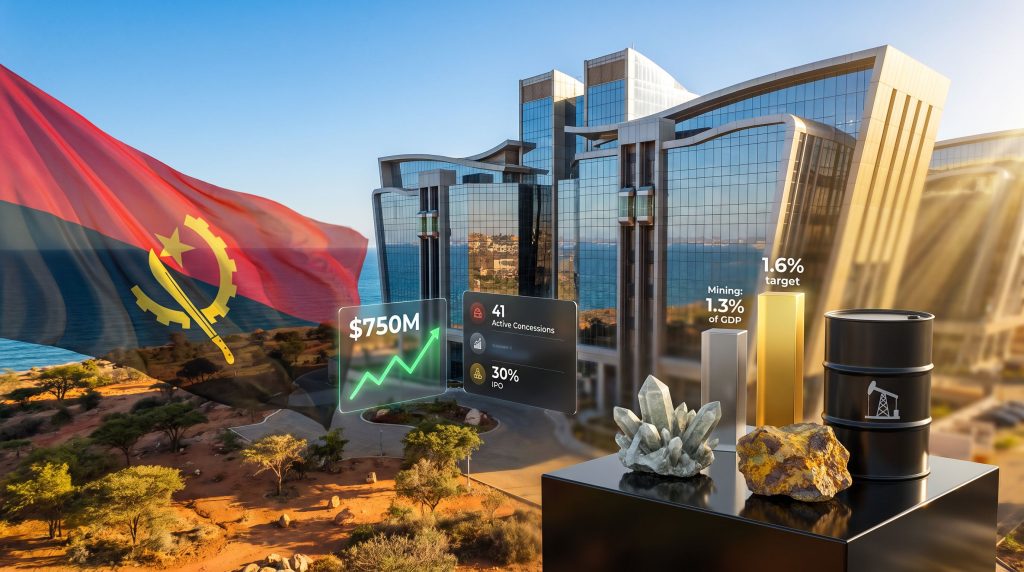
| Capital market access | Limited | $750M debut bond (January 2026) |
| Concession interests held | Variable | 41 active concessions |
The reduction from 21 to 12 departments, while appearing administrative, reflects a deliberate effort to reduce the organisational complexity that historically made Sonangol difficult to evaluate for partnership purposes. Streamlined structures are not only more efficient internally; they are more legible to institutional investors conducting due diligence on potential joint venture counterparties.
What Are the Five Strategic Business Units Driving Sonangol's New Model?
The reorganisation of Sonangol around five clearly defined strategic business units represents a fundamental shift in how the company presents itself to the global investment community. Each unit is structured to enable co-investment, industrial partnership, and eventually, external equity participation.
-
Exploration and Production: The core upstream engine, holding interests across all 41 of Angola's active oil concessions alongside domestic and international partners. The unit is designed to attract co-investment from both international majors and independents seeking exposure to West Africa's deepwater geology.
-
Refining and Petrochemicals: Angola's longstanding dependency on refined fuel imports represents both a fiscal vulnerability and an investment opportunity. Expanding domestic refining capacity is an explicit import-substitution strategy that creates downstream industrial value and reduces the country's exposure to global refined product price volatility.
-
Gas and New Energies: Angola holds material natural gas reserves that have historically been underutilised relative to crude. This unit positions Sonangol to commercialise gas domestically and internationally while developing early-stage hydrogen and renewable energy capabilities as a hedge against long-term demand transition.
-
Trading and Maritime Transport: Commercial optimisation of crude trading logistics is paired with the planned revival of domestic shipbuilding capacity through a partnership with Portuguese construction group Mota-Engil. This initiative is notable because it links Angola's oil services industry to broader industrial capacity-building objectives.
-
Critical Minerals Division: The strategic diversification into uranium and lithium exploration is perhaps the most forward-looking element of the entire restructuring. It positions Sonangol to leverage existing institutional relationships and operational infrastructure to enter mineral categories experiencing structural demand growth driven by the global energy transition.
The five-unit model is designed to make Sonangol more legible to institutional investors and international partners, reducing the opacity that historically characterised its operations and improving its capacity to structure joint ventures and long-term industrial partnerships.
Angola's Mining Diversification: Beyond Oil and Diamonds
One of the least-discussed but strategically consequential dimensions of the Sonangol overhaul in Angola is what it signals about Angola's broader economic diversification ambitions. Angola's extractive economy has long been defined by two sectors: oil, which dominates the fiscal base, and diamonds, which represent the primary non-oil mining activity. Both commodities carry significant price volatility and neither generates the downstream industrial linkages that policymakers require for sustainable employment creation.
The mining sector contributed just 1.3% of GDP in 2022, against a government target of 1.6% by 2027. While the incremental scale of that target may appear modest, the underlying objective is structural. Angola's government has set a goal of attracting $2 billion in non-diamond mining investment to develop lithium and uranium resources that have historically been explored but not commercially developed. Furthermore, the global lithium market and broader critical minerals demand cycle make this a strategically well-timed pivot.
How Angola's Mining Ambitions Compare to Regional Peers
Angola's mining ambitions are best understood in the context of what neighbouring countries have achieved with greater institutional focus on the sector:
| Country | Mining % of GDP | Key Strategic Mineral Focus | Foreign Investment Target |
|---|---|---|---|
| Angola | 1.3% (2022) → 1.6% (2027 target) | Lithium, Uranium | $2B (non-diamond) |
| DRC | ~17% | Cobalt, Copper, Lithium | Ongoing major FDI inflows |
| Zambia | ~12% | Copper | Copper Belt expansion |
| Mozambique | ~5% | Natural Gas, Graphite | LNG-led investment |
The gap between Angola and its peers is substantial. Closing even a portion of that gap requires more than policy ambition. It requires the technical ecosystem, infrastructure, and institutional credibility that Angola is only beginning to assemble. Sonangol's entry into critical minerals exploration is an attempt to accelerate that process by applying an established institutional platform to a new sector, rather than building mining capabilities from scratch through a separate agency.
This approach carries its own risks. The technical and commercial requirements of mining are materially different from upstream oil operations, and institutional cross-sector competency transfer has a mixed track record across African resource economies. The geopolitical mining landscape adds further complexity, as competition for strategic mineral access intensifies globally.
What Sonangol's $750 Million Bond Communicates to Equity Investors
In January 2026, Sonangol completed its debut international bond issuance, raising $750 million from global capital markets. For observers focused on Angola's oil production volumes or crude pricing, this event may appear secondary. For institutional investors evaluating the country's energy sector as a potential equity destination, it is among the most important signals produced by the restructuring.
Bond market access requires a different standard of financial transparency than domestic financing or bilateral credit arrangements. Auditable accounts, governance documentation, and a demonstrable capacity to service external obligations under international legal frameworks are prerequisites for a successful bond issuance. Sonangol's ability to complete this transaction confirms that its restructuring has reached a level of institutional maturity that can withstand external financial scrutiny.
The IPO Roadmap: Opportunity and Constraints
The bond issuance is directly connected to Sonangol's longer-term objective of floating up to 30% of its equity through an initial public offering. Understanding the relationship between these two transactions is important for assessing the realistic pace of the company's transition:
-
Objective: Align Sonangol with international corporate governance standards, broaden its private investor base, and create market-based accountability mechanisms that reinforce the restructuring's commercial orientation.
-
Constraint: Angola's fuel subsidy system, in which Sonangol plays a central operational and financial role, creates a fundamental tension. Companies that carry implicit public service mandates trade at discounts to commercially unconstrained peers. Subsidy reform progress will therefore directly influence the valuation at which a listing becomes viable.
-
Timing: A 2026 listing has been explicitly ruled out. No confirmed timeline has been established. The eventual window will be determined by subsidy reform momentum, market conditions, and the degree to which Sonangol can demonstrate sustained commercial performance independent of state transfers.
Is Foreign Investor Confidence in Angola's Oil Sector Actually Recovering?
The most instructive data point for assessing whether the Sonangol overhaul in Angola is generating real investor confidence is not a survey or a ranking. It is the behaviour of a company that had already made the decision to leave.
In 2024, Portuguese energy company Galp exited Angola's upstream oil market entirely, divesting its stakes in Blocks 14, 14-K, and 32 to domestic operator Somoil for approximately $830 million. The stated strategic rationale centred on concentrating the portfolio around core Brazilian assets and accelerating its decarbonisation transition. The decision was consistent with a wave of European energy company portfolio rationalisation driven by ESG commitments and shareholder pressure.
By mid-2026, Galp had re-engaged with Sonangol to explore new exploration and production opportunities. This reversal occurred within less than two years of the original exit. Importantly, Galp had maintained its commercial presence in Angola throughout this period through Sonangalp, its fuel distribution joint venture with Sonangol, which preserved institutional relationships even as the upstream equity position was liquidated.
Galp's renewed interest does not yet constitute a confirmed investment or signal a broad sectoral revival. It functions as a leading indicator that Sonangol's institutional reforms are generating measurable credibility gains among international operators whose entry decisions are sensitive to governance quality, partner capability, and long-term policy stability.
What Foreign Investors Actually Require Before Re-Entering Angola
For companies considering upstream re-engagement, Galp's evolving position illustrates a broader decision framework that most international operators apply to frontier and emerging energy markets:
-
Stable and transparent licensing frameworks: The ANPG's independence from Sonangol must be demonstrably maintained over multiple licensing cycles, not just formally established on paper.
-
Capable and commercially oriented local partners: Sonangol's restructuring must translate into operational reliability. Governance improvements that exist only on organisational charts are insufficient to justify capital commitment.
-
Long-term policy visibility: Angola's regulatory and fiscal terms must offer sufficient certainty to justify multi-decade upstream capital commitments. Oil block development cycles routinely span 20 to 30 years, meaning investors are evaluating policy environments that will outlast multiple government terms.
-
Subsidy reform progress: Continued fuel subsidy obligations create fiscal unpredictability that sophisticated investors factor directly into country risk assessments and required return thresholds.
Scenario Projection: What a Galp Re-Entry Could Signal
If Galp formalises a return to Angola's upstream sector within the next 12 to 18 months, the market signal effect could extend well beyond the bilateral transaction. Portuguese-speaking international energy companies with historical exposure to Lusophone Africa, including those previously deterred by governance concerns, may accelerate their own Angola re-evaluation processes. This would validate Sonangol's reforms as commercially consequential rather than merely cosmetic, potentially triggering a broader reassessment of Angola's position in international portfolio rankings. The African mining finance trends context further suggests that capital flows across the continent are increasingly responsive to credible institutional reform signals.
The next major ASX story will hit our subscribers first
How Sonangol Compares to Other African NOC Reform Benchmarks
Placing the Sonangol overhaul in comparative context helps clarify both how far the company has come and how far it has yet to travel relative to regional and global peers:
| Reform Dimension | Sonangol (Angola) | Petrobras (Brazil) | NNPC (Nigeria) | SONATRACH (Algeria) |
|---|---|---|---|---|
| Regulatory separation | Complete (2019) | N/A (separate regulator) | Partial (2021 PIA) | Limited |
| Non-core asset divestiture | ~50% complete | Advanced | Early stage | Limited |
| International bond issuance | Yes ($750M, Jan 2026) | Established | Yes | Yes |
| IPO progress | Planned (no timeline) | Listed (Bovespa) | Listed (NGX, 2022) | Not listed |
| Critical minerals expansion | Active (lithium, uranium) | Limited | Limited | Limited |
On regulatory separation and critical minerals diversification, Sonangol is ahead of most African NOC peers. On capital market maturity and IPO completion, however, it remains a work in progress relative to more advanced comparators. The uranium investment dynamics that underpin part of Sonangol's minerals strategy add a further dimension of complexity, given uranium's unique regulatory and geopolitical environment.
Where the Reform Gap Remains
Acknowledging the genuine progress made through the Sonangol overhaul requires equal candour about where the transformation remains incomplete:
-
Staff professionalisation: Structural reform and workforce capability development are not the same thing. Building deep technical and commercial expertise within a restructured organisation is a generational challenge that institutional investors will continue to scrutinise.
-
Subsidy system dependency: Sonangol's embedded role in Angola's fuel subsidy architecture limits its ability to operate as a fully autonomous commercial entity. This constraint will complicate the IPO process and may affect the valuation multiple at which the company eventually lists.
-
Non-core asset privatisation: Approximately 50% of non-oil businesses have been divested. The remaining portfolio requires continued divestiture momentum to fully realise the commercial focus strategy and free up management bandwidth.
-
Governance perception gap: Regulatory separation and organisational restructuring are necessary but not sufficient conditions for changing investor perception. Sustained transparency in contracting, licensing, and financial reporting is required over multiple years before long-standing scepticism fully erodes.
Frequently Asked Questions: Sonangol Overhaul and Angola's Energy Sector
What is the Sonangol overhaul and when did it begin?
The Sonangol overhaul refers to a comprehensive institutional and commercial restructuring of Angola's state oil company, initiated under President João Lourenço's reform agenda. The foundational regulatory change, transferring concessionaire powers to the ANPG, was completed in February 2019, with organisational and portfolio reforms continuing through 2026.
Why did Sonangol separate its regulatory and commercial functions?
The separation was designed to eliminate the structural conflict of interest that arose from Sonangol simultaneously controlling oil block access and competing as an operator. By establishing the ANPG as an independent regulator, Angola sought to create a more competitive and transparent licensing environment capable of attracting sustained international investment.
How many oil concessions does Sonangol currently hold interests in?
As of 2026, Sonangol holds interests in all 41 of Angola's active oil concessions, participating alongside domestic and international partners across the country's upstream portfolio.
What is the status of Sonangol's planned IPO?
Sonangol has announced plans to float up to 30% of its shares through an initial public offering. A 2026 listing has been ruled out, and no confirmed timeline has been established. The pace of Angola's fuel subsidy reform and broader market conditions will be key determinants of when a listing becomes viable.
What new sectors is Sonangol expanding into beyond oil?
Sonangol is actively expanding into natural gas, hydrogen, refining, critical minerals including lithium and uranium, and maritime transport, as part of Angola's broader strategy to diversify its extractive economy and increase domestic industrial value addition. For further context, how restructuring strengthened Sonangol's competitive position as an operator illustrates the depth of institutional change that underpins these ambitions.
Key Takeaways
-
The Sonangol overhaul represents the most structurally significant reform of any African national oil company in the past decade, transitioning the entity from a regulatory gatekeeper to a commercially focused energy group.
-
The $750 million international bond issuance in January 2026 provides concrete capital markets validation that the restructuring has reached a level of institutional maturity capable of withstanding external financial scrutiny.
-
Galp's renewed interest in Angola's upstream sector, less than two years after a full exit, functions as a leading indicator that governance reforms are beginning to produce measurable credibility gains, though no confirmed investment has been announced and no broad foreign investment revival has yet materialised.
-
Angola's critical minerals ambitions and domestic refining expansion represent genuine long-term diversification opportunities, but require sustained policy commitment, infrastructure investment, and technical capacity development to realise at scale.
-
The planned Sonangol IPO, when it occurs, will serve as the definitive commercial test of whether the overhaul has created a company that international institutional investors are willing to own at a price that reflects its reform trajectory rather than its historical governance discount.
This article is intended for informational purposes only and does not constitute financial or investment advice. All forecasts, projections, and scenario analyses discussed reflect analytical frameworks based on publicly available information and are subject to material uncertainty. Readers should conduct independent research before making any investment decisions.
Want to Track the Next Major Mineral Discovery Before the Market Does?
Discovery Alert's proprietary Discovery IQ model scans ASX announcements in real time, instantly identifying significant mineral discoveries across critical commodities — including the lithium and uranium sectors reshaping Africa's resource economy — and converting complex data into clear, actionable insights for investors at every level. Explore historic discoveries and the returns they generated, then begin your 14-day free trial to position yourself ahead of the broader market.