July 21, 2026
Europe's Gas Map Has Been Redrawn, and Algeria Is Holding the Pen
The structural logic of European energy security has never been purely economic. Pipeline routes are geopolitical instruments. Supply agreements double as diplomatic architecture. And when a major continental consumer loses access to its dominant fuel source overnight, the replacement choices it makes in the years that follow define its strategic posture for decades. That is precisely the context in which the Sonatrach gas supply deal with Germany must be understood, not as a routine procurement contract, but as a foundational layer in a post-Russian energy architecture that is still being assembled.
When big ASX news breaks, our subscribers know first
Europe's Supply Vacuum and the Rise of North African Gas
When Russian pipeline gas effectively ceased flowing to Central Europe after 2022, the immediate crisis management phase involved emergency LNG procurement, accelerated renewable deployment, and aggressive demand reduction. However, the medium-term challenge, finding structurally embedded replacement supply that could deliver at scale, pipeline scale, proved far more complex. The renewable energy transition alone was never going to bridge this gap overnight.
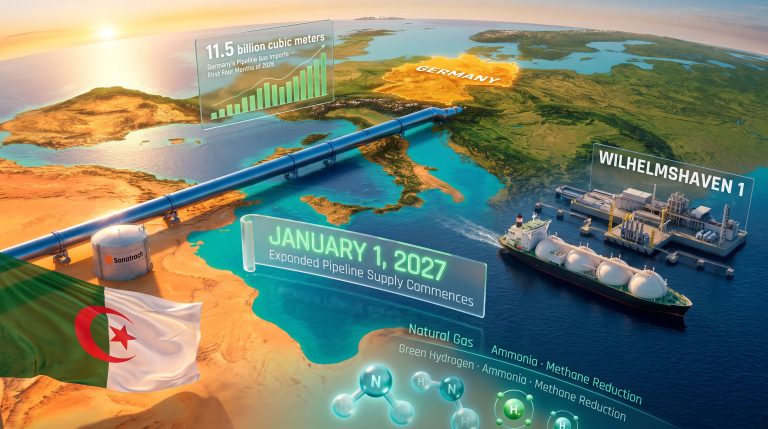
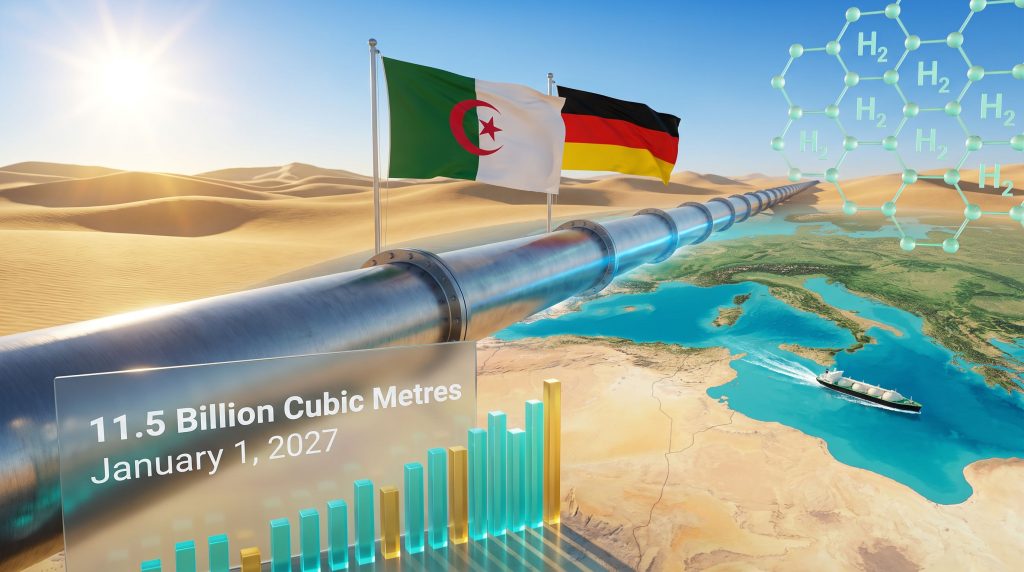
Germany, as Europe's largest natural gas consumer, faced the sharpest version of this challenge. During the first four months of 2026 alone, Germany imported 11.5 billion cubic metres of pipeline gas, representing approximately one quarter of total European pipeline gas imports over the same period. The volume is a reminder that no amount of energy efficiency progress has yet eliminated Germany's dependence on continuous, large-volume hydrocarbon supply chains.
Into this gap, North African suppliers, particularly Algeria, have been steadily inserting themselves. The geography is compelling: Algeria sits at the western end of the Mediterranean, connected to Italy and therefore to Central Europe's existing gas network via the Transmed pipeline. Unlike LNG, which requires liquefaction terminals, tanker fleets, and regasification infrastructure, Algerian pipeline gas can flow directly into the same network architecture that previously carried Russian supply. The capital intensity of establishing new delivery capacity is substantially lower than building greenfield LNG import terminals.
What the Sonatrach–VNG Deal Actually Involves
On July 17, 2026, during Algerian President Abdelmadjid Tebboune's official state visit to Berlin, Algeria's state energy company Sonatrach and German energy group VNG formalised an expanded pipeline gas supply agreement. The deal was signed in Berlin by Sonatrach CEO Nour Eddine Daoudi and VNG Chairman Ulf Heitmüller, with the ceremony co-chaired by Algerian Hydrocarbons Minister Mohamed Arkab and German State Secretary Frank Wetzel.
The agreement establishes increased pipeline gas deliveries to Germany commencing January 1, 2027. Specific volume commitments, contract duration, and financial terms were not disclosed publicly, which is consistent with the confidentiality norms governing major state-to-state energy procurement agreements.
Algerian Energy Minister Mohamed Arkab described the agreement as the culmination of a deepening relationship built on trust, and as a confirmation of Algeria's status as a dependable energy supplier to Europe. The diplomatic framing was deliberate: the deal was structured to signal durability, not opportunism.
The Commercial History Behind the Headlines
The July 2026 agreement did not emerge in isolation. Understanding its significance requires tracing the partnership's evolution over the preceding two and a half years.
| Milestone | Date | Strategic Significance |
|---|---|---|
| Initial Sonatrach–VNG pipeline gas agreement | February 2024 | VNG becomes first German company to purchase Algerian pipeline gas |
| Transmed pipeline activated for German deliveries | 2024 | Direct Algeria–Italy–Central Europe routing established |
| First Sonatrach LNG shipment to Germany | July 2, 2026 | Second supply route opened via sea-based delivery |
| Expanded pipeline supply agreement signed | July 17, 2026 | Volume increase confirmed; hydrogen cooperation formalised |
VNG's history adds important context. Prior to 2022, VNG was one of Germany's largest purchasers of Russian natural gas. The disruption of that supply forced a fundamental reorientation of its procurement strategy. Algeria, with its existing Transmed pipeline infrastructure and available export capacity, emerged as the most operationally feasible corridor for direct replacement. By becoming the first German buyer of Algerian pipeline gas in February 2024, VNG effectively set a commercial precedent that has now matured into a multi-vector energy partnership.
How Algerian Gas Actually Reaches Germany
The Transmed Pipeline: Infrastructure as Strategic Asset
The Transmed pipeline is the physical backbone of the Algeria–Germany supply relationship. Its routing traces a path from Algeria's gas production regions, through Tunisia, across the Mediterranean seabed, into Sicily, and then northward through Italy's gas network before connecting to Central European transmission infrastructure.
This existing corridor is what makes the Sonatrach gas supply deal with Germany commercially viable at the volumes being discussed. Unlike building a new pipeline, which would require years of planning, environmental assessment, and capital expenditure, the Transmed system already exists and has been operating for decades, primarily serving Italian buyers. Expanding utilisation toward Germany required contractual and logistical adaptation, not the construction of new physical infrastructure.
The pipeline's multi-jurisdictional routing, crossing Algeria, Tunisia, and Italy before entering the German-connected European grid, is both an asset and a risk factor. Each jurisdiction represents an independent political variable that could, in theory, interrupt flows. However, the diplomatic depth of the Algeria–Italy and Algeria–Germany bilateral relationships currently provides substantial political insulation against this scenario.
Dual-Route Supply: A Strategic Redundancy Few Competitors Can Match
What distinguishes the Sonatrach–VNG relationship from most bilateral energy arrangements is its dual-route architecture. On July 2, 2026, just two weeks before the expanded pipeline deal was formalised, Sonatrach delivered its first LNG shipment to Germany. This sea-based delivery opened a second, independent supply route, meaning German buyers can now receive Algerian gas via pipeline through Italy or via LNG tanker to German regasification terminals.
This dual-route capability is a structural advantage that few alternative suppliers can replicate at comparable scale. Norwegian gas arrives exclusively by pipeline. US LNG arrives exclusively by sea. Algeria can do both simultaneously, and can theoretically shift volume between routes in response to infrastructure disruptions, market conditions, or seasonal demand patterns.
This redundancy matters particularly in 2026. The closure of the Strait of Hormuz since February 2026 has materially constrained the flow of Gulf LNG to European markets, reducing effective competition from Qatari and other Middle Eastern suppliers and amplifying the relative attractiveness of pipeline-adjacent Algerian gas. Furthermore, the US-China trade war impacts have added further complexity to global energy commodity flows, indirectly reinforcing the appeal of stable bilateral supply agreements.
Algeria's Position Among Europe's Major Gas Suppliers
| Supplier | Primary Delivery Method | Key European Markets | 2026 Strategic Status |
|---|---|---|---|
| Norway | Pipeline (North Sea) | Germany, UK, Netherlands | Dominant; mature, near-capacity infrastructure |
| Algeria | Pipeline (Transmed) + LNG | Italy, Germany, Spain | Expanding; dual-route capability operational |
| United States | LNG | Germany, France, Netherlands | Growing but premium-priced relative to pipeline gas |
| Qatar | LNG | Germany, UK, Belgium | Constrained by Strait of Hormuz closure since February 2026 |
| Russia | Pipeline (suspended) | Germany (historical) | Effectively zero since 2022 |
Algeria's competitive positioning in the current environment rests on several reinforcing factors. Pipeline gas is generally cheaper to deliver than LNG on a per-unit basis once infrastructure is in place, because it eliminates liquefaction, shipping, and regasification costs. Algeria's geographic proximity to European markets via the Mediterranean reduces transit time and cost relative to Atlantic LNG routes. In addition, the Strait of Hormuz disruption has structurally weakened the pricing competitiveness of Gulf suppliers, at least in the near term.
Three Scenarios for Germany's Algerian Gas Dependency
The Sonatrach gas supply deal with Germany creates optionality rather than a single determined outcome. Three distinct strategic pathways could unfold depending on how volumes, diplomatic relationships, and energy transition timelines evolve.
Scenario A: Accelerated Concentration Risk
If Algeria scales deliveries aggressively through 2027 and beyond without parallel growth in other supply sources, Germany risks recreating a version of the Russian dependency problem it worked so hard to escape. The mitigation factors here include Algeria's dual-route supply architecture, its non-membership of OPEC+ for gas purposes, and the relative stability of the Algeria–Germany bilateral diplomatic framework, but concentration risk is a structural concern that energy security planners will be monitoring.
Scenario B: Balanced Multi-Source Portfolio
Algeria becomes one of three or four core gas suppliers alongside Norwegian pipeline gas, US LNG, and a residual LNG mix from other origins. Under this scenario, the Sonatrach–VNG deal anchors an African supply corridor within a genuinely diversified procurement matrix. Given Germany's post-2022 supply security doctrine, which explicitly prioritises source diversification, this scenario aligns most closely with stated policy intent. European energy storage investment is also playing a complementary role in reducing demand volatility across this multi-source framework.
Scenario C: Hydrogen Transition Bridge
Gas volumes peak in the late 2020s as green hydrogen infrastructure matures. The current pipeline gas deal functions as a commercial bridge that sustains the bilateral relationship and keeps infrastructure investment flowing while hydrogen export capacity is being developed. Algeria's active participation in both the ALTEH2A and SoutH2 Corridor initiatives positions this as the most strategically coherent long-term pathway.
The next major ASX story will hit our subscribers first
Beyond Natural Gas: The Algeria–Germany Hydrogen Horizon
ALTEH2A and the SoutH2 Corridor
The gas agreement signed in July 2026 was accompanied by a memorandum of understanding covering green hydrogen, ammonia, and methane emission reduction cooperation. This MoU directly links to two significant infrastructure and trade frameworks: the Algeria to Europe Hydrogen Alliance (ALTEH2A) and the SoutH2 Corridor.
ALTEH2A is a collaborative framework designed to develop Algerian green hydrogen production capacity at a scale capable of meaningful European export. The SoutH2 Corridor is an infrastructure initiative targeting the physical transport of green hydrogen from North Africa to Central Europe, likely through adapted pipeline networks that could share routing with existing or expanded natural gas infrastructure.
Why Algeria Is a Credible Hydrogen Export Candidate
Algeria's case for becoming a viable green hydrogen exporter rests on several interconnected advantages:
- Solar resource intensity: The Saharan regions of Algeria receive among the highest solar irradiance levels on the planet, enabling low-cost renewable electricity generation that would power electrolysis-based hydrogen production at competitive unit costs.
- Existing pipeline infrastructure: The same Transmed pipeline network that currently carries natural gas could, with modification, transport hydrogen blends or serve as a template for dedicated hydrogen pipeline investment.
- Strategic economic interest: Algeria's government has identified hydrogen export as a key pillar of its post-hydrocarbon economic diversification strategy, meaning institutional commitment to developing the sector is high.
- Competitive positioning vs. Morocco: Morocco is pursuing a parallel hydrogen export strategy with European backing. Algeria's established pipeline relationships with Italy, Spain, and now Germany give it a physical infrastructure advantage over Morocco's primarily LNG-route hydrogen export model.
The Ammonia Bridge: Near-Term Hydrogen Export Reality
Pure hydrogen is difficult to transport over long distances before dedicated pipeline infrastructure is operational. Ammonia (NH₃) has emerged as the preferred near-term hydrogen carrier, because it can be liquefied at relatively modest pressure and temperature conditions, transported via established chemical tanker routes, and reconverted to hydrogen at the destination.
The inclusion of ammonia in the Sonatrach–VNG MoU signals that both parties understand this technical constraint and are building a practical, staged export pathway rather than waiting for pure hydrogen transport infrastructure to materialise. This approach also intersects with green transition materials planning at the European level, where staged energy transition pathways are increasingly favoured over all-or-nothing infrastructure bets.
Germany's industrial hydrogen demand, concentrated in steel production, chemical manufacturing, and heavy industry, represents the primary demand anchor for any future Algerian hydrogen supply. The commercial logic of the current gas relationship therefore extends naturally into the hydrogen economy, with the same bilateral trust and infrastructure investment creating the foundation for a fuel transition that neither party can yet fully define in timeline terms.
Key Data Points at a Glance
| Data Point | Figure | Context |
|---|---|---|
| Germany's pipeline gas imports (Jan–Apr 2026) | 11.5 billion cubic metres | Approximately 25% of European pipeline gas imports |
| Initial Sonatrach–VNG agreement | February 2024 | First Algerian pipeline gas delivered to Germany |
| Expanded deal signing date | July 17, 2026 | Signed during President Tebboune's state visit to Berlin |
| Increased delivery commencement date | January 1, 2027 | Confirmed start date for expanded volumes |
| First Sonatrach LNG delivery to Germany | July 2, 2026 | Inaugural sea-based Algerian supply to German market |
| Strait of Hormuz closure | Since February 2026 | Reduced Gulf LNG competition; elevated Algerian pipeline premium |
Geopolitical Dimensions: When Energy Deals Carry Diplomatic Weight
The decision to sign the expanded Sonatrach–VNG agreement during a presidential state visit was not incidental. Energy agreements concluded at head-of-state level carry a different category of political durability than purely commercial contracts. They signal that the bilateral relationship itself is being staked on the deal's success, which functions as a form of non-contractual guarantee against supply disruption driven by short-term political friction.
Algeria has simultaneously been deepening gas supply relationships with Italy, historically its largest European customer via Transmed, and with Spain, while now expanding meaningfully into the German market. This multi-country European strategy diversifies Algeria's own customer concentration risk and embeds the country within the supply security frameworks of multiple major European economies simultaneously. Consequently, Europe's supply chain strategy is increasingly being shaped by these bilateral energy anchors rather than purely by bloc-level policy.
The result is a mutually reinforcing dependency: Germany needs Algeria's pipeline gas to maintain supply security while it builds out renewable capacity; Algeria needs Germany's long-term purchase commitments to justify the infrastructure investment required to develop green hydrogen export capability. The bilateral energy relationship is not a transaction, it is an evolving strategic entanglement that both governments have signalled an intention to deepen.
Frequently Asked Questions
What is the Sonatrach gas supply deal with Germany?
The expanded Sonatrach gas supply deal with Germany is a pipeline gas supply agreement signed on July 17, 2026, between Algeria's state energy company Sonatrach and German energy group VNG. It commits to increased pipeline gas deliveries commencing January 1, 2027, building on an initial mid-term contract signed in February 2024 that made VNG the first German buyer of Algerian pipeline gas.
How does Algerian gas reach Germany physically?
Algerian natural gas flows to Germany via the Transmed pipeline, which routes through Tunisia, crosses the Mediterranean seabed, enters Italy, and connects to Central Europe's broader gas transmission network. A second route opened in July 2026 via LNG tanker shipments to German regasification terminals, giving Algeria dual-route supply capability into the German market.
Does the deal include green hydrogen cooperation?
A memorandum of understanding signed alongside the gas agreement covers green hydrogen, ammonia, and methane emission reduction cooperation. Both companies are engaged in the ALTEH2A (Algeria to Europe Hydrogen Alliance) and SoutH2 Corridor initiatives, which aim to develop Algerian hydrogen production for European export.
Why is the Strait of Hormuz closure relevant to this deal?
The Strait of Hormuz has been closed since February 2026, significantly constraining LNG flows from Qatar and other Gulf producers to European markets. This has structurally improved the relative competitiveness of Algerian pipeline gas, which is unaffected by Middle Eastern maritime disruptions.
Who signed the agreement?
Sonatrach CEO Nour Eddine Daoudi and VNG Chairman Ulf Heitmüller signed the agreement, with Algerian Hydrocarbons Minister Mohamed Arkab and German State Secretary Frank Wetzel co-chairing the ceremony during President Abdelmadjid Tebboune's official state visit to Berlin.
Readers seeking continued coverage of African energy sector developments and North Africa's evolving role in European supply chains can follow ongoing reporting at Ecofin Agency, which provides sector-focused analysis across African economic verticals.
Disclaimer: This article contains forward-looking scenario analysis and projections regarding energy supply relationships, infrastructure development, and hydrogen trade timelines. These scenarios are illustrative and speculative in nature. Actual outcomes will depend on geopolitical, commercial, regulatory, and technical factors that cannot be predicted with certainty. This article does not constitute financial or investment advice.
Want to Track the ASX Stocks Positioned to Benefit From the Global Energy Transition?
Discovery Alert's proprietary Discovery IQ model delivers real-time alerts on significant ASX mineral discoveries — including the critical commodities driving the shift away from fossil fuels — instantly empowering subscribers to identify actionable opportunities ahead of the broader market. Explore Discovery Alert's dedicated discoveries page to see how historic ASX mineral discoveries have generated substantial returns, and begin your 14-day free trial today to position yourself ahead of the next major find.