
June 13, 2026
The Strait of Hormuz closure impact on aluminium market represents one of the most significant supply chain risks facing global commodity markets today. Maritime commerce bottlenecks create vulnerabilities that extend far beyond immediate transportation delays, particularly affecting aluminium markets where production concentration in politically volatile regions creates systematic economic risks. Furthermore, recent trade war oil impacts demonstrate how geopolitical tensions can rapidly escalate into widespread commodity disruptions.
Understanding the Strait of Hormuz's Role in Global Aluminium Trade
Why This 21-Mile Waterway Controls Aluminium Supply Chains
The Strait of Hormuz functions as more than just a shipping lane connecting the Persian Gulf to the Arabian Sea. This narrow passage, measuring approximately 21 nautical miles at its narrowest point, has evolved into a critical infrastructure chokepoint where maritime commerce dependency creates systematic economic vulnerability for global aluminium markets.
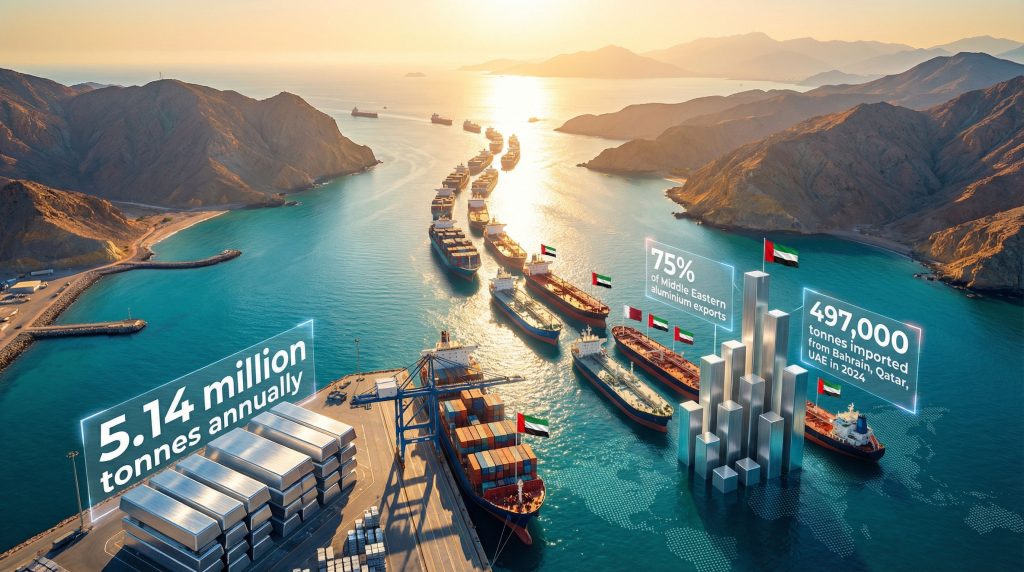
The strategic significance becomes evident when examining the volume of primary aluminium flowing through this corridor. Recent trade data indicates that approximately 5.14 million tonnes of primary aluminium transit the Strait annually, representing roughly 75% of Middle Eastern production. This concentration means that any disruption immediately threatens global supply chains that have been optimised for efficiency rather than resilience.
The geographic positioning of the Strait creates unique operational challenges that extend beyond simple transportation. Vessel monitoring systems and traffic separation schemes manage maritime flows through territorial waters controlled by both Oman and Iran, creating a complex regulatory environment where political tensions can instantly translate into commercial disruptions. Consequently, this has led to increased focus on market volatility hedging strategies.
The Economics Behind Middle East Aluminium Dominance
Middle Eastern aluminium production has reached unprecedented scale, with regional capacity exceeding 6.5 million tonnes annually. The Gulf Cooperation Council nations alone contribute over 6 million tonnes, while Iran adds approximately 550,000 tonnes to regional output. This production concentration stems from fundamental economic advantages that make Middle Eastern smelters globally competitive.
Energy cost arbitrage drives this competitive positioning. Aluminium smelting requires approximately 12-16 kilowatt-hours of electricity per kilogram of primary metal produced, making access to low-cost energy the primary determinant of production economics. Gulf states leverage abundant natural gas resources to power smelting operations at costs significantly below global averages.
The export-oriented business models of major regional producers create direct vulnerability to Strait of Hormuz disruptions:
• Bahrain: Aluminium Bahrain (Alba) operates approximately 900,000 tonnes of annual capacity
• UAE: Emirates Aluminium (EMAL) and Dubai Aluminium combined exceed 2.5 million tonnes
• Saudi Arabia: Ma'aden operates integrated bauxite-to-aluminium facilities
• Oman: Regional smelting operations focused on export markets
• Qatar: Qatar Aluminium maintains specialised alloy production
Port loading infrastructure at facilities like Jabel Ali, Abu Dhabi, and Salman Port Bahrain has been specifically designed to handle bulk aluminium shipments of 40,000-60,000 tonnes per vessel, creating economies of scale that depend entirely on uninterrupted maritime access through the Strait.
When big ASX news breaks, our subscribers know first
How Does a Strait Closure Immediately Impact Aluminium Prices?
Price Volatility Patterns During Maritime Disruptions
When maritime chokepoints close, commodity markets experience rapid repricing through three distinct phases that create compounding price pressures. The Strait of Hormuz closure impact on aluminium market manifests through both immediate panic responses and structural supply-demand rebalancing.
Recent market data from March 2026 demonstrates these dynamics in real-time. London Metal Exchange aluminium prices surged 2.17% overnight to reach USD 3,226 per tonne, representing a 5% weekly increase from the previous baseline of USD 3,077 per tonne. This price movement pattern follows predictable volatility mechanics during supply disruption events.
Table: Aluminium Price Response to Strait Closure Scenarios
| Timeframe | LME Price Impact | Premium Changes | Market Response |
|---|---|---|---|
| Day 1 | +2-3% surge | Regional premiums spike | Panic buying begins |
| Week 1 | +5-8% cumulative | +$20-60/tonne premiums | Inventory hoarding |
| Month 1 | +15-25% potential | +$100-200/tonne | Supply rerouting |
The Panic Phase (0-48 hours) triggers automated risk management protocols across futures markets. Stop-loss orders and margin calls create acute volatility as algorithmic trading systems respond to supply disruption signals faster than human analysis can process fundamental impacts. Additionally, the broader oil price rally creates compounding effects on energy-intensive aluminium production costs.
During the Supply Assessment Phase (2-7 days), market participants evaluate inventory buffers, alternative shipping routes, and production curtailment scenarios. This analytical period drives cumulative price increases of 5-8% as buyers compete for available supply and sellers demand premiums for inventory commitments.
Regional Price Differentials and Market Fragmentation
Physical market premiums represent the clearest indication of supply stress during Strait closures. Regional aluminium premiums, which are charges above LME spot prices, widen dramatically as transportation costs inflate and inventory holders demand compensation for storage risks and liquidity constraints.
European markets face particularly acute supply challenges despite Middle Eastern aluminium representing a relatively marginal supply source. The displacement effect occurs when traditional European suppliers redirect capacity to serve disrupted US and Asian buyers, creating secondary shortages across interconnected global markets.
US import dependency creates specific vulnerability zones. With 497,000 tonnes of primary aluminium imported from Bahrain, Qatar, and UAE in 2024, representing 14% of total US primary aluminium imports, American markets experience direct supply constraints. For instance, this mirrors concerns over US tariff effects creating similar supply chain vulnerabilities.
Premium escalation mechanics follow predictable patterns where physical inventory holders in supply-constrained regions can demand significant premiums above exchange prices. Buyers facing guaranteed delivery requirements pay these premiums rather than risk production shutdowns, creating sustainable price differentials that persist throughout disruption periods.
Which Countries Face the Greatest Aluminium Supply Risk?
US Import Dependency Analysis
The United States exhibits asymmetric supply chain vulnerability that extends beyond simple import statistics. While Middle Eastern sources provide 14% of total primary aluminium imports, this concentration creates disproportionate risk exposure because simultaneous loss of 497,000 tonnes requires emergency sourcing from geographically distant producers.
Critical supply chain nodes connecting Gulf production to US markets include specialised port loading infrastructure, transpacific shipping routes requiring 14-21 day transits, and receiving facilities at Long Beach and Houston ports. Each node represents a potential bottleneck during rerouting scenarios when alternative suppliers must rapidly scale delivery capacity.
The downstream product supply presents even greater challenges. The 112,800 tonnes of value-added aluminium products imported from Oman and Bahrain typically carry higher margins and longer lead times to replace. These products often serve critical aerospace and automotive applications requiring specific alloy specifications that may not be available from alternative suppliers on short notice.
US Supply Chain Vulnerability Breakdown:
• Primary Metal: 497,000 tonnes from Bahrain (Alba), Qatar (QAPCO), UAE (Dubal/EMAL)
• Downstream Products: 112,800 tonnes specialised plates, sheets, bars
• Critical End Uses: Aerospace components, automotive heat exchangers, defence applications
• Alternative Sources: Australian, Canadian, Russian producers at higher costs
European Market Exposure Assessment
European markets demonstrate greater supply diversification compared to US dependency patterns, with Middle Eastern aluminium serving as a marginal rather than critical supply source. However, the interconnected nature of global aluminium markets means European consumers still face significant exposure through displacement effects and competitive pressures for alternative sources.
Norwegian hydroelectric smelters, Russian producers despite sanctions constraints, and Canadian capacity provide European markets with more diversified sourcing options. Nevertheless, when primary buyers are displaced from Gulf sources, European downstream industries face supply constraints due to increased global competition for these alternative supplies.
Alternative Supply Chain Activation Scenarios
Chinese production capacity utilisation becomes critical during Middle Eastern supply disruptions, though domestic demand typically absorbs most Chinese output. Russian aluminium gains market share opportunities despite existing sanctions frameworks, as supply security concerns override political considerations during crisis periods.
Australian and Canadian producers benefit from displacement demand but face infrastructure constraints limiting rapid production scaling. Port capacity limitations at substitute terminals and transportation cost multipliers for rerouted shipments create practical limits on how quickly alternative suppliers can compensate for Gulf disruptions. Meanwhile, tariffs impacting trade add another layer of complexity to alternative sourcing strategies.
What Are the Cascading Effects Beyond Direct Aluminium Trade?
Energy Cost Amplification Through Oil Price Spikes
The dual impact of supply disruption combined with production cost inflation creates compounding pressure on global aluminium markets. When crude oil prices surge 3.84% to USD 80.93 per barrel, as documented during recent Strait tensions, the energy-intensive nature of aluminium smelting translates these increases directly into production cost pressures.
"Energy-Aluminium Price Correlation: Aluminium smelting consumes 12-16 kilowatt-hours per kilogram of metal produced. When energy costs increase through oil-indexed natural gas pricing, smelting operations face immediate margin compression that forces production curtailments or price increases to maintain profitability."
This energy-production cost linkage creates a multiplier effect where every 3-4% crude oil increase drives natural gas-indexed energy costs higher by approximately 2-3% with contract renewal lags. For energy-intensive smelting operations, this translates to 8-12% production cost increases that compound supply disruption impacts.
The geographic concentration of energy-intensive smelting in regions with abundant natural gas supplies means that energy cost inflation affects different producers asymmetrically. Gulf smelters with long-term gas supply contracts may initially avoid cost pressures, while European and Asian smelters face immediate margin compression.
Alumina Supply Chain Vulnerabilities
Aluminium smelting requires processed alumina (aluminum oxide) as feedstock, creating layered supply vulnerabilities that extend beyond primary metal production. Most Gulf smelters maintain only 3-4 week inventory buffers of alumina, indicating critical vulnerability windows where complete Strait closure forces production shutdowns within 4-5 weeks.
The alumina supply chain faces its own geographic concentration risks:
• Bauxite Mining: Australia and Guinea as primary sources requiring maritime shipping
• Alumina Refining: Energy-intensive processing with limited alternative locations
• Transportation: Alternative shipping routes requiring 15-40 day transits vs. 7-10 day normal routes
• Inventory Management: Just-in-time delivery systems vulnerable to disruption
Refinery production cost inflation occurs simultaneously as energy-intensive alumina refining experiences the same energy cost pressures affecting downstream smelting. This creates a double-binding constraint where smelters cannot reduce production costs through cheaper alumina sourcing because alumina supplies face similar cost and availability constraints.
Downstream Manufacturing Disruptions
Automotive Sector Impact:
Modern vehicles incorporate 8-10% aluminium content by weight, primarily in engine blocks, transmission housings, heat exchangers for electric vehicle batteries, and structural components. Supply chain lead times of 4-6 weeks from smelter to finished automotive parts mean a 4-week Strait closure prevents new automotive production from commencing immediately after reopening.
The backlog clearing process requires 8-12 weeks as automotive manufacturers work through delayed component deliveries and restart production lines. Luxury vehicles and electric vehicles face disproportionate impact due to higher aluminium content and specialised alloy requirements that may not be available from alternative suppliers.
Construction Materials:
Building construction timelines compress when aluminium becomes unavailable for curtain wall systems, roofing applications, and window frame manufacturing. Project delays worth USD 50,000-500,000+ per project create cascading effects through construction supply chains, affecting everything from residential housing to commercial real estate development.
Packaging Industry:
Approximately 50% of soft drink markets rely on aluminium cans, while pharmaceutical and food packaging applications require continuous aluminium supply for blister packs and flexible packaging materials. Consumer-facing shortages create visible market disruptions that amplify public awareness of supply chain vulnerabilities.
How Do Logistics Companies Respond to Strait Closures?
Maritime Shipping Route Diversification
When the Strait of Hormuz closes, shipping companies implement emergency rerouting protocols that fundamentally alter global maritime commerce patterns. The primary alternative route requires vessels to transit around the Cape of Good Hope, adding 14-21 days to typical journey times and increasing freight costs by 200-400% for affected shipments.
Container line strategic responses follow established crisis management protocols. Major carriers including MSC and Maersk implement booking suspension procedures that halt new containerised aluminium export commitments until alternative routing capacity can be secured. This immediate response prevents overselling transportation capacity during crisis periods.
Port infrastructure constraints become critical bottlenecks during rerouting scenarios. Alternative terminals at Suez Canal northern approaches, East African ports, and Indian Ocean facilities lack specialised bulk commodity handling equipment optimised for aluminium shipments. Consequently, elevated freight rates demonstrate the immediate cost implications of route diversification.
Container Line Strategic Responses
Insurance premium spikes represent one of the most immediate cost increases affecting rerouted aluminium shipments. Maritime insurance for Middle Eastern cargo can increase by 300-500% during political tensions, reflecting elevated risks of vessel detention, cargo confiscation, or physical damage during transit through alternative routes.
Container availability becomes constrained as existing containers remain in extended transit cycles due to longer journey times. A container that normally completes a Persian Gulf to US East Coast round trip in 45 days may require 65-75 days when rerouted, effectively reducing container fleet capacity by 30-40% for affected trade routes.
Freight forwarding companies implement alternative routing strategies that may include:
• Overland Transportation: Truck and rail connections through Turkey and European corridors
• Air Freight: High-value, low-weight aluminium products via cargo aircraft
• Transhipment Hubs: Using Dubai, Singapore, or European ports for cargo consolidation
• Alternative Departure Points: Shifting exports to Red Sea or Mediterranean ports
What Historical Precedents Guide Market Expectations?
Previous Maritime Chokepoint Disruptions
The 2021 Suez Canal blockage provides the most recent precedent for understanding how maritime chokepoint closures affect global commodity markets. When the Ever Given container ship blocked the canal for six days, crude oil prices increased 3-4% and container freight rates surged 5-10%, demonstrating how even brief closures create disproportionate market impacts.
However, the Strait of Hormuz represents a more critical chokepoint than the Suez Canal for several key reasons. The concentration of energy and aluminium production in Gulf states means alternative production sources cannot easily compensate for lost capacity, unlike Suez disruptions where cargo can be rerouted without affecting production centres.
The Iran-Iraq War period (1980-1988) offers historical context for extended Persian Gulf shipping disruptions. During the "Tanker War" phase, insurance premiums for Gulf shipping increased 500-1000%, and many commercial vessels avoided the region entirely. However, 1980s commodity markets were less globally integrated than current supply chains, making historical price impact data less applicable to modern scenarios.
Recovery Timeline Patterns
Maritime chokepoint closures typically create 2-4 week initial disruption periods, followed by 6-12 month supply chain normalisation phases, with permanent shifts in trade route preferences lasting 2-5 years. These timeline patterns reflect the complexity of rebuilding logistics networks and the conservative risk management approaches adopted by shipping companies after crisis events.
The initial disruption phase focuses on emergency inventory utilisation and spot market purchasing to maintain critical supply chains. During this period, price volatility reaches maximum levels as buyers compete for limited available supplies without clear visibility on disruption duration.
Supply chain normalisation requires rebuilding transportation networks, renegotiating shipping contracts, and establishing alternative supplier relationships. Even after physical shipping routes reopen, commercial relationships may permanently shift as buyers diversify sourcing to reduce future vulnerability to single chokepoint closures.
Recovery Phase Characteristics:
• Weeks 1-4: Emergency inventory depletion and spot market dependence
• Months 1-6: Alternative route establishment and contract renegotiation
• Months 6-12: Production capacity rebalancing and new supplier integration
• Years 1-3: Permanent supply chain diversification and risk management upgrades
The next major ASX story will hit our subscribers first
Which Aluminium Producers Face Operational Shutdowns?
GCC Smelter Vulnerability Assessment
Gulf Cooperation Council smelters face varying degrees of operational vulnerability during extended Strait closures, primarily determined by alumina inventory levels and alternative raw material sourcing capabilities. Facilities with integrated bauxite-to-aluminium production chains demonstrate greater resilience than smelters dependent on imported alumina.
Bahrain – Aluminium Bahrain (Alba):
Alba's approximately 900,000 tonnes of annual capacity relies on seawater cooling systems and imported alumina feedstock. The facility maintains 3-4 week alumina inventory buffers, meaning extended Strait closures would force production curtailments within one month. Alba's primary export markets in North America create direct revenue vulnerability during shipping disruptions.
UAE – Emirates Aluminium (EMAL) and Dubai Aluminium (Dubal):
Combined UAE capacity exceeds 2.5 million tonnes annually, representing the largest single-country exposure to Strait disruptions. These facilities benefit from proximity to Dubai's diversified port infrastructure, potentially enabling some cargo rerouting through alternative Gulf ports or overland transportation corridors.
Saudi Arabia – Ma'aden:
The integrated bauxite-to-aluminium production model provides Ma'aden with greater supply chain resilience during maritime disruptions. Domestic bauxite resources reduce dependence on imported raw materials, though finished aluminium export markets remain vulnerable to shipping constraints.
Production Curtailment Decision Matrices
Smelter operators evaluate production curtailment decisions based on multiple economic thresholds that weigh shutdown costs against continued operational losses. Aluminium smelting involves continuous high-temperature processes where complete shutdowns require 2-4 weeks for restart procedures and equipment recommissioning.
Economic Decision Factors:
• Variable Cost Coverage: Can current LME prices cover direct production costs?
• Inventory Capacity: How long can finished goods be stored awaiting export?
• Restart Costs: What are the technical and financial requirements for production resumption?
• Workforce Retention: Can skilled technicians be retained during temporary shutdowns?
The decision to curtail production becomes increasingly likely when alumina inventory drops below 2-week buffers and export shipping remains unavailable. Maintaining full production during export blockades requires costly inventory accumulation that ties up working capital and storage capacity.
Workforce retention strategies during temporary closures involve maintaining essential technical staff while implementing temporary layoffs for production workers. Skilled smelter operators and maintenance technicians require months of training, making workforce preservation critical for efficient restart procedures.
How Do Aluminium Premiums React to Supply Disruptions?
Regional Premium Structure Changes
Regional aluminium premiums provide the most sensitive indicator of supply chain stress during Strait of Hormuz disruptions. These premiums, charged above London Metal Exchange spot prices, reflect local supply-demand imbalances and transportation cost differentials that become magnified during shipping disruptions.
Table: Premium Evolution During Strait Disruption
| Region | Normal Premium | Week 1 Disruption | Month 1 Projection |
|---|---|---|---|
| Rotterdam | $280-320/tonne | $300-340/tonne | $400-500/tonne |
| Midwest US | $320-360/tonne | $380-420/tonne | $500-600/tonne |
| Japan | $180-220/tonne | $250-290/tonne | $350-400/tonne |
Midwest US Premium Escalation:
The US Midwest premium faces the most severe pressure due to direct import dependency on Gulf sources. Normal premiums of $320-360 per tonne can escalate to $500-600 per tonne within one month as buyers compete for alternative supplies from Canadian and South American producers.
Rotterdam Premium Dynamics:
European premiums experience secondary impacts as displaced US and Asian buyers compete for alternative supplies from Norwegian, Russian, and other European sources. The relatively smaller baseline premium of $280-320 per tonne reflects greater supply diversification, but disruption premiums still reach $400-500 per tonne.
Japanese Market Responses:
Japan's baseline premium of $180-220 per tonne reflects efficient maritime logistics and diverse supplier relationships. However, competition from displaced US buyers and higher shipping costs from alternative sources can drive premiums to $350-400 per tonne during extended disruptions.
Premium Arbitrage Opportunities
Significant premium differentials during supply disruptions create arbitrage opportunities for traders with inventory positions and transportation flexibility. When regional premiums diverge by $100-200 per tonne, traders can profit by redirecting inventory from lower-premium to higher-premium markets.
Inventory Positioning Strategies:
Sophisticated traders maintain strategic inventory positions in multiple regions to capitalise on premium arbitrage during disruption events. This requires significant working capital investment but can generate returns of 15-25% during crisis periods when premiums spike rapidly.
Financial hedging mechanisms become critical for managing arbitrage risks. Traders typically hedge underlying LME price exposure while maintaining exposure to regional premium differentials. This strategy isolates arbitrage profits from broader commodity price movements.
Premium Arbitrage Execution:
• Physical Inventory: Strategic positioning in multiple regional markets
• Transportation Contracts: Pre-negotiated shipping capacity for rapid deployment
• Financial Hedging: LME futures to isolate premium spread exposure
• Market Intelligence: Real-time monitoring of regional supply-demand imbalances
What Long-Term Strategic Shifts Emerge From Strait Closures?
Supply Chain Resilience Investments
Extended Strait of Hormuz closures accelerate fundamental shifts toward supply chain resilience rather than efficiency optimisation. Companies that previously prioritised cost minimisation through single-source suppliers begin investing in diversified sourcing strategies that trade efficiency for security.
Strategic inventory buffer increases represent one of the most immediate changes in corporate supply chain management. Companies historically maintaining 2-4 week inventory buffers expand to 8-12 week supplies to bridge potential future disruptions. This inventory expansion requires significant working capital increases but provides operational security during supply shocks.
Alternative transportation infrastructure investments accelerate as companies and governments recognise the vulnerability of maritime chokepoint dependence. These investments include:
• Overland Transportation: Railway and pipeline development connecting alternative ports
• Port Diversification: Expanding cargo handling capacity at non-Gulf facilities
• Storage Infrastructure: Strategic inventory facilities positioned near consumption centres
• Information Systems: Real-time supply chain visibility and risk monitoring platforms
Geopolitical Risk Pricing Models
Insurance cost integration into aluminium pricing becomes a permanent feature of market structure following major Strait disruptions. Companies begin incorporating political risk assessments into long-term supply contracts, creating explicit pricing mechanisms for geopolitical uncertainty.
Political risk assessment frameworks evolve from periodic reviews to continuous monitoring systems that integrate intelligence from multiple sources. These frameworks evaluate not just immediate military conflicts but also regulatory changes, trade policy shifts, and diplomatic tensions that could affect supply chain stability.
Supply security premiums become standard components of aluminium pricing models, similar to how energy markets price reliability. Buyers demonstrate willingness to pay 3-5% premiums for suppliers with diversified production locations and guaranteed delivery capabilities during crisis periods.
Risk Pricing Components:
• Geographic Diversification Premium: 2-3% for multi-region production
• Strategic Inventory Premium: 1-2% for guaranteed supply buffers
• Alternative Transportation Premium: 1-2% for non-chokepoint routing options
• Political Risk Insurance: 0.5-1.5% for comprehensive coverage
How Should Investors Position for Strait Disruption Scenarios?
Commodity Investment Strategies
Long aluminium positions during closure periods represent the most direct investment strategy, though timing and position sizing require careful risk management. Historical patterns suggest initial price spikes of 15-25% during the first month of disruptions, but volatility remains extreme throughout closure periods.
Energy sector correlation plays provide complementary exposure to Strait disruption scenarios. When crude oil prices surge 3.84% as documented during recent tensions, energy-intensive aluminium production costs increase proportionally, creating sustained upward pressure on aluminium prices beyond pure supply disruption effects.
Transportation stock opportunities emerge as shipping companies benefit from increased freight rates and route diversification demand. Container line operators and specialised bulk carriers can experience 20-40% revenue increases during rerouting periods, though higher operational costs offset some profit gains.
Investment Strategy Components:
• Direct Commodity Exposure: LME aluminium futures with 3-6 month expiration
• Energy Correlation Plays: Natural gas and crude oil positions
• Transportation Beneficiaries: Shipping lines and freight forwarders
• Regional Premium Exposure: Physical aluminium inventory in high-premium markets
Mining Company Valuation Impacts
Non-Middle Eastern aluminium producers experience premium valuations during Strait disruption scenarios as investors recognise the strategic value of geographic diversification. Australian, Canadian, and South American producers benefit from displacement demand while avoiding operational disruption risks.
Integrated supply chain companies demonstrate valuation advantages over single-stage producers during supply disruptions. Companies controlling bauxite mining, alumina refining, and aluminium smelting operations can manage raw material security while capturing margin improvements across the value chain.
Geographic diversification benefits become quantifiable premium factors in mining company valuations. Companies with production facilities across multiple continents trade at 10-15% valuation premiums compared to geographically concentrated peers during periods of heightened geopolitical risk.
Valuation Premium Factors:
• Production Geography: 5-10% premium for non-Middle Eastern facilities
• Supply Chain Integration: 3-5% premium for bauxite-to-aluminium operations
• Transportation Flexibility: 2-3% premium for multiple shipping route options
• Contract Diversification: 2-4% premium for global customer base
Frequently Asked Questions About Strait of Hormuz Aluminium Impact
How Long Do Strait Closures Typically Last?
Historical analysis indicates Strait closures average 2-8 weeks duration, though this data reflects limited precedents and highly variable political resolution timelines. The Iran-Iraq War period involved intermittent disruptions over several years, while more recent tensions have involved shorter closure threats resolved through diplomatic intervention.
Political resolution timeline factors include international diplomatic pressure, economic costs to all parties, and military strategic considerations that extend beyond commodity markets. Economic pressure points forcing reopening typically emerge within 2-4 weeks as energy and commodity price increases create global political pressure for resolution.
The interconnected nature of modern global trade means Strait closures affect multiple commodity streams simultaneously, creating broader economic disruptions that accelerate political pressure for resolution compared to historical precedents.
Can Alternative Routes Handle Full Volume Displacement?
Port capacity limitations at substitute terminals represent the primary constraint on volume displacement during Strait closures. Alternative Gulf ports, Red Sea facilities, and overland transportation corridors lack the specialised infrastructure and throughput capacity to handle full volume replacement without significant delays and cost increases.
Infrastructure constraints for bulk commodity handling include specialised loading equipment, storage facilities, and transportation connections that have been optimised for current trade routes. Rapidly scaling alternative infrastructure requires months or years of investment, not weeks of emergency deployment.
Time and cost multipliers for rerouted shipments create practical limits on economic substitution. When transportation costs increase 200-400% and delivery times extend by 14-21 days, many supply chains become economically unviable, forcing production curtailments rather than alternative sourcing.
Which Aluminium Grades Face Greatest Disruption?
Primary aluminium ingot exports experience the most severe disruption due to concentrated production in Gulf states and standardised transportation requirements. These products represent the highest volume exports through the Strait and face the most immediate impact from maritime shipping constraints.
Specialty alloy production faces disproportionate disruption despite lower volumes because replacement sourcing requires specific technical capabilities that may not be available from alternative producers. Aerospace and automotive applications requiring precise alloy specifications cannot easily substitute products from different suppliers.
Downstream product manufacturing vulnerabilities extend beyond primary metal supply to include value-added products like extruded profiles, rolled sheets, and fabricated components that support construction and manufacturing industries globally.
Preparing for Strait of Hormuz Aluminium Market Disruptions
Key Risk Mitigation Strategies
Supply chain diversification represents the most effective long-term strategy for managing Strait of Hormuz risks, though implementation requires significant time and capital investment. Companies must balance diversification costs against potential disruption impacts while maintaining competitive cost structures.
Strategic inventory management approaches involve expanding buffer stocks beyond traditional just-in-time models while implementing sophisticated demand forecasting to optimise inventory costs. This requires careful balance between working capital efficiency and supply security objectives.
Financial hedging instrument utilisation becomes critical for managing price volatility during disruption periods. Companies can hedge both underlying commodity price exposure and regional premium volatility through combination strategies using futures, options, and physical inventory positions.
Market Monitoring Indicators
Shipping traffic surveillance systems provide early warning indicators of potential Strait disruptions through vessel monitoring data and maritime insurance premium changes. Companies can subscribe to commercial intelligence services that track vessel movements and geopolitical risk indicators.
Price volatility threshold alerts help traders and supply chain managers identify emerging disruption scenarios before full market impact occurs. Automated monitoring systems can trigger emergency procurement or hedging actions when volatility exceeds predetermined thresholds.
Geopolitical tension escalation signals require integration of multiple information sources including diplomatic reporting, military activity monitoring, and energy market indicators that provide advance warning of potential Strait closures. However, the ongoing global aluminium supply concerns highlight how Middle East tensions continue to threaten trade flows.
Monitoring System Components:
• Vessel Traffic Data: Real-time shipping movements through the Strait
• Insurance Premiums: Maritime risk pricing for Gulf shipping
• Price Volatility: LME and regional premium threshold alerts
• Political Intelligence: Diplomatic and military activity indicators
The Strait of Hormuz closure impact on aluminium market represents one of the most significant supply chain risks facing global commodity markets, requiring proactive risk management strategies that balance efficiency with resilience in an increasingly interconnected world economy.
Ready to Navigate Aluminium Market Disruptions?
Discovery Alert's proprietary Discovery IQ model provides instant notifications on significant ASX mineral discoveries, including aluminium-related opportunities that emerge from global supply chain disruptions like Strait of Hormuz closures. Subscribers gain rapid insights into actionable trading opportunities powered by advanced AI technology that scans daily ASX announcements, transforming complex market dynamics into clear investment signals for both short-term traders and long-term investors positioning ahead of the market.