August 2, 2026
The World's Most Dangerous Chokepoint Is Back at the Center of Global Politics
Every few decades, the Strait of Hormuz reasserts itself as the single most consequential stretch of water on Earth. Trump cancels planned attack on Iran over Strait of Hormuz deal — and with that announcement, the fragile balance holding global energy markets together shifted dramatically. Not because of the strait's size — at its narrowest navigable point, it spans roughly 33 kilometres, with just two usable shipping lanes each approximately 3 kilometres wide — but because of what flows through it. Before the current conflict disrupted transit volumes, approximately one-fifth of the world's entire oil supply passed through this geographic bottleneck daily.
When that valve tightens, energy markets feel it instantly. When it closes entirely, the consequences cascade across every oil-dependent economy on the planet. That is precisely why the events of the weekend of 2 August 2026 — and the conditional agreement that preceded a planned U.S. military strike on Iran — carry implications that extend far beyond the bilateral tensions between Washington and Tehran. Understanding the crude oil price trends leading into this moment is essential context for what follows.
When big ASX news breaks, our subscribers know first
The Military Escalation That Brought Both Sides to the Brink
A Rapid and Dangerous Deterioration
The current conflict between the United States and Iran did not emerge overnight. Its roots stretch back to 28 February 2026, when open hostilities replaced the decades-long pattern of proxy-managed tension that had defined U.S.-Iran relations since the 1979 revolution. What followed was a progressive, geographic expansion of the conflict that drew in regional actors, threatened critical maritime infrastructure, and ultimately forced both sides toward a fragile diplomatic threshold.
The escalation timeline reveals just how rapidly the situation deteriorated:
- 13 July 2026: The United States reimposed a naval blockade on Iranian vessels, effectively preventing Iranian ships from entering or leaving their own ports.
- Late July 2026: U.S. Central Command completed what was described as a heavy wave of strikes against dozens of Islamic Revolutionary Guard Corps installations across Iran.
- Iran's response: Retaliatory strikes targeted U.S. military bases in both Kuwait and Bahrain, marking a significant expansion of the conflict's geographic footprint.
- 29 July 2026: The USS George H.W. Bush (CVN 77) was deployed to the U.S. 5th Fleet area of operations, signalling sustained American naval commitment to the region.
- Late Friday, 1 August: A tanker operating near Oman was struck, with a second vessel reporting an explosion in close proximity — incidents that immediately reignited oil market volatility.
- Thursday, 1 August: A drone attack struck two vessels at Egypt's Mediterranean port of Damietta, triggering a fire and representing the first attack on Egyptian soil since the conflict began.
- 2 August 2026: Trump announced via Truth Social that a planned military strike on Iran had been cancelled following a diplomatic request from Tehran and regional neighbours.
The June 17 MOU: A Ceasefire That Could Not Hold
A temporary ceasefire had been established through a memorandum of understanding signed on 17 June 2026. That framework broke down because neither side demonstrated willingness to move on the two central sticking points: Iran's nuclear programme and sovereign control of shipping through the Strait of Hormuz. The collapse of the June 17 agreement serves as the clearest case study in why verification mechanisms — not just signed documents — determine whether ceasefire frameworks actually hold.
Trump Cancels the Strike: What the Announcement Actually Means
A Conditional Stand-Down, Not a Resolution
Understanding the precise nature of Trump's 2 August announcement is critical for anyone interpreting its implications for energy markets, regional security, or diplomatic trajectories. The cancellation was explicitly framed as temporary and conditional. According to reports, Trump stated that Iran and regional neighbours had asked the U.S. to hold off on any attack given that the parameters of a deal had been agreed to, and that he had agreed — subject to being able to rapidly finalise a formal agreement.
Critically, the U.S. military posture did not change. Trump made clear that American forces remained fully prepared to resume strikes, with the language used suggesting immediate operational readiness. The involvement of Israel was also cited, with Trump noting that the country of Israel joins him in the commitment, effectively signalling that any deal failure would carry consequences not just from Washington but from Tel Aviv as well.
Critical distinction: This is not a ceasefire declaration. It is a temporary military stand-down with explicit conditions attached. The difference between the two has enormous implications for how energy markets, insurance underwriters, and regional governments should interpret the risk landscape over the coming weeks.
U.S. Embassy Warnings: Reading Between the Lines
On Saturday, 1 August, U.S. embassies in Iraq, Jordan, and the United Arab Emirates each issued warnings to American citizens advising them to consider immediate departure from the region or to be prepared to leave rapidly if the security situation deteriorated further. Embassy-level evacuation advisories of this nature are rarely issued without substantial intelligence backing, and their simultaneous issuance across three countries represented a significant signal of how seriously U.S. planners were treating the risk of imminent escalation.
What the Hormuz Deal Framework Actually Contains
The Two Pillars of the Reported Agreement
The agreement framework as described by Trump rests on two foundational pillars, though their implementation details remain undefined and unverified by independent parties:
- Immediate, complete, and total reopening of the Strait of Hormuz to international shipping, without conditions or Iranian-imposed restrictions.
- Substantive progress on Iran's nuclear threat, encompassing what the U.S. characterises as ending Iran's nuclear weapons capability — a demand that Tehran has consistently rejected on the grounds of civilian nuclear rights.
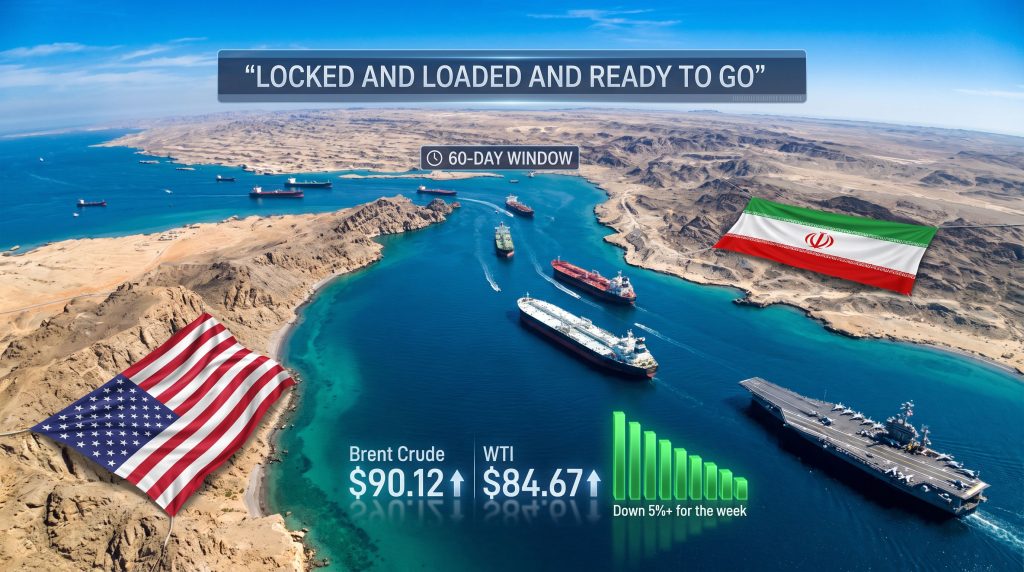
A reported 60-day negotiating window would serve as the operational timeframe for translating this preliminary outline into binding commitments. However, multiple dimensions of the deal remain either unresolved or actively contested.
Where the Two Sides Actually Stand
| Dimension | U.S. Position | Iran's Position | Reported Agreement Status |
|---|---|---|---|
| Strait of Hormuz | Immediate, permanent reopening | Conditional on lifting naval blockade | Temporary framework only |
| Nuclear Programme | Complete elimination of threat | Civilian programme is a sovereign right | Under active negotiation |
| U.S. Naval Blockade | Leverage tool, not a concession | Precondition for any meaningful talks | Unresolved |
| Regional Proxy Activity | Full cessation demanded | Characterised as sovereign policy | Not addressed in framework |
| Negotiating Window | Rapid finalisation required | Extended timeline preferred | 60-day window reported |
Iran's Public Response: Diplomatic Signalling or Genuine Distance?
Iran's Fars International state news agency characterised Trump's demands as amounting to a wish list — language that signals Tehran views the U.S. position as aspirational rather than agreed. This framing carries strategic intent: it preserves Iran's domestic political position while keeping negotiations technically alive.
Iran's Foreign Minister Abbas Araqchi was simultaneously conducting dual-track diplomacy. He engaged with his Saudi counterpart to communicate Iran's readiness to respond decisively to any further aggression, while separately warning both Turkey and Pakistan against participating in or facilitating what he characterised as adventurous action by the U.S. and Israel. Furthermore, these geopolitical trade tensions are reshaping supply chain calculations well beyond the immediate conflict zone.
Separately, a senior Iranian security official warned that continuation of the U.S. naval blockade would not merely tighten Iranian control over the Strait of Hormuz but would also trigger Iranian action to shut down additional maritime chokepoints — most notably the Bab el-Mandeb strait at the southern entrance to the Red Sea.
Why the Strait of Hormuz Is Irreplaceable
Geography as Strategy: Understanding the Chokepoint
The Strait of Hormuz is not simply an important waterway — it is structurally irreplaceable within the current global energy architecture. The nations whose energy export economics depend on unobstructed Hormuz passage include Saudi Arabia, the UAE, Kuwait, Iraq, and Iran itself. Qatar's liquefied natural gas export capacity is similarly dependent on Hormuz, making the LNG supply outlook another casualty of sustained closure.
Before the current conflict disrupted flows, an estimated 17 to 21 million barrels of oil per day moved through the strait. No pipeline network comes close to compensating for that volume in the event of closure:
- Saudi Arabia's East-West Pipeline (Petroline): Capacity of approximately 5 million barrels per day — useful as a partial bypass but nowhere near sufficient.
- UAE's Habshan-Fujairah Pipeline: Maximum capacity of approximately 1.5 million barrels per day, offering marginal relief for Emirati exports only.
The arithmetic is stark. Even if both bypass pipelines operated at full capacity simultaneously, they would cover less than a third of normal Hormuz transit volumes. A sustained closure would constitute a supply shock with no viable short-term remedy at scale.
Historical Precedent: What the Tanker War Teaches Us
The 1980s Tanker War — during which both Iran and Iraq targeted each other's oil infrastructure and neutral shipping in the Persian Gulf — offers a useful, if imperfect, historical parallel. During that period, insurance premiums on Persian Gulf tanker routes surged dramatically, shipping companies rerouted vessels through longer, more expensive corridors, and oil markets absorbed sustained volatility over a multi-year period.
The key difference today is scale: global oil demand is significantly higher than it was in the 1980s, and the alternatives available then — notably, higher spare production capacity among OPEC members — are more constrained now. Indeed, OPEC's market influence over spare capacity decisions will be a critical variable in how quickly any supply shock can be absorbed.
How Energy Markets Interpreted the Weekend's Events
Oil Price Movements: A Market Pricing in De-escalation
The energy market's reaction across the week ending 1 August reveals something important about trader psychology in conflict-zone markets: the dominant bet heading into the weekend was on de-escalation, not escalation.
| Date / Event | WTI Crude (per barrel) | Brent Crude (per barrel) | Weekly Movement |
|---|---|---|---|
| Friday, 1 August (close) | $84.67 (+1%+) | $90.12 (+1%+) | Down 5%+ for the week |
| Context | Tanker struck near Oman | Drone attack at Damietta port | Rally reversed weekly selloff |
The weekly decline of more than 5% is particularly telling. Oil markets had been selling off from the start of the week based on expectations that diplomatic progress would materialise — then reversed on Friday when the tanker incident near Oman and the Damietta drone attack introduced fresh escalation risk. This whipsaw pattern reflects the defining dynamic of conflict-zone energy pricing.
What Traders and Investors Are Watching in the 60-Day Window
For anyone with exposure to energy markets, crude futures, or tanker equities, the leading indicators over the next two months are:
- IRGC operational posture: The Islamic Revolutionary Guard Corps maintains significant institutional independence from Iran's civilian diplomatic apparatus. Whether IRGC naval and proxy operations align with government-level commitments is the central verification problem for any agreement.
- War-risk insurance premiums on tanker routes: These premiums function as real-time market-implied probability assessments of incident likelihood. Rising premiums signal that underwriters believe the deal is fragile; declining premiums indicate growing confidence in implementation.
- Houthi activity in Yemen: Iran-aligned Houthi forces retain the operational capacity to threaten the Bab el-Mandeb strait independently of any U.S.-Iran bilateral agreement.
- Tanker incident frequency: Each incident near Hormuz or Oman resets the market's probability calculation for both deal durability and oil supply risk.
The next major ASX story will hit our subscribers first
The IRGC Problem: Why Any Agreement Is Structurally Difficult to Verify
One of the least-discussed dimensions of U.S.-Iran negotiations is the structural gap between what the Iranian government agrees to and what the Islamic Revolutionary Guard Corps actually does. The IRGC controls Hormuz mining operations, manages naval assets capable of interdicting tanker traffic, and maintains command relationships with proxy networks across Yemen, Iraq, Lebanon, and the Palestinian territories that operate with varying degrees of autonomy.
This creates a verification problem that is fundamentally different from the challenge posed by traditional arms control agreements between state militaries. When the IRGC is the enforcing actor on the Iranian side of any Hormuz commitment, a signed government agreement does not automatically translate into changed operational behaviour at the tactical level. The collapse of the June 17 MOU illustrates this dynamic clearly.
Three Scenarios for the 60-Day Negotiating Window
Scenario 1: Successful Deal Finalisation
Hormuz reopens under a formal, internationally monitored framework. Nuclear talks proceed under structured verification mechanisms acceptable to both Iran and the U.S. The naval blockade is lifted in stages as Iran demonstrates compliance. Energy markets reprice downward, with Brent crude potentially returning toward the $70–75 range absent the conflict premium.
Scenario 2: Partial Agreement with Sustained Ambiguity
Hormuz reopens partially under monitored conditions, but nuclear talks stall on verification requirements. The U.S. maintains the naval blockade as leverage. IRGC operations continue at a reduced but ongoing level, creating periodic incident risk. Energy markets remain elevated and volatile, with war-risk insurance premiums staying high. This scenario, arguably the most probable, creates an extended period of managed instability rather than resolution.
Scenario 3: Deal Collapse and Resumed Military Operations
Negotiations fail to produce binding commitments within the 60-day window. The U.S. resumes military operations against Iran. As analysts have noted, oil prices could surge well above the $90.12 Brent level recorded on 1 August. Iran moves to tighten control over Hormuz and activates the Bab el-Mandeb threat through Houthi proxy operations. This scenario represents the tail risk that markets are currently discounting but not ignoring.
Investor note: The 5%+ weekly oil price decline seen heading into the 2 August announcement reflects the market's base case leaning toward Scenario 2 or better. A shift toward Scenario 3 would likely produce rapid and significant repricing across crude futures, tanker equities, Middle East-exposed energy stocks, and war-risk insurance instruments.
Frequently Asked Questions
Has the planned U.S. military strike on Iran been permanently cancelled?
No. Trump explicitly framed the cancellation as conditional on Iran's ability to rapidly finalise a deal. The U.S. military remains in a stated posture of full operational readiness to resume strikes.
What does the Strait of Hormuz deal framework actually require from Iran?
The reported framework calls for the immediate, complete, and total reopening of the Strait of Hormuz alongside substantive steps toward ending Iran's nuclear threat. Iran's state media has publicly characterised these demands as aspirational rather than agreed terms, suggesting significant distance remains between the two positions.
How long is the negotiating window before the military option returns?
Multiple reports reference a 60-day temporary ceasefire structure during which binding deal terms would need to be negotiated. The timeline is not publicly confirmed by both parties.
What happens to oil prices if the deal collapses?
A deal collapse would likely reverse the 5%+ weekly decline in crude prices seen in late July 2026, potentially pushing Brent crude significantly above the $90.12 level recorded on 1 August. A full Hormuz closure scenario would represent one of the largest supply shocks in the history of the oil market.
What is the Bab el-Mandeb strait, and why does it matter?
The Bab el-Mandeb is a narrow waterway connecting the Red Sea to the Gulf of Aden at the southern tip of Yemen. Iran-aligned Houthi forces in Yemen retain the capacity to threaten this route independently of any U.S.-Iran agreement, making it a potential second chokepoint that any Hormuz-focused deal would not automatically address.
Why did U.S. embassies in the region issue evacuation warnings?
Embassies in Iraq, Jordan, and the UAE each advised American citizens to consider immediate departure or prepare for rapid evacuation on 1 August 2026, reflecting serious intelligence-based assessments of imminent escalation risk — signals that were later partially reversed by Trump's cancellation announcement the following morning.
Disclaimer: This article contains analysis of geopolitical developments and their potential implications for energy markets. It does not constitute financial or investment advice. Energy market forecasts and scenario projections involve significant uncertainty, and actual outcomes may differ materially from any scenarios described. Readers should conduct their own due diligence before making any investment decisions.
Want to Track the ASX Resource Stocks Most Exposed to Oil and Energy Market Volatility?
Discovery Alert's proprietary Discovery IQ model delivers real-time alerts on significant ASX mineral discoveries the moment they hit the exchange, turning complex commodity and market data into actionable investment insights — particularly valuable when geopolitical shocks like the Strait of Hormuz crisis send energy and resource stocks into rapid repricing. Explore historic discoveries and their market returns, then begin your 14-day free trial at Discovery Alert to position yourself ahead of the next major market-moving announcement.