July 21, 2026
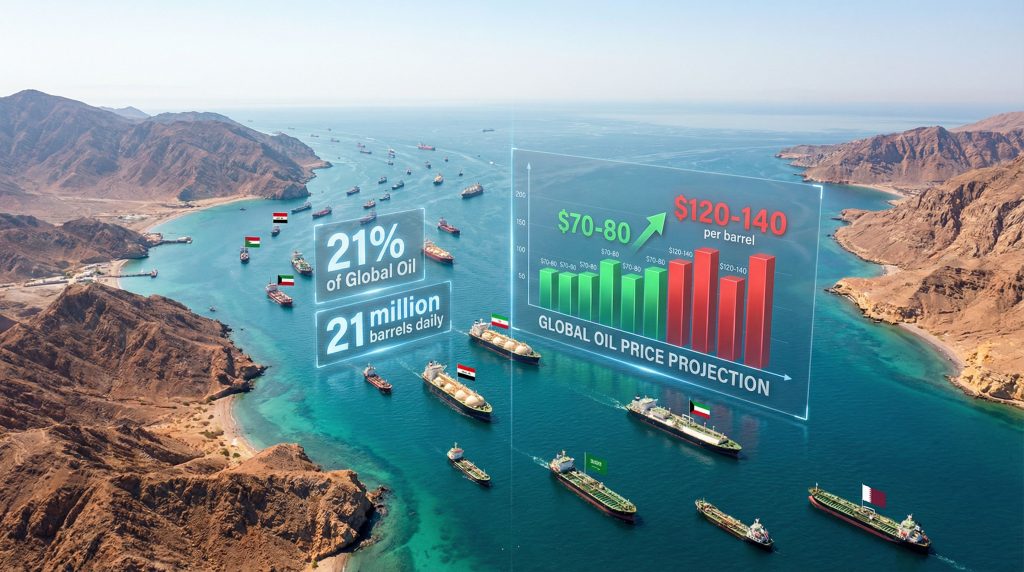
The closure of the Strait of Hormuz represents a nightmare scenario for global energy markets, threatening unprecedented disruption to international commerce and economic stability. Furthermore, with approximately 21% of global petroleum liquids and 25% of liquefied natural gas flows transiting this critical waterway, any prolonged blockade would trigger cascading effects across interconnected supply chains worldwide. Understanding these vulnerabilities reveals not just immediate economic consequences, but long-term structural transformations that reshape how nations approach energy security and independence.
What Makes the Strait of Hormuz Critical to Global Oil Supply?
The Geographic Chokepoint That Controls Global Energy Trade
The Strait of Hormuz represents the world's most critical energy transit route, facilitating passage for approximately 21% of global petroleum liquids and 25% of liquefied natural gas flows according to the U.S. Energy Information Administration. This narrow waterway, measuring just 21 nautical miles at its narrowest point, serves as the primary export corridor for major Persian Gulf producers including Saudi Arabia, Iraq, Kuwait, Qatar, and the United Arab Emirates.
The strategic importance extends beyond simple volume metrics. Daily transit through this passage averages 21 million barrels of oil, representing a concentrated flow that cannot be easily rerouted through alternative channels. The International Maritime Organization maintains designated traffic separation schemes through these waters, with established inbound and outbound lanes requiring approximately 12-14 hours for typical commercial vessel transit.
| Energy Flow Metric | Daily Volume | Global Share |
|---|---|---|
| Crude Oil Transit | 21 million barrels | 21% of global trade |
| LNG Shipments | 3.5 billion cubic feet | 25% of global flows |
| Regional Energy Exports | 85% of Gulf production | Critical supply source |
Maritime Infrastructure and Navigation Constraints
The strait operates under International Maritime Organization protocols established in 1979, featuring two 3-mile-wide shipping lanes separated by a 2-mile buffer zone. These designated corridors manage some of the heaviest commercial shipping traffic globally, with energy cargo representing the majority of transiting vessels.
Geographic constraints create natural vulnerability points. Consequently, the narrow passage forces all regional energy exports through a single maritime corridor, concentrating enormous economic value in a geopolitically sensitive area. Countries dependent on Persian Gulf imports face particular exposure, with Japan importing approximately 88% of crude requirements through this route, South Korea 70%, and India 65%.
Strategic Petroleum Reserve Systems and Emergency Response
Global strategic reserve systems exist specifically to address supply disruptions of this magnitude. However, the United States Strategic Petroleum Reserve maintains approximately 415 million barrels in emergency stocks, while International Energy Agency member countries collectively hold over 1.5 billion barrels in coordinated emergency reserves.
These reserve systems provide crucial buffer capacity, typically offering 90-180 days of import replacement depending on national consumption patterns and release rates. Nevertheless, strategic reserves represent short-term crisis management tools rather than long-term supply alternatives.
When big ASX news breaks, our subscribers know first
What Are the Immediate Economic Consequences of Strait Closure?
Historical Crisis Patterns and Price Volatility
Previous energy crises provide frameworks for understanding potential economic impacts from major supply disruptions. The 1973 oil embargo triggered price increases from approximately $3 to $12 per barrel (300-400% rise), while the 1979 Iranian Revolution drove prices from $14 to $40 per barrel (185% increase). The 1990 Gulf War created temporary spikes from $15 to $40 per barrel before military intervention restored supply chains.
Modern energy markets demonstrate different characteristics than historical precedents. Current global petroleum consumption approaches 102 million barrels daily, with more diversified supply sources and sophisticated financial instruments for price management. However, the concentration of Persian Gulf exports through a single chokepoint creates unique vulnerability compared to previous supply disruptions.
Cascade Effects Across Economic Sectors
Energy supply shocks generate multiplicative effects throughout interconnected economic systems. For instance, global oil price rally analysis reveals similar patterns of sectoral disruption during supply constraints:
- Transportation and Logistics: Shipping costs typically increase 25-35% due to longer alternative routes and fuel surcharges
- Petrochemical Industries: Naphtha and feedstock shortages disrupt plastic, fertilizer, and chemical production
- Agricultural Systems: Fertilizer supply constraints and elevated distribution costs threaten food security
- Manufacturing Sectors: Energy-intensive industries including aluminum, steel, and cement face substantial input cost increases
The 2022 European energy crisis provides recent precedent for understanding sectoral disruptions. LNG prices reached €100+ per megawatt-hour compared to historical ranges of 5-10 €/MWh, forcing fertilizer production shutdowns and manufacturing index declines of 10-15% across energy-intensive sectors.
Inflation and Macroeconomic Impacts
Historical analysis reveals strong correlations between energy crises and broader economic downturns. The 1973 embargo coincided with global recession featuring GDP contractions of 2-3% in developed economies, while the 1979 crisis contributed to stagflation with inflation reaching 13%+ in the United States and United Kingdom.
Oil represents approximately 5-8% of consumer price index calculations in major economies. Similarly, sustained energy price increases generate both direct inflationary pressure through transportation and heating costs, plus indirect effects through supply chain disruptions across multiple sectors.
Economic Assessment: Countries with higher renewable energy penetration rates demonstrate measurably lower vulnerability to fossil fuel price volatility, though transportation and heavy industry sectors remain exposed regardless of electricity generation mix.
Which Alternative Routes Could Compensate for Lost Capacity?
Pipeline Infrastructure and Bypass Capabilities
Several existing pipeline systems could partially offset maritime transit disruptions, though none possess sufficient capacity to fully replace normal shipping volumes. Moreover, energy transition challenges highlight the importance of diversified infrastructure:
| Alternative Route | Current Capacity | Maximum Potential | Key Limitations |
|---|---|---|---|
| Suez Canal/SUMED Pipeline | 4.8 million bpd | 6.2 million bpd | Egyptian political stability |
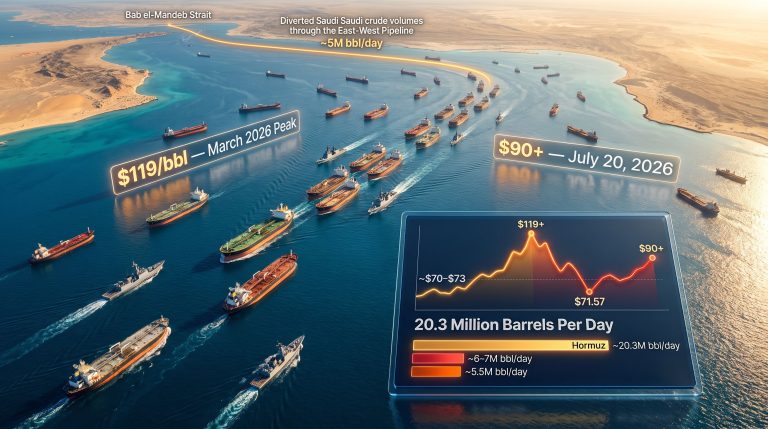
| Saudi East-West Pipeline | 5.0 million bpd | 5.0 million bpd | Single-country dependency |
| Iraq-Turkey Pipeline | 0.6 million bpd | 1.2 million bpd | Security vulnerabilities |
| Trans-Arabian System | Variable | Undisclosed | Operational constraints |
Verification of Pipeline Capacities
The Suez Canal Authority reports approximately 5 million barrels daily of oil transit through canal and SUMED pipeline systems combined. The canal itself handles 12-13% of global maritime trade, with oil representing a significant portion of cargo volume.
Alternative shipping routes through the Cape of Good Hope add approximately 10-14 days to transit times from the Persian Gulf to European and North American markets, substantially increasing transportation costs and supply chain complexity.
Regional Production Adjustments
OPEC+ spare production capacity, primarily concentrated in Saudi Arabia and other Gulf producers, could potentially offset 3-4 million barrels daily of lost production under normal circumstances. However, if these same producers face export constraints due to closure of the Strait of Hormuz, alternative OPEC members including Nigeria, Algeria, and Venezuela would need to maximise output.
Non-OPEC producers including the United States, Brazil, and Norway maintain limited spare capacity but could increase production gradually over periods of several months rather than immediate response timeframes.
How Would Different Regions Adapt to Supply Disruptions?
Asia-Pacific Vulnerability and Response Mechanisms
Asian economies face the greatest immediate exposure to Persian Gulf supply disruptions due to heavy import dependence and geographic proximity to affected shipping lanes. Consequently, Japan, South Korea, and India would likely implement coordinated emergency response measures. Furthermore, examining trade war strategies reveals how regional cooperation becomes crucial during supply crises:
- Strategic Reserve Deployment: Coordinated drawdowns from national emergency stockpiles
- Demand Management: Industrial energy allocation prioritising critical sectors
- Alternative Procurement: Accelerated contracts with West African, North American, and South American suppliers
- Transportation Fuel Rationing: Government-managed allocation systems for essential services
European Market Resilience Factors
European markets demonstrate relatively greater resilience due to diversified supply sources including North Sea production, pipeline imports from multiple regions, and established LNG infrastructure capable of receiving supplies from numerous global exporters.
The European Union's coordinated emergency response protocols provide frameworks for strategic reserve coordination and demand management across member states. Recent experience managing 2022 energy supply disruptions from the Russia-Ukraine conflict provides institutional knowledge for crisis response.
Developing Economy Impacts
Developing economies with limited strategic reserves and constrained foreign currency availability face disproportionate vulnerability to sustained energy price increases. Countries throughout Sub-Saharan Africa, parts of South Asia, and smaller island nations lack adequate buffer mechanisms to manage extended supply disruptions.
What Role Would Renewable Energy Play During Extended Closures?
Accelerated Deployment Scenarios
Historical precedent suggests major energy crises catalyse renewable energy investment and deployment. The 1973 oil embargo prompted significant government investments in alternative energy research and nuclear power expansion, while more recent supply disruptions have accelerated wind and solar development timelines.
Current renewable energy economics create different dynamics than previous crises. For instance, wind and solar electricity generation costs have reached parity or advantage compared to fossil fuel alternatives in most global markets, even before accounting for supply disruption premiums.
Grid Integration and Energy Security Benefits
Strategic Analysis: Nations with renewable energy penetration above 30% of electricity generation demonstrate measurably lower vulnerability to fossil fuel supply shocks, though transportation and industrial heating sectors remain exposed.
Countries including Denmark (over 50% renewable electricity), Spain (approximately 50%), and various others have developed grid management systems capable of handling high renewable penetration rates while maintaining supply reliability.
Investment Flow Redirection
Extended fossil fuel supply disruptions historically redirect capital investment toward energy security and independence. Similarly, closure of the Strait of Hormuz would accelerate clean energy transitions:
- Renewable Project Acceleration: Emergency permitting processes for wind and solar installations
- Energy Storage Development: Battery and other storage technologies to manage grid stability
- Electric Vehicle Infrastructure: Government incentives reducing transportation fuel dependency
- Energy Efficiency Upgrades: Industrial and residential efficiency improvements reducing overall demand
The venture capital and infrastructure investment communities typically respond to energy crises by increasing clean energy technology funding, accelerating deployment timelines by 3-5 years compared to baseline scenarios.
How Would Geopolitical Alliances Respond to Prolonged Closure?
International Energy Agency Emergency Protocols
The International Energy Agency maintains comprehensive emergency response systems designed specifically for major supply disruptions. Member countries coordinate strategic petroleum reserve releases following established protocols, with historical precedent for releasing 60-90 million barrels during initial 30-day crisis periods.
IEA emergency response mechanisms include demand restraint measures, fuel switching programs, and coordinated diplomatic engagement to restore normal supply flows through affected regions.
Military and Diplomatic Response Frameworks
International maritime law provides legal frameworks for maintaining freedom of navigation through critical shipping lanes. Historical precedent includes naval escort operations during the 1980s Iran-Iraq "Tanker War" and various UN Security Council operations.
Coalition naval forces would likely coordinate commercial vessel protection and potentially undertake operations to restore normal shipping traffic through blocked or threatened waterways, depending on specific circumstances and international consensus.
Alliance Structure Evolution
Extended energy crises typically strengthen existing alliance relationships while creating pressure for new cooperative frameworks. Energy-importing nations develop enhanced coordination mechanisms, while energy-exporting countries may adjust diplomatic and trade relationships based on crisis response effectiveness.
The next major ASX story will hit our subscribers first
What Long-Term Structural Changes Would Result?
Infrastructure Investment Transformation
Major energy supply disruptions create lasting changes in infrastructure investment priorities and energy security policy frameworks. Furthermore, US natural gas forecasts suggest increased domestic production becomes strategically critical:
- Diversified Supply Routes: New pipeline construction bypassing vulnerable chokepoints
- Enhanced Strategic Reserves: Expanded emergency stockpile requirements
- Regional Energy Hubs: Localised trading and distribution centres reducing dependency on global chokepoints
- Alternative Energy Scaling: Accelerated renewable deployment mandates
Policy and Regulatory Adaptations
Scenario Projection: Countries experiencing severe economic disruption during major supply crises typically implement permanent policy changes prioritising energy independence and supply diversification over pure cost optimisation.
Historical analysis reveals that energy security considerations become embedded in long-term policy frameworks following major crises. The 1973 embargo led to creation of strategic petroleum reserves, fuel economy standards, and alternative energy research programs that persisted for decades.
Market Structure Evolution
Extended supply disruptions accelerate structural changes in global energy markets. Moreover, global recession analysis indicates how energy crises compound broader economic vulnerabilities:
- Financial Instrument Development: Enhanced hedging and risk management tools
- Technology Innovation Acceleration: Breakthrough development timelines for storage, efficiency, and alternative fuel technologies
- Supply Chain Regionalisation: Reduced dependency on distant suppliers in favour of regional or domestic sources
- Emergency Response Institutionalisation: Permanent crisis management capabilities within government and industry
The 2022 European energy crisis demonstrated how supply shocks create lasting changes in procurement strategies, infrastructure investment, and international energy relationships that persist beyond immediate crisis resolution.
Renewable Energy Market Transformation
Major fossil fuel supply disruptions typically accelerate clean energy transitions by demonstrating the economic and security advantages of domestic renewable resources. Unlike oil and gas, renewable energy sources cannot be embargoed, blockaded, or controlled by foreign powers, providing inherent security benefits during geopolitical instability.
Investment capital flowing toward renewable energy during crisis periods often creates permanent market structure changes, with clean energy technologies maintaining cost and deployment advantages even after fossil fuel supply chains normalise.
Disclaimer: This analysis presents scenario-based projections and historical parallels for educational purposes. Actual outcomes during energy supply disruptions depend on numerous variables including crisis duration, international response effectiveness, and specific regional circumstances. Investment and policy decisions should consider multiple scenarios and professional analysis appropriate to specific situations.
Ready to Position Your Portfolio for Geopolitical Energy Disruptions?
Discovery Alert's proprietary Discovery IQ model instantly identifies significant ASX mineral discoveries that could benefit from supply chain disruptions and energy security concerns, turning complex geological data into actionable trading opportunities. Explore Discovery Alert's discoveries page to understand why strategic mineral discoveries can generate substantial returns during periods of resource scarcity, then begin your 14-day free trial to gain a market-leading advantage in critical minerals investing.