June 4, 2026
Understanding the Strait of Hormuz as a Global Commodity Chokepoint
Global commodity markets operate within an intricate web of geopolitical vulnerabilities that can trigger cascading price movements across multiple sectors. The aluminium industry, despite its industrial nature, remains particularly susceptible to disruptions in critical maritime chokepoints that facilitate international trade flows. Energy-intensive production processes, complex supply chains, and concentrated regional manufacturing create structural dependencies that amplify market volatility during periods of geopolitical uncertainty. Furthermore, the Strait of Hormuz tensions impact aluminium prices through multiple interconnected channels that require careful analysis.
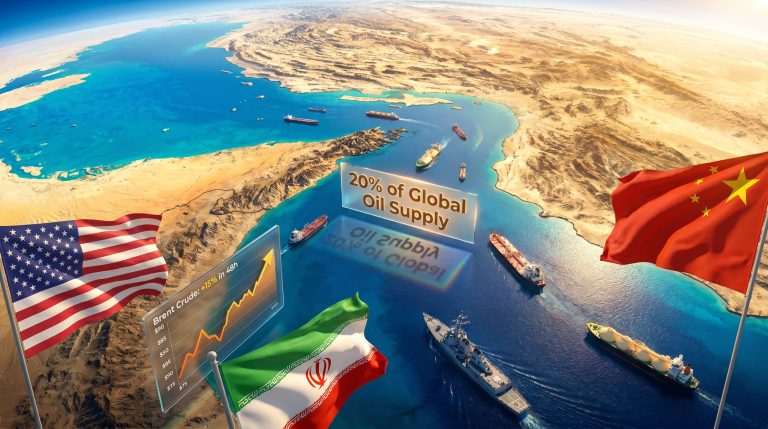
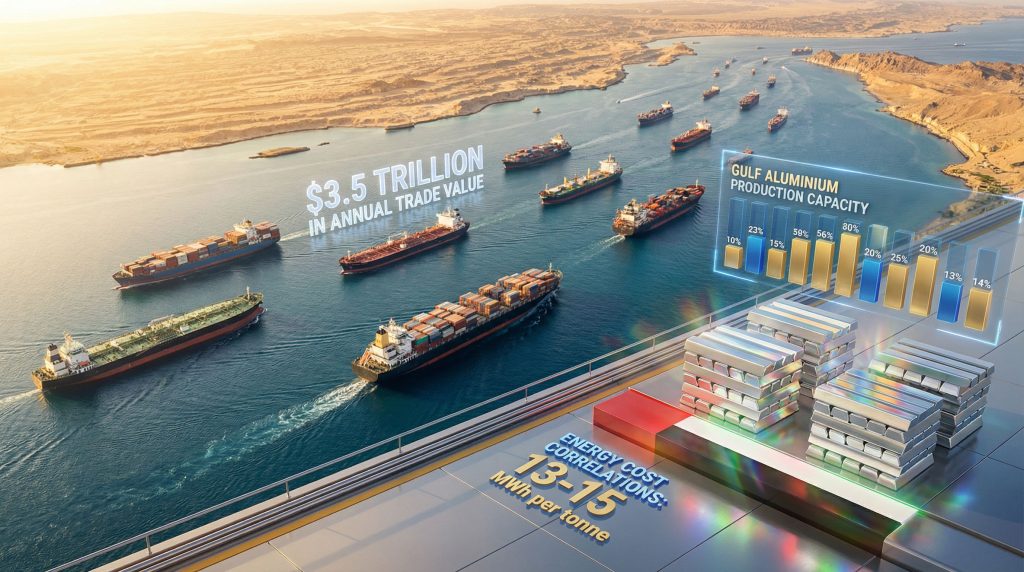
The strategic waterway connecting the Persian Gulf to the Gulf of Oman represents one of the world's most critical trade arteries, facilitating approximately $3.5 trillion in annual global commerce. This narrow passage, measuring just 21 miles at its narrowest point, serves as the primary conduit for energy exports from Gulf nations and creates significant vulnerabilities for international commodity flows.
Critical Trade Route Statistics and Economic Significance
The Strait of Hormuz handles multiple commodity categories that directly impact global aluminium market dynamics. However, the implications extend far beyond regional concerns, particularly when considering US steel & aluminum tariffs that compound existing supply chain pressures.
| Commodity Category | Annual Volume | Economic Value | Market Impact |
|---|---|---|---|
| Crude Oil | 21 million barrels/day | $2.1 trillion | Primary energy cost driver |
| Natural Gas (LNG) | 90 million tonnes | $450 billion | Smelting energy input |
| Aluminium Products | 2.8 million tonnes | $85 billion | Direct supply disruption |
| Industrial Materials | Various | $900 billion | Downstream effects |
Alternative shipping routes present significant cost premiums that directly impact commodity pricing structures. The Cape of Good Hope diversion adds approximately 3,500 nautical miles to typical Gulf-to-Europe routes, translating to additional transportation costs of $400-600 per container and extending delivery timelines by 14-21 days.
Historical Precedents of Strait Disruptions on Metal Markets
The 1987-1988 Tanker War during the Iran-Iraq conflict provides crucial insights into aluminium market behaviour during prolonged shipping disruptions. During this period, LME aluminium prices increased 23% over six months, despite global production capacity remaining largely intact. The price escalation resulted primarily from:
- Insurance premium increases of 300-400% for vessels transiting the Gulf
- Inventory hoarding by major consuming industries
- Speculative positioning by financial market participants
- Supply chain diversification costs absorbed by end-users
More recent precedents include the 2019 drone attacks on Saudi facilities, which triggered immediate aluminium futures volatility of ±4.5% within 48 hours, demonstrating the market's heightened sensitivity to Gulf region disruptions.
When big ASX news breaks, our subscribers know first
What Are the Primary Transmission Mechanisms Affecting Aluminium Markets?
The impact of Strait of Hormuz tensions on aluminium prices operates through multiple interconnected pathways that create both immediate and prolonged market effects. Understanding these transmission mechanisms enables market participants to better assess risk exposure and potential price trajectories. In addition, broader Trump tariff impact considerations must be factored into comprehensive risk assessment frameworks.
Direct Supply Chain Disruption Pathways
Gulf region aluminium production represents approximately 12% of global primary output, with the United Arab Emirates, Qatar, and Saudi Arabia collectively producing 7.2 million tonnes annually. The concentration of smelting capacity in this region creates direct supply vulnerabilities when shipping routes face disruption.
Key disruption pathways include:
- Raw material imports: Bauxite and alumina shipments to Gulf smelters face delays
- Finished product exports: Primary aluminium ingots experience transportation bottlenecks
- Intermediate products: Semi-fabricated goods encounter routing complications
- Logistical infrastructure: Port facilities and storage capacity constraints
Transportation cost escalations during route diversions typically range from $150-250 per tonne for bulk aluminium shipments, representing 4.5-7.6% of current market prices. These additional costs create immediate pressure on profit margins throughout the supply chain.
Energy Cost Amplification Effects
Aluminium smelting requires 13-15 MWh of electricity per tonne of production, making energy costs the single largest component of production economics. Gulf region smelters benefit from subsidised natural gas pricing, but Strait disruptions affect global energy markets through multiple channels. For instance, oil price movements during geopolitical tensions create ripple effects across all energy-intensive industries.
Natural gas price correlations with aluminium production reveal significant sensitivity patterns:
- 10% increase in regional gas prices typically translates to 3-4% higher smelting costs
- Energy-intensive smelters in high-cost regions become marginally uneconomical during sustained price spikes
- Production curtailments often follow within 60-90 days of sustained energy cost increases
Regional energy price differentials during supply disruptions can create temporary competitive advantages for smelters with long-term energy contracts or access to alternative fuel sources, leading to market share shifts that persist beyond immediate crisis periods.
How Do Financial Markets React to Geopolitical Risk in Commodity Pricing?
Financial market mechanisms amplify physical supply disruptions through speculative positioning, risk premium adjustments, and institutional investment flow changes. These financial transmission channels often create price movements that exceed fundamental supply-demand imbalances. Moreover, the US natural gas forecast plays a crucial role in determining regional production economics.
Risk Premium Calculation Models
Commodity markets incorporate geopolitical risk through measurable premium adjustments that reflect probability-weighted disruption scenarios. For aluminium markets, risk premium calculations typically consider:
- Duration probability: Likelihood of sustained disruption (1 week: 15%, 1 month: 8%, 3+ months: 3%)
- Severity assessment: Percentage of supply potentially affected (partial: 25%, significant: 60%, complete: 90%)
- Market memory effects: Historical volatility patterns influence current premium levels
During the March 2026 Strait tensions, LME aluminium cash prices reached $3,377.5 per tonne, representing a four-year high before settling at $3,298 per tonne as markets stabilised. This 2.35% daily decline followed initial risk premium incorporation, demonstrating typical market adjustment patterns.
According to industry analysis from Fastmarkets, volatility index correlations during crisis periods show aluminium price swings typically increase by 40-60% above baseline levels, with options markets pricing in potential price ranges of ±15-20% over 30-day periods.
Institutional Investment Flow Analysis
Exchange-traded funds and commodity-focused investment vehicles create additional demand dynamics during geopolitical tensions. Analysis of institutional positioning reveals several behavioural patterns:
- ETF inflows typically increase 25-40% during initial crisis periods
- Pension fund allocations to commodities rise 2-3 percentage points during sustained uncertainty
- Central bank reserve diversification into physical commodities accelerates during currency volatility
These investment flows create feedback loops where financial demand amplifies industrial demand concerns, leading to price movements that may disconnect from underlying supply-demand fundamentals.
What Are the Regional Production and Consumption Imbalances?
Global aluminium production and consumption patterns create structural vulnerabilities when key shipping routes face disruption. Understanding these imbalances helps explain why relatively localised transportation issues can generate worldwide price impacts. Consequently, tariff market effects become amplified during periods of supply chain stress.
Gulf Region Aluminium Production Capacity
The concentration of smelting capacity in Gulf nations reflects historical advantages in energy costs and strategic positioning for raw material imports. Current production statistics highlight this regional dependence:
| Country | Annual Production | Global Share | Export Dependency |
|---|---|---|---|
| UAE | 2.8 million tonnes | 4.2% | 78% exported |
| Qatar | 1.9 million tonnes | 2.8% | 85% exported |
| Saudi Arabia | 1.1 million tonnes | 1.6% | 65% exported |
| Bahrain | 1.0 million tonnes | 1.5% | 82% exported |
Export dependency ratios for major consuming regions reveal critical vulnerabilities. European manufacturers source approximately 18% of aluminium imports from Gulf producers, while Asian markets depend on Gulf supplies for 22% of total imports.
Alternative Supply Source Activation
When primary shipping routes face disruption, global markets must activate alternative supply sources that often operate at higher cost structures. China maintains strategic aluminium reserves of approximately 1.8 million tonnes, but reserve releases require government authorisation and typically occur only during severe market disruptions.
North American production capacity utilisation currently operates at 87%, providing potential for increased output during supply shortages. However, ramping production requires:
- 60-90 day lead times for mothballed smelter reactivation
- Higher marginal costs of $200-400 per tonne compared to Gulf producers
- Environmental permitting considerations for increased production levels
Australian bauxite-to-alumina supply chain resilience provides some buffer capacity, but transportation logistics still depend on functional maritime routes for global distribution.
How Do Transportation Costs Cascade Through the Aluminium Value Chain?
Transportation cost increases during shipping disruptions create cascading effects throughout the aluminium value chain, impacting everything from raw material procurement to finished product delivery. These cost pressures often persist beyond immediate crisis resolution due to contract adjustments and supply chain restructuring.
Shipping Rate Escalation Analysis
Container and bulk carrier rates experience dramatic increases when alternative routes must accommodate diverted cargo volumes. During Strait disruptions, typical rate escalations include:
- Bulk carriers: $45-65 per tonne increase for Cape route diversion
- Container ships: 150-200% premium above standard Gulf-Europe rates
- Specialized carriers: Custom transport solutions command 250-400% premiums
Time-to-market delays compound financial impacts through increased inventory carrying costs and supply chain disruption expenses. Extended shipping times require manufacturers to maintain higher safety stock levels, typically increasing working capital requirements by 8-12%.
Insurance premium escalations for commodity vessels can reach 300-400% of standard rates during active conflict situations, adding approximately $25-40 per tonne to delivered aluminium costs.
Downstream Industry Impact Assessment
Different aluminium-consuming industries exhibit varying sensitivity to input cost increases, creating differential impacts across economic sectors:
Automotive Sector Analysis:
- Aluminium represents 8-12% of total vehicle material costs
- Price elasticity of -0.3 means 10% aluminium price increases reduce demand by 3%
- Substitution potential exists but requires 12-18 month design cycle adjustments
Construction Industry Dynamics:
- Building materials typically absorb 60-80% of cost increases through pricing mechanisms
- Contract structures often include commodity price adjustment clauses
- Project delays may occur if cost increases exceed 15% thresholds
Packaging Sector Vulnerability:
- High volume, low margin operations face immediate profitability pressure
- Limited substitution options for beverage can applications
- Consumer price sensitivity constrains pass-through pricing ability
What Are the Long-Term Strategic Implications for Aluminium Markets?
Recurring disruptions to critical shipping routes drive structural changes in global aluminium industry organisation and investment patterns. These strategic shifts often outlast immediate crisis periods and reshape competitive dynamics across regional markets. Furthermore, the Strait of Hormuz tensions impact aluminium prices through fundamental changes in global supply chain architecture.
Supply Chain Resilience Investment Trends
Major aluminium producers and consumers increasingly prioritise supply chain diversification over cost optimisation, leading to significant capital allocation shifts:
- Regional production capacity expansion: $12 billion in announced investments for non-Gulf smelting projects
- Strategic stockpile accumulation: Major consumers target 60-90 day inventory buffers, up from historical 30-45 day levels
- Transportation infrastructure: Alternative port facility development and logistics network redundancy
Technology investments in energy-efficient smelting technologies enable production economics in higher-cost regions, reducing dependence on subsidised energy markets. Advanced smelting processes can reduce energy consumption by 15-20%, making previously uneconomical locations viable for production.
Geopolitical Risk Hedging Strategies
Financial instrument development for commodity risk management has accelerated, providing market participants with more sophisticated hedging options:
- Freight rate derivatives allow separation of commodity price risk from transportation cost volatility
- Regional price differential swaps enable hedging of location-specific supply disruptions
- Political risk insurance products specifically designed for commodity supply chains
Government-to-government supply agreements increasingly supplement commercial trading relationships, with bilateral strategic partnerships covering approximately 25% of international aluminium trade flows.
The next major ASX story will hit our subscribers first
How Should Investors and Industry Players Position for Future Disruptions?
Market participants require sophisticated risk management frameworks that account for both temporary disruptions and permanent shifts in global trade patterns. Successful positioning strategies must balance cost optimisation with supply security considerations.
Portfolio Risk Management Frameworks
Correlation analysis between geopolitical events and aluminium returns reveals predictable patterns that enable systematic risk management approaches:
- Initial shock phase (days 1-5): Price increases of 5-15% with high volatility
- Assessment period (weeks 2-4): Price consolidation as markets evaluate disruption severity
- Adaptation phase (months 2-6): New equilibrium pricing incorporating structural changes
Hedging instrument selection criteria should prioritise:
- Liquidity depth during stress periods
- Basis risk minimisation between hedge instruments and physical exposure
- Cost efficiency relative to potential loss mitigation
- Operational flexibility for dynamic position adjustment
Diversification strategies across metal commodities can reduce portfolio volatility, as aluminium often exhibits lower correlation with precious metals during geopolitical stress periods compared to industrial metals like copper or zinc.
Scenario Planning and Stress Testing
Market participants must develop robust scenario frameworks that account for both temporary disruptions and permanent shifts in trade patterns, requiring continuous reassessment of risk parameters and hedging strategies.
Monte Carlo simulation models for price forecasting should incorporate multiple variables:
- Duration probability distributions for various disruption scenarios
- Magnitude assessment ranges based on historical precedents
- Recovery timeline assumptions accounting for supply chain adaptation periods
- Secondary effect calculations including financial market amplification factors
Break-even analysis for alternative supply arrangements helps determine optimal risk tolerance levels. Companies with 25% or greater aluminium input costs often benefit from long-term supply agreements that include 10-15% price premiums in exchange for supply security guarantees.
Stress testing frameworks should evaluate portfolio performance under extreme scenarios including:
- Complete Strait closure for 30-90 day periods
- Partial disruption with 50% capacity reduction for 6-12 months
- Permanent supply chain reorganisation requiring new logistics networks
Critical Market Intelligence and Industry Dynamics
Recent market developments provide additional context for understanding how the Strait of Hormuz tensions impact aluminium prices. Citi analysts have raised LME aluminium price targets from $3,400 to $3,600 per tonne, with bull-case scenarios reaching $4,000 during sustained supply disruptions.
Inventory dynamics reveal underlying market tightness, with LME aluminium stocks at 461,125 tonnes as of March 2026, representing historically low levels relative to consumption rates. As reported by NBC News, industry experts note that while global inventories remain at relatively comfortable levels, regional disparities create vulnerability to localised disruptions.
Live warrants maintaining levels around 377,100 tonnes indicate immediate delivery availability, but cancelled warrants fluctuations of 2-3% weekly suggest active inventory repositioning by market participants anticipating supply chain adjustments.
The LME three-month Asian Reference Price averaging $3,296 per tonne reflects regional premium structures that incorporate transportation risks and local supply-demand dynamics. These pricing differentials provide early warning indicators of developing supply chain stress.
Energy market correlations remain critical, with natural gas price movements directly impacting smelter economics. Facilities operating with long-term energy contracts maintain competitive advantages during volatile periods, while spot market exposed producers face margin compression.
Disclaimer: This analysis contains forward-looking statements and market projections based on current information and historical patterns. Actual market outcomes may differ significantly from projections due to unforeseen geopolitical developments, economic conditions, or industry-specific factors. Readers should conduct independent research and consult qualified financial advisors before making investment decisions.
Looking for Early Insights Into Market-Moving Mineral Discoveries?
Discovery Alert delivers instant notifications on significant ASX mineral discoveries using its proprietary Discovery IQ model, helping investors identify actionable opportunities before broader market recognition. With commodity markets increasingly vulnerable to geopolitical disruptions like those affecting the Strait of Hormuz, staying ahead of supply-side developments becomes crucial for maintaining competitive advantage in volatile trading environments. Begin your 14-day free trial today to position yourself ahead of the market.