
August 1, 2026
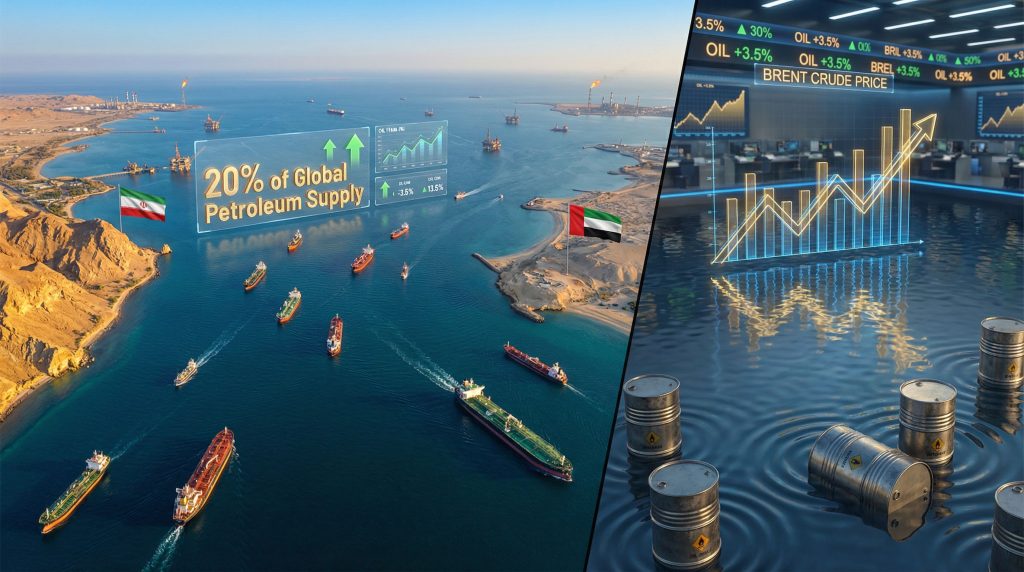
Global energy markets operate within a delicate framework where single chokepoints can trigger cascading disruptions across continents. The intricate web of petroleum infrastructure, refined product networks, and maritime logistics creates vulnerability patterns that extend far beyond immediate supply constraints. Understanding these systemic risks requires analyzing how market mechanisms respond to infrastructure threats, insurance premium calculations, and the complex interplay between geopolitical tensions and commodity pricing structures. The Strait of Hormuz oil disruption represents a critical vulnerability that exemplifies these interconnected risks.
Understanding the Strategic Importance of Middle Eastern Energy Chokepoints
Geographic and Economic Fundamentals of Global Oil Transit Routes
Maritime petroleum transportation relies on several critical passages that collectively determine global energy security. The Strait of Hormuz oil disruption represents the most significant single-point failure risk in international energy infrastructure, with approximately 21-22 million barrels per day flowing through this narrow waterway. This volume constitutes roughly 20-21% of globally traded petroleum, making any disruption capable of triggering immediate price volatility across international markets.
The strait's geographic constraints create inherent vulnerability. At its narrowest point, the waterway spans just 21 miles, with the northbound shipping lane compressed to approximately 2 miles wide. These physical limitations mean that even minor security incidents can halt maritime traffic entirely, as demonstrated by recent events where ship strikes effectively eliminated oil transit through the passage.
Comparative analysis reveals the strategic significance of different chokepoints:
| Chokepoint | Daily Oil Transit (Mbd) | Strategic Risk Level | Recovery Complexity |
|---|---|---|---|
| Strait of Hormuz | 21-22 | Extremely High | Extended timeline |
| Strait of Malacca | 25-30 | High | Alternative routes available |
| Suez Canal | 4-5 | Moderate-High | Bypass options exist |
| Panama Canal | 0.5-1.0 | Moderate | Limited petroleum impact |
The economic multiplier effects become apparent when examining OPEC oil production impact and disruption's downstream consequences. Storage facilities in the Persian Gulf region begin reaching capacity within days of transit halts, forcing upstream production curtailments that cascade through global supply chains.
Infrastructure Density and Vulnerability Assessment in the Persian Gulf
The Persian Gulf region concentrates approximately 11 million barrels per day of refining capacity across Gulf Cooperation Council nations. This industrial clustering creates sequential vulnerability points where disruptions compound rather than remain isolated. Key facilities include Saudi Arabia's Ras Tanura refinery with 550,000 barrels per day capacity and Kuwait's Mina Al-Ahmadi facility processing 350,000 barrels daily.
Storage terminal networks represent critical infrastructure nodes that amplify disruption impacts. The Port of Fujairah serves as a strategic bypass route for 1.8-2.0 million barrels per day of crude that would otherwise transit the Strait of Hormuz. When facilities like Fujairah experience operational disruptions, alternative export pathways become eliminated, concentrating risk through remaining channels.
The interconnected nature of upstream and downstream operations creates cascading effects:
- Crude production from major fields: Ghawar, Safaniyah, Zakum, offshore Qatar fields
- Refining capacity at integrated facilities across UAE, Saudi Arabia, Kuwait
- Export terminals at Fujairah, Ras Laffan, Yanbu, Shuaiba
- Pipeline systems connecting inland production to coastal export facilities
This infrastructure density means that targeted disruptions can simultaneously affect multiple supply chain segments, amplifying market impacts beyond simple capacity calculations. Furthermore, understanding OPEC's global market influence becomes crucial when assessing these infrastructure vulnerabilities.
When big ASX news breaks, our subscribers know first
What Are the Immediate Market Mechanisms Behind Oil Price Volatility?
Futures Market Response Patterns During Geopolitical Crises
Oil futures markets exhibit distinctive behavioral patterns during supply disruption events. Recent market action demonstrates these mechanisms clearly: front-month Brent crude rose $5.66 per barrel to $83.40, while the prompt spread widened to $2.65 per barrel. This spread widening indicates a contango market structure where near-term supply concerns drive immediate price premiums while forward contracts reflect expectations of eventual supply normalization.
The technical dynamics involve several key mechanisms affecting oil price rally dynamics:
Fear Premium Development:
- Normal prompt spreads typically range $0.50-1.00 per barrel
- Crisis-driven spreads can expand to $2.50-3.00 per barrel
- This reflects traders pricing heightened near-term supply risk while maintaining longer-term stability expectations
Algorithmic Trading Amplification:
- Institutional algorithmic systems represent 15-25% of daily crude futures volume during normal conditions
- During crises, algorithmic participation can spike to 40-50% of total volume
- Momentum-following strategies create feedback loops that magnify initial supply shock signals
Historical precedent analysis reveals consistent patterns. During the 1987-1988 Tanker War, crude prices escalated from approximately $15-18 per barrel to peaks exceeding $40 per barrel. The 2019 Abqaiq attacks generated an immediate $9 per barrel intraday spike in Brent crude, with markets closing $5.75 per barrel higher.
Insurance and Shipping Cost Escalation Dynamics
War risk premium calculations form a critical component of market price discovery during geopolitical crises. Lloyd's of London marine insurance operates through percentage-based premiums calculated against cargo value. During the 2019 tanker attacks, war risk premiums spiked to 150-200 basis points, equivalent to 1.5-2% of cargo value.
For practical context, $60 per barrel crude carrying a 2% war risk premium adds $1.20 per barrel in additional transportation costs. These premiums compound through the supply chain, affecting final consumer prices beyond the underlying commodity cost.
Shipping Rate Escalation Patterns:
- Normal charter rates: $20,000-30,000 daily for large crude carriers
- Crisis period rates: $80,000-150,000 daily during peak risk periods
- Historical precedent: 300-400% rate increases during 1987-1988 Tanker War
Insurance underwriting patterns reveal additional market mechanisms. Major insurers respond to elevated risks through:
- Premium increases reflecting probability-adjusted loss calculations
- Coverage limit reductions from standard $100 million to conditional $50-75 million policies
- Exclusion zone expansion removing coverage for specific geographic areas
These adjustments create secondary market effects where vessel availability decreases as operators avoid high-risk routes, further constraining transportation capacity and elevating freight costs.
Which Alternative Supply Routes Can Mitigate Hormuz Disruptions?
Pipeline Bypass Capacity Analysis
Strategic pipeline systems provide limited but critical alternatives to maritime transit through the Strait of Hormuz. The Saudi East-West pipeline system offers the largest bypass capacity at 5.0-7.0 million barrels per day, though current utilization rates of 60-70% indicate available surge capacity during emergencies.
Pipeline Infrastructure Assessment:
| Pipeline System | Daily Capacity (Million Barrels) | Current Utilization | Strategic Limitations |
|---|---|---|---|
| Saudi East-West | 5.0-7.0 | 60-70% | Red Sea security risks |
| UAE Habshan-Fujairah | 1.8 | 45-55% | Terminal capacity constraints |
| Iraq-Turkey | 0.9 | Variable | Kurdish region instability |
The UAE Habshan-Fujairah pipeline represents a critical bypass route, though its 1.8 million barrel daily capacity addresses only a fraction of Hormuz transit volumes. Recent operational disruptions at Fujairah terminals highlight the vulnerability of even alternative export pathways.
Geographic and political constraints limit pipeline effectiveness, particularly when considering oil price stagnation factors:
- Saudi East-West system terminates at Red Sea ports, introducing new security considerations
- UAE systems depend on functioning export terminals that may face targeted disruptions
- Iraq-Turkey routes traverse politically unstable regions with historical interruption patterns
Strategic Petroleum Reserve Deployment Strategies
National strategic reserves provide temporary supply buffers during acute disruptions. The United States maintains 415 million barrels in strategic reserves, while China holds estimated 500+ million barrels across commercial and government facilities.
Reserve Deployment Mechanisms:
Coordinated International Response:
- International Energy Agency (IEA) member nations coordinate release timing
- Historical releases: Gulf War (1991), Hurricane Katrina (2005), Libya crisis (2011)
- Average release duration: 30-60 days for acute crises
Market Timing Considerations:
- Releases typically target maximum psychological impact during price spike peaks
- Effectiveness depends on coordination with spare production capacity deployment
- Strategic reserves provide 30-90 days of import replacement for major consuming nations
Recent statements indicate potential Strategic Petroleum Reserve utilisation, though effectiveness depends on coordinated international action and the underlying disruption duration.
How Do Refined Product Markets Differ from Crude Oil During Supply Disruptions?
Middle Distillate Supply Chain Vulnerabilities
Refined product markets exhibit distinct vulnerability patterns compared to crude oil during supply disruptions. The Persian Gulf region's 11 million barrels per day refining capacity serves critical roles in global middle distillate supply, particularly affecting European markets following Russian sanctions and recent refinery closures.
Seasonal Vulnerability Factors:
Spring Maintenance Scheduling:
- Northern Hemisphere refineries undergo planned maintenance during spring months
- Persian Gulf refinery disruptions coincide with reduced alternative processing capacity
- Middle distillate inventories typically decline during maintenance season
Product-Specific Impact Analysis:
- Diesel fuel: European markets particularly vulnerable due to Russian supply restrictions
- Jet fuel: International aviation fuel supply concentrated in Gulf region
- Gasoline: Less acute impact due to diverse global refining capacity
The compound effect occurs when Gulf refinery outages overlap with planned maintenance elsewhere, creating supply gaps that cannot be easily substituted through alternative facilities. These dynamics closely relate to oil price trade war considerations affecting global supply chains.
LNG Market Interconnectedness with Oil Disruptions
Qatar's dominant position in global liquefied natural gas markets creates interconnected vulnerability with petroleum supply disruptions. The nation controls approximately 20% of global LNG production capacity, with facilities sharing infrastructure and export terminals with petroleum operations.
Natural Gas Price Correlation Mechanisms:
During Middle Eastern conflicts, natural gas pricing exhibits correlation with crude oil through several channels:
- Facility sharing: LNG export terminals utilise common infrastructure with petroleum facilities
- Shipping constraints: LNG carriers face similar maritime security risks in Persian Gulf waters
- Supply substitution: Industrial consumers may switch between oil and gas based on relative pricing
Asian Spot LNG Pricing:
- Spot LNG prices typically correlate with oil prices during supply disruptions
- Japanese and South Korean buyers maintain strategic reserves but face acute vulnerability
- China's growing LNG demand amplifies market sensitivity to Gulf supply disruptions
What Are the Macroeconomic Implications of Sustained Energy Disruptions?
Inflation Transmission Mechanisms Through Energy Markets
Sustained energy supply disruptions create inflationary pressures that extend beyond direct fuel costs. Central bank policy frameworks face complex challenges when addressing energy-driven inflation versus demand-driven price increases.
Inflation Transmission Pathways:
Direct Energy Costs:
- Petrol and heating fuel price increases directly impact consumer price indices
- Transportation costs affect goods distribution across economic sectors
- Industrial production costs rise for energy-intensive manufacturing
Secondary Economic Effects:
- Consumer spending reallocation reduces discretionary purchases
- Business investment decisions delayed pending energy cost stabilisation
- Supply chain adjustments as companies seek alternative suppliers and routes
Central Bank Response Challenges:
- Temporary supply shocks versus persistent inflationary pressures
- Interest rate policy effectiveness limited against external supply constraints
- Communication strategies to manage inflation expectations
Historical precedent indicates that energy supply disruptions exceeding 60 days typically trigger broader economic adjustments, including recession risks for heavily import-dependent economies.
Currency and Trade Balance Effects
Petrodollar recycling patterns face disruption when major oil producers experience sustained export interruptions. The traditional flow of oil revenues into US dollar-denominated assets becomes constrained, affecting global liquidity patterns.
Trade Balance Impacts on Major Economies:
Japan: Oil import costs typically represent 2-3% of GDP; sustained price increases create current account deficits
India: Energy imports consume 8-12% of foreign exchange reserves; prolonged disruptions strain currency stability
Germany: Industrial competitiveness depends on stable energy costs; supply uncertainty affects export manufacturing
Sovereign Wealth Fund Liquidity Management:
- Gulf sovereign wealth funds may liquidate international assets to fund domestic operations
- Currency reserve management becomes critical during extended revenue disruptions
- Investment strategy shifts from growth to capital preservation during crisis periods
Which Investment Strategies Emerge During Energy Security Crises?
Sector Rotation Patterns in Energy Markets
Energy security crises typically trigger predictable sector rotation patterns as investors seek to capitalise on structural market changes. Integrated oil majors tend to outperform independent producers during sustained supply disruptions due to their vertical integration and financial resilience.
Performance Differentiation Factors:
Integrated Oil Companies:
- Benefit from refining margin expansion during crude supply constraints
- Maintain strategic reserves and alternative supply arrangements
- Financial capacity to maintain operations during volatile periods
Independent Producers:
- Higher leverage sensitivity to commodity price volatility
- Limited downstream integration reduces margin stability
- Operational flexibility advantages in rapid response scenarios
Renewable Energy Investment Acceleration:
During fossil fuel volatility periods, renewable energy investments typically receive increased attention as energy security solutions. Historical patterns show 15-25% increases in renewable energy capital allocation following sustained oil supply disruptions.
Geographic Arbitrage and Storage Economics
Floating Storage Economics:
Supply disruptions create lucrative opportunities for floating storage operations. During contango market conditions, traders can profit from price differentials between immediate and forward delivery dates.
Contango Profit Calculations:
- Storage costs: $0.20-0.50 per barrel per month for floating storage
- Forward price premiums during crises: $1.00-3.00 per barrel
- Net profit potential: $0.50-2.50 per barrel for 1-3 month storage periods
Regional Refinery Margin Expansion:
Refineries located outside the Persian Gulf region benefit from increased margins as regional competition decreases. European and North American refineries experience margin improvements of $2-5 per barrel during Gulf supply disruptions.
Strategic Inventory Building:
Major consuming nations and commercial entities accelerate inventory building during supply uncertainty periods. China's strategic and commercial inventory additions can reach 50-100 million barrels during extended crisis periods.
The next major ASX story will hit our subscribers first
How Do Historical Precedents Inform Current Market Expectations?
Comparative Analysis of Previous Hormuz Disruption Episodes
Historical analysis reveals distinct patterns in market response duration and recovery timelines. The 1987-1988 Tanker War provides the most relevant precedent for current conditions, with 563 merchant ships attacked during the peak intensity period.
Tanker War Economic Impact Timeline:
- Duration: 18 months of intensive maritime attacks
- Production loss: Variable, with peak disruptions of 2-3 million barrels per day
- Price impact: Crude rose from $15-18 per barrel to $40+ per barrel peaks
- Recovery pattern: Gradual normalisation following ceasefire agreements
2019 Abqaiq Attack Comparison:
- Duration: Single-event attack with rapid response
- Production loss: 5.7 million barrels per day (50% of Saudi production)
- Price impact: $9 per barrel intraday spike, $5.75 per barrel closing gain
- Recovery timeline: 5-7 weeks to full production restoration
Escalation vs. De-escalation Scenario Modelling
Market pricing mechanisms currently incorporate probability assessments for different conflict duration scenarios. Four to five week duration estimates reflect diplomatic intervention expectations balanced against escalation risks. Moreover, concerns about oil tanker attacks raising global supply fears continue to influence market sentiment.
Scenario Probability Weighting:
Short-term resolution (2-4 weeks):
- Diplomatic intervention effectiveness
- Economic pressure on all parties
- Historical precedent for negotiated settlements
Extended conflict (2-6 months):
- Infrastructure damage requiring repair time
- Military escalation beyond current levels
- Regional conflict expansion risks
Market confidence restoration typically requires concrete evidence of supply restoration rather than diplomatic statements. Physical oil flows resuming through the Strait of Hormuz oil disruption would provide the strongest signal for market normalisation.
Long-term structural changes become more probable with extended disruptions exceeding 90 days. At that threshold, alternative supply arrangements and transportation routes begin receiving permanent infrastructure investment.
What Long-Term Strategic Shifts Could Emerge from Current Disruptions?
Energy Security Policy Recalibration
Sustained supply disruptions typically catalyse fundamental shifts in national energy security strategies. Countries heavily dependent on Persian Gulf imports begin accelerating domestic production capabilities and alternative supplier relationships.
Strategic Partnership Realignment:
- India expanding relationships with African and South American suppliers
- Japan investing in Australian and North American energy projects
- European nations diversifying beyond traditional Middle Eastern suppliers
Alternative Energy Infrastructure Investment:
Current disruptions may accelerate investment timelines for renewable energy projects by 2-5 years as energy security concerns override cost optimisation considerations.
Market Structure Evolution and Risk Management
Enhanced Early Warning Systems:
Financial markets increasingly invest in geopolitical risk monitoring systems that integrate satellite imagery, shipping data, and intelligence analysis to provide advance warning of supply disruption risks.
Financial Instrument Development:
- Energy security derivatives providing hedging against supply disruption events
- Regional price differential contracts allowing geographic risk management
- Strategic reserve utilisation agreements between national governments
Multilateral Coordination Mechanisms:
International Energy Agency protocols may expand to include non-OECD nations, particularly China and India, creating larger coordinated response capabilities during future supply crises.
The current Strait of Hormuz oil disruption represents more than a temporary supply constraint; it serves as a catalyst for structural changes in global energy markets that may persist long after immediate supply issues resolve. Understanding these evolutionary pressures helps investors and policymakers prepare for a reconfigured energy landscape prioritising security alongside efficiency.
Investment Disclaimer: This analysis contains forward-looking statements and market projections that involve inherent risks and uncertainties. Energy market investments carry substantial risk, and past performance does not guarantee future results. Readers should conduct independent research and consult qualified financial advisors before making investment decisions based on geopolitical analysis or commodity market forecasts.
Seeking Opportunities in Energy Market Volatility?
Discovery Alert's proprietary Discovery IQ model delivers real-time alerts on significant ASX mineral discoveries, including energy and critical metals sectors experiencing heightened demand during global supply disruptions. With energy security concerns driving increased focus on domestic resource development, subscribers gain immediate insights into actionable mining opportunities that could benefit from shifting commodity dynamics. Begin your 14-day free trial today to position yourself ahead of the market during these volatile times.