August 4, 2026
The Strait of Hormuz and the Geopolitical Risk Premium Markets Cannot Ignore
Energy markets are rarely moved by a single event. Instead, they respond to the probability distribution of future scenarios — a continuous repricing of risk across thousands of interconnected variables. The Strait of Hormuz has, for decades, sat at the centre of this calculation. It is not merely a geographic feature; it is the world's most consequential energy chokepoint, and any credible threat to its function triggers a chain reaction that stretches from crude futures desks in London to diesel pumps at remote open-pit copper mines in Western Australia.
Understanding what the reported US-Iran oil deal actually means for energy markets requires separating sentiment from structure. The two are not the same, and conflating them is one of the most common and costly errors investors make during geopolitical disruption cycles. Furthermore, the crude oil market dynamics at play here extend well beyond any single diplomatic headline.
When big ASX news breaks, our subscribers know first
Why the Strait of Hormuz Cannot Be Replaced
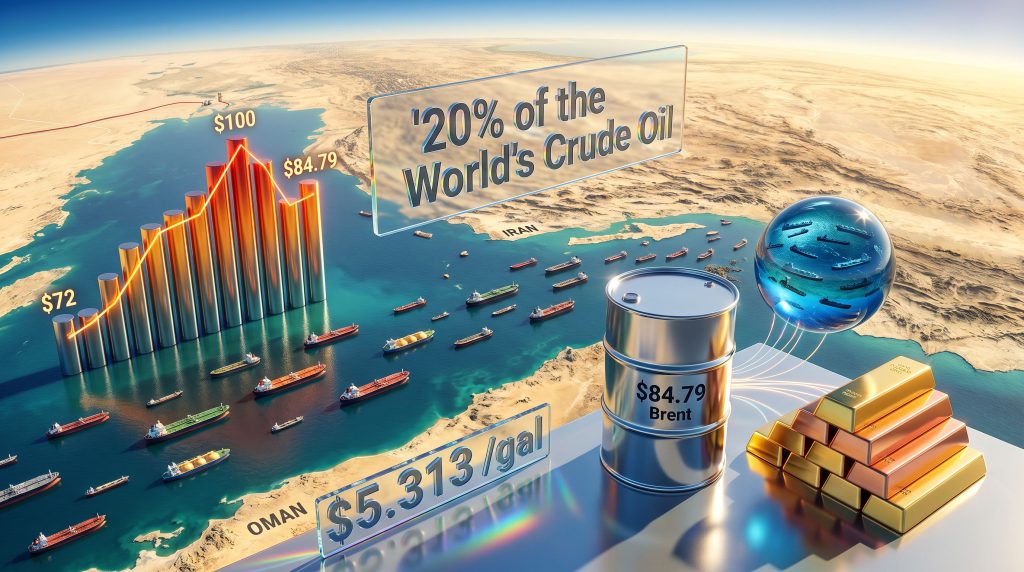
Approximately 20% of the world's traded crude oil and liquefied natural gas passes through the Strait of Hormuz each year, a concentration of energy exposure that no other maritime corridor comes close to matching. The Suez Canal handles a significant share of global container trade, but the Strait of Hormuz is in a different category: it is the singular exit point for the Persian Gulf's hydrocarbon output, serving Saudi Arabia, Iraq, Kuwait, the UAE, and Iran simultaneously.
The partial bypass available through Saudi Arabia's East-West pipeline — stretching approximately 1,200 kilometres to Red Sea export terminals — provides meaningful but incomplete relief. Saudi Aramco has used this infrastructure to maintain crude exports near 7 million barrels per day during the current disruption period, a genuine demonstration of supply resilience. However, this pipeline cannot absorb total Persian Gulf throughput, and smaller Gulf producers lack equivalent bypass infrastructure entirely.
According to Barclays, crude and refined-product net exports through the strait reached 4.2 million barrels per day during the disruption period, up from 3.2 million barrels the prior week, but still well below pre-conflict norms. The recovery in throughput is real, yet it does not represent normalisation.
Dissecting the Reported US-Iran Oil Deal
Multiple major outlets including Reuters, Bloomberg, the Associated Press, and CNBC have characterised the reported arrangement as a conditional sanctions relief framework rather than a formal diplomatic agreement. The distinction matters enormously.
The core reported mechanics involve the United States granting temporary or suspended enforcement of certain oil sanctions in exchange for Iran limiting nuclear activity and facilitating maritime passage through the Strait of Hormuz. However, Iran's foreign ministry publicly stated that no formal negotiations were underway and that its engagement was limited to Oman acting as an intermediary — a position that creates an immediate and significant credibility gap.
Washington and Tehran hold fundamentally incompatible interpretations of a June memorandum at the centre of the dispute:
- The US position holds that the memorandum committed Iran to reopening Hormuz shipping lanes to normal commercial traffic.
- The Iranian position maintains that the memorandum preserved Iran's sovereign authority over the strait and imposed no such obligation.
This is not a negotiating posture. It is a structural barrier to verified compliance, and markets have priced it accordingly. Consequently, this oil market disruption continues to shape investor positioning across the broader energy complex.
| Condition | Status |
|---|---|
| Formal agreement signed | Unconfirmed and disputed |
| Hormuz shipping fully normalised | No — traffic remains below pre-conflict levels |
| Iranian sanctions fully lifted | No — conditional waivers only |
| Physical oil supply fully restored | Partial — rerouting continues |
| Marine war-risk insurance normalised | No — elevated premiums persist |
| Geopolitical risk premium removed | No — premium remains embedded |
The Anatomy of a Geopolitical Oil Price Premium
Energy markets embed a risk premium into crude prices when supply routes face credible disruption threats. This premium exists independently of whether physical shortages are occurring in the present tense. It reflects what the market assigns as a probability-weighted cost of future disruption scenarios.
The August 3 session illustrated this dynamic clearly. Brent crude fell more than 7% to a three-week low before rebounding 1.2% to $84.79 per barrel as traders concluded that a verified diplomatic resolution remained unlikely. West Texas Intermediate recovered 0.6% to $80.80. This partial reversal followed ceasefire speculation, not a change in physical supply fundamentals.
The underlying supply picture told a very different story:
- US commercial crude inventories fell 7.2 million barrels to 404.5 million barrels, approximately 6% below the five-year seasonal average.
- Refinery utilisation reached 97.2% of capacity, confirming that demand remained firm and that the system was running hard.
- A cargo vessel was struck by an unknown projectile near Oman's Al Khasab, maintaining elevated threat perception among commercial shipping operators.
A 7% single-session crude price decline driven by unverified diplomacy headlines, against a backdrop of tightening physical inventories and active maritime incidents, is a sentiment event. Investors who treat it as a structural market shift risk misreading the forward price signal entirely.
Brent's trajectory from approximately $72 per barrel at the July monthly open to above $100 before the August 3 selloff to $84.79 illustrates the premium compression cycle, but not its elimination. The $80 per barrel threshold is the key analytical marker: sustained trading below this level would signal that the market is genuinely pricing out the Hormuz scenario. Trading above it confirms the premium remains embedded.
Three Forward Scenarios and Their Market Implications
Rather than reacting to individual headlines, a scenario framework provides more durable analytical structure for positioning decisions.
Scenario 1 — Verified Agreement, Full Hormuz Reopening
- Probability: Low to moderate in the near term given Iran's continued denial of negotiations
- Brent trajectory: Rapid compression toward the $72–$78 range
- Market impact: Geopolitical premium unwinds, energy equities correct, diesel costs ease for open-pit miners, commodity funds rebalance lower
Scenario 2 — Prolonged Diplomatic Stalemate (Base Case)
- Probability: Moderate to high given the interpretive impasse over the June memorandum
- Brent trajectory: Range-bound between $80 and $90, with headline-driven volatility persisting
- Market impact: Premium remains embedded, diversified commodity exposure continues outperforming, fuel cost pressure persists for mining operators
Scenario 3 — Escalation or Strait Closure
- Probability: Low but non-trivial given active maritime incidents
- Brent trajectory: Potential spike toward $100 and above with structural supply shock characteristics
- Market impact: Severe cost inflation for energy-intensive industries, LNG spot market stress, supply chain disruption across Asian manufacturing hubs
It is also worth noting a secondary risk embedded in Scenario 2: oil sustained above $85 to $90 per barrel introduces stagflationary pressure, combining slower economic growth with persistent energy-driven inflation. This constrains central bank flexibility on interest rate reductions, creating a macro overhang that affects equities well beyond the energy sector. Saxo Bank has flagged this threshold as the point at which oil prices begin to generate meaningful stagflation risk for the broader economy.
How Crude Prices Transmit Into Mining Costs
Elevated crude prices do not stay in the energy sector. They travel directly into diesel fuel costs, which represent 15% to 25% of all-in sustaining costs (AISC) at open-pit mining operations. US retail on-highway diesel reached $5.313 per gallon during the reporting period, approximately 40% above year-earlier levels, creating genuine margin compression at fuel-intensive operations. In addition, these commodity price impacts are reshaping the competitive landscape between diversified majors and junior operators.
The exposure is not uniform across the mining sector:
| Mine Type | Diesel Cost Exposure | Cost Absorption Capacity |
|---|---|---|
| Open-pit, remote, diesel-powered | High — 15% to 25% of AISC | Limited for single-asset junior operators |
| Underground, grid-connected | Low to moderate | Moderate |
| Diversified major with multi-asset portfolio | Moderate blended exposure | High — operational and hedging flexibility |
| Royalty and streaming companies | Minimal direct exposure | Not applicable |
This structural divergence is already visible in market performance. BHP shares gained approximately 32% year-to-date, reflecting commodity pricing strength and the operational scale to absorb input cost increases. Rio Tinto reported a 43% increase in underlying earnings to $6.9 billion, driven by diversified exposure across iron ore, copper, and aluminium. The Invesco Optimum Yield Diversified Commodity Fund, with assets under management of approximately $6.7 billion, appreciated around 32% year-to-date, reflecting broad commodity market strength.
Single-asset junior miners operating remote, diesel-powered open-pit projects represent the most acute margin risk in this environment. Unlike diversified majors, they lack the operational flexibility to reroute, hedge fuel costs at scale, or absorb elevated AISC through commodity price diversification.
In a sustained elevated-crude environment, the performance gap between diversified majors with cost pass-through capacity and fuel-exposed single-asset operators is structurally likely to widen rather than narrow.
The next major ASX story will hit our subscribers first
Saudi Aramco as a Case Study in Supply Resilience
Saudi Aramco's operational response during the Hormuz disruption period offers a valuable reference point for understanding how large, vertically integrated producers navigate chokepoint risk. By rerouting crude exports through the East-West pipeline to Red Sea terminals, Aramco sustained exports near 7 million barrels per day despite reduced Hormuz throughput.
The financial results confirmed the earnings leverage available to major producers during elevated crude environments. Aramco's second-quarter adjusted net income reached $33.4 billion, a 33% year-over-year increase, exceeding consensus analyst estimates of $31.59 billion. The company's ability to maintain output through diversified infrastructure and long-term operational planning illustrates why vertical integration and bypass capacity are not merely strategic advantages but functional price premiums in disrupted markets.
This is a lesson with direct relevance for investors evaluating upstream producers: bypass infrastructure is a form of optionality that is rarely fully priced during stable market conditions but commands significant value during disruption episodes.
Why the Risk Premium Persists Even After Deal Announcements
Historical precedent from prior Iran nuclear frameworks, including the JCPOA signed in 2015 and its partial unwinding between 2018 and 2019, demonstrates that even formally ratified agreements can deteriorate rapidly. Markets have internalised this cycle, which is why they structurally discount headline deal announcements before verified operational improvements are confirmed.
Even a fully signed and verified agreement would not produce immediate shipping normalisation. The structural lags include:
- Rerouted cargo vessels requiring weeks to return to standard Hormuz transit routes as operators assess confidence in sustained access.
- Marine insurance premium normalisation — underwriters require sustained incident-free periods before reducing war-risk surcharges, a process that typically takes months rather than days.
- Operator risk aversion — commercial shipping companies may delay returning vessels to the strait for weeks after a political announcement, pending their own operational risk assessments.
- Ongoing maritime incidents — a cargo vessel struck near Oman's Al Khasab during the current period sustained elevated threat perception even as diplomatic headlines circulated.
This structural lag between announcement and normalisation is not widely appreciated by market participants who have not previously navigated a Hormuz disruption cycle. It means that even positive resolution news is likely to produce a premium compression process that unfolds over weeks or months, not hours. Furthermore, these resource export challenges are particularly acute for Australian producers heavily reliant on stable Persian Gulf shipping corridors.
Key Indicators for Tracking Hormuz Risk Resolution
Rather than reacting to news headlines, a systematic monitoring framework provides more reliable signals for assessing whether the geopolitical premium is genuinely unwinding.
Primary Indicators:
- Brent crude relative to the $80 per barrel threshold — the single most important market-based signal; sustained trading below this level indicates premium compression toward the ~$72 July opening level.
- EIA Weekly Petroleum Status Report (released each Wednesday) — tracks US commercial crude inventory levels and refinery utilisation rates; inventory position relative to the five-year seasonal average is the key comparison metric.
- UK Maritime Trade Operations (UKMTO) incident feed — real-time vessel incident reports for the Strait of Hormuz and surrounding Gulf waters; incident frequency is the most direct proxy for commercial shipping risk perception.
Secondary Indicators:
- Hormuz transit volume data from Barclays and IEA tracking — recovery toward pre-conflict throughput levels is the physical confirmation benchmark.
- Marine war-risk insurance premium spreads — declining spreads indicate underwriter confidence in sustained route safety, typically a lagging but reliable normalisation signal.
- Iran-Oman diplomatic channel activity — given that Iran has designated Oman as its sole active intermediary, progress through this channel is a more reliable signal than US-sourced deal announcements.
Macro Risk Overlay:
- Uranium market trends near $85 per pound continue to benefit from energy-security demand, representing commodity exposure that is structurally insulated from Hormuz-specific disruption and functions as a partial hedge against sustained chokepoint risk.
- Oil sustained above $85 to $90 per barrel introduces the stagflationary risk overlay, constraining Federal Reserve flexibility independent of the Hormuz situation itself.
Frequently Asked Questions: US-Iran Oil Deal and Strait of Hormuz Risk
What is the Strait of Hormuz and why does it matter for oil prices?
The Strait of Hormuz is a narrow maritime passage between Iran and Oman connecting the Persian Gulf to the Gulf of Oman and the broader Arabian Sea. Approximately 20% of the world's crude oil and a substantial share of global LNG exports transit this corridor annually. Any credible threat to shipping through the strait introduces a risk premium into global crude prices regardless of whether physical supply is immediately affected, because markets price the probability distribution of future disruption scenarios rather than only current physical availability.
Has the reported US-Iran deal actually removed Hormuz risk from oil markets?
Not meaningfully. Iran has publicly denied that formal negotiations are underway. Shipping traffic through the strait remains below normal levels. The agreement's terms are disputed between Washington and Tehran. Marine war-risk insurance premiums remain elevated. Markets continue to embed a geopolitical premium into crude, as evidenced by Brent holding above $80 per barrel despite the August 3 selloff.
What oil price level signals that the Hormuz risk premium has been removed?
A sustained decline in Brent crude below $80 per barrel, and particularly toward the approximately $72 level that represented the July monthly open, would indicate that markets are pricing out the Hormuz geopolitical premium. Brent holding above $80 confirms the premium remains structurally embedded. The International Energy Agency tracks these supply and price dynamics in real time and represents one of the most authoritative sources for verifying physical market normalisation.
How does elevated crude pricing affect mining company profitability?
Higher crude prices translate directly into elevated diesel fuel costs. With US retail diesel at $5.313 per gallon, approximately 40% above year-earlier levels, and diesel representing 15% to 25% of AISC at open-pit mines, margin pressure is real and meaningful. Diversified majors with pricing power and operational flexibility are structurally better positioned to absorb these costs than single-asset junior operators with high fuel dependency and limited hedging capacity.
Which commodity exposures are most resilient to Hormuz disruption?
Energy producers with bypass infrastructure, diversified mining majors with commodity pricing power across multiple metals, and uranium producers benefiting from energy-security demand have demonstrated the strongest relative performance. Royalty and streaming companies face minimal direct diesel cost exposure. Single-asset junior miners operating remote, diesel-powered open-pit projects carry the highest vulnerability to sustained elevated crude. The US Energy Information Administration publishes weekly data that investors can use to track how these dynamics evolve over time.
The Hormuz Premium Is a Structural Condition, Not a News Cycle
The August 3 crude selloff was a sentiment correction driven by unverified diplomacy headlines against a backdrop of tightening physical supply, below-average inventories, and active maritime incidents. It was not a structural market shift. The geopolitical risk premium embedded in Brent crude reflects the probability architecture of future Hormuz scenarios, not the current state of negotiations.
Until a verified, operationally confirmed agreement produces measurable improvements in Hormuz transit volumes, normalised marine insurance spreads, and sustained incident-free shipping conditions, that premium will persist. Investors who treat headline announcements as resolved outcomes rather than inputs to a probability framework are likely to be repeatedly caught on the wrong side of the premium compression and re-expansion cycle.
The strategic positioning logic that follows from this analysis is straightforward: prioritise operators with cost pass-through capacity and diversified commodity exposure, maintain systematic monitoring of the $80 Brent threshold, weekly EIA inventory data, and UKMTO incident reports, and treat uranium and diversified commodity funds as structurally insulated alternatives to direct energy-sector exposure until physical Hormuz normalisation is confirmed by operational data rather than diplomatic headlines.
This article contains forward-looking analysis, scenario projections, and market commentary that involve inherent uncertainty. Nothing contained herein constitutes financial advice or a recommendation to buy or sell any security. All investment decisions should be made in consultation with a qualified financial adviser and with full consideration of individual risk tolerance and circumstances.
Want to Stay Ahead of the Next Major ASX Mineral Discovery Driven by Commodity Market Shifts?
When geopolitical disruptions reshape energy and commodity markets, the investors who act fastest on emerging mineral discoveries gain the greatest advantage — Discovery Alert's proprietary Discovery IQ model delivers real-time alerts on significant ASX mineral discoveries, turning complex commodity data into actionable insights the moment announcements hit the exchange. Explore historic examples of exceptional discovery returns and begin your 14-day free trial at Discovery Alert to position yourself ahead of the broader market.