August 1, 2026
Understanding the Strategic Energy Calculus Behind America's Venezuela Gambit
Trump's Venezuela oil plan represents far more than a simple resource acquisition strategy. This multifaceted approach involves complex geopolitical positioning, massive infrastructure rehabilitation requirements, and sophisticated risk management across multiple operational dimensions. The strategic implications extend beyond immediate energy security concerns into broader questions of hemispheric influence and long-term market positioning.
When big ASX news breaks, our subscribers know first
What Makes Venezuela's Oil Assets So Strategically Valuable?
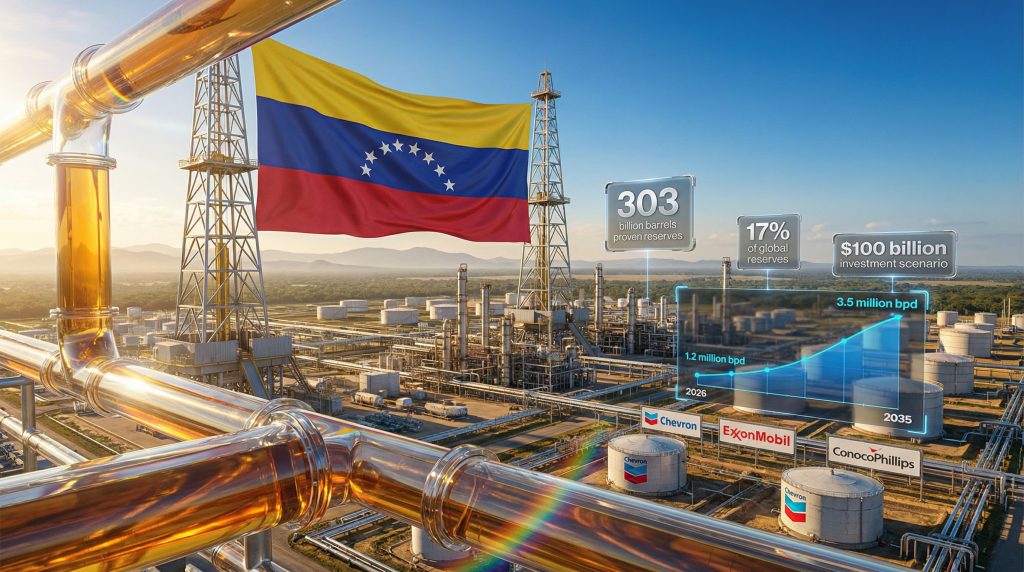
Venezuela controls approximately 303 billion barrels of proven crude oil reserves, representing 17% of global proven reserves according to U.S. Energy Information Administration data. This resource base exceeds individual OPEC member holdings, including Saudi Arabia's 266 billion barrels and Iraq's 145 billion barrels, establishing Venezuela as the world's largest proven reserve holder.
The Scale and Quality of Venezuelan Resources
The Orinoco Belt contains the world's largest concentration of extra-heavy crude oil, characterized by 30-50° API gravity specifications. This heavy crude requires specialized processing capabilities that create natural market alignment with U.S. Gulf Coast refineries, which possess technical configurations specifically calibrated for heavy crude processing.
Current Production Metrics:
- Historical peak production: 3.5 million barrels per day (1970s)
- Current output levels: 800,000-1 million barrels per day
- Production recovery potential: 2.7 million barrel daily increase
Secretary of State Marco Rubio articulated the strategic alignment, stating that U.S. Gulf Coast refineries represent the optimal global infrastructure for processing Venezuelan heavy crude, particularly given documented worldwide shortages of this crude type.
Geographic and Infrastructure Advantages
Venezuela's strategic positioning creates multiple operational advantages:
- Direct Caribbean shipping access to U.S. markets (shortest major crude supply route)
- Existing refinery infrastructure with heavy crude compatibility
- Strategic shipping lane control through Caribbean corridors
- Reduced transportation costs compared to Middle Eastern or African sources
These geographic factors significantly reduce logistical complexities and transportation expenses, creating natural economic incentives for U.S. market integration.
How Could the $100 Billion Investment Scenario Unfold?
Francisco Monaldi, director of Latin American energy policy at Rice University's Baker Institute for Public Policy, quantified the investment requirement at $10 billion annually over the next decade to restore Venezuelan production to historical peak levels. This $100 billion total investment represents one of the largest energy infrastructure rehabilitation projects in modern history.
Phased Investment Strategy Implementation
Phase 1: Infrastructure Rehabilitation (Years 1-3)
- Investment requirement: $30 billion
- Focus areas: Equipment replacement, pipeline restoration, facility modernization
- Expected production increase: 400,000 barrels per day
Phase 2: Production Expansion (Years 4-7)
- Investment requirement: $45 billion
- Focus areas: New drilling operations, enhanced recovery systems, capacity expansion
- Expected production increase: 1.6 million barrels per day
Phase 3: Optimization and Technology Upgrades (Years 8-10)
- Investment requirement: $25 billion
- Focus areas: Advanced extraction technologies, efficiency improvements, long-term sustainability
- Expected production increase: 700,000 barrels per day
Revenue Generation Projections
| Production Scenario | Annual Revenue Potential | Investment Payback Period |
|---|---|---|
| Conservative (2.0 million bpd) | $45-60 billion | 8-10 years |
| Moderate (2.8 million bpd) | $65-85 billion | 6-8 years |
| Optimistic (3.5 million bpd) | $75-105 billion | 5-7 years |
Revenue calculations based on $60-80 per barrel pricing assumptions
President Trump articulated the investment vision, emphasizing that major U.S. oil companies would deploy billions of dollars to rehabilitate Venezuela's deteriorated oil infrastructure while generating substantial returns for the country.
What Are the Primary Implementation Challenges?
Historical Precedent and Corporate Risk Assessment
The 2007 nationalization precedent under Hugo Chávez creates significant corporate hesitation regarding Venezuelan re-engagement. This historical event forced ExxonMobil and ConocoPhillips to exit operations simultaneously, establishing a risk framework that continues to influence corporate decision-making.
Outstanding Arbitration Claims:
- ConocoPhillips: Approximately $10 billion in asset recovery claims
- ExxonMobil: Ongoing arbitration proceedings related to seizure compensation
- Legal timeline: Extended resolution periods spanning multiple years
Infrastructure Degradation Assessment
Venezuelan oil infrastructure has undergone sustained deterioration across three critical dimensions:
1. Mechanical Infrastructure Decay
- Decades of deferred maintenance on production facilities
- Pipeline corrosion and valve system failures
- Refining equipment degradation and environmental containment issues
- Pumping station obsolescence and capacity constraints
2. Human Capital Erosion
- Technical expertise emigration due to economic conditions
- Reduced skilled workforce creating external dependency requirements
- Knowledge transfer gaps in operational procedures
- Training programme reconstruction necessities
3. Supply Chain Constraints
- Sanctions-related equipment replacement limitations
- Specialised component availability restrictions
- Technology transfer regulatory complexities
- Vendor relationship reconstruction requirements
Risk Mitigation Framework Implementation
Political Risk Protection Mechanisms:
- Third-party political risk insurance underwriting
- Bilateral investment treaty establishment with diplomatic backing
- Phased capital deployment reducing transition period exposure
- Escrow account structures protecting investment tranches
Operational Safeguard Development:
- Local partnership requirement frameworks
- Technology transfer limitation protocols
- Environmental compliance standard implementation
- Security contractor deployment strategies
ConocoPhillips articulated measured corporate positioning, stating that while the company monitors Venezuelan developments and their energy market implications, premature speculation regarding future business activities or investments would be inappropriate given current uncertainty levels.
Which Companies Are Positioned for Venezuelan Re-entry?
Primary Corporate Candidates
Chevron Corporation Strategic Profile:
- Current authorisation status: Only major U.S. oil firm with active Venezuelan operations authorisation
- Operational experience: Existing joint venture experience with PDVSA
- Technical capabilities: Heavy crude processing infrastructure compatibility
- Market advantage: Pre-positioned regulatory status reducing entry barriers
ExxonMobil Competitive Position:
- Historical presence: Extensive Venezuelan operations pre-2007 nationalisation
- Technology portfolio: Advanced heavy oil extraction and processing capabilities
- Global expertise: Large-scale project management and execution experience
- Recovery pathway: Asset claims resolution as potential entry mechanism
ConocoPhillips Strategic Leverage:
- Financial claims: $10 billion outstanding arbitration position
- Recovery negotiations: Asset claims conversion into operational rights potential
- Technical expertise: Shale extraction technologies applicable to Venezuelan fields
- Market positioning: Independent operator flexibility in partnership structures
Strategic Partnership Models
Corporate engagement structures reflect varying risk tolerance and capital deployment preferences. Furthermore, these structures must account for the complex relationship between OPEC production impact and market dynamics.
Joint Venture Arrangements:
- Risk and capital sharing with Venezuelan authorities
- Operational control distribution based on investment contributions
- Technology transfer agreements with intellectual property protections
- Profit-sharing mechanisms aligned with production performance
Service Contract Frameworks:
- Fixed-fee arrangements with guaranteed return structures
- Reduced exposure to production volatility and political risk
- Technical service provision with limited operational liability
- Performance-based compensation tied to infrastructure milestones
Production Sharing Agreements:
- Variable return structures correlated with output volumes
- Resource depletion risk sharing between parties
- Market price exposure for both operators and host country
- Long-term operational commitment requirements
How Does This Strategy Impact Global Oil Markets?
Supply Chain Transformation Effects
Venezuelan production recovery would fundamentally alter global heavy crude availability, creating cascading effects across multiple market segments. In addition, the recent oil price rally demonstrates how geopolitical developments influence market sentiment and pricing mechanisms.
U.S. Gulf Coast refineries, specifically configured for heavy crude processing, would benefit from increased supply security and reduced dependence on volatile Middle Eastern import channels.
Market Supply Dynamics:
- Heavy crude shortage alleviation: Global heavy crude scarcity has created premium pricing
- Import dependency reduction: Decreased reliance on geopolitically sensitive supply sources
- Refinery optimisation: Enhanced capacity utilisation for specialised heavy crude processing
- Strategic reserve enhancement: Potential for increased emergency stockpile development
OPEC+ Coordination Implications
Venezuela's production recovery presents significant challenges for OPEC+ market management strategies. However, understanding broader oil price movements related to trade conflicts provides context for these market dynamics.
Quota System Adjustments:
- Market share redistribution: Existing member production allocations require recalibration
- Price stabilisation complexity: Increased supply volumes affecting pricing coordination
- Production discipline: Additional member compliance monitoring requirements
- Strategic alliance shifts: Potential for alternative market partnership development
The next major ASX story will hit our subscribers first
What Are the Geopolitical Risk Scenarios?
Scenario Analysis Framework
Scenario A: Successful Democratic Transition (Probability: Moderate)
- Stable investment environment establishment with international recognition
- Sanctions relief acceleration enabling corporate re-engagement
- Regional stability improvement reducing operational security costs
- Bilateral treaty framework development protecting long-term investments
Scenario B: Continued Political Instability (Probability: High)
- Extended investment timeline requirements increasing capital costs
- Corporate risk premium escalation affecting project economics
- Production target achievement delays impacting return calculations
- Regional tension persistence creating ongoing operational challenges
Scenario C: International Pushback (Probability: Moderate-High)
- Chinese and Russian alternative financing source competition
- Legal disputes over asset control mechanisms and ownership rights
- Diplomatic complications affecting bilateral relationship development
- Alternative energy partnership emergence challenging U.S. positioning
The implementation of Trump's Venezuela oil plan occurs alongside broader economic policy changes, including analysis of the US economy and tariffs, which create additional market complexity.
Timeline for Strategic Implementation
Immediate Actions Phase (2026):
- Asset control establishment and initial crude sales execution
- Corporate due diligence processes and comprehensive site assessments
- Regulatory framework development with interim government coordination
- Security arrangement implementation protecting personnel and infrastructure
Infrastructure Development Phase (2027-2029):
- Major equipment rehabilitation and replacement programmes
- Workforce training initiatives and technical capacity building
- Advanced technology deployment across production facilities
- Production capacity expansion targeting intermediate milestones
Full-Scale Operations Phase (2030-2035):
- Historical production level achievement with sustained output
- Market integration optimisation and supply chain coordination
- Strategic reserve development supporting national energy security
- Long-term sustainability planning with environmental compliance
Investment Return Analysis and Strategic Success Factors
Financial Performance Projections
Conservative Investment Scenario:
- Target production: 2 million barrels per day by 2030
- Annual revenue potential: $45-60 billion (assuming $60-80/barrel pricing)
- Investment payback timeline: 8-10 years
- Strategic value creation: Enhanced regional energy security and market influence
Optimistic Investment Scenario:
- Target production: 3.5 million barrels per day by 2035
- Annual revenue potential: $75-105 billion (assuming $60-80/barrel pricing)
- Investment payback timeline: 5-7 years
- Strategic value creation: Regional energy market dominance and geopolitical leverage
Critical Success Factor Dependencies
Political Stability Maintenance:
- Interim government legitimacy establishment with broad international recognition
- Democratic institution development supporting long-term policy consistency
- Civil society engagement ensuring sustainable governance frameworks
- Regional diplomatic coordination preventing external destabilisation efforts
Corporate Confidence Restoration:
- Property rights protection through bilateral treaty mechanisms
- Arbitration dispute resolution demonstrating commitment to international law
- Transparent regulatory framework development with predictable implementation
- Performance incentive alignment between corporate and national interests
Technical Execution Excellence:
- Infrastructure assessment accuracy determining realistic investment timelines
- Technology deployment effectiveness meeting production enhancement targets
- Workforce development success enabling sustained operational capability
- Environmental compliance achievement maintaining international operational standards
The Venezuelan oil strategy represents a complex intersection of geopolitical ambition, economic opportunity, and operational risk management. Furthermore, the broader implications of the US-China trade war create additional market uncertainties that may affect investment decisions.
Success probability depends critically on navigating political transitions, corporate risk tolerance, and international legitimacy establishment. According to recent analysis by the Financial Times, corporate executives remain cautious about Venezuelan investments despite potential returns.
While the $100 billion investment requirement presents substantial capital deployment challenges, potential strategic and economic returns justify serious consideration under optimistic implementation scenarios. However, Reuters reports that major oil companies continue to express reservations about the viability of immediate large-scale investments.
Consequently, the documented risk factors suggest that phased approaches prioritising incremental progress may prove more viable than aggressive deployment strategies requiring immediate large-scale capital commitments. Trump's Venezuela oil plan ultimately reflects broader strategic competition for energy security influence in an increasingly multipolar global environment.
Ready to Capitalise on the Next Major Energy Discovery?
Discovery Alert's proprietary Discovery IQ model delivers real-time alerts on significant ASX mineral discoveries, turning complex mineral data into actionable insights for investors seeking opportunities in the rapidly evolving energy and commodities sector. Begin your 30-day free trial at Discovery Alert today to position yourself ahead of the market as major strategic shifts reshape global energy landscapes.