
July 21, 2026
Strategic Frameworks Transforming Global Battery Material Markets
The global lithium extraction industry stands at a critical inflection point, where traditional resource governance models face pressure from evolving geopolitical priorities and technological demands. Supply chain security considerations now intersect with national resource sovereignty in unprecedented ways, creating new hybrid ownership structures that balance private operational expertise with state strategic control.
Critical mineral partnerships increasingly require sophisticated frameworks that address multiple stakeholder interests while maintaining production efficiency. The evolution from purely private concession arrangements toward state-influenced operational models reflects broader shifts in how resource-rich nations approach strategic asset management in an era of battery technology proliferation.
When big ASX news breaks, our subscribers know first
How the SQM and Codelco Lithium Joint Venture Redefines Extraction Partnerships
Production Scale and Market Positioning Analysis
The NovaAndino Litio partnership represents a fundamental restructuring of Chile's lithium extraction approach, combining SQM's operational expertise with Codelco's state backing. This 50-50 joint venture encompasses Chile's largest brownfield lithium resource at the Atacama salt flats, establishing a production framework designed to maximise both operational efficiency and state revenue capture.
Current baseline metrics demonstrate significant scale:
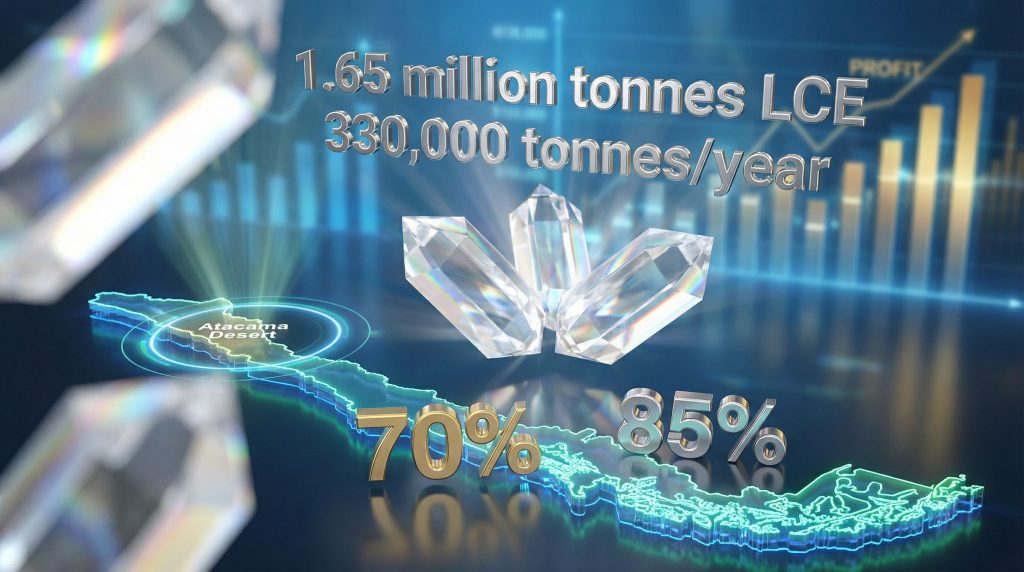
- 1.65 million tonnes LCE extraction allowance through 2030
- 300,000 tonnes additional capacity secured by end-2030
- 2.5 million tonnes LCE quota for operations from 2031-2060
- 330,000 tonnes per year average production target post-2031
Furthermore, the partnership's golden share mechanism for Codelco creates a phased transition structure. SQM maintains operational control through 2030, after which Codelco assumes operational authority starting January 2031. This arrangement provides continuity for existing operations while ensuring state control over long-term strategic direction.
Operational Control Transition Architecture
The leadership structure reflects institutional continuity planning, with Maximo Pacheco serving dual roles as both Codelco CEO and NovaAndino president until May 2026. Ricardo Ramos, SQM's chief executive, assumes the vice-president position, ensuring technical expertise transfer across the partnership.
This hybrid governance model addresses the fundamental tension between immediate operational requirements and long-term state participation objectives. The structure allows private sector efficiency to drive near-term production while building state capacity for eventual operational control.
Legal Challenges and International Stakeholder Dynamics
Minority Shareholder Rights Under Resource Nationalism
Tianqi Lithium's 22.1% stake in SQM positions the Chinese company as the second-largest shareholder, creating complex dynamics around minority rights in strategic resource partnerships. The company has initiated legal challenges arguing that the joint venture approval violated Chilean corporate governance requirements.
In addition, the central legal argument focuses on procedural compliance rather than operational objections:
- Joint venture approved solely by SQM board without shareholder vote
- Alleged violation of Chile's Corporations Act mandatory procedures
- Claims regarding CMF (financial market regulator) approval process irregularities
Tianqi contends that the partnership affects SQM's core lithium operations, potentially impacting investment returns and dividend distributions. The company argues it was denied access to key partnership information and voting opportunities at shareholders' meetings, alongside withdrawal rights recognised under Chilean law.
Regulatory Approval Framework and Precedent Setting
The Chilean regulator's launch of an audit demonstrates institutional scrutiny of the partnership structure. Initial rejection occurred because no formal joint venture existed for suspension, while subsequent challenges address implementation phase concerns.
Multiple court defeats for Tianqi across different Chilean judicial venues suggest institutional support for the partnership structure, potentially encouraging similar arrangements in other strategic mineral sectors.
Revenue Distribution Innovation and State Capture Mechanisms
Multi-Layered Revenue Extraction Model
The partnership implements an escalating state revenue capture framework designed to increase government participation as operational control transitions:
| Period | State Revenue Share | Control Mechanism | Annual Production Target |
|---|---|---|---|
| 2025-2030 | 70% of operating profit margins | SQM operational control | 275,000 tonnes LCE |
| 2031-2060 | 85% of operating profit margins | Codelco operational control | 330,000 tonnes LCE |
Revenue Stream Architecture
The state captures value through three distinct channels, creating redundancy in revenue extraction:
1. Direct Taxation Components:
- Corporate income tax on NovaAndino profits
- Mining-specific royalties and assessments
- Standard business taxation framework
2. State Enterprise Participation:
- Codelco dividend distributions from 50% equity stake
- Enhanced profit participation through operational control post-2031
- State enterprise reinvestment capabilities
3. Land Lease and Concession Payments:
- Payments to Corfo (Chile's economic development agency)
- Contractual revenue streams from Atacama salt flats access
- Production-linked payment structures
This multi-channel approach ensures state revenue capture even if individual tax rates or profit margins fluctuate, while the 15 percentage point increase in state share (from 70% to 85%) coincides directly with Codelco's assumption of operational control.
Comparative Analysis with Global Lithium Governance Models
International Benchmarking Framework
The SQM and Codelco lithium joint venture occupies a unique position among global lithium governance approaches, combining elements from different international models while introducing novel operational transition mechanisms. However, this approach requires careful coordination with broader critical minerals strategy initiatives across different jurisdictions.
| Jurisdiction | Ownership Model | Operational Control | State Revenue Capture | Foreign Investment |
|---|---|---|---|---|
| Chile (NovaAndino) | 50-50 public-private | Transition mechanism | 70-85% of profits | Yes (through SQM) |
| Australia | Private-dominated | Private operators | Taxation framework only | Dominant model |
| Argentina | Provincial concessions | Private operators | 3-8% royalty rates | Yes (widespread) |
| Bolivia | State-controlled YLB | Direct state operation | 100% (state ownership) | Limited partnerships |
Governance Innovation Assessment
The golden share transition mechanism represents institutional innovation for managing tensions between immediate operational needs and long-term state control objectives. Unlike Argentina's provincial model (no state operational role) or Bolivia's direct state control, the Chilean approach preserves private sector operational expertise while building state capacity.
Australia's private-dominated framework relies primarily on taxation and regulatory oversight, offering operational freedom but limited state participation in value capture. For instance, the NovaAndino model seeks to capture Australia's operational efficiency while achieving Bolivia's state participation levels through a phased transition approach.
Operational Challenges and Technical Integration Requirements
Process Efficiency and Environmental Compliance
The partnership must maintain production efficiency improvements without increasing brine extraction volumes, requiring technological innovation and process optimisation. Water balance maintenance in environmentally sensitive regions creates additional operational constraints that both partners must navigate.
Key technical challenges include:
- Integration of SQM operational processes with Codelco management systems
- Technology transfer protocols during the 2025-2031 transition period
- Environmental compliance across multiple regulatory frameworks
- Indigenous consultation requirements and community engagement protocols
Regulatory Oversight Framework
Nuclear Energy Commission oversight for radioactive material handling adds complexity to operational compliance requirements. Consequently, antitrust compliance across multiple international jurisdictions creates additional regulatory navigation challenges for the partnership.
The transition period from 2025-2031 requires careful management of operational handover processes while maintaining production targets and regulatory compliance across all applicable frameworks.
The next major ASX story will hit our subscribers first
Investment Implications and Risk Assessment Framework
Capital Market Response and Valuation Impacts
SQM share price implications from reduced operational control post-2030 create near-term investment considerations. The transition from operational control to minority partnership status fundamentally alters SQM's risk-return profile for the Atacama operations.
Furthermore, Codelco's enhanced asset base through operational control acquisition strengthens the state enterprise's strategic positioning in global lithium markets. The partnership provides Codelco with immediate exposure to lithium operations while building capacity for expanded production management.
International Capital and Regulatory Stability
Minority shareholder protection concerns in resource nationalism contexts may influence future investment flows into Chilean mining operations. The Tianqi litigation outcomes will establish precedents for international investor rights in strategic resource partnerships. These developments align with broader mining industry evolution trends affecting global investment patterns.
Currency exposure and revenue repatriation mechanisms require careful structuring to accommodate international stakeholder interests while maintaining Chilean regulatory compliance. The partnership structure must balance foreign investment attraction with national resource control objectives.
Future Critical Mineral Partnership Templates
Replication Potential Across Commodity Sectors
The NovaAndino framework provides a potential template for other critical mineral partnerships, particularly in copper, rare earth, and strategic metal sectors. For example, similar approaches might be considered in response to recent critical minerals executive order initiatives affecting supply chain security requirements.
Template development considerations include:
- Revenue-sharing optimisation for different commodity price cycles
- Technology transfer requirements in public-private partnerships
- Environmental stewardship integration in commercial agreements
- Minority shareholder protection frameworks in strategic sectors
Long-term Supply Chain Implications
Battery manufacturer sourcing strategies must adapt to increased state participation in lithium supply chains. The partnership model may encourage geographic diversification requirements as private operators face operational control transitions in key producing regions.
Moreover, Chilean firms partnering to form giant lithium company demonstrates how the SQM and Codelco lithium joint venture represents broader consolidation trends in critical mineral sectors. Supply security considerations now require evaluation of both operational efficiency and political stability across producing jurisdictions.
Regulatory Framework Innovation and Legal Precedents
Hybrid Ownership Structure Development
The partnership establishes legal framework innovations for extractive industries, particularly regarding hybrid ownership structures that balance private operational expertise with state strategic control. Minority shareholder rights in strategic resource sectors receive detailed examination through the Tianqi litigation process.
International arbitration mechanisms for resource disputes may evolve based on Chilean court rulings regarding corporate governance in strategic partnerships. The precedents established could influence similar arrangements across Latin American jurisdictions, particularly as investors seek guidance through comprehensive mining stocks investment guide resources.
Policy Template and Implementation Framework
Revenue-sharing optimisation models developed through the NovaAndino partnership provide reference points for other resource-rich nations seeking to increase state participation without deterring operational efficiency. Technology transfer requirements embedded in the agreement structure offer frameworks for knowledge transfer in public-private partnerships.
The integration of environmental stewardship requirements within commercial partnership agreements demonstrates evolving expectations for responsible resource extraction in critical mineral sectors. These developments align with lithium industry innovations that prioritise sustainable extraction methods alongside production efficiency.
Disclaimer: This analysis contains forward-looking statements and projections based on current market information and regulatory frameworks. Actual outcomes may differ materially from projections due to changes in political, economic, or regulatory conditions. Investment decisions should consider comprehensive due diligence and professional advisory services.
Ready to Capitalise on Critical Mineral Discovery Opportunities?
Discovery Alert's proprietary Discovery IQ model provides instant notifications on significant ASX mineral discoveries, including critical battery materials and lithium developments, empowering subscribers to identify actionable investment opportunities ahead of the broader market. Explore historic examples of exceptional discovery returns and begin your 30-day free trial today to secure your competitive advantage in the evolving critical minerals sector.