
July 23, 2026
Strategic Implications Behind Pentagon's Cautious Approach to Hormuz Operations
Modern naval warfare has evolved into a complex multi-domain battlespace where traditional escort operations face unprecedented technological and geopolitical challenges. The current situation in the Strait of Hormuz exemplifies how advanced missile systems, asymmetric naval tactics, and commercial insurance dynamics create operational complexities that extend far beyond historical precedents. Furthermore, the Pentagon not close to reopening Hormuz reflects the intricate nature of contemporary military planning.
Multi-Domain Threat Assessment Framework
Contemporary military planners must navigate an environment where surface-to-surface missile capabilities create overlapping engagement zones across the entire Persian Gulf region. Iran's demonstrated use of these weapons against commercial shipping has fundamentally altered the risk calculations for any escort operation.
The tactical environment presents several interconnected challenges that complicate operational planning. However, understanding market volatility hedging strategies becomes crucial for energy traders navigating these disruptions.
- Advanced missile threat vectors requiring comprehensive air defence coverage
- Fast attack craft operations utilising coastal geography for tactical advantage
- Commercial insurance market paralysis driving risk premiums to economically prohibitive levels
- International shipping hesitancy creating supply chain bottlenecks beyond military control
Current intelligence assessments indicate that while mining operations have not been detected, the surface-to-surface missile threat remains the primary operational concern for naval planners. This represents a shift from traditional mine warfare countermeasures to active missile defence requirements.
When big ASX news breaks, our subscribers know first
Resource Allocation Constraints in Multi-Theater Operations
Military officials acknowledge that comprehensive escort operations would require substantial naval assets currently deployed across multiple operational theaters. The "tactically complex environment" referenced by senior Pentagon leadership encompasses both immediate tactical challenges and broader strategic resource management considerations.
Current Military Objectives Impact Timeline
The Pentagon's emphasis on completing "current military objectives" before undertaking escort missions reflects fundamental principles of military planning where sequential operational phases must be completed before committing assets to new mission profiles. In addition, US‑China trade tensions continue to influence resource allocation decisions.
Key operational prerequisites include:
- Threat suppression activities targeting Iranian coastal defence installations
- Intelligence gathering operations for comprehensive threat mapping
- Coalition coordination mechanisms with regional maritime partners
- Force protection protocols ensuring escort vessel survivability
Strategic risk calculations must balance escalation management with commercial reopening objectives, requiring careful assessment of mission success probability under sustained hostile fire conditions.
Global Energy Market Disruption Metrics Drive Decision-Making
The economic pressures stemming from the strait's closure create measurable impacts across multiple energy market segments. Current disruption levels demonstrate the strategic significance of the chokepoint for global energy security. Moreover, understanding oil price dynamics remains essential for market participants.
| Impact Category | Current Disruption Level | Strategic Significance |
|---|---|---|
| Daily Transit Volume | Minimal commercial traffic | Critical supply chain bottleneck |
| Crude Oil Flows | 25% of global trade blocked | Major price volatility driver |
| LNG Supply Routes | 20% of global capacity affected | European energy security risk |
| Regional Energy Hub | Gulf production stranded | Alternative routing pressure |
War Risk Insurance Market Dynamics
Commercial shipping viability depends heavily on insurance market conditions, which have responded dramatically to the conflict environment. Insurance premium calculations now incorporate vessel value multiplied by cargo value and significant risk multipliers that often exceed commercial viability thresholds.
The current insurance market presents several critical factors:
- Premium multiplication reaching levels that eliminate profit margins for most commercial operations
- Coverage availability declining as major underwriters refuse Gulf transit policies
- Alternative route economics comparing Suez Canal bypass costs against Cape of Good Hope routing
- Charter party obligations creating contractual complications for shipping companies
Lloyd's of London market participants have effectively classified the Persian Gulf region as a high-risk war zone, fundamentally altering the commercial calculation framework for energy transit operations.
Strategic Petroleum Reserve Drawdown Response
The administration's approach to managing supply disruptions involves sophisticated financial instruments designed to maintain long-term strategic reserves while addressing immediate market needs. Energy Secretary Chris Wright has outlined a swaps mechanism that would release emergency reserves while simultaneously securing future supply commitments.
The strategic approach involves:
- 172 million barrel emergency drawdown over four months
- 200 million barrel replacement commitment within one year
- Market backwardation advantages utilising price differential arbitrage
- No taxpayer cost through strategic timing of purchases and sales
This approach takes advantage of market conditions where front-month crude prices trade at approximately $96 per barrel compared to $71 per barrel for April 2027 delivery, creating natural arbitrage opportunities for strategic reserve management.
Historical Naval Escort Precedent Analysis
Operation Earnest Will, conducted during 1987-1988, provides the most relevant historical precedent for current strategic planning. This operation demonstrated both the feasibility and complexity of sustained naval escort operations in the Persian Gulf environment.
Reagan-Era Operation Characteristics
Historical records indicate that Operation Earnest Will required:
- Extended operational commitment lasting approximately 14 months
- Substantial naval asset deployment across multiple vessel classes
- Comprehensive convoy escort protocols throughout Persian Gulf waters
- Successful commercial traffic restoration achieving strategic objectives
Modern Operational Complexity Differences
Contemporary threat environments present fundamentally different challenges compared to 1980s operational parameters. Consequently, the Pentagon not close to reopening Hormuz reflects these evolved complexities.
- Advanced precision weapon systems creating narrower engagement zones
- Sophisticated coastal defence networks with extended range capabilities
- Multinational coordination requirements involving complex alliance structures
- Commercial shipping evolution featuring larger vessels with higher value cargo concentrations
The technological advancement in missile systems since the 1980s requires updated tactical approaches that account for precision guidance capabilities and extended engagement ranges not present during Operation Earnest Will.
Alternative Strategic Scenario Development
Pentagon planners maintain contingency frameworks for multiple operational approaches, each presenting distinct advantages and implementation challenges. Furthermore, energy security insights help inform these strategic considerations.
Graduated Reopening Strategy
Limited convoy trials could serve as proof-of-concept operations, demonstrating safe passage capabilities while building commercial confidence through progressive risk reduction. This approach would involve:
- High-value strategic cargo prioritisation for initial transit attempts
- Incremental threat assessment through operational experience accumulation
- Commercial confidence building via demonstrated escort effectiveness
- Insurance market stabilisation through successful passage documentation
Comprehensive Security Zone Establishment
Full maritime domain control would require extensive naval presence across Persian Gulf approaches, involving:
- Permanent naval coverage with rotating carrier strike groups
- Regional partner integration for sustained operational capability
- Advanced sensor networks providing comprehensive maritime domain awareness
- Coordinated air defence systems protecting commercial and military vessels
Diplomatic-Military Hybrid Framework
Negotiated partial access could provide immediate relief for humanitarian and essential supplies while maintaining pressure for broader conflict resolution:
- International maritime organisation oversight ensuring neutral vessel protection
- Conditional access protocols linked to broader diplomatic progress
- Humanitarian corridor establishment for critical supply categories
- Regional stakeholder involvement facilitating multilateral agreements
The next major ASX story will hit our subscribers first
Operational Security Considerations Behind Timeline Opacity
Military officials maintain deliberate ambiguity regarding specific operational timelines to preserve tactical advantages and maintain strategic flexibility.
Tactical Surprise Preservation
Operational security protocols prevent premature disclosure of capability assessments, force deployment schedules, and tactical methodologies. This approach protects against Iranian countermeasure development and maintains strategic unpredictability in operational planning.
Political-Military Coordination Requirements
Complex coordination mechanisms require alignment across multiple government agencies and international partners:
- Presidential directive coordination with broader Iran strategy frameworks
- Congressional consultation processes for extended military commitment authorisation
- Allied coordination timelines involving multinational operation approval procedures
- International legal compliance ensuring maritime law adherence
The integration of these coordination requirements creates inherent timeline uncertainties that military officials acknowledge through deliberate communication strategies.
Technical Challenges Defining Operational Complexity
Geographic constraints within the Strait of Hormuz create unique operational challenges that distinguish these potential operations from open-ocean escort missions. For instance, shipping crisis reports highlight the unprecedented nature of current disruptions.
Geographic Constraint Analysis
The strait's physical characteristics present several tactical complications:
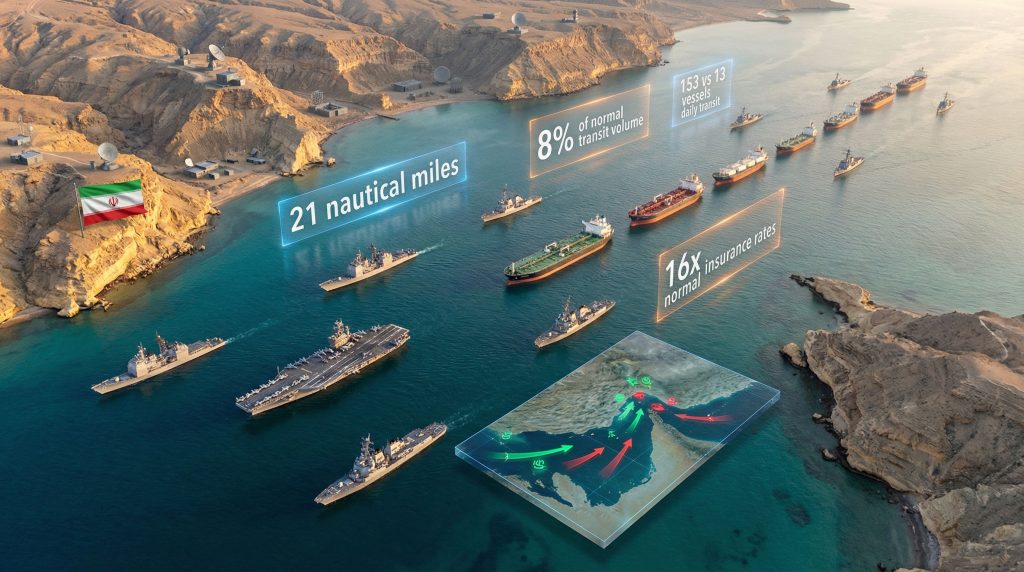
- Chokepoint width limitations at approximately 21 nautical miles
- Water depth variations between 180-300 feet creating submarine threat zones
- Coastal proximity factors with Iranian territory within 12 miles of shipping lanes
- International traffic separation requiring compliance with maritime law frameworks
Threat Assessment Verification
Current intelligence assessments confirm the absence of mining operations within the strait, contrary to some operational assumptions. The primary threat vector involves surface-to-surface missile attacks against commercial shipping, requiring active defence rather than clearance operations.
This threat assessment adjustment eliminates the need for extensive mine clearance operations but increases requirements for continuous air defence coverage throughout transit operations.
Commercial Shipping Industry Decision Frameworks
Shipping company risk management protocols have evolved to incorporate unprecedented threat assessment methodologies, fundamentally altering commercial decision-making processes. However, the OPEC production impact continues to influence global supply considerations.
Insurance Market Mechanics Evolution
Risk assessment methodologies now incorporate multiple threat vectors simultaneously:
- Vessel replacement value calculations under wartime loss scenarios
- Cargo value protection requirements for specialised energy shipments
- Crew safety insurance covering personnel risk exposure
- Alternative routing costs comparing risk reduction benefits against operational expenses
Regional Alternative Infrastructure Development
Gulf Cooperation Council partners have expanded port capacity to accommodate redirected energy flows:
- Saudi Arabian port facilities at Ras Tanura and Yanbu providing alternative routing
- UAE transshipment capabilities through Fujairah and Jebel Ali hubs
- Kuwaiti naval cooperation supporting joint maritime patrol operations
- Omani territorial coordination managing Musandam Peninsula chokepoint access
Regional Geopolitical Integration Requirements
Successful escort operations require coordination across multiple regional partners, each contributing specific capabilities and geographic access rights.
Gulf Cooperation Council Coordination Mechanisms
Regional partners provide essential infrastructure and operational support:
- Port facility access for logistics and vessel servicing requirements
- Territorial water coordination ensuring legal compliance across national boundaries
- Joint patrol operations maximising regional maritime security coverage
- Intelligence sharing protocols enhancing threat assessment accuracy
International Maritime Law Compliance
UN Convention on the Law of the Sea frameworks govern escort operations, requiring:
- Freedom of navigation principles protecting neutral shipping rights
- Environmental protection protocols preventing ecological damage during military operations
- Search and rescue obligations ensuring distressed mariner assistance
- Neutral vessel identification protecting non-belligerent commercial shipping
Long-Term Strategic Precedent Implications
Current Pentagon decisions regarding Hormuz escort operations will establish precedents affecting future chokepoint security policies and international maritime law evolution.
Global Chokepoint Security Architecture
The strategic approach to Hormuz reopening influences future intervention thresholds for other critical maritime passages, including the Malacca Strait and Suez Canal. These precedents shape international expectations regarding U.S. commitment to commercial route protection.
Deterrence Credibility Demonstration
Successful escort operations would demonstrate U.S. naval capability and resolve, influencing regional power balance calculations and allied burden-sharing expectations. This credibility extends beyond immediate operational success to broader strategic deterrence frameworks.
The complexity of Pentagon planning for Strait of Hormuz reopening reflects fundamental shifts in maritime security challenges, where traditional naval escort operations must adapt to advanced threat environments while managing commercial, diplomatic, and alliance considerations simultaneously. Indeed, the Pentagon not close to reopening Hormuz underscores the multifaceted nature of modern maritime security operations.
This analysis is based on publicly available information and does not constitute investment advice. Readers should conduct independent research and consult qualified professionals before making investment or policy decisions related to energy security or maritime operations.
Searching for Strategic Energy Investment Opportunities?
Discovery Alert's proprietary Discovery IQ model delivers real-time alerts on significant mineral discoveries across energy-critical commodities, helping investors capitalise on market opportunities during global supply chain disruptions. Navigate the complexities of energy market volatility by exploring Discovery Alert's proven track record of identifying major mineral discoveries before they move markets, and begin your 14-day free trial today to secure your competitive advantage.