
June 21, 2026
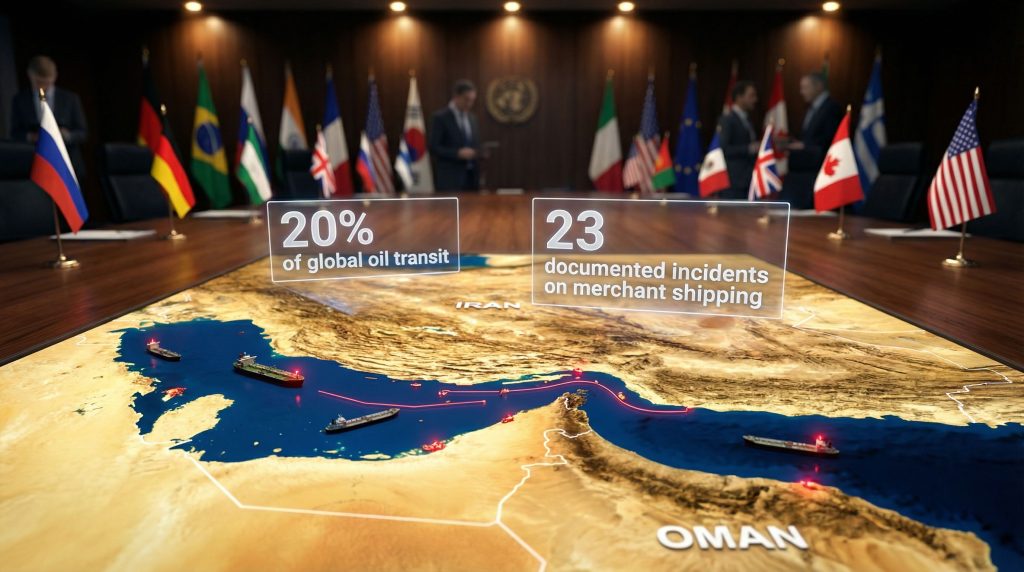
Global financial markets operate within a delicate web of interdependencies where single chokepoints can trigger cascading disruptions across entire economic systems. Maritime trade corridors, particularly those controlling energy flows, represent critical vulnerabilities in this interconnected framework. When geopolitical tensions escalate around strategic waterways, Strait of Hormuz reopening tensions extend far beyond immediate shipping concerns to encompass supply chain resilience, diplomatic coordination, and long-term infrastructure planning.
The intersection of energy security, international diplomacy, and market psychology creates complex scenarios where traditional economic models struggle to predict outcomes. Understanding these dynamics requires examining both historical precedents and contemporary risk assessment methodologies that guide decision-making in volatile environments.
Understanding Strategic Maritime Chokepoints and Economic Vulnerability
Geographic Constraints and Global Trade Dependencies
Strategic waterways serve as critical arteries for international commerce, with the Strait of Hormuz representing one of the most economically significant passages in global trade. This narrow channel between Iran and Oman controls access to the Persian Gulf, handling approximately 20-21% of world petroleum trade according to the U.S. Energy Information Administration. Daily transit volumes reach 21 million barrels of crude oil and condensate, making it the world's most important oil chokepoint.
The geographic constraints of this passage create inherent vulnerabilities for global energy markets. Furthermore, the oil price rally following regional tensions demonstrates the immediate market response to supply security concerns.
These physical limitations include:
- Navigable width: Only 2 miles (3.2 km) in the deepest channel
- Daily commercial traffic: 5-7 large vessels during normal periods
- Alternative routing distance: 5,000+ additional nautical miles via Cape of Good Hope
- Additional transit time: 14-21 days for alternative routing
These physical limitations transform regional conflicts into global economic concerns, as approximately 2,000+ commercial vessels transit the area annually, carrying energy supplies essential to Asian and European markets.
Historical Context of Maritime Security Disruptions
Previous incidents in strategic waterways provide frameworks for understanding current Strait of Hormuz reopening tensions. The 2019 tanker attacks near the Strait demonstrated how quickly regional conflicts can impact global markets. Six confirmed incidents between May and July 2019 caused Brent crude prices to rise from $60 to $65 per barrel within three weeks, illustrating the immediate market response to supply security concerns.
Similarly, the 2022 Black Sea grain corridor disruptions showed how maritime blockades create 20-30% price volatility across multiple commodity sectors beyond the directly affected goods. These precedents highlight the interconnected nature of global supply chains and the psychological impact of perceived supply threats on market behaviour.
When big ASX news breaks, our subscribers know first
Economic Impact Assessment: Beyond Energy Markets
Energy Sector Vulnerabilities and Price Dynamics
Current Strait of Hormuz reopening tensions create multi-layered economic impacts extending beyond immediate oil price fluctuations. War risk insurance premiums have historically increased 400-500% during comparable crises, with coverage rising from $0.25-$0.75 per barrel to $1.50-$2.50 per barrel based on 2019 incident data from Lloyd's Market Association.
Alternative Route Cost Analysis:
| Cost Factor | Normal Operations | Alternative Routing | Additional Cost |
|---|---|---|---|
| Transit Time | 7-10 days | 21-31 days | +14-21 days |
| Shipping Rates | $15,000-$30,000/day | Same daily rate | $210,000-$630,000 per vessel |
| Insurance Premiums | $0.25-$0.75/barrel | $1.50-$2.50/barrel | 400-500% increase |
| Regional Price Differential | Baseline | 8-12% premium | Significant market distortion |
Market participants prioritise supply security over absolute price levels, with historical analysis showing a 20:80 weighting favouring certainty over cost considerations during acute crises. In addition, market volatility hedging becomes essential for risk management during these periods. This psychological framework drives volatility beyond what pure supply-demand calculations would suggest.
Supply Chain Resilience Testing Across Sectors
The current tensions expose vulnerabilities in just-in-time inventory models across manufacturing sectors. Automotive, pharmaceutical, and electronics industries face particular challenges due to their dependence on Asian manufacturing inputs that typically transit through Gulf shipping routes.
Food commodity markets also experience indirect impacts as transportation costs increase across all shipping routes. The FAO Food Price Index documented 25-40% increases in wheat prices during the 2022 grain corridor disruptions, demonstrating how maritime security concerns affect global food systems even when agricultural production remains stable.
Risk assessment methodologies employed by carriers now incorporate:
- Geographic routing risk classification by conflict zone proximity
- Vessel specifications including age and hull classification standards
- Crew nationality considerations and flag state registration implications
- Cargo type categorisation, with hazardous materials increasing premiums 50-100%
- Historical loss ratios specific to operational regions
Diplomatic Coordination Efforts and International Response
Multilateral Framework Development
International diplomatic efforts to address Strait of Hormuz reopening tensions involve complex coordination mechanisms among diverse stakeholders. Recent developments include a UK-hosted virtual meeting with approximately 40 nations focused on reopening and securing the strategic waterway, according to market reports.
The diplomatic framework emphasises non-military intervention approaches while coordinating sanctions policies among participating nations. This strategy reflects lessons learned from previous maritime security crises where military escalation complicated resolution efforts. However, the US-China trade war impacts demonstrate how prolonged tensions can affect global cooperation mechanisms.
Key diplomatic mechanisms include:
- Multilateral consultation platforms for coordinating responses
- Sanctions coordination frameworks among Western nations
- Regional mediation initiatives involving Gulf Cooperation Council members
- UN Security Council engagement through formal resolution proposals
Regional Power Dynamics and Mediation Efforts
Gulf Cooperation Council members play crucial roles in mediation efforts, with Bahrain proposing UN frameworks for Strait monitoring based on established maritime security protocols. Iran-Oman bilateral discussions regarding traffic monitoring represent parallel diplomatic channels that could provide breakthrough opportunities.
The absence of direct U.S. military coordination with coalition efforts reflects broader strategic positioning considerations. Market analysts note the complexity created by conflicting policy signals from various stakeholders, contributing to uncertainty about resolution timelines and increasing volatility in energy markets.
European Union coordination involves France, Germany, and the Netherlands in sanctions policy alignment, though energy security prioritisation creates internal tensions within the bloc. Asian economic powers, including Japan and China, pursue different engagement strategies reflecting their distinct energy import dependencies.
Military and Security Considerations Affecting Resolution
Maritime Defence Capabilities Assessment
Security factors complicating Strait of Hormuz reopening tensions involve documented defence capabilities that create substantial operational challenges for commercial shipping. Iranian maritime assets include various patrol craft, torpedo boats, and submarine capabilities that can effectively monitor and control traffic through the narrow passage.
Regional Defence Infrastructure:
- Missile systems: Range capabilities extending 800+ km for maritime applications
- Naval mines: M-08 and M-13 variants with 50+ km deployment potential
- Submarine operations: Including Kilo-class vessels suitable for shallow-water operations
- Patrol assets: Fast-attack craft optimised for confined-water operations
Commercial vessel incidents documented through Lloyd's List Intelligence and International Maritime Bureau reporting systems provide evidence of ongoing security challenges. These incidents affect insurance underwriting decisions and shipping route planning across the region.
International Naval Response Limitations
Force projection in confined waters presents significant operational challenges for international naval responses. The Strait's 2-nautical-mile navigable channel width limits large naval vessels to 2-3 operating positions simultaneously, creating tactical constraints for coalition operations.
Submarine operational challenges include:
- Limited depth variation for electronic warfare countermeasures
- Acoustic signature management complications in shallow waters
- Restricted manoeuvring space for evasive operations
- Complex rules of engagement for defensive operations
These tactical realities influence diplomatic strategies, as military solutions face inherent geographical limitations that favour defensive rather than offensive capabilities in the confined waterway environment.
Sector-Specific Vulnerability Analysis
Energy Import Dependencies by Region
Asian Market Exposure Levels:
| Country | Strait Dependence | Strategic Reserve Capacity | Alternative Supply Options |
|---|---|---|---|
| Japan | 85% of crude imports | 90-day strategic reserves | Limited alternative routing |
| South Korea | 70% of energy imports | 60-day reserves | Developing renewable capacity |
| India | 60% of crude imports | 45-day reserves | Expanding domestic production |
| China | 40% of imports | 30-day reserves | Strategic pipeline development |
European alternative supply routes include expanded pipeline capacity from Norway and North Africa, though these systems require 3-5 years for significant capacity increases. Moreover, energy transition security becomes increasingly important as nations seek to reduce dependence on volatile supply routes. Strategic petroleum reserve utilisation rates vary significantly across nations, with some maintaining only 30-45 day coverage compared to International Energy Agency recommendations of 90+ days.
Manufacturing Supply Chain Adaptation Strategies
Just-in-time inventory models face fundamental challenges during extended maritime disruptions. Electronics manufacturers report inventory holding period extensions from 2-3 weeks to 8-12 weeks to maintain production continuity. This shift requires substantial working capital increases and warehouse capacity expansion.
Regional production shifting patterns accelerate during prolonged crises, with companies evaluating:
- Supplier diversification across multiple geographic regions
- Inventory buffer optimisation balancing costs against supply security
- Transportation route flexibility including air freight for critical components
- Regional manufacturing capacity development in end-market proximity
These adaptations represent permanent structural changes rather than temporary adjustments, reshaping global manufacturing geography beyond immediate crisis resolution.
Long-Term Scenario Analysis and Resolution Pathways
Diplomatic Resolution Framework Assessment
Resolution Scenario Probability Framework:
| Scenario Type | Timeline Estimate | Key Requirements | Probability Factors |
|---|---|---|---|
| Negotiated Settlement | 3-6 months | International monitoring | Regional cooperation levels |
| Conditional Reopening | 6-12 months | Phased implementation | Sanctions effectiveness |
| Alternative Infrastructure | 2-5 years | Pipeline development | Investment commitment levels |
| Status Quo Continuation | Indefinite | Ongoing tensions | Escalation management |
Economic pressure point effectiveness depends on regional economic isolation consequences and global recession risk threshold analysis. Sanctions impact measurement methodologies focus on:
- Trade volume reductions in non-energy sectors
- Financial system access limitations for regional institutions
- Technology transfer restrictions affecting industrial capabilities
- Investment flow disruptions impacting infrastructure development
Infrastructure Development Alternatives
Pipeline capacity expansion projects represent long-term solutions to maritime chokepoint vulnerabilities. Current regional pipeline infrastructure handles approximately 30-40% of regional energy exports, with expansion projects requiring substantial international investment coordination.
Strategic storage facility construction priorities focus on:
- Regional distribution hubs in consuming markets
- Underground storage capacity in geologically suitable locations
- Floating storage terminals for operational flexibility
- Cross-border pipeline connections for supply diversification
These infrastructure investments require $50-100 billion in coordinated development over 5-10 year periods, representing fundamental shifts in energy architecture rather than short-term solutions.
The next major ASX story will hit our subscribers first
Investment Strategy Development for Maritime Security Volatility
Energy Portfolio Risk Management Approaches
Energy portfolio hedging strategies during Strait of Hormuz reopening tensions require sophisticated risk management frameworks addressing both price volatility and supply security concerns. Traditional commodity hedging instruments may prove insufficient during extended supply disruptions. Furthermore, investment strategy allocation must account for the increased correlation between geopolitical events and market performance.
Recommended Hedging Mechanisms:
- Forward contract diversification across multiple delivery points
- Options strategies providing asymmetric risk protection
- Geographic price differential hedging between regional markets
- Currency hedging for energy-importing economies
Alternative energy investment acceleration becomes strategic during maritime security crises, as renewable energy infrastructure provides supply security benefits beyond environmental considerations. Solar, wind, and battery storage technologies offer energy independence advantages that traditional fossil fuel supplies cannot match during geopolitical disruptions.
Supply Chain Contingency Planning Framework
Business Continuity Framework for Maritime Disruptions:
Effective contingency planning requires comprehensive supplier relationship diversification across multiple geographic regions, inventory management optimisation balancing costs against supply security, and transportation route flexibility including air freight capabilities for critical components.
Regional market exposure balancing involves:
- Supplier geographic distribution across 3+ regions minimum
- Inventory holding period optimisation for critical components
- Transportation mode diversification including air, rail, and road options
- Financial hedging coordination with operational hedging strategies
Currency and commodity hedging strategies must address correlation risks between energy prices, shipping costs, and regional currencies during maritime security crises. Emerging market currencies often depreciate during energy price spikes, creating compound exposure risks for multinational operations.
Market Psychology and Investor Behaviour During Maritime Crises
Sentiment Analysis and Trading Pattern Recognition
Market psychology during Strait of Hormuz reopening tensions reflects established behavioural patterns where security concerns override fundamental analysis in short-term trading decisions. Analysis from recent market reports indicates that supply security concerns take precedence over absolute pricing considerations, with traders focusing on availability rather than cost optimisation.
Volatility risk premiums increase 15-25% during confined maritime crises compared to broader geopolitical events, reflecting the concentrated nature of chokepoint vulnerabilities. This premium structure creates opportunities for sophisticated investors while increasing risks for traditional portfolio approaches.
Key Behavioural Indicators:
- Flight to quality assets during escalation phases
- Energy sector rotation favouring unhedged producers
- Currency volatility increases in energy-importing economies
- Insurance sector impacts through marine coverage exposure
Technology Sector Implications and Growth Disruptions
Technology sector vulnerabilities during maritime security crises stem from Asian manufacturing concentration and just-in-time supply chain dependencies. Recent market performance shows technology stocks declining 3-8% during acute Strait tensions, led by companies with significant Asian supply chain exposure.
Semiconductor supply chains face particular challenges due to:
- Taiwan manufacturing concentration requiring Pacific shipping routes
- Chemical precursor dependencies from Gulf region suppliers
- Rare earth element supply chains vulnerable to shipping disruptions
- Assembly facility locations in Southeast Asia requiring energy imports
Long-term technology sector adaptation involves supply chain regionalisation and inventory buffer optimisation, creating permanent structural changes in industry operations beyond immediate crisis resolution.
Monitoring Indicators for Resolution Progress Assessment
Diplomatic Engagement Intensity Measurements
Tracking Strait of Hormuz reopening tensions requires systematic monitoring of multiple diplomatic engagement indicators. Meeting frequency analysis between key stakeholders provides early signals of resolution progress or escalation risks.
Primary Monitoring Indicators:
- Bilateral meeting frequency between regional powers and international mediators
- UN Security Council resolution activity and voting pattern evolution
- Commercial vessel transit applications submitted to regional authorities
- Insurance premium adjustments reflecting risk assessment changes
Economic pressure point effectiveness tracking involves:
- Trade volume measurements in non-energy bilateral relationships
- Financial transaction monitoring through international banking systems
- Regional economic growth indicators showing isolation impacts
- Energy price differential analysis between regional and international markets
Regional Security Cooperation Development Assessment
International cooperation mechanism strengthening requires evaluation across multiple coordination frameworks. Gulf Cooperation Council mediation effectiveness provides insights into regional stability prospects, while European Union energy policy coordination indicates Western response sustainability.
Maritime chokepoint vulnerability reassessment extends beyond immediate Strait concerns to encompass global shipping route security. Alternative infrastructure investment priorities include pipeline capacity development, strategic storage expansion, and renewable energy acceleration that reduce dependence on vulnerable maritime routes.
Investment Priority Rankings:
- Cross-border pipeline infrastructure connecting major suppliers with consumers
- Regional strategic storage facilities providing supply security buffers
- Renewable energy capacity expansion reducing fossil fuel import dependencies
- Alternative transportation corridors including rail and road connections
These infrastructure investments represent decades-long commitments requiring international coordination and substantial financial resources, fundamentally reshaping global energy architecture beyond current crisis resolution. Additionally, reports suggest that over 40 countries have united to address the reopening of this critical oil route, demonstrating the global significance of the issue.
Disclaimer: This analysis contains forward-looking scenarios and speculative assessments based on historical precedents and current market conditions. Geopolitical developments involve substantial uncertainty and outcomes may differ significantly from presented frameworks. Investors should conduct independent research and consult qualified financial advisors before making investment decisions during periods of maritime security volatility.
Ready to Navigate Complex Geopolitical Market Movements?
Geopolitical tensions around critical infrastructure like the Strait of Hormuz create significant opportunities for informed investors who can identify emerging trends before they impact mainstream markets. Discovery Alert's proprietary Discovery IQ model provides instant notifications on significant ASX mineral discoveries, helping subscribers capitalise on market-moving developments in critical minerals and energy sectors that become increasingly valuable during supply chain disruptions.