
June 21, 2026
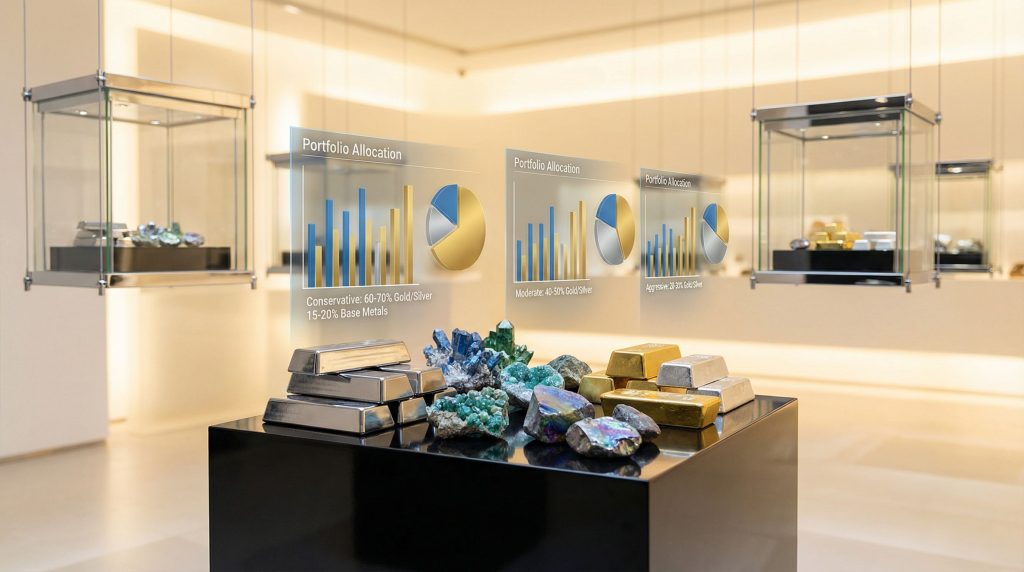
Modern investment paradigms face unprecedented complexity as traditional asset allocation models struggle to accommodate rapid geopolitical shifts and technological disruption. The rise of strategic resource scarcity creates new portfolio construction challenges that extend far beyond conventional precious metals positioning. Understanding how institutional capital navigates these emerging dynamics reveals fundamental changes in risk assessment and return optimization across commodity markets, particularly when expanding strategic metal portfolio approaches.
What Defines a Strategic Metals Portfolio in Today's Resource Landscape?
Strategic metals classification has evolved dramatically beyond simple commodity categorization, reflecting institutional recognition of supply security concerns and defense-critical material requirements. Contemporary frameworks distinguish between traditional store-of-value metals and resources essential for technological infrastructure and national security applications.
Core Components of Strategic Metal Classifications
Defense-critical materials now command premium valuations due to concentrated supply chains and specialized applications resistant to substitution. Tungsten exemplifies this phenomenon, serving as a super-dense material essential for drilling equipment and armor-piercing weaponry. The material's extraordinary 557% rally during recent market cycles demonstrates how supply constraints create asymmetric investment opportunities when combined with inelastic military and industrial demand.
Energy transition metals present distinctly different investment characteristics, with demand directly linked to electric vehicle production rates and grid-scale storage deployment. Furthermore, the critical minerals energy transition drives battery chemistry specifications that determine material intensity requirements for lithium, cobalt, and graphite, creating dynamic demand profiles responsive to technological evolution in energy storage systems.
Traditional precious metals maintain foundational portfolio roles despite strategic mineral opportunities. However, gold prices record highs with gold futures trading at $4,603.90 per ounce and silver at $70.275 per ounce as of March 2026 reflect continued institutional demand for systemic risk hedging instruments during periods of monetary uncertainty and geopolitical stress.
Technology infrastructure metals including gallium, indium, and germanium serve specialized semiconductor and telecommunications applications. In addition, investment access remains limited due to concentrated processing capabilities and restricted trading markets.
Geographic Risk Distribution Analysis
Supply chain concentration creates fundamental vulnerabilities that drive strategic metals investing frameworks. Chinese export restrictions on tungsten and rare earth elements overview demonstrate how resource monopolies translate into geopolitical leverage, forcing Western economies to develop alternative supply sources despite higher production costs.
Infrastructure development requirements for emerging deposits outside established mining jurisdictions add complexity to project evaluation. Western rare earth initiatives face processing capacity gaps that extend development timelines beyond typical institutional investment horizons, as downstream refining capabilities matter more than raw material access for competitive positioning.
Jurisdictional stability assessments incorporate regulatory frameworks, permitting timelines, and political risk factors affecting project development certainty. For instance, mining investments require multi-decade operational horizons where policy consistency and legal frameworks significantly impact return realization.
When big ASX news breaks, our subscribers know first
How Do Institutional Investors Structure Strategic Metal Allocations?
Institutional portfolio construction for strategic metals balances competing objectives including diversification, liquidity management, and macroeconomic scenario alignment. Real-world allocation patterns reveal sophisticated approaches distinguishing between core holdings providing stability and tactical positions capturing specific supply-demand imbalances.
Asset Management Frameworks for Resource Diversification
Strategic metal portfolio expansion approaches demonstrate varied institutional thinking. With $6 billion in assets under management, major funds maintain approximately 75% exposure to gold while distributing the remaining 25% across copper, lithium, uranium, and other strategic metals.
This allocation pattern reflects continuing institutional emphasis on precious metals as portfolio anchors despite strategic mineral expansion opportunities. The heavy gold weighting acknowledges the metal's unique role in systemic risk hedging during monetary dislocations or geopolitical crises, where traditional financial assets may underperform significantly.
Institutional Portfolio Allocation Models
| Portfolio Type | Gold/Silver | Base Metals | Critical Minerals | Cash Buffer |
|---|---|---|---|---|
| Conservative | 60-70% | 15-20% | 10-15% | 5-10% |
| Balanced | 45-55% | 25-30% | 15-20% | 5-10% |
| Growth-Oriented | 30-40% | 35-40% | 20-25% | 5-10% |
Cash buffers ranging from 5-15% enable opportunistic deployment when major shareholding positions become available for acquisition. Consequently, this flexibility requires capital discipline, withholding deployment until risk-adjusted returns exceed required thresholds rather than deploying capital on predetermined schedules.
Investment Vehicle Selection Methodology
Physical ownership versus mining equity exposure represents fundamental architectural decisions with significant operational implications. Physical precious metals require established custodian relationships, insurance contracts, and dealer networks for execution, creating operational overhead but providing direct commodity ownership without company-specific risks.
Mining equity investments offer leveraged commodity exposure through operational improvements and cost position enhancements, though they introduce management execution risks unrelated to underlying commodity fundamentals. Zijin's expanding strategic portfolio demonstrates equity-based approaches providing influence over capital allocation without complete operational control.
Exchange-traded fund structures enable sector diversification without individual company selection requirements, though they may include holdings misaligned with specific strategic metal investment themes. Furthermore, private placement opportunities in development-stage projects offer potential discounts to public market valuations but require acceptance of extended illiquidity periods during project development phases.
Streaming and royalty agreements provide commodity exposure while transferring operational risks to mining companies, creating hybrid structures combining commodity leverage with reduced operational oversight requirements.
Which Critical Minerals Present the Strongest Investment Thesis?
Contemporary critical minerals present varying risk-return profiles based on supply constraint severity, demand growth visibility, and investment accessibility. Market performance differentials reveal institutional preferences for materials with established pricing mechanisms and liquid trading markets.
Tungsten Market Dynamics and Supply Constraints
Tungsten's exceptional price performance reflects fundamental supply-demand imbalances driven by Chinese export restrictions and sustained military demand growth. The material's classification as a super-dense substance essential for drilling equipment and armor-piercing weaponry creates inelastic demand characteristics resistant to price-driven substitution.
Chinese export curbs represent deliberate policy leveraging resource monopoly positioning for geopolitical advantage. China's substantial majority share of global tungsten processing capacity enables export control mechanisms similar to strategic petroleum reserve concepts, using resource dominance for national security and economic leverage.
Defense applications establish demand floors resistant to cyclical economic weakness, as military procurement budgets maintain strategic material requirements independent of broader economic conditions. This demand stability contrasts sharply with industrial metals exhibiting cyclical consumption patterns tied to manufacturing activity levels.
Alternative sourcing strategies from Western jurisdictions face higher production costs and extended development timelines, though policy support for domestic strategic material production may improve project economics through various mechanisms including accelerated depreciation schedules and strategic stockpile purchases.
Uranium Sector Fundamentals and Nuclear Renaissance
Uranium market dynamics demonstrate how policy shifts create structural demand changes with multi-decade implications. Global reactor construction pipelines provide quantifiable demand vectors, though specific project timelines require careful analysis as many announced initiatives experience delays or cancellations.
Nuclear power generation represents unique commodity dynamics where utility companies commit to multi-year purchase contracts, creating demand stability distinct from spot market-driven materials. This contracting structure reduces price volatility compared to industrial metals while supporting longer-term price discovery processes.
Strategic considerations parallel government petroleum reserve concepts, where nations establish uranium stockpiles for energy security without immediate consumption requirements. This creates additional demand layers beyond utility contracting, supporting price floors during market weakness.
Institutional positioning in uranium reflects conviction regarding sustained demand growth, with major investment funds maintaining uranium exposure despite general precious metals focus. Price rallies over recent years anticipate atomic energy demand expansion as governments reassess nuclear power's role in carbon reduction strategies.
Rare Earth Element Value Chain Positioning
Rare earth elements present complex investment challenges despite strong fundamental demand drivers from electric vehicle production and high-technology manufacturing applications. The critical distinction between raw material extraction and downstream processing capacity creates competitive barriers favoring integrated Chinese operations.
"Processing capabilities matter more than raw material access. Western rare earth projects must develop downstream refining capacity to compete effectively with Chinese integrated operations combining mining, separation, and refinement into finished materials."
Investment opportunities face significant timing challenges, with quality projects requiring extended development periods before achieving commercial production. Many rare earth initiatives prove either expensive relative to expected returns or necessitate development timelines extending beyond typical institutional investment horizons.
The separation and refining processes require specialized technical expertise and substantial capital investments, creating competitive moats for established processors while complicating Western project development economics. Environmental considerations add regulatory complexity to processing facility development in jurisdictions with stringent permitting requirements.
What Risk Management Strategies Protect Strategic Metal Investments?
Strategic metal investment risk management requires understanding correlation patterns across different market stress scenarios and implementing appropriate hedging mechanisms for portfolio stability. Volatility mitigation strategies must accommodate the unique characteristics of strategic metals markets compared to traditional commodity investing approaches.
Volatility Mitigation Through Correlation Analysis
Precious metals historically provide portfolio stabilization during financial market stress, though correlation patterns may shift during periods when monetary policy or geopolitical factors drive simultaneous demand across multiple asset classes. Gold's role as a wealth storage anchor maintains relevance during uncertainty periods involving global conflicts or monetary system changes.
Industrial metals exhibit cyclical behavior tied to manufacturing activity and economic growth rates, creating different risk profiles compared to defense-critical materials with more stable demand patterns. Copper's current trading level of $5.381 per pound reflects industrial demand expectations rather than strategic stockpiling considerations.
Currency hedging becomes particularly important for international strategic metal investments, as exchange rate fluctuations can significantly impact returns for investments denominated in foreign currencies. Natural resource investments often provide inherent inflation hedging characteristics, though specific hedging strategies may be warranted based on portfolio construction and investor domicile.
Liquidity Planning for Physical Holdings
Physical strategic metals present unique liquidity challenges requiring careful position sizing and exit strategy planning. Precious metals benefit from established dealer networks providing continuous bid-ask spreads, while specialized strategic materials may require negotiated transactions with extended execution timelines.
Storage and insurance optimization requires understanding specific material characteristics and regulatory requirements. Some strategic metals necessitate specialized storage conditions, creating additional operational costs and logistical considerations beyond standard precious metals custody arrangements.
Dealer relationships become critical for execution in less liquid strategic metals markets. However, establishing multiple counterparty relationships ensures competitive pricing and reliable transaction capability during various market conditions.
How Should Investors Evaluate Mining Company Fundamentals?
Mining company evaluation for strategic metals requires specialized analytical frameworks addressing project development risks, operational execution capabilities, and management track records in bringing complex projects to commercial production. Traditional financial metrics must be supplemented with technical assessments of resource quality and development feasibility.
Operational Excellence Indicators
Reserve life calculations provide foundation for long-term value assessment, though strategic metals projects often feature complex geological characteristics requiring specialized extraction and processing techniques. Resource expansion potential becomes particularly important for strategic materials where demand growth may outpace traditional supply development timelines.
Production cost positioning within global supply curves determines competitive sustainability during various price environments. Strategic metals producers with cost advantages may capture disproportionate margin expansion during supply constraint periods, while high-cost producers face operational challenges during price weakness.
Environmental, social, and governance compliance frameworks increasingly impact permitting timelines and operational approvals, particularly for projects in developed economies with stringent regulatory requirements. ESG considerations may affect access to capital markets and institutional investor participation.
Management Team Assessment Criteria
Track records in project development distinguish management teams capable of navigating complex permitting processes and construction execution from those lacking relevant experience. Strategic metals projects often require specialized technical expertise beyond traditional mining operations.
Capital allocation discipline becomes critical for strategic metals companies where project development requires substantial capital commitments over extended timeframes. Management teams must demonstrate ability to maintain project momentum while preserving financial flexibility during development phases.
Strategic partnership capabilities enable access to specialized technical expertise, processing infrastructure, and customer relationships essential for strategic metals commercialization. Joint venture experience indicates management sophistication in structuring complex development arrangements.
What Macroeconomic Factors Drive Strategic Metal Valuations?
Strategic metal valuations respond to distinct macroeconomic drivers compared to traditional commodity investments, reflecting their specialized end-use applications and supply chain characteristics. Understanding these relationships enables better portfolio positioning across different economic scenarios.
Monetary Policy Impacts Across Metal Categories
Interest rate sensitivity varies significantly across strategic metal categories, with precious metals typically exhibiting inverse relationships to real interest rates while industrial strategic metals may respond more to growth expectations than monetary policy directly. Current precious metals pricing at gold $4,603.90 per ounce and silver $70.275 per ounce reflects monetary uncertainty and geopolitical tensions.
Inflation hedging effectiveness differs among strategic metals based on demand elasticity and supply response capabilities. Materials with inelastic demand and constrained supply responses provide superior inflation protection, while those with elastic demand may underperform during inflationary periods reducing consumption.
Currency debasement scenarios historically favour hard assets including strategic metals, though specific performance depends on demand characteristics and supply availability. Palladium trading at $1,444 per ounce demonstrates industrial metal performance during periods of monetary accommodation.
Global Trade Policy Implications
Export restriction enforcement creates asymmetric impacts across strategic metals markets, with materials subject to export controls experiencing enhanced price volatility and supply security premiums. For instance, the US-China trade war impact on Chinese tungsten export restrictions demonstrates how trade policy translates directly into investment performance.
Critical mineral stockpiling initiatives by major economies create additional demand vectors beyond industrial consumption, supporting price floors during periods of reduced commercial activity. These strategic reserves parallel petroleum stockpile concepts, providing government demand during market weakness.
Friend-shoring trends in strategic resource procurement drive investment flows toward projects in allied nations, potentially improving economics for Western strategic metal developments through policy support mechanisms and long-term supply agreements.
The next major ASX story will hit our subscribers first
Which Emerging Technologies Create New Metal Demand Vectors?
Technological evolution creates dynamic demand patterns for strategic metals, with emerging applications potentially overwhelming traditional supply sources. Understanding technology roadmaps enables anticipation of demand shifts before they impact market pricing when expanding strategic metal portfolio allocations.
Electric Vehicle Supply Chain Requirements
• Battery chemistry evolution affects material intensity requirements for lithium, cobalt, and nickel, with different cathode formulations requiring varying quantities per unit energy storage capacity
• Charging infrastructure buildout drives copper demand for electrical installations, creating sustained industrial consumption beyond vehicle production
• Autonomous vehicle sensor requirements utilise specialty metals for radar, lidar, and computing systems, establishing new demand categories
• Fast-charging technology development may alter battery chemistry specifications, affecting relative demand across battery metals
Renewable Energy Infrastructure Material Needs
Wind turbine permanent magnet requirements drive rare earth demand, particularly neodymium and dysprosium for efficient generator operation. Offshore wind development creates additional demand due to larger turbine sizes and specialised materials for marine environments.
Solar panel manufacturing consumes significant silver quantities for electrical conductivity, creating industrial demand growth linked to renewable energy deployment rates. Grid-scale energy storage installations require various strategic metals depending on storage technology selection, from lithium-ion systems to alternative chemistries.
Furthermore, grid modernisation initiatives necessitate substantial copper investments for transmission and distribution infrastructure, supporting long-term demand growth independent of traditional industrial applications.
How Do Geopolitical Tensions Reshape Strategic Metal Markets?
Geopolitical considerations increasingly dominate strategic metals investing as governments recognise resource security implications for economic and military capabilities. Supply chain resilience building creates new investment opportunities while traditional trade relationships face scrutiny.
Supply Chain Resilience Building
Western mining project development acceleration reflects policy recognition of strategic vulnerability to Chinese-dominated supply chains. Government support mechanisms including accelerated permitting processes and strategic purchasing agreements improve project economics for domestic strategic metal production.
Strategic partnership formations between allied nations create cooperative frameworks for resource development and sharing, reducing individual nation dependence on concentrated supply sources. These partnerships may include joint stockpiling initiatives and coordinated export policies.
Alternative processing capacity development outside China addresses the critical bottleneck limiting Western strategic metal independence. Processing infrastructure investments require substantial capital commitments but create competitive advantages for integrated operations.
National Security Considerations in Resource Policy
Defence stockpile management involves rotation strategies maintaining material quality while providing market support during surplus disposal periods. Strategic reserves require careful balance between security requirements and market disruption avoidance.
Critical mineral designation impacts investment flows by providing policy support and government purchasing commitments that reduce project development risks. These designations may include tax incentives, expedited permitting, and strategic stockpile purchases.
Export control coordination between allied governments creates unified approaches to strategic material trade, potentially affecting global supply patterns and pricing mechanisms for controlled materials.
What Portfolio Construction Methodologies Optimise Risk-Adjusted Returns?
Modern portfolio theory applications to strategic metals require understanding correlation patterns across different market environments and incorporating unique risk characteristics of commodity investments. Optimal portfolio construction balances diversification benefits with concentration risks in supply-constrained markets.
Modern Portfolio Theory Applications to Commodity Investing
Correlation matrices across strategic metal categories reveal changing relationships during market stress periods, when traditional diversification assumptions may break down. Gold and copper correlations typically remain low during normal market conditions but may increase during severe economic dislocations.
Efficient frontier construction incorporating strategic metals allocation must account for higher volatility and potential illiquidity compared to traditional financial assets. The risk-return optimisation requires careful consideration of position sizes and rebalancing frequency to maintain desired exposure levels.
Rebalancing frequency optimisation for volatile assets like strategic metals requires balance between maintaining target allocations and avoiding excessive transaction costs during high volatility periods. Systematic rebalancing approaches may prove superior to discretionary timing attempts.
Scenario Planning for Different Economic Outcomes
Strategic Metal Performance by Economic Scenario
| Economic Scenario | Gold | Copper | Rare Earths | Uranium |
|---|---|---|---|---|
| High Growth | Moderate | Strong | Very Strong | Strong |
| Stagflation | Very Strong | Weak | Moderate | Strong |
| Recession | Strong | Very Weak | Weak | Moderate |
| Currency Crisis | Very Strong | Moderate | Strong | Strong |
High growth scenarios typically favour industrial strategic metals through increased manufacturing activity and technology deployment, while precious metals may underperform due to reduced safe-haven demand. Stagflationary environments historically support precious metals while creating headwinds for demand-sensitive industrial materials.
Recession scenarios create divergent impacts across strategic metal categories, with defensive precious metals outperforming while industrial metals face demand destruction. Currency crisis environments typically support all strategic metals as alternatives to fiat currencies, though specific performance depends on crisis severity and duration.
Building Adaptive Strategic Metal Portfolios
Implementation Timeline and Milestone Planning
Phase 1 focuses on core precious metal foundation establishment, utilising established markets and liquidity to create portfolio stability. This foundation provides the anchor for wealth storage during uncertainty periods while generating sufficient returns to fund tactical strategic metal allocations.
Phase 2 introduces industrial metal exposure through carefully selected mining equities, emphasising companies with operational excellence and strategic metal exposure beyond traditional base metals. This phase requires fundamental analysis capabilities and sector-specific expertise development.
Phase 3 incorporates critical mineral specialisation based on technology trends and supply security considerations, potentially including direct physical ownership or specialised investment vehicles for less liquid strategic materials. This phase demands sophisticated understanding of supply chains and end-use applications.
Phase 4 emphasises portfolio optimisation and risk management refinement, incorporating lessons from earlier phases and adjusting allocation patterns based on market evolution and geopolitical developments.
Monitoring and Adjustment Framework
Quarterly allocation reviews based on fundamental changes in supply-demand balance, geopolitical developments, and technological advancement provide systematic evaluation of strategic metal investment themes. These reviews should incorporate both quantitative performance metrics and qualitative assessment of changing market dynamics.
Annual strategy reassessment enables comprehensive evaluation of strategic metal investment approaches, incorporating lessons learned and adjusting frameworks based on market evolution. This process should evaluate both successful and unsuccessful investment decisions to refine future allocation strategies.
Continuous market intelligence gathering for emerging opportunities requires established information sources and analytical frameworks capable of identifying new investment themes before they achieve broad market recognition. Consequently, this intelligence function becomes particularly important in rapidly evolving strategic metals markets where new applications and supply disruptions create investment opportunities.
Disclaimer: This article contains speculative analysis and forward-looking statements regarding commodity markets and investment strategies. Past performance does not guarantee future results. Strategic metals investing involves significant risks including price volatility, liquidity constraints, and geopolitical factors. Investors should conduct thorough due diligence and consider their risk tolerance before making strategic metals investments.
Ready to Capitalise on Strategic Mineral Discoveries Before They Hit the Headlines?
Discovery Alert's proprietary Discovery IQ model delivers real-time alerts on significant ASX strategic mineral discoveries, transforming complex market data into actionable investment opportunities ahead of the broader market. Understanding why major strategic mineral discoveries can generate substantial returns becomes clearer when you explore Discovery Alert's dedicated discoveries page, showcasing historic examples of exceptional market outcomes and begin your 14-day free trial to position yourself strategically for the next breakthrough discovery.