August 11, 2026
Strategic Mineral Dependencies Reshape European Battery Economics
European governments face mounting pressure to secure domestic lithium supply chains as electric vehicle adoption accelerates across the continent. Traditional supply routes from South America and Australia create vulnerability to geopolitical disruptions, while domestic processing capabilities remain underdeveloped. This strategic gap has prompted renewed focus on Portugal's significant but historically underutilised lithium reserves, particularly with the Portugal lithium prospecting tender 2026 approaching.
The transition from ceramics-grade to battery-grade lithium production represents a fundamental shift in mineral processing economics. Portugal's existing production infrastructure serves traditional ceramic applications, requiring substantial technological upgrades and capital investment to meet automotive sector specifications. Furthermore, the battery-grade lithium refining transformation involves complex metallurgical processes and quality control systems that differ significantly from conventional lithium carbonate production.
When big ASX news breaks, our subscribers know first
Portugal's Strategic Position in European Critical Mineral Security
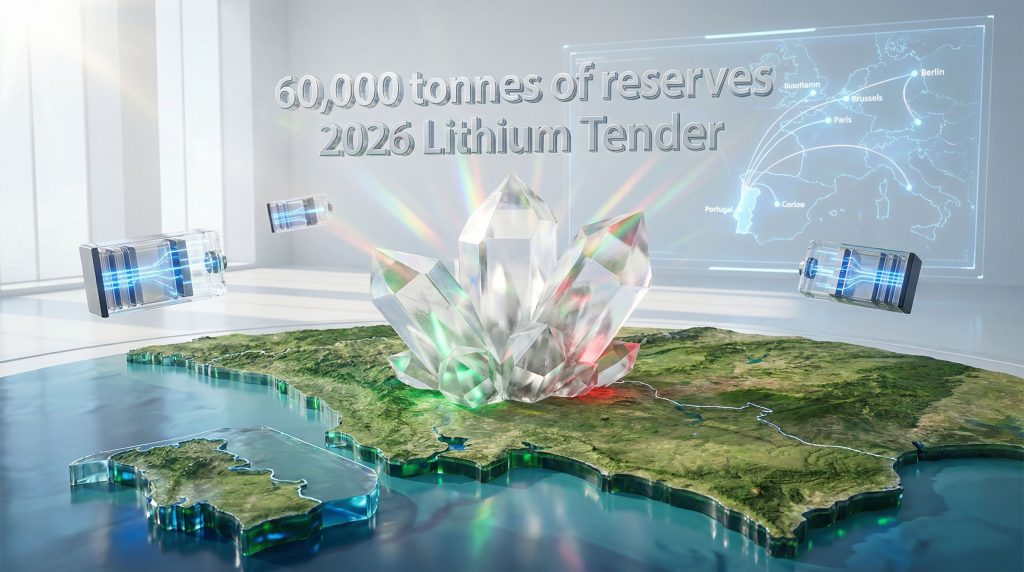
Portugal commands Europe's largest proven lithium reserves with 60,000 tonnes of identified resources, positioning the country as a cornerstone of continental supply chain independence. Current production focuses predominantly on ceramic industry applications, creating an untapped opportunity for battery-grade material development.
The European Union's strategic autonomy objectives emphasise reducing critical mineral import dependencies, particularly from geographically concentrated sources. In addition, Portugal's reserves offer geographic proximity to major European automotive manufacturing centres, potentially reducing transportation costs and supply chain complexity compared to traditional South American suppliers.
Key Strategic Advantages:
- Geographic proximity to European gigafactory developments
- Established mining regulatory framework within EU jurisdiction
- Existing lithium processing experience through ceramic industry applications
- Political stability within European institutional frameworks
Technological Transition Requirements
The shift from ceramic-grade to battery-grade lithium involves substantial technical challenges. Ceramic applications typically require lower purity specifications, while automotive battery production demands precise chemical composition and minimal impurity levels. Consequently, this transition necessitates significant capital investment in purification technologies and quality control systems.
Battery-grade lithium hydroxide production requires advanced processing techniques including precipitation, filtration, and crystallisation systems that exceed traditional ceramic industry requirements. However, companies must invest in specialised equipment and technical expertise to achieve automotive sector certification standards.
Moreover, international examples such as lithium industry innovations demonstrate the technological pathways available for scaling production capabilities.
Critical Timeline Analysis: 2026 Tender Framework
Portugal's Environment Minister Maria da Graca Carvalho confirmed the government's commitment to implementing a comprehensive strategy by summer 2026, with potential tender launch within the same year. This timeline represents a significant acceleration from previous delays that began with original 2018 planning efforts.
Historical Development Timeline:
| Period | Key Events | Impact Assessment |
|---|---|---|
| 2018-2024 | Original tender planning disrupted by multiple government transitions | Extended uncertainty for international investors |
| March 2025 | Current minority administration elected | Renewed political commitment to resource development |
| Summer 2026 | Target completion date for regulatory framework | Establishes foundation for tender implementation |
| Late 2026 | Potential tender launch window | Market entry opportunity for qualified operators |
The Portuguese environmental agency has granted initial approvals for key projects, including Savannah Resources' Barroso mine operation and Lusorecursos' Montalegre development. These pre-approvals indicate regulatory momentum toward commercial production, though detailed environmental compliance requirements remain subject to final permitting processes.
Furthermore, understanding mining permitting insights provides valuable context for navigating these complex approval pathways.
Regulatory Framework Considerations
Environmental approval processes in Portugal involve comprehensive assessment protocols addressing ecosystem impact, water resource management, and community engagement requirements. The initial approvals granted to existing projects suggest regulatory pathways exist for responsible development, though community consultation remains a critical component of final permitting.
International best practice adoption represents a cornerstone of Portugal's approach, with government officials emphasising study of successful models from established mining jurisdictions. This comparative analysis approach suggests Portugal aims to implement proven community engagement and revenue-sharing mechanisms rather than developing entirely novel regulatory frameworks.
For instance, Portugal's mining technology sector is actively preparing for enhanced licensing procedures as the tender framework develops.
Investment Economics and Capital Requirements
Lithium mining and processing operations require substantial upfront capital investment across multiple development phases. Initial exploration and resource definition typically involves several million euros in geological assessment and drilling programmes. Subsequently, mine development and processing facility construction can require tens to hundreds of millions in capital depending on deposit characteristics and production targets.
Primary Investment Categories:
- Exploration and resource definition: Geological surveys, drilling programmes, metallurgical testing
- Infrastructure development: Access roads, power supply, water management systems
- Processing facilities: Extraction, purification, and battery-grade production equipment
- Environmental compliance: Monitoring systems, habitat restoration, community benefit programmes
Portuguese government policy emphasises domestic value retention through local employment requirements and regional economic development mandates. This approach may influence project economics by requiring specific community benefit allocations and local hiring preferences, potentially affecting overall project returns while supporting regional development objectives.
Supply Chain Integration Opportunities
European automotive manufacturers increasingly seek direct supplier relationships to ensure battery material quality and delivery reliability. Portugal's geographic position offers logistics advantages for supplying major European automotive production centres, with existing transportation infrastructure providing access to key markets.
Several European gigafactory developments are progressing across the continent, creating potential demand for Portuguese lithium production. Proximity to these facilities offers cost advantages compared to intercontinental shipping from traditional suppliers, though specific supply agreements require individual negotiation between producers and battery manufacturers.
Additionally, studying lithium brine insights from other regions provides valuable benchmarks for production economics and market positioning.
Risk Assessment Framework for Stakeholders
Community Relations and Environmental Stewardship
Local community acceptance represents a fundamental risk factor for lithium development projects. Historical mining operations in some regions have created scepticism about environmental protection and economic benefit distribution, requiring comprehensive engagement strategies to build social licence for operations.
Portuguese policy emphasises involving local communities and ensuring project wealth remains within national borders while generating regional employment opportunities, according to government statements regarding the tender framework.
Environmental protection standards within European Union jurisdiction typically exceed those in many traditional mining regions, requiring enhanced monitoring and mitigation measures. These standards may increase operational costs while providing greater long-term environmental security and community acceptance.
Stakeholder Risk Matrix:
| Stakeholder Category | Primary Risk Concerns | Mitigation Approaches |
|---|---|---|
| Local Communities | Environmental impact and benefit distribution | Transparent revenue sharing and employment programmes |
| International Investors | Regulatory stability and permitting delays | Long-term licence security and clear approval processes |
| Environmental Organisations | Ecosystem protection and restoration | Enhanced monitoring and habitat conservation measures |
| Government Entities | Strategic supply security and economic development | Domestic processing requirements and export controls |
Market Volatility and Price Risk
Lithium markets demonstrate significant price volatility based on supply-demand dynamics, technological developments, and geopolitical factors. Projects must demonstrate economic viability across various price scenarios to attract long-term financing and maintain operational sustainability.
Alternative battery technologies and lithium recycling developments present potential demand risks for primary production operations. Solid-state batteries, sodium-ion alternatives, and advanced recycling processes may influence long-term lithium demand projections, requiring flexible operational planning and market adaptation capabilities.
Successful examples such as Thacker Pass lithium production demonstrate how large-scale operations can navigate these market challenges whilst maintaining commercial viability.
Future Scenarios: European Lithium Market Development
High-Success Development Pathway
Successful implementation of Portugal's lithium strategy could position the country as a significant supplier within European battery supply chains by the mid-2030s. This scenario assumes effective community engagement, streamlined permitting processes, and successful technology transfer for battery-grade production.
Integrated value chain development might include downstream processing partnerships with European battery manufacturers, creating additional employment and technological expertise within Portugal. Such integration could enhance project economics while supporting broader industrial policy objectives.
Projected Outcomes Under Optimal Development:
- Establishment of multiple commercial lithium operations across qualified deposits
- Development of domestic battery-grade processing capabilities
- Creation of regional employment clusters supporting mining and processing operations
- Contribution to European Union strategic mineral independence objectives
According to European investment analysis, Portugal's strategic position offers significant opportunities for supply chain resilience across the continent.
Moderate Development Scenario
Conservative development approaches might focus on proven deposits with established community acceptance and minimal environmental sensitivity. This pathway emphasises gradual expansion and technological development while maintaining existing ceramic industry supply relationships.
Limited geographic expansion under this scenario would concentrate development in areas with existing industrial activity and established regulatory precedents. Such approaches may reduce development risks while potentially limiting overall production volumes and economic impact.
Challenge Scenario Considerations
Extended permitting delays due to environmental concerns or community opposition could significantly impact project timelines and investment returns. Complex geological conditions or unexpected technical challenges might increase capital requirements and delay commercial production.
Global market developments including increased recycled lithium availability or breakthrough alternative battery technologies could influence long-term demand projections. Projects must demonstrate adaptability to changing market conditions and technological developments.
The next major ASX story will hit our subscribers first
Strategic Implications for Market Participants
International Mining Companies
Successful participation in the Portugal lithium prospecting tender 2026 requires comprehensive understanding of European regulatory frameworks and community engagement expectations. Companies must demonstrate technical capabilities for battery-grade production while meeting enhanced environmental and social governance standards.
Strategic partnerships with European technology providers and automotive manufacturers may strengthen tender applications while providing market access for production output. Such relationships can demonstrate demand security and support project financing efforts.
Critical Success Factors:
- Technical competence: Proven experience in battery-grade lithium production
- Financial capacity: Adequate capital for complete development cycle
- Community engagement: Demonstrated track record of successful stakeholder relations
- Environmental compliance: Capability to exceed EU environmental standards
European Policymakers
Portugal's tender framework may establish precedents for other European Union member states with critical mineral resources. Successful implementation could provide a model for balancing economic development with environmental protection and community benefit requirements.
Coordination between national governments on critical mineral strategies could enhance overall European supply chain resilience while avoiding destructive competition between member states. Harmonised approaches to permitting and environmental standards may facilitate cross-border investment and technology sharing.
Regional Communities and Environmental Organisations
Proactive engagement in tender design and evaluation criteria offers opportunities to influence project development standards and benefit distribution mechanisms. Independent environmental monitoring and community oversight frameworks can ensure long-term protection of local interests.
Economic diversification planning beyond mining lifecycle considerations provides foundation for sustainable regional development. Communities benefit from establishing long-term economic development strategies that build on mining-related employment and investment while preparing for eventual mine closure transitions.
Conclusion: Portugal's Lithium Strategy as European Development Model
The Portugal lithium prospecting tender 2026 represents a critical test case for European approaches to domestic critical mineral development. The balance between economic opportunity, environmental protection, and community benefit will likely influence similar initiatives across other European Union member states seeking supply chain independence.
The emphasis on international best practice adoption and comprehensive stakeholder engagement may establish new standards for responsible lithium extraction within developed economies. Success in Portugal could demonstrate that high-standard mining operations can coexist with environmental protection and community development objectives.
Disclaimer: This analysis contains forward-looking projections and scenario modelling based on current policy statements and market conditions. Actual outcomes may differ significantly based on regulatory changes, market developments, technological advances, and unforeseen circumstances. Readers should conduct independent research and consult qualified experts before making investment or business decisions related to lithium markets or Portuguese mining opportunities.
The long-term success of the Portugal lithium prospecting tender 2026 will depend on effective execution of community engagement protocols, environmental protection measures, and technical capability development. These factors will determine whether Portugal emerges as a reliable supplier within European battery supply chains or encounters the delays and opposition that have affected other mineral development initiatives.
Could Portugal's Lithium Strategy Transform Your Investment Portfolio?
Discovery Alert's proprietary Discovery IQ model delivers instant notifications when significant lithium and battery metal discoveries emerge on the ASX, helping investors identify opportunities in this rapidly evolving sector before broader market recognition. Join thousands of subscribers who rely on Discovery Alert's real-time mineral discovery alerts for actionable investment insights, and begin your 30-day free trial today to position yourself ahead of the market.