
June 6, 2026
Strategic Supply Chain Vulnerabilities in Global Iron Ore Markets
The modern iron ore market operates as a complex web of interdependencies, where strategic positioning by major consuming nations can trigger cascading effects across global commodity flows. Recent developments in China's approach to iron ore procurement reveal the intricate balance between market leverage and supply security that defines contemporary mining economics. Furthermore, understanding these dynamics requires examining how temporary supply disruptions, even those lasting mere weeks, can reshape pricing mechanisms and alter long-term strategic calculations for both producers and consumers.
The escalating tensions between China's state-controlled purchasing entities and major Australian iron ore producers illustrate the evolving nature of commodity diplomacy. Consequently, commercial negotiations increasingly intersect with broader geopolitical considerations. These market disruptions provide critical insights into the vulnerability of global supply chains and the strategic importance of diversification in both sourcing and market access.
When big ASX news breaks, our subscribers know first
Understanding China's Iron Ore Market Dominance and Import Dependencies
Statistical Analysis of China's Massive Iron Ore Consumption
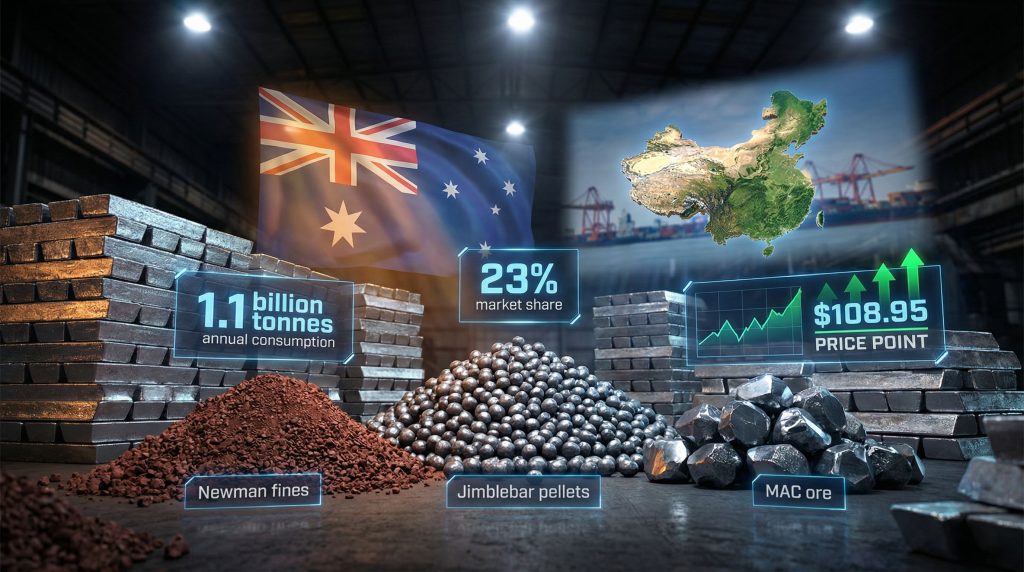
China's position as the world's dominant iron ore consumer fundamentally shapes global market dynamics. The nation imports approximately 1.1 billion tonnes of iron ore annually, representing roughly 70% of global seaborne iron ore trade. This massive consumption stems from China's steel production capacity, which exceeds 1 billion tonnes per year, supporting both domestic infrastructure development and export manufacturing.
The scale of China's iron ore dependency creates unique market vulnerabilities. When China eases BHP iron ore ban temporarily, even for products like Jimblebar fines, the market response demonstrates the concentration risk inherent in global commodity flows. The temporary easing of restrictions on approximately 3.17 million tonnes of iron ore products highlights how relatively small volumes can create significant price volatility when supply chains are disrupted.
BHP's Strategic Position in China's Supply Mix
BHP maintains approximately 23% market share of China's total iron ore imports, making it the third-largest supplier after Vale and Rio Tinto. This positioning creates mutual dependency, where BHP relies on Chinese demand for revenue stability while China depends on BHP's high-quality iron ore products for efficient steel production.
The company's product portfolio includes several specialized grades tailored to Chinese steel mill requirements:
• Newman fines: Premium grade iron ore with 62-64% iron content
• Jimblebar fines: Medium-grade product with specific metallurgical properties
• MAC fines: Lower-grade option suitable for blending applications
Each product serves distinct roles in Chinese steel production, with Newman fines commanding premium pricing due to superior quality characteristics that reduce energy consumption and improve blast furnace efficiency.
Comparative Supplier Analysis in the Chinese Market
| Supplier | Market Share | Primary Products | Key Advantages |
|---|---|---|---|
| Vale (Brazil) | 28% | Carajas fines, Pellets | Highest iron content |
| Rio Tinto | 25% | Pilbara Blend, Pilbara Fines | Consistent quality |
| BHP | 23% | Newman, Jimblebar, MAC | Product diversity |
| Fortescue | 15% | Fortescue Blend | Cost competitive |
This supplier concentration means that disruptions affecting any major producer can significantly impact global pricing and availability. The interdependence also creates opportunities for strategic maneuvering during contract negotiations.
Contract Negotiation Dynamics and Market Leverage Mechanisms
Annual Supply Agreement Structures in Global Iron Ore Trade
Iron ore supply contracts typically follow annual negotiation cycles, with pricing mechanisms that blend spot market references with negotiated premiums or discounts. In addition, major suppliers like BHP negotiate comprehensive supply agreements covering:
• Volume commitments: Fixed minimum and maximum delivery quantities
• Pricing mechanisms: Monthly average spot pricing with quality adjustments
• Delivery terms: Port specifications and shipping scheduling
• Quality specifications: Iron content, impurity levels, and physical characteristics
The complexity of these agreements means that disruptions during negotiation periods can create extended market uncertainty. When China eases BHP iron ore ban for specific products, it reflects the ongoing tension between maintaining leverage in negotiations while ensuring adequate supply for domestic steel production.
Strategic Implications of State-Controlled Purchasing Power
China Mineral Resources Group (CMRG) operates as the centralised purchasing entity for Chinese steel mills, concentrating enormous buying power that can influence global pricing. This state-controlled approach differs significantly from the distributed purchasing models used in other major consuming regions.
CMRG's strategy involves:
• Coordinated bargaining: Leveraging combined demand to negotiate better terms
• Supply diversification: Reducing dependency on any single supplier
• Strategic stockpiling: Building inventory buffers during favourable pricing periods
• Market timing: Using temporary restrictions to influence negotiation dynamics
The recent temporary easing of restrictions demonstrates the delicate balance CMRG must maintain between negotiation leverage and supply security for domestic steel production.
Immediate Market Impact Analysis of Supply Disruptions
Iron Ore Price Volatility Patterns and Market Response
Recent market movements illustrate the sensitivity of iron ore pricing to supply disruption signals. When restrictions on BHP products were implemented and subsequently eased, price movements reflected both the immediate supply impact and market psychology around future availability.
However, understanding these iron ore price trends requires analysing the broader market context and supply-demand fundamentals.
Iron Ore Price Movement Analysis:
| Date Range | Price Movement | Key Trigger | Market Volume |
|---|---|---|---|
| March 10-12, 2026 | +4.2% to $108.95 | Newman fines restriction | High volatility |
| March 13, 2026 | -2.1% | Temporary easing announcement | Profit taking |
| February 2026 | +15% month-over-month | Initial Jimblebar restrictions | Supply concerns |
| January 2026 | Baseline $94.50 | Pre-restriction levels | Normal trading |
The price volatility demonstrates how supply disruptions, even temporary ones, can create significant trading opportunities while highlighting the underlying tension in global iron ore markets.
Port Storage and Logistics Complications
Iron ore logistics involve complex coordination between mining operations, shipping schedules, and port infrastructure. When China eases BHP iron ore ban for products already at Chinese ports, it addresses immediate logistical challenges whilst maintaining negotiation pressure.
Key logistical considerations include:
• Port inventory management: Chinese ports typically maintain 30-45 days of iron ore inventory
• Shipping coordination: Vessel scheduling conflicts during restriction periods
• Quality segregation: Separating restricted from approved products at port facilities
• Steel mill supply planning: Managing production schedules around supply uncertainty
The temporary nature of the easing suggests CMRG recognises the practical limitations of completely disrupting established supply chains while negotiations continue.
Product Quality Differentiation and Substitution Challenges
Technical Specifications of Restricted Iron Ore Products
The specific products subject to restrictions reveal important technical considerations in steel production. Jimblebar fines, temporarily allowed for delivery, possess particular metallurgical characteristics that make substitution challenging:
Jimblebar Fines Specifications:
• Iron content: 58-61%
• Silica levels: 4-7%
• Alumina content: 2-4%
• Phosphorus: <0.08%
• Physical properties: Optimal size distribution for blast furnace charging
These specifications make Jimblebar fines suitable for specific blending applications in Chinese steel mills, where consistent quality and predictable behaviour in blast furnaces are essential for operational efficiency.
Substitution Economics and Blending Requirements
Chinese steel mills cannot easily substitute products from different suppliers without adjusting their operational parameters. The technical challenges include:
• Blast furnace optimisation: Different iron ore grades require adjusted air flow and temperature profiles
• Sintering plant modifications: Varying mineral compositions affect sinter quality
• Cost implications: Substitute products may increase energy consumption or reduce productivity
• Quality consistency: Maintaining steel grade specifications with different raw material inputs
"Steel mill operators typically require 2-4 weeks to optimise blast furnace performance when switching between different iron ore suppliers, making short-term substitution economically challenging."
The temporary easing of restrictions acknowledges these technical realities whilst maintaining pressure on long-term contract negotiations.
Historical Context and Precedent Analysis
Previous China-Australia Mining Commodity Disputes
The current iron ore situation follows established patterns from previous commodity disputes between China and Australia. The most relevant precedent involves coal import restrictions implemented between 2020-2022:
Coal Restriction Timeline and Resolution:
• Initial restrictions: October 2020 – targeting Australian thermal coal
• Escalation period: November 2020 – March 2021 – expanded to metallurgical coal
• Peak impact: April 2021 – August 2022 – near-complete import ban
• Gradual easing: September 2022 – February 2023 – selective permit approvals
• Full normalisation: March 2023 – unrestricted trade resumption
The coal dispute lasted approximately 30 months from initial restrictions to full normalisation, suggesting that commodity trade disputes can persist longer than immediate market impacts might suggest.
Resolution Patterns and Economic Pressures
Analysis of historical commodity disputes reveals common resolution patterns:
• Economic necessity: Domestic supply shortages eventually force compromise
• Face-saving measures: Gradual easing allows both parties to claim success
• Market adaptation: Alternative suppliers and buyers emerge during extended disputes
• Relationship rebuilding: Post-resolution trade often exceeds pre-dispute levels
The temporary easing of the BHP iron ore restrictions fits the pattern of testing market waters before broader resolution. Consequently, this allows both parties to assess the economic impact of continued restrictions.
The next major ASX story will hit our subscribers first
Investment Implications and Market Psychology
Short-term Trading Opportunities and Risk Considerations
The volatility created by supply restrictions generates significant trading opportunities in iron ore futures markets. However, these opportunities come with substantial risks that require careful position management:
For instance, professional traders must consider the mining demand insights when evaluating market opportunities during disruptions.
Trading Considerations:
• Volatility spikes: Daily price movements exceeding 3-5% during restriction announcements
• Volume patterns: Increased trading activity around policy announcements
• Basis relationships: Spot versus futures price differentials during supply uncertainty
• Calendar spreads: Near-term versus distant contract pricing distortions
"Iron ore price volatility during supply restrictions creates both opportunities and significant risks. The unpredictable nature of diplomatic commodity negotiations means that position sizing must account for potential rapid policy reversals that can trigger substantial price movements."
Professional traders focus on short-term momentum whilst maintaining strict risk management protocols. They recognise that diplomatic negotiations can shift market sentiment rapidly and unpredictably.
Long-term Structural Investment Themes
The recurring nature of commodity trade disputes suggests several long-term investment themes. Furthermore, the potential iron ore surplus decline adds complexity to investment decisions:
Diversification Imperatives:
• Geographic diversification: Mining companies developing operations in multiple jurisdictions
• Customer base expansion: Reducing dependency on single large customers
• Product portfolio breadth: Offering multiple grades to various market segments
• Logistics flexibility: Developing multiple shipping routes and port options
Infrastructure Investment Priorities:
• Alternative supply chains: Development of non-traditional trade routes
• Port capacity expansion: Investment in handling facilities outside traditional hubs
• Processing technology: Advanced beneficiation to improve product quality
• Storage infrastructure: Strategic inventory capabilities in key consuming regions
Market Monitoring and Predictive Indicators
Key Data Points for Tracking Market Development
Investors and market participants monitor several critical indicators to anticipate changes in the China-BHP iron ore situation:
Weekly Monitoring Metrics:
• Port inventory levels: Chinese port iron ore stockpiles (normal range: 130-160 million tonnes)
• Steel mill purchasing patterns: Buying behaviour changes among state-owned versus private mills
• Shipping data: Vessel tracking for BHP cargoes to Chinese ports
• Futures market positioning: Speculative versus commercial trader positions
Monthly Assessment Factors:
• Steel production data: Chinese crude steel output trends
• Import statistics: Country-by-country iron ore import volumes
• Contract negotiation progress: Public statements and industry reports
• Alternative supplier market share: Changes in supplier relationships
Futures Market Signals and Price Discovery
The iron ore futures curve provides insights into market expectations for dispute resolution timing. Key curve characteristics include:
• Contango patterns: Higher distant prices suggest expected normalisation
• Backwardation signals: Higher near-term prices indicating current supply tightness
• Volatility structure: Elevated near-term volatility during negotiation periods
• Open interest patterns: Speculative versus hedging activity levels
Professional market participants use these indicators to gauge market sentiment and position for potential resolution scenarios. They recognise that diplomatic breakthroughs can rapidly alter market dynamics.
Strategic Outlook and Industry Evolution
Supply Chain Resilience Development
The recurring nature of trade disputes is accelerating investment in supply chain resilience across the global iron ore industry. Mining companies are implementing strategies to reduce vulnerability to single-market dependency.
Considering Australia's iron ore leadership position, companies are developing comprehensive approaches to market diversification:
Resilience Strategies:
• Market diversification: Developing relationships with steel producers in India, Southeast Asia, and other emerging markets
• Product innovation: Creating specialised grades for different regional preferences
• Logistics redundancy: Establishing multiple shipping routes and port relationships
• Financial hedging: Using derivative instruments to manage price and currency risks
The temporary nature of recent restrictions suggests that both China and Australia recognise the mutual benefits of stable iron ore trade. However, they also acknowledge the need for periodic relationship recalibration.
Technology and Quality Competition
Future iron ore market dynamics will increasingly focus on product quality and technological innovation rather than solely on volume and price competition. Developments like the onslow haulage update demonstrate industry commitment to operational excellence.
Key development areas include:
• Beneficiation technology: Improving iron content and reducing impurities
• Environmental performance: Lower carbon footprint in steel production
• Consistency optimisation: Reducing variability in product specifications
• Logistics efficiency: Streamlined handling and transportation systems
Companies investing in these areas will likely maintain stronger negotiating positions during future contract discussions. They will be better positioned for long-term market growth.
The evolving China-BHP iron ore situation demonstrates the complex interplay between commercial interests, strategic positioning, and diplomatic considerations. These factors increasingly characterise global commodity markets. Understanding these dynamics provides essential context for evaluating investment opportunities and risks in the mining sector. Additionally, it highlights the importance of supply chain resilience in an interconnected global economy. The recent easing of restrictions represents a tactical pause rather than a strategic shift. Meanwhile, broader market dynamics continue to evolve as both nations balance economic pragmatism with strategic positioning.
Looking to Capitalise on Iron Ore Market Volatility?
Discovery Alert's proprietary Discovery IQ model delivers real-time alerts on significant mineral discoveries across the ASX, including iron ore opportunities that could benefit from current market dynamics and supply chain disruptions. See how major discoveries have historically generated substantial returns by exploring Discovery Alert's discoveries page, then begin your 14-day free trial to position yourself ahead of market movements.