June 20, 2026
Strategic Technology Consolidation in Global Mining Equipment Markets
Mining technology consolidation has accelerated dramatically over the past decade, driven by operators' demands for integrated solutions that bridge the gap between physical equipment and digital optimization systems. Caterpillar acquires RPMGlobal represents a pivotal moment in this transformation, reflecting a fundamental shift in how mining companies approach operational efficiency. Companies are moving from best-of-breed software approaches toward unified platforms that promise seamless data integration across their entire technology stack.
The recent completion of Caterpillar's $1.1 billion acquisition of Brisbane-based RPMGlobal represents more than just another corporate transaction. It signals a strategic pivot within the $67.6 billion equipment manufacturer's approach to capturing value from the mining sector's ongoing digital transformation.
When big ASX news breaks, our subscribers know first
Industrial Equipment Giants Expanding Software Capabilities
The mining equipment sector has witnessed unprecedented consolidation activity as manufacturers recognise that hardware capabilities alone no longer provide sufficient competitive differentiation. Traditional equipment giants are increasingly investing in software capabilities to create integrated ecosystems that combine physical assets with intelligent planning and optimisation systems.
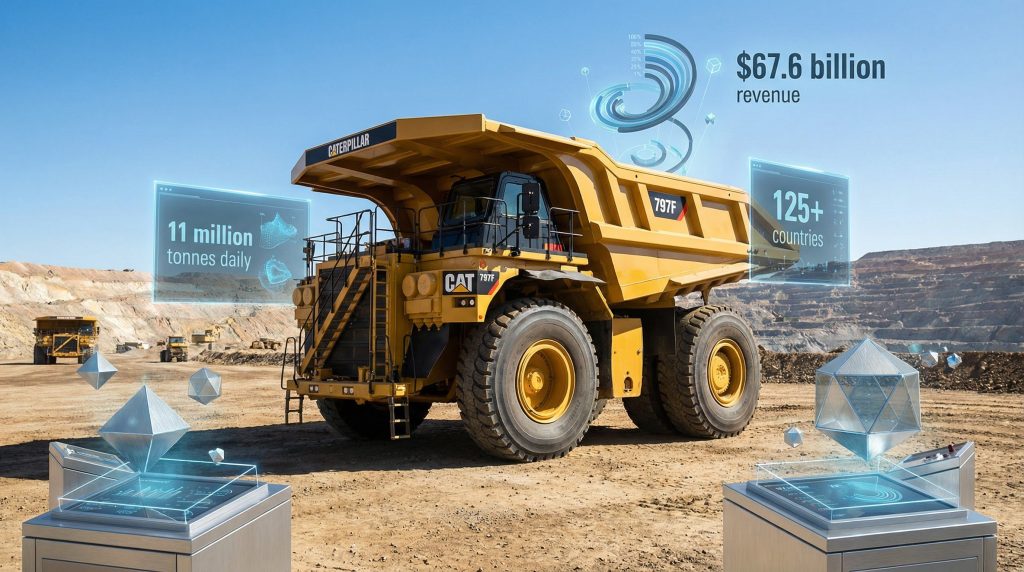
Caterpillar's financial positioning provides substantial resources for strategic acquisitions, with annual revenues reaching $67.6 billion across construction and mining equipment, off-highway engines, industrial gas turbines, and diesel-electric locomotives. This diversified revenue base enables the company to invest heavily in technology integration without compromising core manufacturing operations.
Furthermore, the acquisition strategy reflects broader industry consolidation trends where equipment manufacturers are pursuing vertical integration through software capabilities. Rather than relying on third-party partnerships or licensing arrangements, companies are gaining direct control over software development roadmaps that align with their hardware capabilities.
Technology acquisition patterns among heavy equipment manufacturers typically focus on three key areas:
- Operational optimisation software that directly interfaces with equipment sensors and telemetry systems
- Predictive maintenance platforms that leverage equipment performance data for proactive service delivery
- Planning and scheduling systems that integrate equipment availability with production optimisation algorithms
The integration between hardware and software solutions creates significant competitive barriers for independent software providers while potentially increasing switching costs for mining operators who become dependent on integrated platforms.
RPMGlobal's 50-Year Mining Software Legacy
RPMGlobal brings substantial domain expertise to the partnership, having provided mining software solutions for approximately 50 years with operations spanning 125+ countries. This global footprint represents established customer relationships and deep understanding of diverse mining environments, from underground hard rock operations to large-scale open pit facilities.
The company's XECUTE platform demonstrates the sophisticated capabilities that attracted Caterpillar's attention. This live, multi-user environment processes planning data for 11 million tonnes of material movement daily while supporting $91 billion in shipped products annually. These performance metrics indicate that RPMGlobal's software operates at industrial scale across some of the world's largest mining operations.
Real-time collaboration capabilities within the XECUTE platform enable multiple users to simultaneously modify mine plans with immediate updates across all connected systems. This functionality addresses a critical operational challenge where planning delays can directly impact production schedules and equipment utilisation rates.
The platform's global deployment across diverse mining jurisdictions provides Caterpillar acquires RPMGlobal with immediate access to established customer relationships and proven software performance in varying geological and operational conditions.
How Will This Merger Transform Mine Site Operations?
The convergence of Caterpillar's equipment capabilities with RPMGlobal's planning software creates opportunities for operational integration that neither company could achieve independently. This combination enables data-driven mining operations that flow between physical equipment sensors and planning optimisation algorithms, potentially transforming how mining operations coordinate equipment deployment and production scheduling.
Equipment-Software Convergence Models
Real-time integration architecture between Caterpillar machinery and RPMGlobal planning systems could enable closed-loop optimisation where equipment performance data directly influences planning adjustments. Equipment sensors monitoring fuel consumption, operating temperatures, and mechanical performance would feed into planning algorithms that automatically adjust schedules based on actual equipment capabilities rather than theoretical capacities.
This integration model offers several operational advantages:
- Dynamic scheduling adjustments based on real-time equipment status rather than static planning assumptions
- Predictive maintenance coordination where maintenance windows are automatically integrated into production planning
- Equipment utilisation optimisation through intelligent load balancing across mixed equipment fleets
- Performance validation where planning forecasts are continuously calibrated against actual operational results
Operational efficiency gains from unified data platforms could significantly reduce the variance between planned and actual production. Mining operations typically experience 15-25% variance between planning projections and actual output due to equipment availability issues, geological surprises, and coordination challenges between planning and operations teams.
In addition, integrated systems could potentially reduce this variance to 5-10% by enabling real-time adjustments and providing operations teams with more accurate equipment availability data for short-term planning decisions.
Competitive Response Strategies
The Caterpillar acquisition creates immediate pressure on other major equipment manufacturers to develop similar integrated capabilities. Komatsu, Liebherr, Volvo Construction Equipment, and other industry leaders must now evaluate whether to pursue their own software acquisitions or develop internal capabilities to compete with integrated offerings.
Market consolidation implications for independent software providers include increased acquisition interest from equipment manufacturers seeking to replicate Caterpillar's strategy. Companies offering complementary technologies such as fleet management systems, geological modelling software, or maintenance optimisation platforms may become attractive targets.
Software acquisition targets in the mining technology space typically fall into three categories:
| Category | Revenue Multiple Range | Strategic Value |
|---|---|---|
| Mine Planning Software | 8-12x | High switching costs, mission-critical operations |
| Asset Management Systems | 6-10x | Equipment lifecycle optimisation, predictive capabilities |
| Integrated Platforms | 12-18x | End-to-end solutions, ecosystem lock-in effects |
Independent software providers may need to choose between remaining independent and potentially losing market access as equipment manufacturers favour integrated solutions, or accepting acquisition offers from strategic buyers seeking to build competitive responses to the Caterpillar acquires RPMGlobal combination.
What Are the Financial and Market Implications?
The $1.1 billion acquisition price represents approximately 1.6% of Caterpillar's annual revenues, indicating that the company views this as a strategic investment rather than a transformative transaction. However, the financial implications extend beyond the initial purchase price to include long-term revenue synergies and competitive positioning benefits.
Valuation Frameworks for Mining Technology Assets
Acquisition valuation multiples in the mining software sector reflect the recurring revenue characteristics and switching costs associated with mission-critical planning systems. The RPMGlobal transaction price suggests a valuation multiple consistent with integrated platform providers, indicating that Caterpillar recognised premium value in the combination of established customer relationships and comprehensive software capabilities.
Market analyst perspectives on the acquisition quality provide validation of the strategic rationale. Industry experts characterised the transaction as representing high-quality assets with strong competitive positioning and growth potential within the mining technology sector, according to Caterpillar's official announcement.
The valuation framework considers several factors unique to mining software investments:
- Customer concentration risk from dependence on major mining operators
- Regulatory compliance complexity across multiple international jurisdictions
- Technology obsolescence risks in rapidly evolving digital transformation environments
- Integration complexity when combining software platforms with equipment systems
Return on Investment Projections
Customer retention improvements through integrated offerings could significantly enhance lifetime value calculations for both companies. Mining operators typically prefer consolidated vendor relationships that reduce coordination complexity and enable unified support structures across their technology stack.
Cross-selling opportunities across Caterpillar's equipment base present substantial revenue expansion potential. RPMGlobal's software could be marketed to existing Caterpillar customers who currently use competing planning systems, while Caterpillar equipment could be promoted to RPMGlobal's software customer base during equipment replacement cycles.
Operational cost reductions for mining operators using integrated solutions include:
- Reduced IT infrastructure complexity through unified platforms
- Lower training costs for operations personnel using integrated systems
- Decreased coordination overhead between equipment and planning teams
- Simplified vendor management and support relationships
"The acquisition creates a competitive moat through integrated capabilities that are difficult for competitors to replicate quickly, potentially enabling premium pricing for combined solutions." – Industry analyst assessment from Canadian Mining Journal.
Industry Transformation Scenarios and Future Outlook
The mining industry's digital transformation trajectory suggests that equipment-software integration will accelerate significantly over the next decade. Autonomous equipment deployment, artificial intelligence optimisation, and real-time data analytics are converging to create opportunities for operational improvements that require deep integration between physical assets and software systems.
These developments align with broader mining transformation trends towards electrification and decarbonisation, where integrated systems become essential for monitoring and optimising environmental performance metrics.
Technology Integration Roadmap
Phase 1 implementation focuses on establishing data sharing protocols between Caterpillar equipment sensors and RPMGlobal planning systems. This foundational integration enables basic operational coordination and performance monitoring across integrated systems.
Phase 2 development introduces autonomous equipment coordination capabilities where planning systems can directly communicate operational instructions to compatible Caterpillar machinery. This advancement reduces human intervention requirements and enables more responsive adjustments to changing operational conditions.
Phase 3 vision incorporates artificial intelligence-driven optimisation across entire mining operations, where edge AI computing solutions continuously optimise equipment deployment, maintenance scheduling, and production planning based on historical performance data and real-time operational conditions.
Competitive Landscape Evolution
Market share redistribution among equipment manufacturers will likely favour companies that successfully integrate software capabilities with hardware offerings. Mining operators increasingly prefer consolidated solutions that reduce complexity and coordination overhead across their technology infrastructure.
Independent software providers face strategic decisions about their long-term competitive positioning as equipment manufacturers develop integrated capabilities. Options include:
- Specialisation strategies focusing on niche applications where integration benefits are less compelling
- Partnership approaches with multiple equipment manufacturers to maintain vendor neutrality
- Acquisition consideration by strategic buyers seeking to build competitive responses
- Platform expansion to become comprehensive solution providers competing directly with integrated offerings
Customer consolidation preferences for integrated solutions reflect broader industry trends toward simplified vendor relationships and unified support structures. Mining operators report 20-30% reduction in IT management overhead when using integrated platforms compared to best-of-breed approaches requiring coordination across multiple vendors.
Risk Assessment and Implementation Challenges
Integration complexity factors present significant implementation challenges that could impact the success of the combined offering. Cultural alignment between hardware-focused engineering organisations and software development teams requires careful management to maintain innovation velocity while achieving operational synergies.
Integration Complexity Factors
Technical architecture compatibility represents a fundamental challenge when combining established software platforms with equipment sensor systems. RPMGlobal's cloud-based architecture must interface seamlessly with Caterpillar's equipment telemetry systems while maintaining security protocols and performance standards required for industrial applications.
Customer transition management requires careful coordination to avoid operational disruption during system integration. Mining operations cannot tolerate planning system downtime or data migration issues that could impact production schedules.
Data ownership and portability considerations become critical when customers evaluate integrated solutions. Mining operators require assurance that their operational data remains accessible and transferable if they choose to modify their technology architecture in the future.
Market Position Vulnerabilities
Competitor response timing could impact the success of Caterpillar acquires RPMGlobal integrated strategy. If other equipment manufacturers rapidly develop or acquire similar capabilities, the competitive advantage period may be shorter than anticipated.
Technology obsolescence risks in rapidly evolving sectors require continuous investment in research and development to maintain competitive positioning. The mining technology sector experiences significant innovation pressure from startups and technology companies entering the market with cloud-native solutions.
Regulatory considerations across global mining jurisdictions could impact deployment flexibility. Different countries maintain varying requirements for data storage, cybersecurity protocols, and technology approval processes that may require customised implementation approaches.
The next major ASX story will hit our subscribers first
Investment and Strategic Implications for Mining Operators
Mining companies evaluating integrated technology solutions must balance the operational benefits of unified platforms against potential risks associated with vendor concentration and technology lock-in effects. The decision framework involves evaluating short-term operational improvements against long-term strategic flexibility requirements.
Furthermore, these considerations align with broader investment strategy components that mining operators must evaluate when making technology infrastructure decisions.
Technology Investment Decision Framework
"Strategic Assessment: Mining operators should evaluate whether integrated solutions from equipment manufacturers provide superior total cost of ownership compared to best-of-breed approaches that maintain vendor flexibility and competitive leverage."
Total cost of ownership analysis must consider both direct software licensing costs and indirect operational benefits such as reduced IT management overhead, simplified training requirements, and improved coordination efficiency between planning and operations teams.
Vendor concentration risk requires careful evaluation, particularly for operations heavily dependent on specific equipment brands. Integrated solutions may create switching costs that reduce negotiating leverage during equipment replacement cycles.
Long-term Operational Strategy Shifts
Data ownership and portability considerations become increasingly important as mining operations generate larger volumes of operational data through integrated systems. Mining companies should establish clear contractual frameworks regarding data access rights and export capabilities.
Scalability requirements for growing mining operations must accommodate both equipment fleet expansion and software user growth. Integrated platforms should demonstrate capability to scale across multiple mine sites and varying operational complexity levels.
Technology roadmap alignment between mining operators and integrated solution providers requires ongoing collaboration to ensure that software development priorities align with evolving operational requirements and industry best practices.
Frequently Asked Questions
What specific technologies does RPMGlobal bring to Caterpillar?
RPMGlobal contributes comprehensive mine planning and scheduling software platforms that process 11 million tonnes of material movement daily. The XECUTE platform provides real-time collaboration capabilities, financial modelling tools, and optimisation algorithms that support $91 billion in annual shipped products across 125+ countries.
Asset management and simulation systems enable predictive modelling of equipment performance and maintenance requirements, while financial modelling capabilities support investment analysis and operational cost optimisation across diverse mining environments.
How will this affect existing RPMGlobal customers?
Continued operation under the RPMGlobal brand ensures minimal disruption to existing customer relationships and support structures. Current software users will retain access to established functionality while gaining potential benefits from enhanced integration capabilities with Caterpillar equipment systems.
Expanded global support infrastructure through Caterpillar's service network may improve response times and technical support quality for international customers. The combined organisation provides broader geographic coverage and deeper technical resources than either company could offer independently.
What does this mean for mining industry digitalisation?
Accelerated adoption of integrated technology platforms will likely increase as mining operators recognise the operational benefits of unified equipment and software systems. The successful integration could demonstrate viability of comprehensive digital transformation approaches versus incremental technology adoption strategies.
Increased competitive pressure on other equipment manufacturers and independent software providers will drive additional consolidation activity and technology development investment across the mining technology sector.
Greater emphasis on data-driven mining operations reflects industry-wide recognition that operational optimisation requires sophisticated integration between physical assets and analytical capabilities to achieve meaningful efficiency improvements.
This analysis is based on publicly available information and industry research. Specific financial projections and integration outcomes may vary based on implementation execution and market conditions. Mining operators should conduct independent evaluation of integrated solutions based on their specific operational requirements and strategic objectives.
Want to Capitalise on Mining Technology Consolidation?
Discovery Alert's proprietary Discovery IQ model identifies emerging opportunities in mining technology companies before major consolidation events unfold across the sector. Subscribers receive instant notifications on significant ASX mineral discoveries and strategic developments that could impact mining technology valuations, ensuring you're positioned ahead of market-moving announcements in this rapidly evolving space. Begin your 14-day free trial today and gain the market-leading advantage that comes from accessing actionable insights the moment they're announced.