May 13, 2026
Understanding Supply Chain Vulnerabilities in Modern Manufacturing
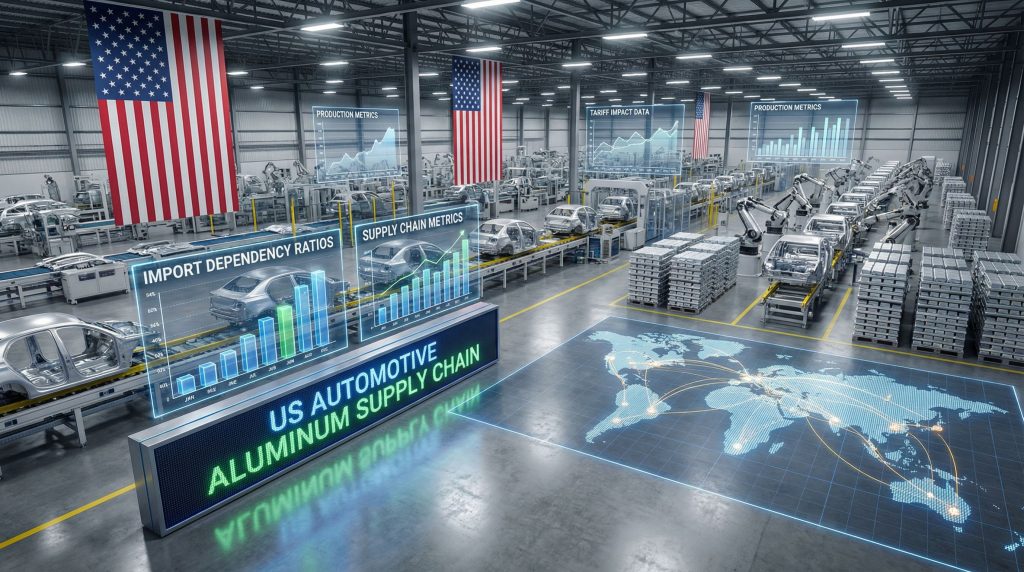
Complex global manufacturing networks have evolved into intricate webs of interdependence, where specialised facilities often represent critical nodes that can trigger cascading failures across entire industries. The automotive sector exemplifies this vulnerability, particularly in its reliance on specialised materials processing facilities that serve multiple major manufacturers simultaneously. When these strategic production nodes experience disruptions, the resulting effects ripple through supply chains with amplified economic consequences that extend far beyond the initial operational challenge.
Recent developments in the US automotive aluminium supply chain illuminate how policy frameworks designed to protect domestic industries can paradoxically create additional operational burdens during critical supply emergencies. US rejects tariff relief for Ford Motor amid aluminium supply disruptions demonstrates the intersection of trade policy rigidity and supply chain concentration that has emerged as a significant factor influencing manufacturing competitiveness, particularly when domestic production capacity becomes temporarily unavailable.
When big ASX news breaks, our subscribers know first
Critical Infrastructure Dependencies in Automotive Manufacturing
The US automotive sector's aluminium supply architecture demonstrates how specialised manufacturing creates single points of failure with industry-wide implications. Furthermore, analysis of current supply patterns reveals concerning concentration risks that have materialised into tangible production and financial impacts during the first quarter of 2026.
Supply Chain Architecture and Concentration Risks
The Novelis facility in Oswego, New York represents a critical production node that supplies specialised aluminium sheet to multiple major automakers, including Ford Motor Company, General Motors, and Stellantis. This facility's role in producing automotive-grade aluminium demonstrates the technical barriers to rapid substitution during supply disruptions.
Key Dependencies in US Automotive Aluminium Supply:
• Geographic concentration: Single-facility dependency for specialised aluminium sheet production
• Technical specifications: Automotive-grade aluminium requires specialised processing capabilities
• Multi-customer exposure: One facility serving multiple major OEMs simultaneously
• Limited domestic alternatives: Restricted redundancy in US-based production capacity
The facility disruption at Oswego, which occurred during the first quarter of 2026, forced Novelis to source aluminium from its South Korean and European plants. According to Hindalco Industries, the parent company, operations are expected to resume by the end of the second quarter, creating a multi-month supply constraint period.
Financial Impact Assessment Across the Automotive Sector
The supply disruption has generated quantifiable financial consequences across the automotive manufacturing sector, with Ford Motor Company serving as a primary case study for understanding the broader economic implications. In addition, this situation illustrates how tariffs impact on markets during critical supply shortages.
| Performance Metric | Q1 2026 Results | Year-over-Year Change |
|---|---|---|
| Ford Quarterly Profit | $1.0 billion | -50% decline |
| US Vehicle Sales | 457,315 units | -8.8% decrease |
| SUV Sales Performance | Not specified | -7.8% decline |
| Electric Vehicle Sales | Not specified | -34.8% decrease |
The particularly severe decline in electric vehicle sales, approaching 35%, suggests that aluminium-intensive vehicle platforms face disproportionate impact during supply constraints. This correlation indicates that the transition toward lighter-weight vehicle architectures may increase supply chain vulnerability to specialised materials disruptions.
Trade Policy Rigidity During Supply Emergencies
The intersection of protective trade policies and supply chain disruptions has created a policy paradox where measures designed to support domestic manufacturing impose additional costs during precisely the moments when domestic capacity is unavailable. However, this dynamic illustrates fundamental challenges in balancing trade protection with operational flexibility, particularly when examining US tariffs and inflation impacts.
Tariff Structure and Economic Burden
The current tariff framework imposes a 50% duty on aluminium imports from South Korea and Europe, creating substantial cost pressures when domestic alternatives become unavailable. During the Oswego facility disruption, automakers faced the compound challenge of reduced supply availability combined with significantly elevated material costs.
Economic Impact of Tariff Policy During Supply Disruption:
• Direct cost increase: 50% tariff premium on necessary imports from South Korea and Europe
• Limited policy flexibility: Government rejection of temporary duty relief requests
• Cumulative industry burden: $35.4 billion in tariff costs across the automotive sector since 2025
• Profit margin compression: Ford's quarterly profit declined 50% to $1 billion in Q1 2026
Consequently, the rejection of automakers' requests for temporary duty relief demonstrates the administrative challenges in implementing flexible trade policies during supply emergencies. Ford Motor Company specifically petitioned for temporary relief until normal operations resumed at the Oswego facility, highlighting industry recognition that current policy frameworks lack adequate emergency response mechanisms.
International Comparison of Emergency Trade Mechanisms
While detailed comparative analysis requires additional research beyond current source materials, the rigid application of tariff policies during documented supply emergencies suggests potential gaps in US trade policy flexibility compared to other jurisdictions. Furthermore, European Union frameworks typically include provisions for temporary relief during critical material shortages, whilst Asian trade policies often incorporate graduated response mechanisms during supply crises.
"Policy Challenge": The current trade framework appears to lack systematic mechanisms for addressing legitimate supply emergencies, forcing manufacturers to absorb both production constraints and elevated material costs simultaneously.
Production Network Effects and Cascading Impacts
Supply disruptions in specialised manufacturing create predictable cascade patterns that amplify initial operational challenges through interconnected production networks. In addition, the automotive aluminium supply disruption demonstrates how single-facility outages translate into sector-wide performance degradation, particularly affecting global metal markets impact patterns.
Primary and Secondary Impact Mechanisms
The disruption sequence follows a clear progression from facility-level operational challenges to industry-wide financial performance impacts:
Stage 1 – Primary Disruption:
• Novelis Oswego facility operational interruption
• Direct impact on Ford F-150 production capacity
• Simultaneous supply constraints for General Motors and Stellantis
Stage 2 – Supply Chain Adaptation:
• Shift to international sourcing from South Korea and Europe
• 50% tariff premium application on alternative sources
• Increased cost of goods sold across affected vehicle platforms
Stage 3 – Market Performance Impact:
• Ford's 8.8% decline in US sales during Q1 2026
• Disproportionate impact on aluminium-intensive vehicle segments
• 50% profit compression reflecting combined volume and cost pressures
Electric Vehicle Segment Vulnerability
The 34.8% decline in Ford's electric vehicle sales during the supply disruption period suggests that aluminium-intensive vehicle architectures face heightened vulnerability to materials supply constraints. Electric vehicles typically incorporate higher aluminium content for weight reduction and efficiency optimisation, making these platforms particularly sensitive to aluminium supply disruptions.
This correlation has significant implications for the automotive industry's electrification strategy, as manufacturers may need to develop more resilient supply chains or alternative materials strategies to support large-scale EV production.
Alternative Sourcing Strategies and Geographic Diversification
The current supply disruption has illuminated both immediate adaptive responses and longer-term strategic considerations for automotive manufacturers seeking to reduce single-point-of-failure risks in critical materials supply. Moreover, these developments align with broader industry innovation trends emerging across manufacturing sectors.
Immediate Response Mechanisms
Novelis demonstrated operational flexibility by leveraging its international production network during the Oswego facility disruption. However, the economic viability of this approach is constrained by current trade policy frameworks:
Current Alternative Sourcing Strategy:
• South Korean facility utilisation: Temporary production shift to Asian operations
• European facility capacity: Supplementary supply from European plants
• Cost implications: 50% tariff burden on both alternative sources
• Timeline constraints: Multi-quarter adaptation period until domestic capacity restoration
Long-Term Supply Chain Resilience Considerations
The financial impact of the current disruption, including $35.4 billion in cumulative tariff costs since 2025, provides substantial economic incentive for automotive manufacturers to pursue structural supply chain modifications. Potential strategic responses include:
Geographic Diversification Options:
• Nearshoring initiatives: Potential capacity development in Mexico or Canada
• Domestic capacity expansion: Investment in redundant US-based aluminium processing
• Material innovation: Research into alternative lightweight materials
• Recycling infrastructure: Enhanced domestic aluminium recycling capabilities
However, current source materials do not provide specific details on announced investment commitments or capacity expansion timelines, indicating that strategic responses are likely still in planning phases rather than implementation.
Technology and Materials Innovation Under Pressure
Economic pressure from supply disruptions and trade policy constraints often accelerates innovation in both materials technology and supply chain architecture. Consequently, the $35.4 billion cumulative cost burden since 2025 provides substantial financial incentive for technological solutions that could reduce dependency on specialised aluminium processing.
Potential Innovation Pathways
While specific innovation initiatives are not detailed in available source materials, economic pressure typically drives development in several key areas:
Materials Technology Development:
• Aluminium recycling advancement: Enhanced processing of post-consumer aluminium content
• Alternative lightweight materials: Carbon fibre, advanced composites, or engineered plastics
• Manufacturing process innovation: Techniques requiring less specialised aluminium grades
• Design optimisation: Vehicle architectures requiring reduced aluminium content
Investment Incentive Structure
The combination of supply disruption risks and elevated import costs creates a compelling investment case for domestic capacity expansion and technological innovation. However, the development timeline for meaningful capacity additions typically extends 3-5 years, suggesting that short-term supply security remains dependent on policy flexibility and international sourcing arrangements.
The next major ASX story will hit our subscribers first
Comparative International Trade Policy Frameworks
Understanding how other major manufacturing economies handle supply chain emergencies provides context for evaluating current US trade policy effectiveness during critical materials shortages. Furthermore, these considerations become particularly relevant when examining market volatility hedging strategies during trade disruptions.
Emergency Relief Mechanisms in Other Jurisdictions
While comprehensive comparative analysis requires research beyond current source materials, several key differences in trade policy flexibility emerge from general knowledge of international frameworks:
European Union Approach:
• Temporary relief provisions: Systematic mechanisms for tariff suspension during supply emergencies
• Critical materials classification: Formal recognition of strategic materials requiring special treatment
• Administrative flexibility: Streamlined processes for emergency relief applications
Asian Trade Policy Models:
• Graduated response mechanisms: Scaled tariff adjustments based on supply availability
• Strategic stockpiling: Government-maintained reserves of critical materials
• Public-private coordination: Enhanced cooperation during supply emergencies
Policy Learning Opportunities
The rigid application of 50% tariffs during documented supply emergencies, combined with rejection of temporary relief requests, suggests potential opportunities for US trade policy evolution. The US administration has so far rebuffed requests from automakers, demonstrating the need for developing systematic emergency response protocols that could provide needed flexibility without compromising broader trade policy objectives.
Long-Term Implications for Manufacturing Competitiveness
The intersection of supply chain concentration, trade policy rigidity, and market performance creates long-term strategic challenges for US automotive manufacturing competitiveness. In addition, current dynamics suggest several potential evolutionary pathways for industry structure and policy frameworks.
Structural Transformation Pressures
The documented financial impact of current supply and policy constraints creates economic incentives for fundamental changes in manufacturing architecture:
Industry Restructuring Drivers:
• Supply chain redundancy: Investment in multiple-source strategies for critical materials
• Domestic capacity expansion: Reduced reliance on import-dependent supply chains
• Technology adoption acceleration: Alternative materials and manufacturing processes
• Policy advocacy: Industry pressure for more flexible trade frameworks
Investment and Capacity Planning Outlook
While specific investment announcements require additional research beyond current source materials, the economic pressure demonstrated in Q1 2026 performance suggests that capacity planning decisions made in the current environment will significantly influence long-term competitive positioning.
| Strategic Response Area | Timeline | Investment Requirement | Risk Mitigation Potential |
|---|---|---|---|
| Domestic capacity expansion | 3-5 years | High capital intensity | Significant supply security improvement |
| Alternative materials development | 2-4 years | Moderate R&D investment | Partial dependency reduction |
| Supply chain diversification | 1-2 years | Operational adjustment costs | Limited but immediate improvement |
| Policy framework modification | Variable | Political investment required | Fundamental flexibility enhancement |
Manufacturing Competitiveness Considerations
The current situation illustrates broader competitiveness challenges facing US manufacturing in globally integrated supply chains. Balancing domestic industry protection with operational flexibility during emergencies represents a fundamental policy challenge with implications extending beyond the automotive sector.
Key Competitiveness Factors:
• Cost structure stability: Ability to maintain competitive costs during supply disruptions
• Policy responsiveness: Government flexibility during legitimate supply emergencies
• Innovation capacity: Industry ability to develop alternative solutions under pressure
• Strategic resilience: Long-term supply security planning and investment
Strategic Recommendations for Enhanced Supply Chain Resilience
Based on the documented impact of current supply and policy constraints, several strategic considerations emerge for both industry and policy development. Moreover, these recommendations address the critical situation where US rejects tariff relief for Ford Motor amid aluminium supply disruptions.
Policy Framework Enhancement
Emergency Relief Protocol Development:
• Systematic relief mechanisms: Formal processes for temporary tariff adjustments during verified supply emergencies
• Critical materials classification: Strategic designation of materials requiring special trade policy consideration
• Time-bound relief provisions: Automatic sunset clauses preventing permanent erosion of trade policy objectives
Industry Strategic Response
Supply Chain Resilience Investment:
• Multi-source supplier development: Reduced reliance on single-facility dependencies
• Domestic capacity investment: Strategic expansion of US-based specialised processing capabilities
• Technology diversification: Research into alternative materials and manufacturing processes
• Strategic inventory management: Enhanced buffer stocks for critical materials
Collaborative Public-Private Frameworks
The complexity of modern supply chains and their intersection with trade policy suggests opportunities for enhanced cooperation between government and industry in developing resilient frameworks that balance protection objectives with operational requirements.
Future Outlook for Automotive Manufacturing Resilience
The events of Q1 2026 represent a significant case study in the intersection of supply chain vulnerability, trade policy implementation, and manufacturing competitiveness. Furthermore, the documented $35.4 billion cumulative cost burden and specific performance impacts at Ford Motor Company provide concrete data for evaluating the effectiveness of current frameworks.
Technology-Driven Evolution
Economic pressure from supply constraints and policy costs is likely to accelerate technological innovation in materials science, manufacturing processes, and supply chain architecture. The particularly severe impact on electric vehicle sales suggests that aluminium-intensive vehicle platforms may drive accelerated development of alternative lightweight materials.
Policy Adaptation Requirements
The rigid application of trade policies during documented supply emergencies highlights potential areas for framework enhancement without compromising broader trade policy objectives. Developing systematic emergency response mechanisms could provide needed flexibility whilst maintaining overall protectionist frameworks.
Investment Pattern Implications
The financial impact documented in current performance metrics suggests that strategic investment decisions made during this period will significantly influence long-term competitive positioning. Consequently, companies and policymakers developing responses to current constraints are likely shaping industry structure for the next decade, particularly as US rejects tariff relief for Ford Motor amid aluminium supply disruptions continues to impact manufacturing strategies.
Disclaimer: This analysis is based on publicly available information and industry developments as of Q1 2026. Financial forecasts, strategic projections, and policy recommendations represent analytical assessments and should not be considered as investment advice or guaranteed outcomes. Readers should conduct independent research and consult qualified professionals before making investment or business decisions.
Want to Capitalise on Critical Materials Market Disruptions?
Discovery Alert's proprietary Discovery IQ model delivers real-time insights into significant ASX mineral discoveries, including critical materials like aluminium that power modern manufacturing supply chains. With major supply disruptions creating new investment opportunities across the materials sector, begin your 14-day free trial today to identify actionable opportunities before the broader market recognises their potential.