August 5, 2026
The Rarest Pieces on the Nickel Chessboard
Not all nickel is created equal. Beneath the surface of a market currently weighed down by oversupply from Indonesian laterite operations lies a structural tension that sophisticated mineral investors understand well: the chemistry of the ore body determines everything. Nickel sulfide deposits, geologically distinct from their laterite counterparts, offer processing advantages that laterite simply cannot replicate at competitive cost. They are also becoming increasingly scarce. When a high-grade sulfide deposit of meaningful scale sits in a jurisdiction willing to engage with Western capital, the strategic calculus shifts from routine deal-making into something far more consequential.
That is precisely the context in which Tanzania's Kabanga deposit has become one of the most closely watched nickel development stories of the current decade, and why the selection of a US-backed investor in Tanzania nickel project negotiations carries implications well beyond a single mining transaction.
When big ASX news breaks, our subscribers know first
Understanding What Makes Kabanga Geologically Distinctive
Sulfide vs. Laterite: Why Does the Distinction Matter?
The global nickel industry broadly divides into two ore types, and the difference shapes everything from metallurgical costs to battery supply chain compatibility.
Nickel laterite deposits form through weathering of ultramafic rocks near the earth's surface. They dominate global supply, particularly in Indonesia and the Philippines, and account for the majority of nickel produced worldwide. However, processing laterites into battery-grade nickel is energy-intensive and chemically complex, typically requiring high-pressure acid leaching (HPAL) technology. HPAL plants carry significant capital costs and have historically been prone to operational difficulties and cost overruns.
Nickel sulfide deposits, by contrast, form at depth through magmatic processes. Understanding magmatic nickel deposits helps clarify their processing advantages: conventional flotation concentration followed by smelting and refining. Critically, sulfide ore bodies naturally lend themselves to producing nickel sulfate, the compound battery manufacturers specifically require for cathode chemistry in electric vehicles.
Kabanga sits firmly in the sulfide category. Lifezone Metals describes it as one of the largest and highest-grade undeveloped nickel sulfide deposits on the planet, a classification supported by independent geological assessments. For battery supply chain planners seeking to source nickel with verified chemistry and competitive processing economics, this distinction alone elevates Kabanga well above most available development assets.
Co-Products Add Another Layer of Value
Kabanga is not a single-metal story. The deposit's ore contains meaningful concentrations of copper and cobalt alongside nickel, transforming the project's output profile into a multi-critical-mineral package. This co-product revenue stream materially improves project economics and aligns Kabanga with the broader basket of materials that EV battery supply chains require simultaneously.
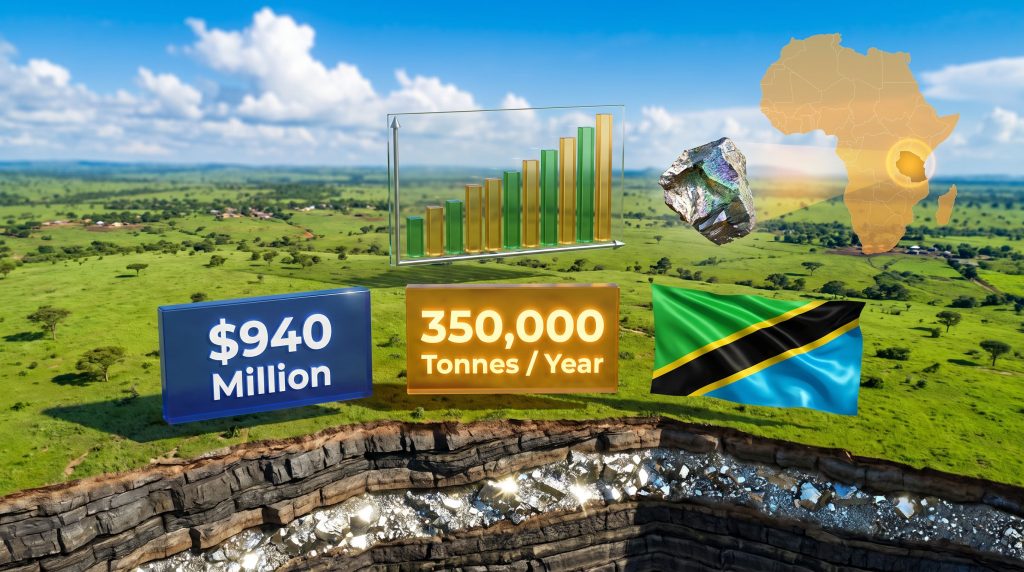
The planned development model targets approximately 350,000 tonnes of nickel concentrate per year in its first phase, with copper and cobalt recovered as by-products. A second-phase downstream refinery would upgrade nickel concentrate into battery-grade nickel sulfate, capturing the margin differential between a commodity concentrate and a specification-grade battery precursor material.
The Orion CMC Consortium and Its Sovereign Architecture
How Was the Preferred Investor Group Assembled?
The consortium identified as the preferred investor in Kabanga operates under the Orion CMC structure, established in October with an initial capital base of $1.8 billion. Its architecture is unusual and deliberate: it blends US government development finance with Gulf sovereign capital, creating a hybrid vehicle designed specifically to compete for large-scale critical mineral assets in developing markets.
The two anchor backers bring complementary capabilities:
- The US International Development Finance Corporation (DFC) contributes political risk mitigation, government-to-government relationship credibility, and balance sheet depth backed by the US government's development mandate.
- Abu Dhabi's L'imad Holding brings Gulf sovereign capital, which carries different geopolitical optics and can navigate certain frontier market dynamics more fluidly than US government institutions alone.
Orion Resource Partners, a specialist metals and mining investment firm with a global mandate, leads the consortium operationally. This structure is increasingly common in Western-aligned critical mineral deal-making: sovereign or quasi-sovereign capital providing the de-risking layer that pure private equity vehicles cannot offer in frontier jurisdictions.
The DFC's stated rationale for expanding its financial commitment to the Orion CMC vehicle was to increase allied access to vital minerals and reduce overreliance on concentrated supply sources, according to statements made in June.
The DFC had been involved with the Tanzanian asset since at least 2024, when it began conducting due diligence on providing political risk insurance and expressed interest in project lending. This suggests the Kabanga transaction was not an opportunistic pivot but a deliberately cultivated strategic position developed over multiple years. Furthermore, Lifezone Metals has officially initiated the project financing process for Kabanga, signalling serious momentum toward a Final Investment Decision.
Orion CMC's Emerging Portfolio Pattern
Kabanga would represent one of the consortium's earliest concrete investments if a deal is concluded. Its most prominent prior engagement is a preliminary agreement announced in February to acquire 40% of Glencore's majority interests in two significant copper-cobalt mining operations in the Democratic Republic of Congo. That transaction had not yet closed at the time of reporting.
Comparing the two deals reveals a clear strategic pattern:
| Deal | Asset Type | Location | Status | Primary Metals |
|---|---|---|---|---|
| Glencore DRC stake | Copper-cobalt mines | Democratic Republic of Congo | Preliminary, not closed | Copper, Cobalt |
| Kabanga Nickel | Nickel sulfide deposit | Tanzania | Preferred investor selected | Nickel, Copper, Cobalt |
Both targets are large-scale, high-grade base metal assets in Sub-Saharan Africa with direct energy transition relevance. The geographic and commodity focus is consistent: building a portfolio of African critical mineral exposure across the full battery metals spectrum. In addition, the global cobalt supply dynamics make co-product cobalt recovery from projects like Kabanga increasingly valuable to Western-aligned investors.
Tanzania's Strategic Position and the Kabanga Development Framework
A Country Expanding Beyond Gold
Tanzania has historically been known primarily as a gold producer, a reputation anchored by major operations in the Lake Victoria goldfields. The country's ambition to transition into energy transition metals represents a meaningful economic diversification objective. Beyond Kabanga, Tanzania hosts an active graphite exploration and development pipeline, as well as copper prospects, positioning it as a potential multi-mineral supplier to global clean energy supply chains.
The Tanzanian government holds a 16% equity stake in Kabanga Nickel, the Lifezone subsidiary undertaking the project. This direct financial participation aligns state interests with project success while reflecting the broader African trend of governments seeking royalty-plus-equity structures rather than purely royalty-based arrangements.
How Tanzania compares to other emerging African nickel jurisdictions:
| Jurisdiction | Primary Nickel Asset Type | Government Equity Model | Western Partner Interest |
|---|---|---|---|
| Tanzania | Nickel sulfide (Kabanga) | 16% state stake | US DFC-backed consortium |
| Democratic Republic of Congo | Copper-cobalt laterite | Variable by project | Multiple Western bidders |
| Indonesia | Laterite (dominant global supply) | Private/Chinese-backed | Limited Western involvement |
Why BHP's Exit Was Not Necessarily a Negative Signal
Before Lifezone launched its competitive investor selection process, BHP held an option to acquire control of the Kabanga project and maintained a minority shareholding in the project entity. The mining giant terminated its acquisition option and disposed of its stake, prompting Lifezone to appoint Standard Chartered to run a formal process to identify a new strategic partner approximately one year before the preferred investor announcement.
BHP's withdrawal deserves careful interpretation. Major diversified miners operate under capital allocation frameworks that prioritise near-term production assets and measurable returns within defined investment horizons. A long-dated greenfield development project requiring approximately $940 million in upfront capital, with a Final Investment Decision not expected until early 2027, may simply not have met BHP's internal hurdle rates at this stage of the cycle, regardless of the resource's quality.
What BHP's exit reflects is the fundamental difference between the risk appetite of diversified mining majors and government-backed development finance vehicles. For institutions like the DFC, frontier project risk is partially offset by geopolitical return, a calculus that pure commercial miners cannot apply.
This distinction is important for investors evaluating Kabanga's prospects: the transition from a major miner as potential controller to a government-backed consortium as preferred investor does not diminish the resource's quality. It reflects a change in who is best positioned to bear the development risk at this stage. Crux Investor's coverage of Kabanga provides additional context on how the project is advancing toward a production decision.
The Nickel Market Paradox and Kabanga's Timing Sensitivity
Indonesian Dominance and the Chemistry Problem
The Indonesian nickel market accounts for approximately 60% of global nickel supply, a position built on Chinese-backed smelter investment following the country's 2020 ban on exports of raw nickel ore. This has flooded global markets with nickel pig iron and mixed hydroxide precipitate, suppressing prices and creating the current oversupply environment.
However, not all Indonesian nickel output serves battery manufacturers equally. The dominant Indonesian processing pathway produces nickel intermediates that require additional conversion steps to reach battery-grade nickel sulfate specifications. Furthermore, Indonesian nickel dominance has prompted Western battery manufacturers and automakers to increasingly differentiate between nickel sources on the basis of chemistry, certification, and supply chain traceability — categories where Kabanga's sulfide ore has structural advantages.
The 2028–2032 Window and FID Timing Risk
The convergence of EV adoption curves and battery manufacturing capacity expansions points to a critical demand acceleration window between approximately 2028 and 2032. Greenfield nickel projects typically require five to seven years from Final Investment Decision to meaningful production ramp-up.
This creates a direct timeline sensitivity for Kabanga:
- FID is currently targeted for early 2027, subject to completion of financing arrangements and resolution of negotiations with the Tanzanian government.
- Negotiations with the Tanzanian government have progressed more slowly than originally anticipated, introducing schedule risk.
- Societe Generale has been appointed to lead debt financing, adding institutional credibility to the capital raising effort.
- If the FID slips materially beyond 2027, Kabanga risks missing the steepest part of the demand acceleration curve, reducing the margin premium it could otherwise command.
The financial architecture being assembled, combining Orion CMC equity with Societe Generale-led debt, reflects the scale and complexity of bringing a $940 million greenfield project to investment decision in a challenging market environment.
The next major ASX story will hit our subscribers first
What This Transaction Signals for African Critical Mineral Development
The Kabanga preferred investor selection is representative of a broader structural shift in how Western governments are approaching mineral security. Rather than relying solely on trade agreements or private market incentives, the US and allied governments are deploying sovereign and quasi-sovereign capital directly into project development, accepting frontier risk in exchange for supply chain optionality. Consequently, the surge in critical minerals demand is only accelerating this strategic repositioning.
For Africa, this creates both opportunity and complexity. The continent holds extraordinary mineral endowment across the full critical minerals spectrum, but converting geological advantage into sustained industrial value requires patient capital, political stability, and capable regulatory frameworks. The gap between preferred investor selection and binding agreements remains a material risk, and the distance between announcement and production is measured in years, not months.
The selection of a US-backed investor in Tanzania nickel project development illustrates both the depth of Western strategic interest in African nickel and the evolving mechanisms through which that interest is being expressed. Whether the project ultimately delivers on its considerable promise depends on the careful navigation of financing, government negotiations, and construction execution that lies ahead.
Disclaimer: This article contains forward-looking statements and speculative analysis regarding project timelines, market dynamics, and investment outcomes. These projections involve inherent uncertainty and should not be construed as financial advice. Readers should conduct independent due diligence before making investment decisions. Final Investment Decisions, deal closings, and production timelines referenced are subject to change based on commercial negotiations, regulatory processes, and market conditions.
Want to Stay Ahead of the Next Major Mineral Discovery?
Discovery Alert's proprietary Discovery IQ model delivers real-time alerts on significant ASX mineral discoveries across nickel, copper, cobalt, and 30+ other commodities — instantly transforming complex geological data into actionable investment insights for both short-term traders and long-term investors. Explore historic discoveries and their remarkable returns on Discovery Alert's dedicated discoveries page, then begin your 14-day free trial at Discovery Alert to position yourself ahead of the market.