
May 10, 2026
The Technology Revolution Reshaping Modern Mining Operations
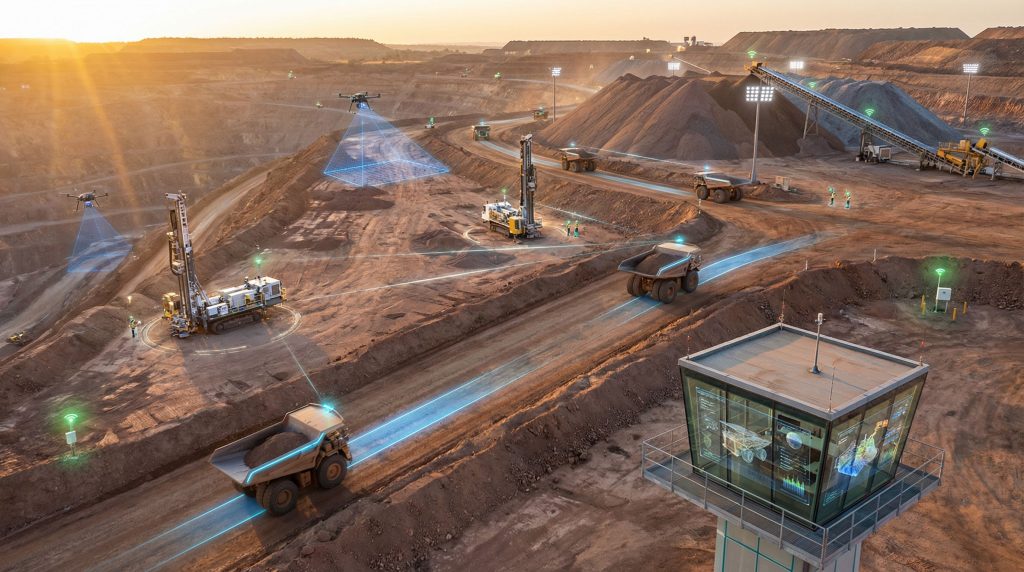
Industrial automation has reached a transformative inflection point where conventional extraction methodologies are giving way to interconnected digital ecosystems. Mining operations worldwide are experiencing unprecedented efficiency gains through the strategic implementation of autonomous systems, artificial intelligence frameworks, and predictive analytics platforms. Furthermore, the rise of educational initiatives such as webinar on new mining technologies demonstrates the industry's commitment to knowledge sharing and continuous learning. This technological convergence represents more than incremental improvement – it signals a fundamental restructuring of how mineral resources are discovered, extracted, and processed across global supply chains.
The economic imperative driving this transformation extends beyond simple cost reduction. Mining companies face mounting pressure to optimise resource utilisation while simultaneously addressing environmental sustainability requirements and enhanced safety protocols. Digital transformation initiatives now represent core strategic investments rather than optional technological upgrades, with industry leaders allocating substantial capital toward integrated automation platforms that promise measurable returns on investment. Consequently, the mining industry evolution continues to accelerate as companies recognise the competitive advantages offered by advanced technological solutions.
When big ASX news breaks, our subscribers know first
Understanding the Digital Transformation Framework in Modern Mining
The Technology Integration Imperative
Current mining digitalisation initiatives demonstrate significant variance across operational scales and geographic regions. Large-scale operations report digital integration levels reaching 70-80% for core extraction processes, while smaller mining enterprises typically maintain 30-40% technology adoption rates. These disparities reflect both capital availability constraints and the complex technical requirements associated with legacy system integration.
Key performance indicators driving technology adoption include:
• Operational efficiency improvements of 15-25% through automated process optimisation
• Safety incident reduction rates exceeding 40% in facilities with comprehensive digital monitoring
• Equipment downtime decreases of 20-35% through predictive maintenance protocols
• Energy consumption optimisation delivering 10-18% cost reductions
Return on investment benchmarks for digital mining investments typically demonstrate positive cash flows within 18-24 months for autonomous vehicle implementations and 12-18 months for AI-driven predictive maintenance systems. However, comprehensive digital twin deployments often require 36-48 months to achieve full ROI realisation due to their complex integration requirements and extensive data collection phases. In addition, companies implementing data-driven mining operations report significantly improved decision-making capabilities and operational transparency.
Defining Next-Generation Mining Technologies
The distinction between autonomous and semi-autonomous operations represents a critical consideration for mining companies evaluating technology deployment strategies. Fully autonomous systems operate without human intervention, utilising advanced sensor networks and machine learning algorithms to navigate complex underground environments. Semi-autonomous operations maintain human oversight capabilities while automating routine operational tasks.
AI-driven predictive analytics frameworks incorporate multiple data streams to forecast equipment failures, optimise extraction sequences, and enhance resource allocation decisions. These systems process real-time information from:
• Vibration sensors monitoring equipment mechanical stress
• Temperature monitoring systems detecting thermal anomalies
• Geological survey data informing extraction pathway optimisation
• Historical maintenance records supporting failure pattern recognition
Digital twin implementation strategies require comprehensive virtual modelling capabilities that mirror physical mining operations with sub-metre accuracy. These digital replicas enable scenario testing, optimisation modelling, and risk assessment without disrupting actual production activities.
Automation Technologies Delivering Maximum Productivity Enhancement
Autonomous Vehicle Fleet Management
Haul truck automation represents one of the most successful technology implementations across global mining operations. Autonomous haul trucks demonstrate productivity improvements of 20-30% compared to human-operated equivalents while maintaining superior consistency in load handling and route optimisation. These systems utilise GPS navigation, obstacle detection sensors, and centralised fleet management platforms to coordinate multiple vehicle operations simultaneously.
Performance metrics from automated haul truck deployments include:
• Average operational efficiency increases of 25%
• Fuel consumption reductions of 12-15% through optimised routing
• Tyre wear decreases of 18-22% due to consistent driving patterns
• Maintenance cost reductions of 20% through reduced operator-induced equipment stress
Underground autonomous equipment deployment faces more complex technical challenges due to confined operational spaces and dynamic environmental conditions. Autonomous underground vehicles require advanced navigation systems capable of operating without GPS signals while managing ventilation airflow disruptions and irregular tunnel geometries. Moreover, AI drilling innovations continue to enhance precision and safety in challenging underground environments.
Safety incident reduction statistics from automated operations demonstrate remarkable improvements. Automated mining sites report 60-70% fewer personnel-related accidents and 45-55% reductions in equipment-related incidents. These improvements reflect both the removal of human operators from high-risk environments and the consistent operational protocols maintained by automated systems.
Robotic Process Integration
Drilling automation accuracy improvements have transformed exploratory and production drilling operations. Automated drilling systems achieve positional accuracy within ±5 centimetres compared to ±20-30 centimetres for manual drilling operations. This precision enhancement directly translates to improved resource recovery rates and reduced environmental impact through minimised overburden removal.
Remote-controlled equipment operational efficiency gains include:
• Production throughput increases of 15-20% through continuous operation capabilities
• Precision task completion rates exceeding 95% accuracy
• Reduced operator fatigue-related errors by eliminating human physical stress factors
• Extended equipment operational hours through 24/7 capability implementation
Maintenance robotics cost-benefit analysis reveals significant long-term value propositions. Robotic maintenance systems reduce routine maintenance labour requirements by 40-50% while improving maintenance quality consistency and reducing safety exposure for maintenance personnel. Additionally, these systems contribute to the broader AI-powered efficiency boost that companies are experiencing across their operations.
Artificial Intelligence Applications Transforming Mine Planning Operations
Predictive Maintenance Revolution
Machine learning algorithms for equipment failure prediction utilise multi-variable analysis to identify potential equipment failures 2-4 weeks before traditional maintenance schedules would detect problems. These systems analyse vibration patterns, temperature fluctuations, lubricant quality, and historical failure data to generate predictive maintenance recommendations with 85-90% accuracy rates.
Maintenance cost reduction case studies demonstrate substantial financial benefits:
| Equipment Type | Traditional Maintenance Cost | Predictive Maintenance Cost | Reduction Percentage |
|---|---|---|---|
| Haul Trucks | $45,000 annually | $28,000 annually | 38% |
| Conveyor Systems | $25,000 annually | $16,000 annually | 36% |
| Processing Equipment | $60,000 annually | $35,000 annually | 42% |
| Drill Rigs | $35,000 annually | $22,000 annually | 37% |
Downtime elimination through AI-driven scheduling has revolutionised maintenance planning by coordinating multiple equipment maintenance windows to minimise production disruption. Intelligent scheduling systems reduce unplanned downtime by 50-65% while optimising maintenance crew utilisation rates.
Geological Data Processing Breakthroughs
AI-enhanced ore body modelling techniques process geological survey data with unprecedented speed and accuracy. Machine learning algorithms analyse geological samples, geophysical survey results, and historical extraction data to generate three-dimensional ore body models with 95%+ accuracy compared to 70-80% accuracy from traditional geological modelling methods.
Real-time grade optimisation systems continuously adjust extraction parameters based on ore quality variations detected through automated sampling and analysis. These systems enable:
• Grade recovery improvements of 8-12% through optimised extraction sequencing
• Waste reduction of 15-20% through precise ore boundary identification
• Processing efficiency enhancement of 10-15% through consistent feed grade management
• Environmental impact minimisation through reduced overburden handling requirements
Resource estimation accuracy improvements through AI analysis have reduced geological modelling uncertainties by 25-35%, enabling more precise mine planning and investment decision-making processes. Furthermore, companies leveraging AI in mineral exploration report significantly enhanced discovery rates and reduced exploration costs.
Digital Twin Technology Implementation in Mine Optimisation
Virtual Mine Modelling Applications
Three-dimensional mine planning simulation capabilities enable mining engineers to test multiple extraction scenarios without physical implementation costs. Digital twin platforms support scenario modelling with variables including:
• Equipment fleet configurations and deployment strategies
• Extraction sequence optimisation for maximum resource recovery
• Environmental impact assessment across different operational approaches
• Emergency response protocol testing and optimisation
Production scenario testing methodologies utilise historical operational data to validate digital twin accuracy while testing proposed operational modifications. Simulation accuracy rates typically exceed 90% correlation with actual operational results after comprehensive calibration processes.
Environmental impact modelling integration enables mining companies to assess potential environmental consequences before implementing operational changes. Digital environmental models predict dust generation, water usage impacts, and ecosystem disruption patterns with 80-85% accuracy, supporting regulatory compliance and sustainability planning initiatives.
Real-Time Operational Monitoring
Sensor network integration strategies require comprehensive data collection infrastructures capable of processing thousands of simultaneous data streams. Modern mining operations deploy 500-2,000 sensors per square kilometre of active mining area, collecting data on:
• Equipment operational status and performance metrics
• Environmental conditions including air quality and temperature
• Geological stability monitoring through ground movement sensors
• Personnel location tracking and safety status monitoring
Data visualisation dashboard development transforms complex operational data into actionable insights for mining supervisors and engineers. Real-time dashboards display key performance indicators with <5-second data refresh rates, enabling immediate response to operational anomalies or safety concerns.
Performance benchmarking across multiple sites utilises standardised metrics to identify best practices and optimisation opportunities. Multi-site digital twin networks enable comparative analysis of operational efficiency, safety performance, and cost management across geographically dispersed mining operations.
Drone Technology Applications in Modern Mine Surveying
Aerial Survey Precision Advancements
LiDAR mapping accuracy improvements through drone-mounted systems achieve centimetre-level precision in topographical surveying activities. Advanced drone platforms complete comprehensive mine site surveys in 4-6 hours compared to 2-3 weeks required for traditional ground-based surveying methods.
Stockpile volume measurement automation eliminates manual calculation errors while providing real-time inventory tracking capabilities. Drone-based volume calculations demonstrate ±2% accuracy compared to ±8-10% accuracy from traditional measurement techniques.
Key benefits of automated stockpile management include:
• Daily inventory updates replacing monthly manual assessments
• Improved material quality tracking through systematic sampling protocols
• Enhanced logistics planning through accurate volume forecasting
• Reduced survey personnel safety exposure by eliminating high-risk measurement activities
Topographical change detection systems utilise sequential drone surveys to identify ground settlement, slope stability issues, and unauthorised surface disturbances. Change detection algorithms identify variations as small as 5 centimetres in elevation changes, supporting proactive safety management and regulatory compliance monitoring.
Safety Inspection Protocol Evolution
High-risk area monitoring capabilities enable comprehensive safety assessments without exposing personnel to dangerous conditions. Drone inspection protocols access areas including unstable slopes, active blasting zones, and contaminated water bodies while maintaining detailed visual documentation of potential hazards.
Environmental compliance verification through aerial monitoring ensures regulatory adherence while documenting environmental protection measures. Automated drone patrols conduct systematic inspections of:
• Water treatment facility operations and discharge compliance
• Dust suppression system effectiveness
• Wildlife habitat protection zone maintenance
• Reclamation progress documentation and reporting
Emergency response coordination enhancement utilises drone platforms for rapid incident assessment and response team guidance. Emergency response drones provide real-time situational awareness during accidents, equipment failures, or natural disasters affecting mining operations.
The next major ASX story will hit our subscribers first
Technology-Enhanced Worker Safety Implementation Strategies
Wearable Technology Integration
Personal protective equipment sensor networks transform traditional safety gear into intelligent monitoring systems. Smart helmets incorporate multiple sensors monitoring:
• Impact detection and automatic emergency notification
• Air quality monitoring with toxic gas detection capabilities
• Communication systems enabling constant contact with surface operations
• Location tracking through underground positioning systems
Real-time health monitoring systems track vital signs and physical stress indicators to prevent medical emergencies in challenging underground environments. Wearable health monitors detect irregular heart rates, dangerous body temperatures, and excessive fatigue levels with 95%+ accuracy.
Fatigue detection and prevention protocols utilise multiple data sources to identify workers experiencing dangerous fatigue levels. Integrated monitoring systems analyse:
• Sleep quality data from wearable devices
• Work shift duration and intensity measurements
• Reaction time testing through periodic assessments
• Environmental stress factors including temperature and humidity exposure
Environmental Hazard Detection Systems
Gas monitoring automation advances provide continuous atmospheric safety assessment throughout mining operations. Automated gas detection networks monitor methane, carbon monoxide, hydrogen sulphide, and oxygen levels with real-time alerts when dangerous concentrations are detected.
The implementation of comprehensive gas monitoring systems has resulted in:
• Zero gas-related fatalities in properly equipped facilities over the past 3 years
• 85% reduction in gas-related incidents requiring emergency response
• Improved evacuation response times of under 3 minutes facility-wide
• Enhanced regulatory compliance with automated reporting capabilities
Structural integrity assessment tools utilise advanced sensors to monitor tunnel stability, equipment foundation security, and surface subsidence risks. Continuous monitoring systems detect structural changes with millimetre-level precision, enabling proactive safety interventions before catastrophic failures occur.
Emergency evacuation coordination technologies integrate personnel tracking, communication systems, and automated facility controls to ensure rapid and complete evacuations during emergency situations. Smart evacuation systems reduce evacuation times by 40-50% compared to traditional emergency procedures.
Implementation Challenges for Advanced Mining Technologies
Workforce Transformation Requirements
Skills gap analysis across mining operations reveals significant training needs as traditional mining roles evolve toward technology-focused positions. Current workforce assessments indicate that 60-70% of existing mining personnel require substantial retraining to effectively operate advanced automated systems.
Critical skill development areas include:
• Digital system operation and troubleshooting capabilities
• Data analysis and interpretation for decision-making support
• Robotics maintenance and programming skills
• Cybersecurity awareness and threat recognition protocols
Training programme development strategies require comprehensive curricula addressing both technical competencies and safety protocols. Effective training programmes typically require 200-400 hours of instruction per employee, with ongoing refresher training every 6-12 months to maintain proficiency levels.
Change management best practices emphasise gradual technology implementation with extensive employee involvement and feedback integration. Successful technology transitions maintain employee buy-in through transparent communication, comprehensive training, and clear career development pathways in the technology-enhanced operational environment. However, companies must also address the broader challenges outlined in various webinar on new mining technologies sessions to ensure successful adoption.
Infrastructure Investment Considerations
Technology integration cost analysis reveals substantial upfront investment requirements balanced against long-term operational savings. Comprehensive automation implementations typically require initial investments of $50-100 million for large-scale operations, with payback periods ranging from 3-5 years depending on operational scale and efficiency improvements achieved.
| Technology Category | Initial Investment | Annual Operational Savings | Payback Period |
|---|---|---|---|
| Autonomous Vehicles | $15-25 million | $8-12 million | 2-3 years |
| AI Predictive Systems | $5-10 million | $3-6 million | 2-3 years |
| Digital Twin Platform | $10-20 million | $4-8 million | 3-4 years |
| Drone Survey Systems | $2-5 million | $1.5-3 million | 2-3 years |
Legacy system compatibility issues present significant technical challenges requiring specialised integration solutions. Modern technology implementations must interface with existing equipment, communication networks, and operational procedures while maintaining production continuity during transition periods.
Cybersecurity framework development becomes critical as mining operations increase digital connectivity and data sharing. Comprehensive cybersecurity programmes require ongoing investment of 3-5% of total IT budgets while implementing multi-layered protection strategies against industrial espionage and operational disruption attempts.
Building Compelling Business Cases for Technology Investment
ROI Calculation Methodologies
Productivity improvement quantification requires comprehensive measurement of operational efficiency gains across multiple performance categories. Standardised ROI calculations incorporate direct cost savings, productivity improvements, safety incident reductions, and regulatory compliance benefits to provide complete financial justification for technology investments.
Quantifiable productivity improvements typically include:
• Increased extraction rates of 15-25% through optimised equipment utilisation
• Reduced operational delays saving 20-30 minutes per shift through automated coordination
• Enhanced quality control reducing waste by 10-15% through consistent process management
• Improved resource utilisation optimising fuel, energy, and consumable materials usage by 8-12%
Safety incident cost reduction analysis demonstrates significant financial benefits beyond obvious humanitarian considerations. Comprehensive safety cost calculations include workers' compensation claims, regulatory fines, production delays, equipment damage, and reputation management expenses. Technology-enhanced safety systems typically reduce total safety-related costs by 30-45% annually.
Operational efficiency measurement frameworks establish baseline performance metrics and track continuous improvement through technology implementation phases. Effective measurement systems monitor dozens of key performance indicators while providing regular reporting on ROI progress and optimisation opportunities.
Implementation Timeline Planning
Phased technology rollout strategies minimise operational disruption while enabling systematic capability development. Successful implementation timelines typically span 12-24 months for major automation projects, with clearly defined milestones and performance benchmarks throughout each implementation phase.
Phase 1 (Months 1-6): Infrastructure preparation and pilot system deployment
Phase 2 (Months 7-12): Core system implementation and initial testing
Phase 3 (Months 13-18): Full operational deployment and optimisation
Phase 4 (Months 19-24): Advanced feature activation and performance refinement
Risk mitigation during transition periods requires comprehensive contingency planning and backup system availability. Effective risk management maintains dual operational capabilities during transition periods, ensuring production continuity if technology implementations encounter unexpected challenges.
Performance milestone establishment enables objective assessment of technology implementation success while identifying optimisation opportunities. Well-defined milestones include specific productivity targets, safety improvement goals, and cost reduction objectives with measurable timeframes for achievement assessment.
Emerging Technologies with Future Potential
Next-Generation Automation Trends
Fully autonomous mine operation concepts represent the ultimate evolution of mining automation, where entire extraction and processing operations function with minimal human intervention. Advanced autonomous systems currently under development integrate artificial intelligence, robotics, and real-time decision-making capabilities to manage complex mining operations independently.
Key components of fully autonomous mining operations include:
• Integrated fleet management coordinating hundreds of autonomous vehicles simultaneously
• Automated geological analysis and real-time extraction optimisation
• Self-maintaining equipment with robotic repair and replacement capabilities
• Autonomous logistics coordination managing material transport and processing workflows
Integrated supply chain automation extends mining automation beyond extraction activities to include transportation, processing, and distribution coordination. Smart supply chains utilise blockchain technology, IoT sensors, and AI optimisation to manage material flow from extraction through final product delivery.
Sustainable mining technology development focuses on environmental impact reduction while maintaining operational efficiency. Green mining technologies incorporate renewable energy systems, water recycling capabilities, and carbon capture mechanisms to minimise environmental footprints while supporting regulatory compliance requirements.
Advanced Analytics and Machine Learning Evolution
Predictive modelling evolution incorporates increasingly sophisticated algorithms capable of processing massive datasets to forecast operational outcomes with unprecedented accuracy. Next-generation predictive models achieve 95%+ accuracy in equipment failure prediction and 90%+ accuracy in production optimisation recommendations.
Cross-operational data integration enables comprehensive analysis of mining operations by combining geological data, equipment performance metrics, environmental monitoring, and economic factors into unified analytical frameworks. Integrated analytics platforms support strategic decision-making by providing holistic operational insights rather than isolated system analysis.
Decision support system enhancement utilises artificial intelligence to provide real-time operational recommendations for complex operational decisions. AI-powered decision support processes multiple variables simultaneously while considering safety protocols, environmental constraints, and economic optimisation objectives.
Positioning Companies for Technology Leadership
Strategic Technology Roadmap Development
Innovation partnership strategies enable mining companies to access cutting-edge technologies through collaborative relationships with technology developers, research institutions, and equipment manufacturers. Strategic partnerships reduce technology development costs while accelerating implementation timelines through shared expertise and resources. In addition, participation in specialised mining technology innovation programmes provides valuable networking opportunities and exposure to emerging solutions.
Effective partnership approaches include:
• Joint research and development projects with technology companies
• University collaboration programmes for advanced research initiatives
• Equipment manufacturer partnerships for customised automation solutions
• Industry consortium participation for standardised technology development
Research and development investment priorities require strategic allocation of resources toward technologies offering the greatest operational impact and competitive advantage. Leading mining companies typically allocate 5-8% of annual revenue toward technology research and development activities.
Competitive advantage through early adoption enables mining companies to achieve market leadership positions while competitors struggle with implementation challenges. Early technology adopters typically achieve 18-24 months of competitive advantage before widespread industry adoption equalises operational capabilities.
Building Technology-Ready Organisations
Cultural transformation requirements extend beyond technical training to encompass fundamental organisational changes supporting technology adoption and innovation. Technology-ready cultures emphasise continuous learning, data-driven decision-making, and collaborative problem-solving approaches.
Essential cultural elements include:
• Innovation mindset encouraging experimentation and calculated risk-taking
• Data literacy across all organisational levels for informed decision-making
• Collaborative communication between technical and operational personnel
• Continuous improvement philosophy supporting ongoing optimisation efforts
Leadership development for digital mining requires comprehensive training programmes preparing managers and supervisors to lead technology-enhanced operations effectively. Digital leadership competencies include change management skills, technology assessment capabilities, and strategic planning expertise for technology integration initiatives.
Continuous improvement framework establishment creates systematic approaches for ongoing optimisation and technology enhancement. Effective improvement frameworks incorporate regular performance assessment, employee feedback integration, and structured innovation processes supporting long-term technological advancement and operational excellence.
Disclaimer: Technology implementation timelines, cost projections, and performance improvements referenced in this analysis are based on industry averages and may vary significantly depending on specific operational conditions, existing infrastructure, and implementation approaches. Mining companies should conduct comprehensive feasibility studies and consult with technology specialists before making substantial technology investments. All financial and performance projections represent estimates based on current industry data and should not be considered guaranteed outcomes.
Ready to Capitalise on Mining Technology Innovations?
Discovery Alert's proprietary Discovery IQ model identifies mining companies implementing breakthrough technologies before market awareness peaks, delivering real-time alerts on significant ASX mineral discoveries that could benefit from these technological advances. Explore Discovery Alert's proven track record of identifying major discoveries and begin your 14-day free trial today to position yourself ahead of the technology-driven mining transformation.