August 21, 2026
What Makes Thailand's Gold Market Performance Historically Significant?
The convergence of macroeconomic forces across Southeast Asian economies has created unprecedented conditions for precious metals accumulation, fundamentally reshaping regional wealth preservation strategies. When private sector commodity trading revenues approach the scale of sovereign fiscal budgets, traditional boundaries between commercial activity and national economic capacity become blurred.
Thailand's gold trading landscape exemplifies this transformation, where cultural wealth preservation practices intersect with modern digital commerce infrastructure to generate transaction volumes that rival government spending capacity. The thai gold dealer revenue surpasses national budget phenomenon reflects broader shifts in Asian investor behavior, where traditional asset allocation models are being recalibrated in response to yield-scarce environments and currency volatility concerns. Furthermore, recent gold price highs have amplified these trends significantly.
Revenue Scale Analysis: When Private Trading Exceeds Government Budgets
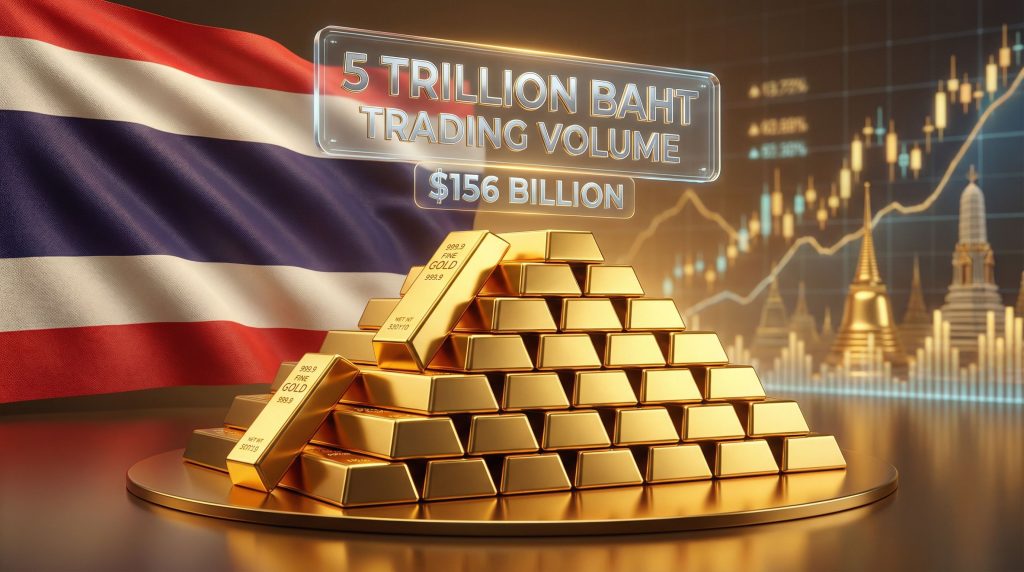
The scale comparison between Hua Seng Heng's 5 trillion baht ($156 billion) annual trading volume and Thailand's 3.8 trillion baht fiscal 2026 budget represents more than a statistical curiosity. This metric reveals how precious metals intermediaries can achieve transactional throughput exceeding sovereign spending capacity during periods of intense retail demand.
Historical precedents for private sector revenues surpassing government budgets typically occur in resource extraction economies or during hyperinflationary periods. Thailand's case differs significantly: the volume represents retail precious metals trading rather than commodity production, indicating widespread participation in gold accumulation across demographic segments.
The 75-year operational history of Hua Seng Heng provides context for October 2025's performance, which company leadership describes as the apex of seven decades of operations. This timeframe encompasses multiple economic cycles, currency crises, and geopolitical disruptions, suggesting current demand levels represent exceptional rather than cyclical conditions.
When gold prices exceeded $4,000 per ounce in October 2025, the resulting transaction surge necessitated operational adaptations that reveal infrastructure constraints within precious metals retail. The extension of trading hours to near-midnight operations indicates demand saturation during traditional business windows, whilst the doubling of online platform subscribers demonstrates technology capacity limitations during peak periods. Moreover, this gold market surge has been documented by analysts at Bangkok Post, who reported on the remarkable trading volumes.
Market Structure Transformation in Southeast Asian Gold Trading
The evolution from traditional physical retail to hybrid digital-physical precious metals commerce is exemplified by operational adaptations implemented during peak demand periods. Rather than replacing physical retail channels, successful market participants are deploying parallel infrastructure to capture both in-person and digital client preferences.
Infrastructure scaling challenges become apparent when demand surges require simultaneous capacity expansion across multiple operational channels:
• Extended physical retail hours approaching midnight operations
• Digital platform subscriber capacity doubling during peak periods
• Real-time inventory management across physical and virtual channels
• Settlement and clearing system capacity for high-value transactions
The 70% annual demand increase referenced in market projections necessitates fundamental reconsideration of traditional precious metals retail infrastructure. Traditional jewellery stores and gold dealers typically operate within established transaction volume parameters; sustained demand growth at these levels requires technological and operational transformation.
Digital-first precious metals commerce introduces regulatory compliance complexities absent from traditional physical retail. Know-Your-Customer procedures, anti-money laundering monitoring, and cross-border transaction reporting requirements become critical operational components when transaction volumes reach institutional scales.
When big ASX news breaks, our subscribers know first
Why Are Asian Investors Driving Global Gold Demand Growth?
The intersection of macroeconomic conditions, cultural wealth preservation patterns, and geopolitical risk premiums has created sustained precious metals accumulation across multiple Asian economies simultaneously. This regional demand coordination represents a departure from historical patterns where individual countries demonstrated cyclical or seasonal gold purchasing behaviours.
Asian gold demand persistence contrasts sharply with Western investor positioning, where gold ETF liquidations have occurred alongside Asian retail accumulation. This geographic divergence in precious metals sentiment reflects fundamental differences in portfolio construction philosophy and economic uncertainty perception. Additionally, broader industry evolution trends are shaping these market dynamics.
Macroeconomic Conditions Fuelling Precious Metals Allocation
Low interest rate environments across Southeast Asian economies have created yield-seeking behaviour that positions gold as a portfolio substitute rather than traditional diversification hedge. In baht-denominated terms, gold has generated 10% annual average returns, with exceptional years reaching 70% returns as recorded in 2024.
These return metrics become particularly relevant when compared to alternative investment options available to Thai retail investors:
• Thai equity markets delivering negative returns during equivalent periods
• Interest rates near historic lows reducing fixed-income attractiveness
• Currency devaluation concerns affecting foreign-denominated investments
• Limited alternative investment access for retail investor demographics
The characterisation of gold as one of the few bright spots for retail investors reflects a portfolio construction environment where traditional asset classes are underperforming relative to inflation expectations and currency stability concerns. Consequently, investors are increasingly turning to bull market catalysts to guide their investment decisions.
Geopolitical risk premium application has become increasingly relevant with escalating military conflicts between Thailand and Cambodia influencing safe-haven demand patterns. Additionally, potential economic impacts from tariff implementations on Thai export-dependent economy sectors have contributed to precious metals allocation decisions.
Cultural and Historical Wealth Preservation Patterns
The deep integration of gold accumulation within Thai financial culture represents intergenerational wealth transfer mechanisms that operate independently of short-term market conditions. CEO Tanarat Pasawongs' observation that gold purchasing behaviour is ingrained from childhood reflects systematic wealth preservation practices embedded within cultural frameworks.
This cultural foundation differentiates Thai gold demand from investment-driven accumulation patterns observed in other markets. Rather than tactical asset allocation decisions, Thai gold purchasing represents systematic wealth building behaviour that persists across economic cycles.
Comparative analysis with Chinese and Indian gold accumulation behaviours reveals distinct regional characteristics:
• Thailand: Consistent retail-driven demand through cultural preference and economic uncertainty
• China: Cyclical patterns sensitive to government policy and seasonal industrial demand
• India: Festival-driven and wedding-season dependent purchasing concentrated in specific periods
• Vietnam: Emerging middle-class participation representing new market development
• South Korea: Supply-constrained growth limited by mint capacity and availability issues
Geopolitical Risk Premium in Regional Gold Pricing
Border tensions and military conflicts are influencing safe-haven demand patterns across Southeast Asian economies, with Thailand-Cambodia escalating conflicts specifically cited as contributing factors to increased gold accumulation. These geopolitical risk premiums operate alongside economic policy uncertainties to create sustained demand for tangible assets.
Trade policy uncertainties affecting regional economic stability have particular relevance for Thailand's export-dependent economy. Potential tariff implementations could significantly impact key export sectors including automotive manufacturing, electronics production, and agricultural products, creating currency and economic stability concerns that support precious metals demand.
Portfolio hedging strategies against currency and political volatility have become increasingly sophisticated among Asian retail investors. Gold serves multiple hedging functions simultaneously: inflation protection, currency devaluation insurance, and political stability hedge, creating multi-dimensional demand drivers that operate independently. This is particularly relevant in the context of market volatility hedging strategies being employed by institutional investors.
How Does Thailand's Gold Consumption Compare to Global Market Leaders?
Thailand's unique position as the only nation maintaining consistent demand growth through pandemic disruptions distinguishes it from cyclical patterns observed in larger consuming nations. This sustained growth trajectory through 2020-2023 demonstrates resilience characteristics absent from other major markets during equivalent periods.
Regional Demand Growth Metrics and Projections
| Country | 2024 Demand Growth | 4-Year Trend | Market Characteristics |
|---|---|---|---|
| Thailand | +10% (projected) | 4 consecutive years growth | Retail-driven, cultural preference |
| China | Variable, Q4 surge | Cyclical, policy-sensitive | Industrial + investment demand |
| India | Festival-driven spikes | Seasonal patterns | Wedding/cultural demand cycles |
| South Korea | Supply shortage conditions | Supply-constrained growth | Mint capacity limitations |
| Vietnam | Emerging growth | Rising middle-class participation | New market development |
The 10% projected growth for 2024 in Thai gold demand, according to Thai Futures Exchange data, represents continuation of unprecedented consistency compared to volatility patterns observed in other major consuming nations. China and India, despite ranking as the top two gold-consuming countries globally, demonstrate cyclical fluctuations that contrast with Thai market stability.
Recent demand recovery patterns illustrate regional coordination effects: Chinese gold demand picked up significantly in September and October after modest summer declines, whilst Indian officials reported strong demand during festival seasons. This timing coordination suggests regional macroeconomic factors are influencing multiple Asian markets simultaneously.
Thailand's Unique Position in Global Gold Flows
Export growth of 69% reaching $8 billion annually positions Thailand as both significant consumer and re-export hub within regional gold trade flows. This dual role creates complex market dynamics where domestic demand growth occurs alongside export market expansion.
The 7% baht appreciation associated with strong gold export performance demonstrates currency stability benefits from precious metals trade flows. For tourism-dependent economies, currency strength from commodity exports provides economic diversification benefits that extend beyond precious metals sector performance.
Asian ETF domination of global gold inflows during recent months reflects institutional recognition of regional demand sustainability. Six consecutive months of ETF inflows into gold positions, primarily through Asian investment vehicles, indicates professional money management acknowledgement of Asian demand persistence.
This institutional recognition contrasts with American investor gold selling patterns observed during equivalent periods, highlighting geographic divergence in precious metals sentiment and portfolio construction approaches. However, experts note that the thai gold dealer revenue surpasses national budget scenario is driving significant attention from global investment firms, as reported by Money Metals.
What Are the Investment and Trading Infrastructure Implications?
The rapid evolution of precious metals trading infrastructure necessitated by sustained demand growth reveals both opportunities and constraints within traditional commodity retail frameworks. When subscriber bases double during peak periods and operating hours extend to near-midnight, fundamental infrastructure capacity limitations become apparent.
Digital Transformation of Precious Metals Commerce
Online trading platform scaling challenges become critical when subscriber bases experience sudden capacity requirements. The doubling of Hua Seng Heng's online subscribers during October 2025 peak demand illustrates technology infrastructure constraints that emerge during sustained precious metals bull markets.
Technology infrastructure requirements for high-volume precious metals transactions encompass multiple operational layers:
• Real-time pricing feeds integrated with international gold spot markets
• Settlement and clearing systems capable of processing large-value transactions
• Secure payment processing systems meeting financial regulatory requirements
• Database management systems handling transaction volumes at institutional scales
• Customer relationship management platforms supporting rapid subscriber growth
Regulatory compliance challenges in digital gold trading environments introduce operational complexity absent from traditional physical retail. Anti-money laundering protocols, beneficial ownership verification, and cross-border transaction reporting requirements become fundamental operational components rather than peripheral compliance considerations.
Supply Chain and Logistics Considerations
Physical delivery mechanisms for large-scale retail gold purchases require infrastructure coordination between digital platforms and physical fulfilment capabilities. The hybrid model demonstrated by major Thai gold dealers suggests optimal operational structure maintains both digital convenience and physical delivery reliability.
Storage and security infrastructure development requirements become increasingly critical as transaction volumes approach institutional scales. Segregated client storage accommodations, insurance coverage for stored metals, and inventory management systems tracking individual holdings represent capital-intensive infrastructure investments.
Integration between online platforms and physical retail networks requires real-time inventory coordination across multiple locations. When physical retail locations extend operating hours to near-midnight, staffing, security, and operational coordination complexities multiply significantly.
Market Liquidity and Price Discovery Mechanisms
The role of major trading houses in regional price formation becomes increasingly important as transaction volumes approach scales traditionally associated with institutional markets. Hua Seng Heng's revenue levels suggest market influence capabilities that extend beyond traditional retail precious metals dealer functions.
Relationships between local demand surges and international gold pricing create arbitrage opportunities and risks that require sophisticated hedging strategies. Currency hedging strategies in baht-denominated gold transactions become critical operational requirements when transaction volumes reach these scales.
Market liquidity provision during peak demand periods requires access to international gold markets, wholesale supplier relationships, and financing capabilities typically associated with institutional commodity trading operations rather than traditional retail precious metals dealers.
How Are Regulators Responding to Unprecedented Trading Volumes?
The evolution of regulatory oversight frameworks in response to unprecedented precious metals trading volumes reflects broader challenges associated with commodity retail markets achieving institutional transaction scales. When private sector commodity trading revenues approach sovereign fiscal budget levels, traditional regulatory frameworks require enhancement.
Compliance and Oversight Framework Evolution
Enhanced monitoring systems for large-volume precious metals transactions become necessary when individual companies process transaction volumes exceeding 5 trillion baht annually. These monitoring requirements typically apply to banking institutions and institutional commodity traders rather than traditional retail precious metals dealers.
Anti-money laundering protocols for digital gold trading platforms must accommodate transaction monitoring capabilities, suspicious activity pattern recognition, and reporting mechanisms scaled for high-volume operations. These requirements represent significant operational and technological infrastructure investments.
Cross-border transaction reporting requirements and implementation become increasingly complex when Thai gold dealers serve international clients or engage in export activities representing $8 billion annual volumes. Coordination with international regulatory frameworks requires legal and compliance expertise typically associated with institutional financial services operations.
Proposed Taxation and Market Structure Changes
Industry opposition to proposed 1-2% transaction tax implementations on baht-denominated gold trades reflects concerns about competitive positioning and market development impact. Transaction taxes at these levels could significantly affect retail participation rates and overall market liquidity.
Cost-benefit analysis of increased compliance requirements must balance market development promotion with oversight effectiveness. Excessive regulatory burden could discourage retail participation whilst insufficient oversight might create systemic risk concerns given transaction volume scales.
The balance between market growth promotion and regulatory oversight becomes particularly challenging when private sector trading volumes approach scales traditionally associated with critical economic infrastructure rather than retail commodity markets.
What Does This Signal for Global Precious Metals Markets?
Thailand's unprecedented gold trading volumes and sustained demand growth patterns provide insights into broader structural shifts within global precious metals markets. The emergence of Asian retail markets as primary demand drivers represents a fundamental rebalancing of global gold consumption patterns.
Asian Demand Sustainability and Growth Projections
Long-term demographic and economic factors supporting continued gold accumulation across Southeast Asian economies suggest sustained regional demand growth rather than cyclical phenomena. Rising middle-class participation, cultural wealth preservation practices, and macroeconomic uncertainty combine to create multi-decade demand support.
Potential for similar patterns emerging in other Southeast Asian economies is evidenced by strong demand growth in Vietnam, supply constraints in South Korea, and cultural preferences for precious metals across regional demographics. These patterns suggest Thailand represents early-stage development of broader regional trends.
Integration with global supply chains and international pricing mechanisms becomes increasingly important as Asian demand represents larger percentages of global gold consumption. Asian market conditions increasingly influence international gold pricing rather than responding to Western market dynamics.
Currency and Monetary Policy Implications
The impact of strong gold demand on regional currency stability is demonstrated by Thailand's 7% baht appreciation associated with strong export performance. This currency strengthening effect provides economic diversification benefits for tourism-dependent economies whilst supporting continued precious metals accumulation.
Central bank policy responses to private sector precious metals accumulation require balancing currency stability objectives with market development promotion. Strong gold export performance supports currency stability whilst high import volumes for gold consumption create complex policy considerations.
Relationships between gold flows and broader economic competitiveness become increasingly relevant as precious metals trading revenues approach scales comparable to major economic sectors. Gold trading sector performance begins influencing broader economic metrics rather than operating as peripheral market activity.
Investment Strategy Considerations for Global Markets
Portfolio allocation insights from Asian precious metals demand patterns suggest sustained regional gold accumulation independent of Western market sentiment. This geographic divergence creates opportunities for investors recognising regional demand sustainability characteristics.
Geographic diversification benefits in gold-related investments become increasingly important as Asian markets demonstrate demand persistence through economic cycles that have historically caused volatility in Western precious metals markets. Asian retail demand provides stability characteristics that complement institutional and investment demand patterns.
Timing considerations for exposure to Asian gold market dynamics require understanding cultural, economic, and geopolitical factors that operate independently of traditional precious metals market drivers. Regional demand sustainability characteristics suggest long-term structural support rather than cyclical opportunities.
The next major ASX story will hit our subscribers first
Key Takeaways for Investors and Market Participants
The significance of Thailand's gold trading surge extends beyond statistical curiosities to reveal fundamental shifts in global precious metals market structure. When private sector commodity trading revenues approach sovereign fiscal budget scales, traditional frameworks for understanding market dynamics require reconsideration.
Strategic Implications Summary
Recognition of Asian markets as primary drivers of global gold demand represents a fundamental rebalancing from historically Western-dominated precious metals sentiment. Asian retail participation demonstrates characteristics of sustainability and cultural integration that differ significantly from investment-driven demand patterns.
Understanding cultural and economic factors supporting sustained precious metals accumulation across Asian demographics provides insights into long-term demand sustainability. These factors operate independently of short-term market conditions and traditional precious metals investment drivers.
Regulatory evolution patterns influencing market structure development require monitoring as private sector precious metals trading achieves institutional transaction scales. Enhanced oversight frameworks and compliance requirements will likely influence operational structures and market participation patterns.
Risk Assessment Framework
Geopolitical factors continuing to support safe-haven demand include regional military conflicts, trade policy uncertainties, and currency stability concerns across Southeast Asian economies. These factors operate independently and simultaneously to create multi-dimensional demand support.
Currency volatility implications for international gold trading become increasingly important as regional demand influences global price discovery mechanisms. Asian market conditions increasingly drive international precious metals pricing rather than responding to Western market dynamics.
Technology infrastructure requirements for participating in digital precious metals markets represent both opportunities and barriers for market participants. Successful operations require hybrid digital-physical capabilities scaled for high-volume transaction processing.
The transformation of Asian precious metals markets from traditional retail channels to hybrid digital-physical platforms operating at institutional scales represents broader evolution patterns likely to influence global precious metals market structure development. The fact that thai gold dealer revenue surpasses national budget demonstrates the remarkable scale of this transformation, signalling a new era in global precious metals markets.
Disclaimer: This analysis is based on publicly available market information and should not be considered investment advice. Precious metals investments carry inherent risks including price volatility, currency fluctuations, and regulatory changes. Projections and forecasts involve uncertainty and actual results may differ significantly from presented scenarios. Readers should conduct independent research and consult qualified financial advisors before making investment decisions.
Ready to Position Yourself Ahead of the Next Major Precious Metals Discovery?
Thailand's unprecedented gold trading surge demonstrates how quickly precious metals markets can transform, creating exceptional opportunities for informed investors. Discovery Alert's proprietary Discovery IQ model delivers instant notifications on significant ASX mineral discoveries, ensuring you never miss actionable opportunities that could rival the extraordinary returns seen in Asian precious metals markets—explore our discoveries page to see how major mineral discoveries have generated substantial market returns throughout history.