June 5, 2026
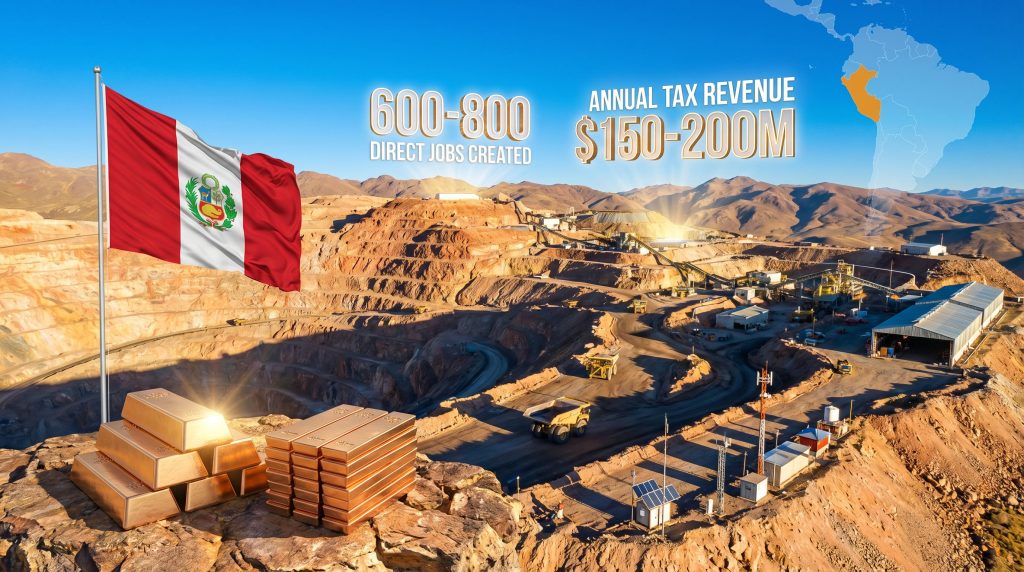
Peru's copper mining sector operates within a framework where geological abundance meets regulatory complexity. As the world's second-largest copper producer, accounting for approximately 10-12% of global output, Peru maintains extensive mineral reserves totaling around 77 million metric tons. The Tía María copper project in Peru exemplifies the challenges and opportunities within this environment, requiring navigation of multi-layered authorization systems that balance economic development with environmental protection and community rights.
The regulatory landscape reflects decades of legislative refinement, constitutional protections for Indigenous communities, and international treaty obligations. This creates a system where technical mining expertise intersects with social licence requirements, environmental compliance mandates, and political stability considerations that can extend project timelines far beyond initial expectations.
What Makes Peru's Copper Mining Approval Process So Complex?
Understanding Peru's Multi-Tiered Mining Authorization System
Peru's mining authorization operates through a sophisticated hierarchy involving multiple government agencies with distinct jurisdictions. The Ministry of Energy and Mines (MINEM) grants mining concessions and supervises operational aspects, while the Ministry of Environment (MINAM) issues environmental licences and monitors compliance. Regional governments exercise territorial oversight, and specialised agencies like INDECOPI review competition implications for large-scale investments.
Environmental Impact Assessments typically require 12-24 months for completion and approval, with major copper projects often extending toward the longer timeframe. Furthermore, effective copper investment strategies must account for this extended timeline. The process involves five distinct phases:
- Phase 0: Preliminary project concept evaluation and early environmental screening
- Phase 1: Comprehensive Environmental Impact Assessment document development
- Phase 2: Government technical evaluation against established environmental standards
- Phase 3: Prior Consultation process with affected communities (mandatory for projects affecting Indigenous territories)
- Phase 4: Environmental licence issuance or modification requests
- Phase 5: Administrative appeals period (typically 30-60 days for stakeholder challenges)
The distinction between legal permits and social licence creates parallel approval tracks operating on different timelines. While legal permits follow defined regulatory schedules, social licence depends on community sentiment and stakeholder confidence that cannot be controlled through administrative procedures alone.
Prior Consultation requirements under ILO Convention 169 mandate minimum 30-day engagement periods with Indigenous communities. Peru ratified this convention in 1994, establishing constitutional protections that require meaningful consultation rather than simple notification for projects affecting traditional territories.
The Role of Political Stability in Large-Scale Mining Investments
Political transitions in Peru create decision paralysis rather than policy reversals in mining authorisation. Between 2016 and 2023, Peru experienced six presidents, with multiple government transitions occurring outside regular electoral cycles. Consequently, this volatility affects mining project continuity through administrative review periods and changing interpretation of environmental standards.
Incoming administrations often establish transition periods lasting 30-90 days during which existing environmental licences undergo administrative review, even if technically approved by previous governments. This creates de facto delays without formal legal changes, extending already complex approval timelines.
Electoral cycles significantly influence mining authorisation decisions. Major approvals frequently occur 18-36 months following presidential inaugurations when governments maintain political capital. Conversely, decisions slow or stall in the final 12 months of administrations facing political opposition or declining approval ratings.
The relationship between electoral cycles and mining decisions remains asymmetrical. Governments with strong mandates or high approval ratings tend to finalise contested mining approvals, while politically weakened administrations delay controversial decisions to avoid additional opposition.
When big ASX news breaks, our subscribers know first
Why Do Billion-Dollar Copper Projects Face Decades-Long Development Cycles?
Technical Complexity Factors in Large-Scale Copper Operations
Large-scale copper operations face cumulative technical complexity that drives extended development timelines through sequential dependency chains. The Tía María copper project in Peru exemplifies this complexity, requiring 28 years from initial exploration to environmental approval in April 2026.
However, understanding mineral exploration insights helps explain why the project timeline demonstrates typical development phases:
- Exploration and concept development: 1998-2008 (10 years)
- Preliminary feasibility studies: 2008-2011 (3 years)
- Environmental baseline studies: 2010-2014 (4 years, concurrent with other assessments)
- Final feasibility study completion: 2011-2015 (4 years)
- Environmental authorisation processes: 2015-2026 (11 years, including multiple consultation cycles)
Geological complexity significantly impacts development timelines. Many Peruvian copper deposits contain both oxide and sulfide ore bodies, requiring dual-process infrastructure that increases capital requirements by 15-25% compared to single-process operations.
Oxide processing through heap leaching offers lower capital intensity (approximately US$400-600 million per 50,000 tons annual capacity) and faster production ramp-up (18-24 months). In contrast, sulfide processing requires flotation circuits with higher capital intensity (US$800-1,200 million per equivalent capacity) and longer ramp-up periods (24-36 months).
The presence of both ore types creates operational advantages through extended mine life and production flexibility, but demands sophisticated engineering solutions that require additional planning and capital allocation.
Infrastructure Requirements for Remote Location Access
Remote copper projects require comprehensive infrastructure development that extends project timelines significantly. Typical infrastructure components include:
- Access roads: 100-300 kilometres requiring 2-4 years construction
- Power supply infrastructure: Generation capacity or transmission lines needing 3-8 years for development and negotiation
- Water management systems: Including desalination plants or extraction facilities requiring 2-5 years
- Employee accommodation: Housing, medical facilities, and educational infrastructure
- Tailings storage facilities: Design and construction spanning 1-3 years
Building dedicated power infrastructure alone can require 4-8 years, including initial feasibility (1-2 years), environmental assessment (1-2 years), construction (2-3 years), and grid integration (1-2 years).
Environmental baseline characterisation adds substantial timeline requirements. Baseline environmental studies require 18-36 months before project development begins. Water resource studies need 12-24 months for hydrological surveys and baseline flow characterisation. Air quality baseline establishment requires minimum 12 months for year-round data collection, while biological and ecological surveys need 12-24 months for seasonal variation documentation.
How Do Community Relations Determine Mining Project Success in Peru?
Social Licence Framework Analysis
Community acceptance operates as a parallel approval track that functions independently of formal government permits. Projects can receive complete legal authorisation while lacking social licence, creating operational risks despite regulatory compliance.
Peru's constitutional framework recognises community consultation rights through multiple mechanisms:
- Constitutional protections: Peru's 1993 Constitution Article 89 establishes Indigenous community rights
- International treaty obligations: ILO Convention 169 ratification in 1994
- Domestic legislation: Law No. 29785 (2011) on Prior Consultation rights
These frameworks create legally mandated consultation requirements that extend beyond notification to meaningful engagement and consent-building processes. In addition, understanding the mining permitting process provides essential context for navigating these requirements effectively.
Traditional consultation processes emphasise consensus-building through extended dialogue periods, community assemblies, and stakeholder representation mechanisms. Modern stakeholder engagement incorporates formal benefit-sharing agreements, environmental monitoring participation, and conflict resolution protocols.
Economic benefit distribution models significantly influence community acceptance. Successful projects typically implement:
- Direct employment programmes: Local hiring preferences and skills training initiatives
- Infrastructure investment: Road improvements, healthcare facilities, and educational infrastructure
- Revenue sharing mechanisms: Tax revenue allocation to local communities and development funds
- Environmental monitoring participation: Community involvement in environmental oversight and reporting
Regional Variations in Social Acceptance Patterns
Mining projects in different Peruvian regions face varying community engagement challenges based on historical experiences, economic conditions, and cultural factors.
Cusco region projects often encounter extended consultation periods due to archaeological significance and complex Indigenous land tenure arrangements. The Espinar province exemplifies this complexity with multiple concurrent mining operations requiring coordination between different community groups and government levels.
Arequipa region projects, including the Tía María copper project in Peru, face community concerns related to agricultural land protection and water resource management. Local agricultural communities express concerns about potential impacts on irrigation systems and crop production areas.
"Community acceptance rates above 70% correlate strongly with project success, while environmental compliance scores exceeding 95% and production cost positioning within the bottom quartile globally indicate operational sustainability."
Conflict prevention and resolution systems incorporate multiple stakeholder levels:
- Local community assemblies: Direct community participation in project discussions
- Municipal coordination: Local government facilitation of community-company dialogue
- Regional government oversight: Territorial authority coordination and dispute mediation
- Federal agency involvement: Environmental and mining ministry participation in complex disputes
What Economic Factors Drive Copper Mining Investment Decisions in Peru?
Production Capacity and Market Positioning
The Tía María copper project in Peru targets approximately 120,000 metric tons of copper cathode production annually at full capacity, representing significant addition to Peru's copper output. With capital expenditure of US$1.8 billion and estimated 40+ years of production life, the project exemplifies large-scale copper development economics in Peru.
Ore reserves of approximately 850 million metric tons containing mixed oxide and sulfide material provide foundation for extended operation. This scale positions the project among Peru's major copper producers while contributing to the country's 10-12% share of global copper production.
Production capacity calculations must account for processing technology selection and efficiency metrics. Open-pit operations typically offer US$1.20-2.50 per ton extraction costs compared to underground operations at US$2.50-4.50 per ton. Approximately 85-90% of Peru's copper production derives from open-pit operations due to these economic advantages.
Investment Return Calculations for Extended Development Cycles
Extended development timelines significantly impact investment return calculations through multiple factors:
- Capital cost escalation: Prolonged approval processes increase construction costs through inflation and material price changes
- Financing costs: Extended pre-production periods require sustained capital investment without revenue generation
- Commodity price volatility: Copper price fluctuations during development affect project economics and financing availability
- Discount rate adjustments: Political and social uncertainties require risk premiums of 8-12% in financial modelling
Net present value calculations incorporate regulatory delay scenarios and commodity price volatility assumptions. Companies typically model base case, optimistic, and pessimistic scenarios for approval timelines and production start dates.
Infrastructure cost sharing with government entities can improve project economics. Public-private partnerships for road construction, power infrastructure, and port facilities reduce individual project capital requirements while providing broader regional economic benefits.
How Do Environmental Regulations Shape Mining Operations Design?
Water Resource Management Requirements
Environmental regulations fundamentally influence mining operations design through comprehensive resource protection mandates. Water resource management represents a critical compliance area requiring sophisticated engineering solutions and extensive monitoring systems.
River system protection protocols establish baseline flow requirements, seasonal variation limits, and water quality standards that mining operations must maintain. Agricultural land preservation mandates require demonstration that mining activities will not compromise existing irrigation systems or crop production areas.
Groundwater impact assessment requires detailed modelling of extraction effects on local aquifer systems, subsurface flow patterns, and well water availability for surrounding communities. Projects must demonstrate neutral or positive net water impact through conservation measures or alternative water source development.
Waste management and tailings facility regulations establish strict containment standards for mining byproducts. Tailings storage facility design must incorporate multiple containment barriers, groundwater monitoring systems, and long-term stability analysis for post-closure periods.
Technology Innovation in Environmental Compliance
Advanced processing techniques enable reduced environmental impact while maintaining production efficiency. Real-time monitoring systems provide continuous environmental data collection for air quality, water chemistry, noise levels, and seismic activity.
Modern operations integrate environmental management systems that include:
- Automated monitoring networks: Sensor arrays providing continuous environmental data
- Predictive analytics: Early warning systems for potential environmental impacts
- Adaptive management protocols: Real-time operational adjustments based on environmental conditions
- Community reporting systems: Transparent environmental data sharing with local stakeholders
Rehabilitation planning requires detailed post-closure land use proposals, financial bonding for restoration activities, and long-term monitoring commitments. Moreover, mine reclamation innovations are transforming how companies approach environmental restoration.
Technology advancement enables precision mining techniques that minimise surface disturbance, reduce waste generation, and optimise resource recovery. These innovations support regulatory compliance while improving operational economics.
What Role Does Peru Play in Global Copper Supply Chain Security?
Strategic Resource Positioning
Peru's position as the world's second-largest copper producer creates strategic importance for global supply chain security. With approximately 77 million metric tons of identified copper reserves representing 12-14% of global reserves, Peru provides supply diversification benefits for international markets.
Geopolitical considerations in copper sourcing strategies emphasise supply chain resilience through geographic diversification. Peru's recent strategic infrastructure developments demonstrate the country's commitment to maintaining its position as a reliable copper supplier.
Infrastructure development impact on regional competitiveness includes port facility expansion, transportation network improvements, and processing capacity increases. These developments enhance Peru's ability to serve global copper demand while reducing logistics costs and delivery timeframes.
Future Production Scenarios and Market Implications
Pipeline project analysis indicates Peru could increase copper production substantially over the next decade through projects currently in development or early production phases. Technology advancement impact on extraction efficiency enables access to previously uneconomic ore bodies and extends mine life for existing operations.
Climate change adaptation requirements for mining operations include water conservation technologies, renewable energy integration, and environmental monitoring enhancement. These adaptations align with international sustainability requirements while maintaining production competitiveness.
International trade relationship effects on project viability include trade agreement benefits, investment protection mechanisms, and dispute resolution frameworks. Furthermore, detailed project specifications highlight the technical aspects that make Peru's copper projects attractive to international investors.
Supply chain diversification benefits extend beyond copper to include molybdenum, silver, and other byproduct metals recovered from copper operations. This diversification reduces global supply risk for multiple critical materials used in technology and infrastructure applications.
The next major ASX story will hit our subscribers first
How Can Mining Companies Navigate Complex Approval Processes?
Best Practice Framework for Stakeholder Engagement
Successful navigation of Peru's complex approval processes requires integrated stakeholder engagement strategies that begin during early project development phases. Early consultation implementation involves community relationship building 2-3 years before formal permit applications begin.
Transparent communication protocols establish regular information sharing schedules, community meeting calendars, and grievance resolution mechanisms. These systems create predictable engagement processes that build trust and address concerns before they become project obstacles.
Economic benefit sharing mechanism design incorporates multiple stakeholder levels:
- Individual community members: Employment opportunities and skills training programmes
- Community organisations: Infrastructure investment and social programme funding
- Municipal governments: Tax revenue sharing and development project partnerships
- Regional authorities: Economic development coordination and infrastructure partnerships
Conflict prevention systems incorporate early warning mechanisms for community concerns, rapid response protocols for addressing issues, and neutral mediation resources for resolving disputes. These systems prevent minor concerns from escalating into project-threatening opposition.
Regulatory Compliance Optimisation Strategies
Phased approval approaches break complex projects into manageable components with clear milestone achievements and regulatory checkpoints. This approach enables incremental progress demonstration and builds regulatory confidence in project management capabilities.
Technical documentation quality assurance processes ensure permit applications meet or exceed regulatory requirements on initial submission. High-quality initial submissions reduce review cycles and demonstrate professional competence to regulatory authorities.
Government relationship management requires coordination protocols across multiple agency relationships. Successful projects maintain active communication with MINEM, MINAM, regional governments, and specialised agencies throughout development processes.
What Future Trends Will Shape Peru's Mining Sector Development?
Technological Innovation Impact on Operations
Automation and digital transformation enable mining operations to improve efficiency while reducing environmental impact and safety risks. Remote operation capabilities reduce workforce requirements at mine sites while enabling centralised technical expertise application across multiple operations.
Environmental monitoring technology advancement includes satellite-based monitoring systems, artificial intelligence-powered analytics, and predictive environmental impact modelling. These technologies enable proactive environmental management and demonstrate compliance effectiveness to regulatory authorities.
Sustainable mining practice evolution incorporates circular economy principles, waste minimisation technologies, and renewable energy integration. These practices align with international sustainability standards while reducing operational costs and environmental liabilities.
Policy Evolution and Investment Climate Outlook
Regulatory framework modernisation trends emphasise streamlined approval processes, digital permit systems, and integrated environmental monitoring. These improvements reduce administrative burden while maintaining environmental protection standards.
International investment protection agreement developments provide additional security for large-scale mining investments. Regional cooperation initiatives and cross-border projects create opportunities for infrastructure sharing and market development.
Climate policy integration with mining regulations creates both challenges and opportunities. Carbon pricing mechanisms may increase operational costs while creating incentives for technological innovation and efficiency improvements.
Investment climate outlook remains positive for well-managed projects that demonstrate strong community engagement, environmental compliance, and technical competence. The success of projects like the Tía María copper project in Peru provides precedent for future developments that meet evolving regulatory and social standards.
"The mining sector's evolution toward sustainability and technological innovation positions Peru as a leader in responsible copper production, attracting international investment while maintaining environmental and social standards."
Understanding industry evolution trends provides valuable context for companies planning long-term investments in Peru's copper sector. These trends indicate that successful projects will increasingly need to demonstrate excellence in environmental stewardship, community engagement, and technological innovation.
Note: Mining investments involve significant risks including commodity price volatility, regulatory changes, and operational challenges. This analysis is for informational purposes and should not be considered investment advice. Potential investors should conduct thorough due diligence and consult qualified professionals before making investment decisions.
Ready to Capitalise on Latin American Mining Discoveries?
Discovery Alert's proprietary Discovery IQ model delivers real-time alerts on significant ASX mineral discoveries, instantly empowering subscribers to identify actionable opportunities ahead of the broader market. Begin your 14-day free trial today and secure your market-leading advantage in the global mining sector.