June 22, 2026
The Engineering Mind Behind a Mining Giant's Reinvention
The global mining equipment industry is undergoing a structural reset. Consolidation among tier-one suppliers, the retirement of legacy diversified industrial models, and surging capital expenditure driven by copper and gold price strength have converged to create a genuinely new competitive landscape. Within that context, leadership transitions at major Original Equipment Manufacturers carry outsized strategic weight. The decisions made at the top of companies like FLSmidth ripple across project pipelines, procurement timelines, and technology adoption curves at mines on every continent.
When a company of FLSmidth's scale installs a new Group CEO, the mining industry takes note. Not simply because of the brand's global footprint, but because the strategic posture adopted at the executive level directly shapes how thousands of mines plan, equip, and operate their processing circuits for years ahead. Furthermore, as mining's transformation accelerates through electrification and decarbonisation, the choices made at this level carry ever-greater consequences.
When big ASX news breaks, our subscribers know first
Who Is Toni Laaksonen? Background and Career Trajectory
Toni Laaksonen, CEO of FLSmidth, brings a career profile that is simultaneously technically grounded and commercially broad. Born in 1982, the Finnish executive holds an engineering degree from Tampere University of Technology and a business qualification from the University of Vaasa, a combination that positioned him early for the intersection of industrial complexity and commercial leadership.
His professional path before arriving at FLSmidth included senior roles at some of the most influential names in global industrial and mining technology:
- Metso and Outotec (now Metso Outotec, rebranded as Metso): Business development, sales, and service leadership within the mining and minerals processing sectors
- ABB: Exposure to automation, electrification, and industrial systems at global scale
- Posti Group: Operational leadership in a logistics and services context, developing cross-sector management capability
- Glaston Corporation: Served as President and CEO, providing board-level P&L accountability before entering the FLSmidth orbit
This arc across Finnish industrial champions and global technology companies gave Laaksonen a perspective that bridges product engineering, aftermarket services economics, and enterprise leadership, which proved directly relevant to the role he was initially hired to fill.
The Path to the CEO Chair
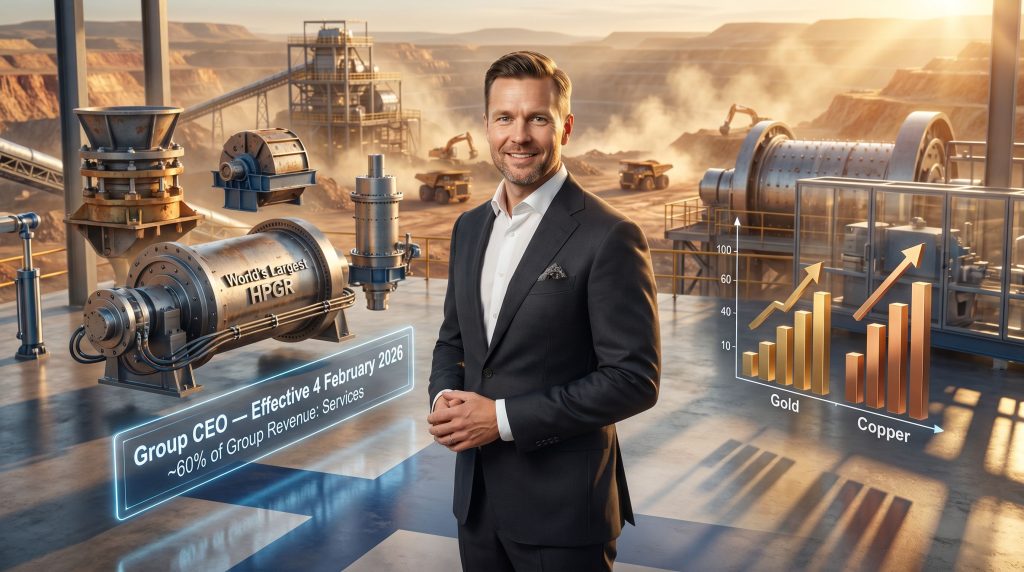
Laaksonen joined FLSmidth in June 2025 as President of the Service Business Line, a division that at the time represented roughly two-thirds of the company's total employee base and accounted for approximately 60% of group revenue. This was not a peripheral role. Running FLSmidth's largest revenue generator from day one meant Laaksonen was embedded in the company's most operationally complex and strategically significant division before the CEO position even became available.
The transition accelerated when predecessor Mikko Keto announced his departure in November 2025, stepping down immediately. Toni Laaksonen was appointed Group CEO on 4 February 2026, a succession that moved with notable speed and drew on the internal familiarity he had already built across the services organisation.
The board's decision to appoint an internal successor with deep services experience, rather than conducting a broad external search, signals a clear institutional conviction that FLSmidth's growth engine will be driven by its aftermarket and services relationships rather than by capital equipment sales cycles alone.
FLSmidth's Strategic Transformation: Life After Cement
To understand what Toni Laaksonen is building toward, it is essential to appreciate the structural shift FLSmidth completed immediately before his arrival. The company divested its cement business in 2025, a transaction that fundamentally altered FLSmidth's identity and financial profile. The subsequent sale of its former headquarters in Valby, Denmark, further monetised legacy real estate assets.
These combined transactions have left FLSmidth in a materially stronger liquidity position, with capital available to redeploy into mining-focused growth. The strategic outcome is a company that has shed diversification in favour of depth.
| Strategic Dimension | Pre-Divestment Position | Post-Divestment Position |
|---|---|---|
| Business Scope | Mining and Cement | Mining exclusively |
| Revenue Mix | Diversified across two sectors | ~60% services-driven |
| Capital Deployment | Legacy assets and dual-sector capex | Growth, M&A, and field expansion |
| Headquarters | Valby, Denmark | Rationalised |
| Competitive Identity | Industrial conglomerate | Pure-play mining supplier |
This is not a modest pivot. It represents a complete repositioning of a century-old industrial company toward a single commodity-facing market at a moment when that market is experiencing significant capital formation.
Capital Allocation Under the New CEO
Laaksonen has outlined a multi-pronged approach to deploying the company's strengthened balance sheet:
- Facility investment across key mining jurisdictions to deepen manufacturing and service capacity
- Field service expansion, including growing the number of engineers and technical specialists deployed at customer sites
- Talent acquisition, with an emphasis on finding technically specialised professionals rather than volume hiring
- M&A activity, with Laaksonen indicating the company expects to report progress on potential transactions within a 6 to 12 month window from early 2026
The M&A signal is particularly significant in the context of global mining equipment sector consolidation. A well-capitalised pure-play supplier with a broad product portfolio and established customer relationships is a credible consolidator of smaller, specialist technology providers.
Technology Portfolio: Where FLSmidth Holds Structural Advantages
Comminution Technology and the HPGR Milestone
Comminution, the process of crushing and grinding ore to liberate target minerals, typically accounts for 30 to 50% of a processing plant's total energy consumption. This makes it the most energy-intensive stage of most mineral processing circuits and therefore a primary target for efficiency improvement. FLSmidth's technology investments in this segment reflect a deliberate strategic concentration.
High Pressure Grinding Rolls (HPGRs) have gained significant traction over conventional tumbling mills in hard rock applications because they consume meaningfully less energy per tonne processed while also generating favourable micro-fracturing characteristics in the ore that can improve downstream recovery. FLSmidth is preparing to deliver what has been identified as the world's largest HPGR unit, a milestone that signals both engineering capability and the scale at which copper and gold projects are now being designed.
Vertical mills represent another area where FLSmidth has invested in competitive differentiation. Laaksonen has indicated the company holds a technical lead over rival suppliers in this segment, a claim that carries weight given the competitive intensity among equipment providers targeting regrind and fine grinding applications.
Gyratory crushers complete the comminution picture, with FLSmidth's top-service design offering maintenance accessibility advantages that reduce scheduled downtime. In high-throughput operations where every hour of crusher downtime translates directly to reduced production, this is a commercially material differentiator.
Full Flowsheet Capability: A Rare Integrated Offering
One of the less-discussed but strategically significant capabilities in FLSmidth's portfolio is its ability to design, supply, and service a complete mineral processing flowsheet. This means a single supplier can take responsibility for the full processing circuit from primary crushing through comminution, classification, flotation, solid-liquid separation, and tailings management.
In practice, this matters for several reasons:
- Interface risk reduction: Multi-supplier projects carry inherent risk at the boundaries between equipment systems. A single integrated supplier reduces this risk substantially
- Performance guarantee alignment: When one party is responsible for the full flowsheet, accountability for overall plant performance is clearer
- Lifecycle services consolidation: Operators can consolidate aftermarket procurement, parts supply, and technical support through a single relationship
Few competitors globally can credibly offer this end-to-end capability at scale, and it is a structural moat that FLSmidth has built over decades of project delivery. In addition, tools such as AI-powered mining copilots are increasingly complementing this integrated approach by boosting operational efficiency at the site level.
Sustainability Metrics: Beyond Net Zero Rhetoric
FLSmidth launched its Mission Zero sustainability campaign in 2019 with the ambition of enabling zero waste and zero emissions from mining operations. By 2026, industry-wide enthusiasm for broad net-zero pledges had moderated considerably, replaced by more operationally grounded metrics that mining companies can directly measure and monetise.
Under Laaksonen's framing, the sustainability conversation has evolved into three measurable value propositions:
- Reduction in CO₂ per tonne of ore processed, enabled by energy-efficient comminution and classification technologies
- Reduction in unit operating cost per tonne, achieved through process efficiency and reduced power draw
- Reduction in water consumption per tonne, driven by advanced flotation cell design and high-efficiency thickening technology
This shift from headline carbon commitments toward unit-level operational efficiency metrics is arguably more durable commercially. When a technology can simultaneously lower an operator's power bill, reduce their water licence risk, and cut their carbon intensity, the procurement case becomes compelling regardless of the prevailing ESG sentiment cycle.
Commodity Markets and Order Book Dynamics
Gold and Copper: Contrasting Project Profiles
Elevated gold and copper market trends entering 2026 have generated strong inquiry volumes for plant engineering and equipment supply. However, these two commodity markets present structurally different procurement dynamics that shape how FLSmidth's order book builds.
| Factor | Gold Projects | Copper Projects |
|---|---|---|
| Typical capital scale | Smaller footprint | Very large, capital-intensive |
| Order to execution cycle | Relatively short | Extended engineering and procurement phases |
| Current FLS engagement | Active across multiple regions | Engineering projects at existing operations |
| Throughput focus | New plant construction | Recovery and production optimisation |
Gold projects, with their generally smaller capital requirements, move faster from engineering study through to equipment procurement and delivery. Copper projects are structurally larger and more complex, often involving modifications to existing processing plants at producing operations rather than greenfield construction.
Lead Time Risk: A First-Mover Dynamic
As of early 2026, FLSmidth reports that equipment delivery lead times across its product range are operating within normal parameters. This is a notable statement given the supply chain disruptions that characterised the 2021 to 2023 period across global capital goods manufacturing.
However, a latent risk exists. If multiple large greenfield mining projects reach simultaneous equipment procurement phases within a 12 to 24 month window, the supply chain could tighten materially and rapidly. This dynamic has historical precedent in prior commodity cycles and creates a strategic incentive for mining operators to move early in the project pipeline rather than waiting for commodity prices to reach peak levels before committing capital.
North American Operations: A Structural Tariff Buffer
The US tariff environment that emerged through 2025 created asymmetric competitive dynamics across the global mining equipment sector. Suppliers relying on offshore manufacturing to service the North American market found themselves exposed to cost headwinds that domestically-producing competitors did not face. Consequently, understanding how tariffs affect the mining sector is increasingly critical for equipment suppliers operating across global jurisdictions.
FLSmidth's North American operational footprint is substantial:
- Tucson, Arizona: Manufacturing facility producing pumps, cyclones, and valves
- Salt Lake City, Utah: Regional operational and logistics hub
- Multiple US service centres: Distributed across the country, each equipped with machining capabilities
- A bronze foundry within the US network, providing specialised casting capability for wear components
This distributed manufacturing and service presence means FLSmidth is largely insulated from import tariff exposure on products sold into the US market. For investors and procurement managers assessing total cost of ownership, this structural advantage over competitors dependent on cross-border supply chains is a commercially meaningful differentiator in the current trade policy environment. Furthermore, the Trump administration's impact on mining in America has reinforced the strategic value of domestic manufacturing capacity.
The next major ASX story will hit our subscribers first
The Laaksonen Growth Agenda: Three Declared Pillars
Laaksonen has articulated a coherent set of priorities for FLSmidth's next phase. These are not abstract strategic statements but operational commitments tied to the company's financial position and market timing.
Profitable global expansion sits at the centre of the agenda. The emphasis on profitability alongside growth reflects a disciplined capital allocation philosophy. Revenue growth without margin discipline destroys value in capital-equipment businesses with long project cycles.
Internal capability uplift through structured investment in workforce education and technical training addresses a constraint that affects the entire mining equipment sector. As experienced engineers retire and projects increase in technical complexity, the companies that invest proactively in skills development gain a sustainable service delivery advantage.
Targeted talent acquisition with a quality-over-quantity emphasis reflects the reality that specialised mining process engineers are genuinely scarce globally. The ability to attract, retain, and deploy technically credentialed professionals is increasingly a competitive differentiator in aftermarket services.
Beyond these three pillars, Laaksonen has emphasised a co-development model with mining operators, positioning FLSmidth as a collaborative engineering partner rather than simply a hardware supplier. This customer-intimacy approach is structurally aligned with a services-heavy revenue model where long-term relationships generate recurring revenue streams that are far more defensible than one-time equipment sales. According to Australian Mining, this appointment marks a significant step forward in FLSmidth's focused growth strategy.
FAQ: Toni Laaksonen and FLSmidth's Strategic Direction
Who is Toni Laaksonen?
Toni Laaksonen, CEO of FLSmidth, was formally appointed on 4 February 2026. A Finnish national born in 1982, he holds engineering and business qualifications from Finnish universities and has accumulated more than 15 years of international leadership experience across mining technology, industrial services, and capital equipment sectors.
What did Toni Laaksonen do before becoming CEO of FLSmidth?
Before his CEO appointment, Laaksonen served as President of FLSmidth's Service Business Line from June 2025. Prior to joining FLSmidth, he was President and CEO of Glaston Corporation and held senior leadership roles at Metso, Outotec, ABB, and Posti Group.
What is FLSmidth's current strategic focus?
Following the divestment of its cement business in 2025, FLSmidth operates exclusively as a mining equipment supplier and aftermarket services provider. The company is prioritising global expansion, field service investment, talent acquisition, and M&A activity under Laaksonen's leadership.
What technologies does FLSmidth specialise in?
FLSmidth's core technology portfolio spans gyratory crushers, HPGRs, vertical mills, flotation cells, thickeners, pumps, cyclones, and complete flowsheet engineering covering the full mineral processing circuit from comminution through to tailings management.
Is FLSmidth exposed to US import tariffs?
FLSmidth maintains a substantial North American manufacturing footprint including a factory in Tucson, Arizona, a hub in Salt Lake City, Utah, and multiple service centres with machining capability and a bronze foundry. This domestic presence provides significant insulation from import tariff exposure in the US market.
Disclaimer: This article contains forward-looking statements and analysis based on publicly available information and industry commentary as of mid-2026. Statements regarding M&A timelines, market conditions, and competitive positioning involve inherent uncertainty and should not be construed as financial advice. Readers should conduct independent due diligence before making any investment or procurement decisions.
Want to Track the Next Major ASX Mineral Discovery Before the Market Moves?
Discovery Alert's proprietary Discovery IQ model delivers real-time alerts on significant ASX mineral discoveries, cutting through complex mineral data to surface actionable opportunities the moment they are announced — explore historic discoveries and their remarkable returns, then begin your 14-day free trial to position yourself ahead of the market.