
July 15, 2026
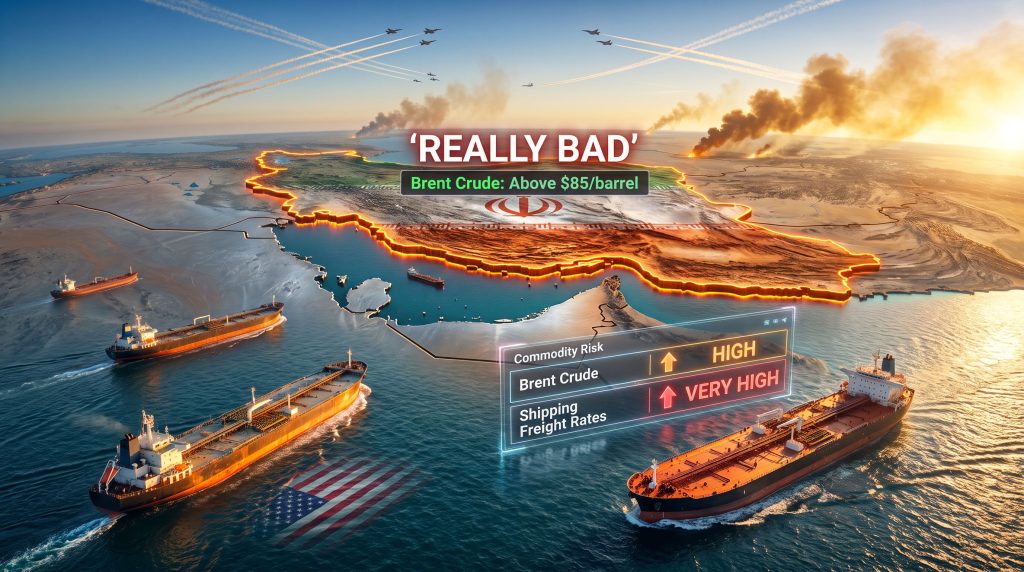
When Conflict Becomes Policy: Understanding the U.S.-Iran Escalation Cycle
History offers a consistent lesson about military coercion: the most dangerous phase of any conflict is not the opening strike, but the structured escalation that follows a failed ceasefire. When diplomatic pauses collapse under the weight of mutual distrust, the transition from contained military action to systemic infrastructure warfare becomes not just possible, but strategically predictable. That is precisely the trajectory where Trump warns U.S. strikes on Iran could get really bad next week, and the consequences extend far beyond the two nations directly involved.
When big ASX news breaks, our subscribers know first
The Architecture of a Collapsing Ceasefire
The ceasefire reached in the weeks prior to July 2026 was always fragile. It rested on a foundation of back-channel communications, mutual restraint, and the assumption that both sides would interpret ambiguous military postures as non-threatening. That assumption, however, proved wrong.
The critical turning point came when commercial vessels transiting the Strait of Hormuz came under attack, providing the United States with a clear operational justification for a retaliatory strike campaign against dozens of Iranian targets. Once U.S. Central Command executed those strikes, the ceasefire framework effectively lost its legitimacy as a restraining mechanism.
On July 8, 2026, President Trump formally declared the ceasefire finished, signalling Washington's intent to shift from a posture of monitored restraint to one of active military pressure. Iran's response was not passive. Tehran launched simultaneous attacks against multiple Gulf states, transforming what had been a bilateral standoff into a regional destabilisation event. The breakdown of back-channel communications removed the last available safety valve, and the conflict's military timeline accelerated accordingly.
What Trump Threatened and When: Decoding the Strike Timeline
The clearest articulation of Washington's escalation strategy came during Trump's Fox News interview on July 14, 2026. Rather than issuing vague warnings, Trump outlined a structured, phased approach to intensifying military pressure on Iran, with each phase tied to Tehran's willingness to return to the negotiating table.
A Three-Phase Strike Framework
| Phase | Timeframe | Stated Targets |
|---|---|---|
| Phase 1 | Immediate (nightly strikes) | Active Iranian military assets |
| Phase 2 | Short-term continuation | Increased frequency and intensity |
| Phase 3 | Following week (conditional) | Power plants, bridges, critical infrastructure |
The conditional architecture of this threat is strategically significant. Trump explicitly stated that escalation to Phase 3 would halt if Iran returned to peace negotiations, confirming that infrastructure targeting is being deployed as coercive leverage rather than a predetermined military objective. U.S. and Iranian representatives had maintained recent contact as of that interview, leaving a narrow diplomatic window open even as military operations continued nightly.
What Targeting Infrastructure Actually Means
The doctrinal shift from striking military assets to targeting civilian infrastructure — specifically power plants and bridges — represents a qualitative change in the nature of the conflict. Military attrition campaigns aim to degrade an adversary's capacity to fight. Infrastructure disruption campaigns, in addition, aim to degrade an adversary's capacity to function as a modern state.
Historical precedents from conflicts in Iraq, Serbia, and Libya demonstrate that infrastructure targeting produces rapid humanitarian consequences, including loss of medical services, water treatment failures, and economic paralysis, while simultaneously generating intense international pressure on the attacking power. The legal framework under the Geneva Conventions imposes significant constraints on targeting civilian infrastructure, adding a layer of international law complexity to Washington's stated strategy.
Strategic Note: The phrase attributed to Trump's Fox News interview, warning that next week's strikes would target power plants and bridges, marks a decisive shift from a military campaign to one with the explicit goal of dismantling national systems. Whether this functions as genuine intent or calibrated coercive signalling is the central interpretive question for both policymakers and markets.
The Strait of Hormuz: Why One Waterway Holds the Global Economy Hostage
To understand why Trump warns U.S. strikes on Iran could get really bad next week resonates so powerfully across global financial markets, it is essential to grasp the singular economic importance of the Strait of Hormuz. Approximately 20% of global oil supply transits this narrow waterway annually, making it the single most consequential chokepoint in the world's energy logistics network.
There is no alternative route that can absorb a full disruption of Hormuz transit without significant cost and delay. Saudi Arabia's East-West Pipeline offers partial capacity relief, but it cannot replace the volume and variety of hydrocarbons that flow through the Strait from Kuwait, Iraq, the UAE, Qatar, and Iran itself. Furthermore, a sustained disruption would affect not just crude oil but the LNG supply implications from Qatar, one of the world's largest LNG producers.
As of July 15, 2026, front-month Brent crude futures were holding above $85 per barrel, reflecting market anxiety about transit safety without yet pricing in a worst-case disruption scenario. For context, monitoring crude oil price trends shows that Brent crude spiked sharply during the 1990–91 Gulf War and again following the September 2019 drone attacks on Saudi Arabia's Abqaiq processing facility, which temporarily knocked out roughly 5% of global oil supply and sent prices surging by the largest single-day percentage jump in decades.
The Hormuz Toll Reversal: A Case Study in Policy Volatility
Earlier in the week, Trump proposed imposing a 20% levy on all cargo shipped through the Strait of Hormuz, a proposal that would have effectively taxed the global oil trade at its most critical transit point. The idea was abandoned by Tuesday, July 15, 2026, replaced by an arrangement in which Gulf states would direct investment into the United States rather than pay shipping tolls.
The rapid reversal illustrates a broader pattern: U.S. policy signalling in this conflict has been volatile, and that volatility itself carries economic costs. Shipping operators, cargo insurers, and energy traders cannot make rational operational decisions in an environment where major policy directions reverse within 48 hours. The oil price shock risks associated with such unpredictability compound the challenges already facing global supply chains.
What the Shipping Industry Is Actually Experiencing
BIMCO, the Baltic and International Maritime Council, is one of the world's most authoritative voices on maritime risk. The organisation's Chief Safety and Security Officer, Jakob Larsen, described the operating environment in precise terms during an appearance on CNBC's Squawk Box Europe on July 15, 2026. Larsen characterised the situation as one in which rapidly shifting and contradictory policy signals compound the already elevated physical risks of transiting the region, ultimately translating into higher costs across the entire supply chain.
War-risk insurance premiums on Hormuz transit routes have escalated sharply. Shipping operators face the compounding challenge of assessing not just current threat levels but the policy environment that will govern their liability exposure if a vessel is damaged or seized. In practical terms, many operators are extending voyage durations by routing around potential conflict zones, adding days and fuel costs to deliveries that would normally transit directly through the Strait.
Commodity and Energy Market Sensitivity
| Commodity | Current Exposure | Escalation Risk Profile |
|---|---|---|
| Brent Crude Oil | High (direct Hormuz dependency) | Significant upside pressure toward $100/barrel |
| Natural Gas (LNG) | Moderate (Qatar LNG at risk) | Supply rerouting and cost inflation |
| Petrochemicals | High (feedstock sourcing disruption) | Production cost escalation regionally and globally |
| Shipping Freight Rates | Very High (war-risk premiums active) | Rapid further escalation likely |
| Gold | Moderate-High (safe-haven demand) | Historically benefits from Middle East conflict escalation |
Defence sector equities historically outperform broader indices during sustained Middle East military engagements. Furthermore, the gold safe-haven demand dynamic is well-established during periods of geopolitical instability, making it a key consideration for portfolio managers. Institutional investors with exposure to emerging market currencies should note that a sustained oil price spike disproportionately impacts energy-importing developing economies, amplifying currency pressure and sovereign debt risk in those markets.
Scenario Modelling: Three Pathways Through the Coming Week
Scenario A: Diplomatic Re-engagement
If Iran returns to the negotiating table before the infrastructure strike deadline, the immediate pressure on Brent crude eases and shipping risk premiums partially unwind. This outcome likely requires third-party mediation, possibly involving Omani or Swiss diplomatic channels that have historically facilitated U.S.-Iran back-channel communication. A partial discussion of sanctions relief would probably be necessary to give Tehran political cover for returning to talks.
Scenario B: Infrastructure Strikes Begin
If Iran refuses negotiations and the United States proceeds with targeting power plants and bridges, the humanitarian situation inside Iran deteriorates rapidly. International pressure on Washington intensifies, particularly from European allies and Asian energy importers with direct Hormuz exposure. Brent crude in this scenario could spike into the $95 to $100 per barrel range as risk premiums reflect the possibility of Hormuz transit disruption.
Scenario C: Full Regional Escalation
The most severe scenario involves Iranian proxy networks launching coordinated retaliatory strikes across Gulf Cooperation Council member states, potentially damaging Saudi Arabian or UAE energy infrastructure. A partial or full closure of Hormuz transit, even temporarily, would constitute a global energy supply shock with recession-inducing potential for energy-import-dependent economies across Europe and Asia.
Investor Note: These scenarios carry materially different risk profiles for energy equities, shipping stocks, and commodity-linked assets. Portfolio positioning decisions made in the coming days should account for the conditional nature of the current escalation framework and the narrow but real possibility of diplomatic resolution. This article does not constitute financial advice.
The next major ASX story will hit our subscribers first
The Geopolitical Ripple Effects Beyond Iran
Iran's simultaneous strikes against multiple Gulf states have activated contingency planning across the GCC. The geopolitical risks in mining and broader resource sectors are consequently elevated, as conflict spillover into Iraq remains a genuine concern given the presence of Iranian-aligned militia networks. The Lebanese theatre adds another layer of complexity through Hezbollah's potential role in any coordinated escalation response.
The United Nations Security Council faces structural limitations in its ability to intervene, given the geopolitical alignment of permanent members. European nations, particularly those heavily dependent on Gulf energy exports, face difficult choices between diplomatic pressure on Washington and economic self-interest in maintaining stable energy supply chains.
China and India, as the world's largest and third-largest oil importers respectively, have the most direct economic stake in Hormuz stability. Their diplomatic positioning in the coming days will significantly influence whether international pressure on both Washington and Tehran gains traction before the next phase of strikes begins.
Frequently Asked Questions
What infrastructure has Trump threatened to target?
Trump specifically identified power plants and bridges as the targets of the next escalation phase, with the stated objective of eliminating Iran's power generation capacity and bridge network unless Tehran engages in formal peace negotiations.
Why was the Hormuz toll proposal abandoned?
The 20% levy on Strait of Hormuz cargo was withdrawn by July 15, 2026. The administration pivoted to an arrangement in which Gulf states would make direct investments in the United States as an alternative to paying transit tolls.
How high could oil prices go under a Hormuz disruption?
With Brent crude already above $85 per barrel as of July 15, 2026, a material and sustained disruption to Hormuz transit could push prices toward or beyond $100 per barrel, based on historical conflict analogues and the volume of supply at risk.
Is diplomatic contact still ongoing between the U.S. and Iran?
As of Trump's Fox News interview on July 14, 2026, representatives from both sides had maintained recent contact. However, Trump warned that military strikes would continue until a formal diplomatic agreement is reached, confirming that the situation where Trump warns U.S. strikes on Iran could get really bad next week remains an active and evolving concern.
What is BIMCO's current assessment of maritime risk in the region?
BIMCO's leadership characterised the environment as one of escalating uncertainty and risk, with rapidly changing and contradictory policy signals adding operational complexity for shipping operators and driving higher prices across the maritime supply chain.
Want to Stay Ahead of the Next Major Commodity Shift?
Geopolitical flashpoints like the U.S.-Iran escalation cycle can move commodity markets dramatically and without warning — Discovery Alert's proprietary Discovery IQ model delivers real-time alerts on significant ASX mineral discoveries, helping subscribers identify actionable opportunities in gold, energy, and resource stocks the moment they emerge. Explore how historic mineral discoveries have generated substantial market returns and begin your 14-day free trial today to position yourself ahead of the next major market move.