
May 12, 2026
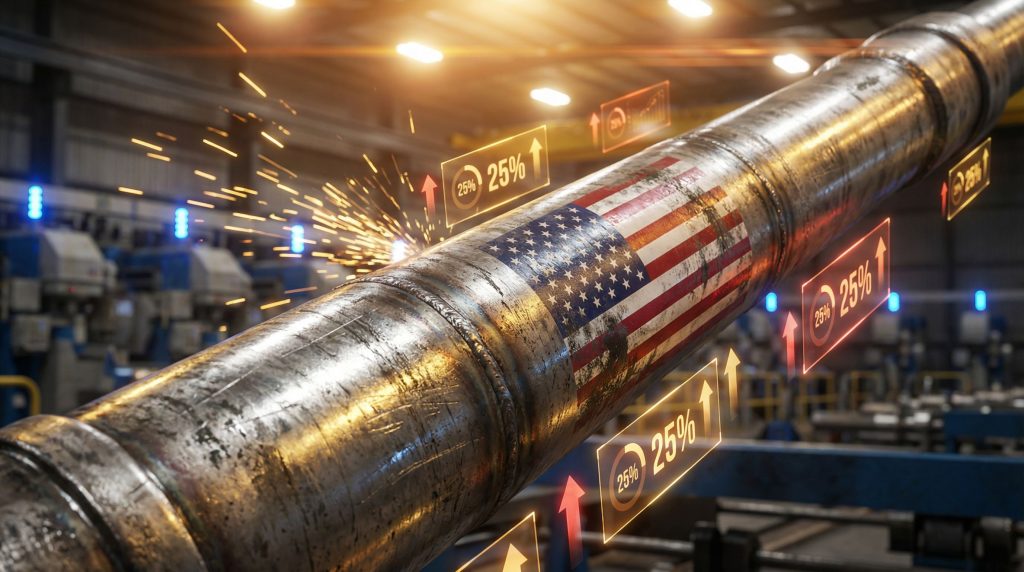
Trump's tariffs on oil industry equipment create significant cost pressures across energy infrastructure while strategically preserving competitive advantages through selective exemption policies. The current tariff environment demonstrates how targeted protectionism can fundamentally alter break-even economics while maintaining critical supply chain flows. Investment decisions in energy sectors increasingly hinge on understanding how trade policy reshapes fundamental cost structures through asymmetric pressures across interconnected energy value chains.
Strategic Framework Behind Selective Energy Tariffs
The current approach to energy trade policy represents a departure from traditional protectionist models through its targeted exemption strategy. Unlike comprehensive trade barriers, Trump's tariffs on oil industry equipment create cost pressures on infrastructure while maintaining feedstock flow advantages.
Crude Oil Exemption Architecture
The formal exemption of crude oil, natural gas liquids, and refined products from tariff schedules reflects calculated economic positioning rather than oversight. Furthermore, this policy framework preserves three critical competitive advantages:
• Gulf Coast refinery optimisation: Complex facilities designed for medium and heavy crude processing maintain access to international feedstock without duty burden
• Consumer price stability: Direct fuel cost transmission to retail markets avoided through commodity exemptions
• Export competitiveness preservation: Refined product export margins protected from feedstock cost inflation
The 25% tariff on Canada and Mexico imports specifically targets equipment and materials while leaving energy commodities untouched, creating differential cost impacts across upstream, midstream, and downstream operations. Moreover, the us economy tariffs demonstrate broader implications for national economic policy beyond energy sector considerations.
Steel-Centric Infrastructure Targeting
Equipment tariffs focus on steel-intensive components essential for energy infrastructure development:
| Component Category | Tariff Rate | Primary Impact |
|---|---|---|
| Drill pipe and casing | 25% | Upstream operations |
| Line pipe (transmission) | 25% | Midstream infrastructure |
| LNG compression equipment | 25% + 10% | Export facility construction |
| Chinese control systems | 10% | Automation and efficiency |
This targeting mechanism raises capital expenditure requirements for new projects while avoiding operational cost increases for existing facilities processing imported crude. However, the tariffs impact markets extends beyond energy sectors into broader financial implications.
Historical Precedent Analysis
Reagan-era steel protectionism (1982-1989) applied broad import quotas affecting entire energy sectors uniformly. In contrast, the current approach demonstrates greater selectivity by preserving crude oil supply chains while pressuring equipment procurement networks.
Key differential: Previous trade policies impacted both feedstock and infrastructure costs simultaneously. Current policy isolates infrastructure cost pressures while maintaining commodity flow advantages.
When big ASX news breaks, our subscribers know first
Asymmetric Cost Distribution Across Energy Subsectors
The tariff structure creates uneven financial burdens across energy value chain segments, with upstream operations bearing disproportionate cost increases relative to downstream processing facilities.
Upstream Equipment Cost Escalation
Drilling operations face immediate cost pressures through multiple tariff transmission mechanisms:
Steel component impact: Drill pipe, casing, and completion equipment sourced from Canada and Mexico subject to 25% tariff burden. For typical shale wells utilising 500 tons of steel pipe at $800/ton, equipment costs increase from $400,000 to $500,000 per well.
Chinese automation systems: Electrical controls, sensors, and drilling optimisation technology face 10% tariff increases. These systems represent 15-20% of total drilling automation budgets for advanced operators.
Project-level cost transmission: Industry analysis indicates 2-5% overall project cost increases for offshore and deepwater developments, with shale operations experiencing 2-3% equipment budget inflation.
Midstream Infrastructure Pressures
Pipeline and processing facility construction encounters dual tariff exposure through steel content and foreign-sourced speciality equipment:
• Transmission pipeline steel: 25% tariff on North American-sourced line pipe affects 60-70% of new pipeline construction budgets
• LNG terminal equipment: Compression systems face combined tariffs on steel components (25%) and Chinese electrical controls (10%)
• Cross-border project constraints: Canadian and Mexican speciality alloy sourcing subject to elevated duty rates
Supply chain timeline extensions: Equipment lead times expanded 4-8 weeks post-tariff implementation as suppliers adjust pricing structures and operators front-load procurement to hedge future cost increases.
Downstream Protection Mechanisms
Refinery operations maintain cost advantages through commodity exemption policies:
Feedstock cost stability: Gulf Coast refineries processing 3.2-3.8 million barrels per day of international heavy crude avoid tariff burden on primary input costs.
Competitive positioning preservation: Complex refineries designed for heavy crude processing maintain economic advantages over facilities dependent on light domestic production.
Export margin protection: Refined product export competitiveness preserved through avoided feedstock cost inflation compared to international competitors. Consequently, the oil price rally under tariffs reflects these complex competitive dynamics.
Equipment Cost Transmission Into Project Economics
Tariff-driven cost inflation creates measurable impacts on drilling programme economics and capital allocation decisions across major shale plays and deepwater developments.
Break-Even Sensitivity Analysis
For representative Permian Basin drilling programmes:
Base case scenario ($60/bbl WTI):
• Equipment cost: $55,000 per well
• Return on invested capital: 8.5%
Tariff impact scenario (+3% equipment costs):
• Equipment cost: $56,650 per well
• Return on invested capital: 8.1%
• ROI decline: 4.7%
At lower commodity prices ($50/bbl WTI), tariff impact becomes more severe:
• Base case ROI: 4.2%
• Tariff scenario ROI: 3.8%
• ROI decline: 9.5% (approaches uneconomic threshold)
Supply Chain Adaptation Strategies
Operators implement multiple approaches to mitigate tariff cost exposure:
Inventory buffer expansion: Equipment stockpiling increased from historical 6-9 month supplies to 12-18 month buffers, representing $50-150 million working capital increases for mid-cap independents.
Alternative sourcing evaluation: Procurement teams assess European and Japanese equipment suppliers to avoid 25%/10% North American and Chinese tariff exposure.
Long-term contract restructuring: Multi-year equipment agreements negotiated to hedge tariff volatility and secure pricing certainty for drilling programmes.
Regional Competitiveness Shifts
Tariff impacts create differential advantages across major shale basins:
Permian Basin operators: Greater exposure to Canadian/Mexican steel pipe suppliers results in higher relative cost increases from 25% tariff rates.
Bakken operators: Increased reliance on domestic steel sourcing provides relative cost advantages in tight capital allocation environments.
Eagle Ford positioning: Mixed sourcing patterns create moderate tariff exposure compared to other major plays.
Hypothetical Crude Oil Tariff Impact Assessment
Analysis of potential crude oil tariff implementation reveals significant downstream disruption potential and consumer cost transmission mechanisms that explain current exemption policies.
Refinery Margin Destruction Scenarios
Gulf Coast refinery economics would face immediate disruption under crude oil tariff scenarios:
10% crude tariff impact:
• Feedstock cost increase: $5-7 per barrel
• Refinery margin compression: From 8-15% to 2-6% on affected barrels
• Utilisation reduction for older, less-efficient processing units
25% crude tariff impact:
• Heavy crude processing becomes uneconomic for multiple facilities
• Refinery closures accelerated, particularly East Coast plants
• Employment losses of 500-2,000 direct jobs per facility plus regional multiplier effects
Consumer Price Transmission Analysis
Crude oil tariffs would create rapid pump price increases through established petroleum product pricing mechanisms:
| Tariff Level | Petrol Price Impact | Transmission Timeline |
|---|---|---|
| 10% crude tariff | 10-15 cents/gallon | 1-2 weeks |
| 15% crude tariff | 15-25 cents/gallon | 1-2 weeks |
| 25% crude tariff | 25-40 cents/gallon | 1-2 weeks |
Diesel and jet fuel impacts: Commercial transportation fuels would experience similar percentage increases, affecting logistics costs across multiple economic sectors.
Global Market Rebalancing Effects
U.S. crude import reduction from tariff-driven economics would create international market distortions:
Crude oil flow redirection: Producers would shift barrels to alternative buyers, potentially tightening global markets and pressuring Brent pricing upward.
Export competitiveness erosion: Higher U.S. production costs would reduce refined product export competitiveness in Latin American and European markets. Similarly, the us tariffs on canadian industries demonstrates cross-border economic disruption patterns.
Strategic petroleum reserve implications: Domestic crude tariffs could necessitate increased strategic reserve utilisation during supply disruptions.
Corporate Investment Strategy Adaptations
Energy companies implement multiple approaches to navigate tariff-driven cost uncertainty while maintaining competitive positioning in evolving market conditions.
Capital Allocation Rebalancing
Project timeline adjustments: Operators delay final investment decisions on marginal projects by 6-12 months pending tariff policy clarity and equipment cost stabilisation.
Geographic prioritisation shifts: International deepwater projects in Southeast Asia and West Africa receive slower capital allocation growth due to equipment cost increases affecting domestic project break-even thresholds.
Technology investment acceleration: Automation and digital efficiency improvements receive increased budget allocation to offset labour and material cost inflation impacts.
Supply Chain Risk Management
Companies adopt sophisticated procurement strategies to minimise tariff exposure:
Supplier diversification initiatives: Equipment sourcing expanded to include European and Japanese manufacturers outside primary tariff zones.
Contract restructuring programmes: Multi-year agreements with key suppliers provide cost certainty and hedge against future tariff policy changes.
Inventory optimisation: Strategic equipment stockpiling balances carrying costs against tariff escalation risks.
Merger and Acquisition Activity
Tariff-driven cost structure changes influence consolidation patterns across energy subsectors:
Service company consolidation: Equipment suppliers and drilling contractors pursue scale advantages to absorb tariff cost pressures.
Vertical integration strategies: Operators evaluate backward integration into equipment manufacturing to reduce tariff exposure.
International diversification: U.S.-based companies increase overseas asset allocation to balance domestic cost inflation risks.
Industry Production and Employment Forecasts
Tariff impacts create measurable effects on drilling activity, regional employment, and overall energy production capacity through equipment cost transmission mechanisms.
Production Growth Adjustments
Shale operator guidance revisions: Equipment cost increases contribute to 5-10% capital expenditure budget reductions for 2025-2026 drilling programmes among mid-cap independents.
Deepwater project delays: Complex subsea developments face 18-24 month timeline extensions due to equipment cost uncertainty and supply chain disruptions.
Natural gas infrastructure constraints: LNG export terminal expansions and interstate pipeline projects encounter construction cost increases affecting project sanction decisions.
Regional Economic Impact Assessment
Texas employment effects: Reduced drilling activity in Permian Basin creates 2,000-4,000 direct job losses in service sectors, with 1.5x regional multiplier effects.
North Dakota economic implications: Bakken operators' relative cost advantages partially offset broader industry employment declines.
Pennsylvania Marcellus impacts: Midstream infrastructure delays affect construction employment in processing facility and pipeline development projects.
Service Company Consolidation Trends
Equipment manufacturers and drilling contractors implement cost reduction strategies:
Operational efficiency improvements: Service companies reduce workforce 5-8% while maintaining service capacity through automation deployment.
Pricing strategy adjustments: Equipment rental rates increase 3-5% to offset tariff cost pass-through requirements.
Geographic rebalancing: Service companies shift capacity allocation towards regions with lower tariff impact exposure.
The next major ASX story will hit our subscribers first
Energy Security and Policy Scenario Analysis
Long-term implications of selective tariff policies depend on potential policy evolution and international response patterns that could fundamentally alter current energy trade relationships.
Crude Oil Exemption Stability Assessment
Several factors could trigger reconsideration of current crude oil tariff exemptions:
Political pressure scenarios: Domestic crude producers lobby for import protection during extended low price environments (sub-$50/bbl sustained periods).
Economic nationalism escalation: Broader protectionist policy momentum could overcome refinery sector opposition to crude tariffs.
Geopolitical crisis triggers: Supply disruption events might create political justification for energy import restrictions despite economic costs. For instance, the energy exports challenges illustrates international supply vulnerability patterns.
Retaliatory Response Potential
International partners implement counter-measures affecting U.S. energy competitiveness:
Canadian policy responses: Equipment export restrictions or preferential domestic pricing reduce U.S. access to critical pipeline infrastructure components.
Mexican cooperation constraints: Cross-border energy project approval processes face increased regulatory scrutiny and delays.
USMCA stability concerns: Trade agreement framework experiences pressure from escalating tariff disputes affecting energy sector provisions.
Domestic Energy Independence Implications
Tariff policies create tensions between energy security objectives and economic efficiency:
Production capacity constraints: Higher equipment costs reduce marginal well economics, potentially limiting domestic production growth during price cycles.
Infrastructure development delays: Midstream bottlenecks persist longer due to elevated pipeline and processing facility construction costs.
Technological competitiveness risks: Equipment cost increases could slow adoption of advanced drilling and processing technologies compared to international competitors.
Investment Portfolio Navigation Strategies
Energy sector investors require sophisticated frameworks to evaluate Trump's tariffs on oil industry impacts across different subsectors while identifying emerging opportunities from market disruption patterns.
Sector-Specific Performance Expectations
Upstream operator positioning: Independent producers with domestic equipment sourcing advantages outperform companies dependent on international supply chains. Focus on Bakken-heavy portfolios over Permian-concentrated operators.
Equipment manufacturer opportunities: Domestic steel producers and drilling equipment manufacturers benefit from import substitution trends. U.S. Steel (X) and Nucor Corporation (NUE) gain market share from tariff-protected pricing.
Midstream infrastructure challenges: Pipeline companies face extended project timelines and budget overruns. Enterprise Products Partners (EPD) and Kinder Morgan (KMI) experience margin pressure from higher construction costs.
Downstream refinery advantages: Complex refineries with heavy crude processing capabilities maintain competitive advantages. Valero Energy (VLO) and Phillips 66 (PSX) benefit from preserved feedstock cost structures.
Risk Management Framework Implementation
Tariff sensitivity analysis: Portfolio construction emphasises companies with lowest equipment import dependency and strongest domestic supply chain relationships.
Geographic diversification: Balance U.S. energy exposure with international operations insulated from domestic tariff policies through ExxonMobil (XOM) and Chevron (CVX) global asset bases.
Commodity price hedging: Equipment cost inflation reduces drilling activity, creating bullish crude oil pricing conditions. Long oil positions hedge against production constraints from higher break-even requirements.
Emerging Opportunity Identification
Automation technology beneficiaries: Companies providing digital drilling optimisation and automated completion systems see accelerated adoption as operators offset labour and equipment cost increases.
Alternative energy comparative advantages: Solar and wind development face lower tariff impacts on core components compared to fossil fuel infrastructure, creating relative investment attractiveness for NextEra Energy (NEE) and Brookfield Renewable Partners (BEP).
Regional utility positioning: Electric utilities with natural gas generation exposure benefit from constrained pipeline development reducing gas supply competition. However, offshore industry impacts create additional complexity for Kinder Morgan (KMI) and TC Energy (TRP) pipeline development headwinds creating utility margin opportunities.
Important Disclaimer: The analysis presented represents assessment of current policy impacts and potential future scenarios. Energy sector investments carry significant risks including commodity price volatility, regulatory changes, and geopolitical factors. Trump's tariffs on oil industry policies may change without notice, potentially altering the investment thesis for affected companies. Investors should conduct independent research and consider professional financial advice before making investment decisions.
Energy trade policy demonstrates how selective protectionism creates complex economic effects across interconnected industrial systems. Current tariff structures preserve certain competitive advantages while creating cost pressures that reshape investment patterns and regional competitiveness. Understanding these dynamics becomes essential for investors navigating energy markets where policy decisions increasingly influence fundamental business economics alongside traditional commodity price cycles and geological factors.
Looking to Navigate Energy Sector Opportunities Amid Tariff Disruptions?
Discovery Alert's proprietary Discovery IQ model delivers real-time alerts on significant ASX mineral discoveries, helping investors identify actionable opportunities in resource and energy sectors ahead of market movements. Start your 30-day free trial today and gain the market-leading advantage needed to capitalise on shifting energy investment landscapes.