July 20, 2026
Tungsten's Moment: Why the Forrest-EQR Deal Marks a Turning Point for Western Critical Minerals
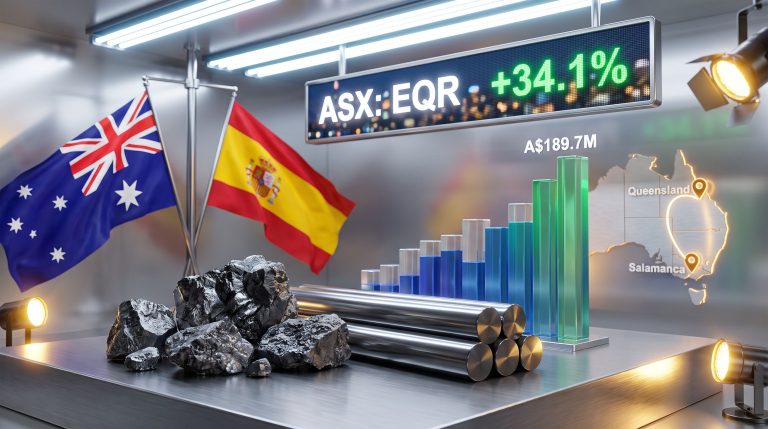
The global race to secure critical mineral supply chains rarely announces itself with a single transaction. More often, it unfolds through a gradual accumulation of capital commitments, policy frameworks, and industrial demand signals that eventually coalesce into a recognisable pattern. The Andrew Forrest EQ Resources tungsten stake, valued at approximately A$190 million, represents precisely this kind of inflection point — one where private conviction capital, geopolitical necessity, and industrial demand converge around an asset class that most investors still dramatically underestimate.
When big ASX news breaks, our subscribers know first
The Metal That Runs the World's Most Demanding Industries
Tungsten occupies a unique position in the periodic table and in industrial civilisation. With the highest melting point of any known metal at 3,422 degrees Celsius, a density approaching that of gold, and a hardness that makes it the benchmark material for cutting and wear-resistant applications, it is genuinely irreplaceable across a remarkable range of industries. Furthermore, tungsten's strategic importance has become increasingly central to Western defence procurement planning.
Approximately 60% of global tungsten consumption flows into cemented carbide cutting tools, the workhorse components of metalworking, mining equipment, and construction machinery. The remaining demand is distributed across:
- Defence applications, including kinetic energy penetrators used in armour-piercing munitions, radiation shielding, and shaped charge components where no substitute material can replicate tungsten's ballistic performance
- Electronics and semiconductor fabrication, where tungsten serves as an interconnect metal within chip architecture, a demand vector that is structurally expanding alongside the global semiconductor buildout
- Aerospace components, including turbine counterweights, gyroscope rotors, and vibration dampening systems that require extreme density in minimal volume
- Emerging fusion energy research, where tungsten's resistance to plasma erosion makes it the leading candidate material for plasma-facing reactor components, representing a long-duration demand optionality still in its early stages
What makes tungsten particularly compelling from a supply chain perspective is not just its physical properties but the near-total absence of viable substitutes in its most critical applications. Unlike lithium, where sodium-ion chemistry offers a partial alternative, tungsten's role in penetrator munitions and high-precision cutting tools has no credible replacement pathway at current technology maturity levels. In addition, it ranks among the most essential critical military metals relied upon by NATO-aligned nations.
China's Structural Grip on Global Tungsten Supply
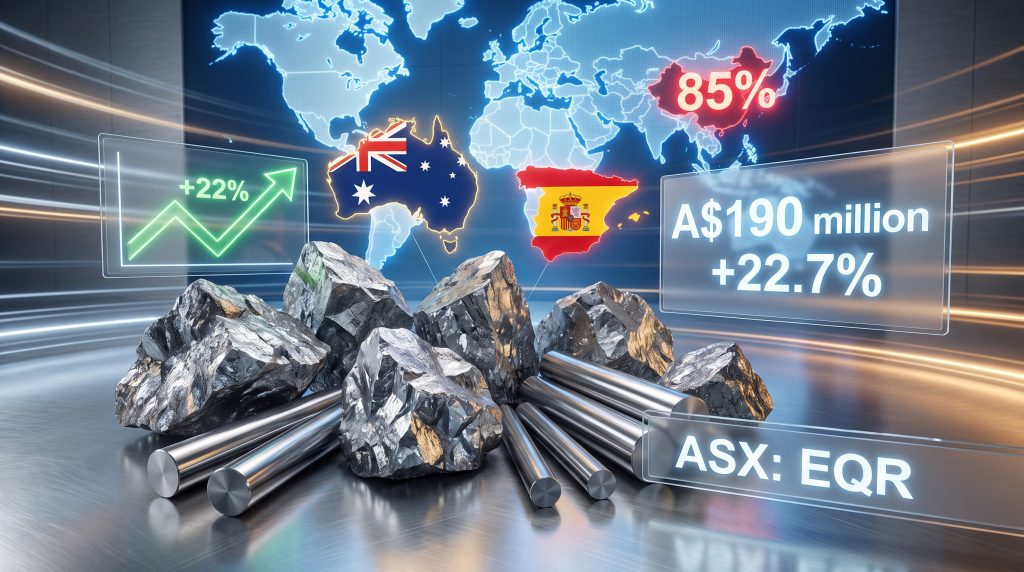
Understanding why the Andrew Forrest EQ Resources tungsten stake carries strategic weight requires grasping a single, uncomfortable statistic: China controls approximately 85% of global tungsten production. This is not a temporary market condition but a decades-long structural reality rooted in China's dominance of known ore bodies, its vertically integrated processing infrastructure, and its control over the ammonium paratungstate (APT) refining capacity that transforms raw ore into tradeable commodity.
APT is the primary form in which tungsten trades internationally, priced in US dollars per metric tonne unit (MTU). Crucially, tungsten does not trade on any major commodity exchange such as the London Metal Exchange. Pricing is determined through bilateral contracts and opaque spot market negotiations, which creates a fundamentally different risk and return profile compared to exchange-traded metals.
For Western buyers in defence and aerospace, this opacity is itself a vulnerability, as supply disruptions do not trigger visible exchange price signals until the physical shortage is already acute. Consequently, the critical minerals demand surge now underway is forcing governments and industry alike to rethink procurement assumptions.
The geopolitical implications of this concentration are becoming increasingly difficult for Western governments to ignore. Both the European Union and the United States have formally classified tungsten as a critical raw material, yet unlike lithium or rare earths, it has attracted comparatively little mainstream policy attention or capital market enthusiasm. This asymmetry between strategic importance and market awareness is precisely the kind of mispricing that experienced resource investors look for.
The combination of inelastic industrial demand, a near-monopoly supply structure dominated by a single geopolitical actor, and accelerating defence-sector consumption creates a fundamentally different risk-reward profile for tungsten compared to more widely traded critical minerals.
The Transaction: What Forrest Bought and What It Signals
The mechanics of the Andrew Forrest EQ Resources tungsten stake reveal as much about investment strategy as they do about the asset itself. The transaction summary is as follows:
| Deal Parameter | Detail |
|---|---|
| Acquirer | Andrew Forrest via investment vehicle Wonongarra |
| Target | EQ Resources Ltd (ASX: EQR) |
| Stake Acquired | ~16.8% of issued capital |
| Transaction Value | Approximately A$190 million |
| Shares Transferred | ~862 million shares |
| Options Included | ~35.5 million options |
| Vendor | Oaktree Capital Management |
| Share Price Impact | +22.7% in a single trading session (A$0.22 to ~A$0.27) |
The identity of the seller is as strategically significant as the buyer. Oaktree Capital Management, one of the world's most sophisticated alternative investment firms, had served as EQ Resources' cornerstone investor, providing the risk capital essential to developing the asset base to operational maturity. According to reporting by Proactive Investors, the complete transfer of that anchor position to Wonongarra rather than its dispersal across multiple institutional buyers signals a deliberate, concentrated strategic commitment rather than a passive market purchase.
Critically, the transaction involved no change to EQ Resources' management structure, operational activities, or workforce. This was a secondary market register reshaping, not a corporate event, and that distinction matters for how the market should interpret the move.
The 22.7% single-session share price movement deserves context. In small-to-mid-cap critical mineral equities, the entry of a credible long-duration anchor investor can compress perceived risk premium almost instantaneously, as institutional allocators reassess the probability of financing risk, management continuity, and strategic staying power. This is market psychology in action, not just fundamental revaluation.
Why the ~16.8% Threshold Is Deliberately Calibrated
The specific stake size is not accidental. Under Australian Corporations Act provisions, a holding below 20% avoids triggering mandatory offer obligations associated with a formal takeover bid, yet a stake of approximately 16.8% constitutes a substantial holder with significant practical influence over capital raises, strategic decisions, and future M&A scenarios.
This positioning provides maximum optionality across several strategic pathways:
- Incremental accumulation up to or beyond the 20% threshold if the investment thesis strengthens
- Participation in future capital raises at negotiated terms, potentially increasing economic exposure without triggering regulatory thresholds
- Constructive engagement with management on operational direction and strategic partnerships without the obligations of a controlling holder
- A liquid exit pathway if circumstances change, given the stake's size relative to market capitalisation
This is the kind of calibrated positioning that reflects long-duration resource sector experience rather than opportunistic trading.
EQ Resources: The Asset Base Behind the Investment Thesis
EQ Resources operates at a remarkable geographic intersection for a company of its size, holding producing tungsten assets on two separate continents within two of the world's most policy-active critical minerals jurisdictions.
Mt Carbine Tungsten Mine, North Queensland
Mt Carbine is one of only two operating tungsten mines in Australia and carries both historical production depth and modern redevelopment optionality. The North Queensland location provides access to established mining infrastructure, a stable sovereign regulatory environment, and geographic positioning that facilitates export logistics to Asian industrial markets.
The deposit's skarn-hosted ore body, typical of Queensland's polymetallic geological terranes, has been known since the early twentieth century, giving it an unusually long exploration and production history by Australian standards.
From an ore characteristics perspective, tungsten mineralisation in skarn systems tends to produce scheelite (calcium tungstate) as the primary ore mineral, which responds well to flotation and gravity concentration methods. Scheelite's fluorescent response under ultraviolet light also makes ore sorting and grade control somewhat more tractable than in wolframite-dominated deposits. These metallurgical characteristics have direct implications for processing costs and recovery rates, factors that significantly influence the economics of Western tungsten production relative to Chinese operations with lower labour cost structures.
Barruecopardo Tungsten Mine, Spain
The Spanish asset adds a dimension that few ASX-listed critical mineral companies of comparable scale can claim: an operating European production footprint at precisely the moment the EU is aggressively implementing its European Critical Raw Materials Act (CRMA). The European critical raw materials framework establishes benchmarks for domestic production of strategic materials, including tungsten, and creates a policy environment that incentivises European industrial buyers to seek EU-origin supply.
European tungsten demand is driven by a specific combination of end markets: precision engineering for the automotive sector's transition to electrification, defence manufacturing across NATO member states, and the semiconductor supply chain expansion occurring across Germany, the Netherlands, and Ireland. All of these demand vectors are on structurally upward trajectories independent of short-term economic cycles.
The Barruecopardo deposit is hosted in a vein-type wolframite mineralisation style, geologically distinct from Mt Carbine's scheelite skarn system. Wolframite ((Fe,Mn)WO4) requires different metallurgical processing, typically gravity concentration followed by magnetic separation, and grades in such systems are typically reported as WO3 (tungsten trioxide) equivalent, the industry-standard unit for expressing tungsten mineralisation intensity.
Dual-Hemisphere Production: Why Geography Creates Competitive Moat
| Asset | Jurisdiction | Primary Demand Market | Ore Type | Processing Method |
|---|---|---|---|---|
| Mt Carbine | Australia | Indo-Pacific industrial | Scheelite (skarn) | Flotation, gravity |
| Barruecopardo | Spain (EU) | European defence, industrial | Wolframite (vein) | Gravity, magnetic separation |
The ability to supply both Asian and European buyers from Western-aligned, politically stable jurisdictions creates a provenance premium that is becoming increasingly valuable. Defence and aerospace procurement regulations in the US, EU, and Australia are progressively incorporating supply chain origin requirements. Moreover, tungsten in defence and aerospace procurement frameworks is now subject to verified origin requirements that directly favour Western producers such as EQ Resources.
The next major ASX story will hit our subscribers first
Forrest's Investment Philosophy and Track Record Relevance
Andrew Forrest's transformation of Fortescue from a speculative iron ore explorer into a tier-one global producer is the defining lens through which his resource sector conviction calls are interpreted. His stated rationale for the EQ Resources investment centres on backing domestic producers, domestic employment, and domestic technical capability, framing the transaction as a sovereign capability play as much as a financial investment.
This framing is consistent with a broader pattern visible across the critical minerals landscape: high-conviction domestic capital entering to anchor strategic assets as foreign institutional investors rotate out following successful project development phases. As reported by The Australian, private equity vehicles like Oaktree are structurally incentivised to exit mature assets and redeploy into higher-risk, higher-return opportunities, with the Wonongarra entry absorbing that exit cleanly.
For smaller critical mineral companies that lack self-funding balance sheets, the presence of a credible long-duration anchor investor carries consequences well beyond the immediate share price reaction. It materially improves access to debt capital markets, enhances the credibility of offtake negotiations with industrial buyers, and signals to co-investment mechanisms that the asset has passed a sophisticated due diligence threshold.
Comparing Tungsten to Other Critical Minerals: The Risk-Reward Matrix
| Mineral | Western Supply Concentration Risk | Australian Production Scale | Substitute Availability |
|---|---|---|---|
| Tungsten | Very High (China ~85%) | Very Low (2 operating mines) | Very Low |
| Rare Earths | High | Growing (Lynas primary) | Low |
| Lithium | Moderate | Significant | Moderate (Na-ion emerging) |
| Cobalt | High (DRC dominated) | Limited | Moderate |
| Nickel | Moderate-High | Established | Low-Moderate |
The table illustrates why tungsten sits in a structurally differentiated position relative to the more widely discussed critical minerals. Its combination of extreme supply concentration, minimal Western production scale, and negligible substitute availability creates a scarcity profile that the market has been slow to price. However, the Andrew Forrest EQ Resources tungsten stake may represent the beginning of a broader institutional reassessment of that pricing gap.
What Investors Should Watch Going Forward
The Andrew Forrest EQ Resources tungsten stake establishes several forward-looking dynamics worth monitoring closely:
- Stake accumulation trajectory: Whether Wonongarra increases its holding toward or beyond 20% will be a meaningful signal of evolving conviction
- Offtake agreement announcements: The credibility of a Forrest-anchored register significantly enhances the likelihood of securing binding supply agreements with European or US defence-adjacent buyers
- Mt Carbine expansion milestones: Capital expenditure announcements and production rate updates from North Queensland will test whether the investment thesis translates into operational delivery
- APT price movements: While not exchange-traded, APT price benchmarks published by specialist industry sources provide the closest proxy for tungsten market health
- EU CRMA implementation: Regulatory milestones under the European Critical Raw Materials Act could catalyse demand for EU-origin tungsten supply from Barruecopardo
- Defence procurement cycles: NATO member spending trajectories and specific munitions procurement programs represent the most direct near-term demand signal for tungsten
For investors monitoring the critical minerals sector, tungsten remains one of the most underappreciated structural stories in Western supply chain security, and the Forrest-EQR transaction may well mark the moment that broader capital began to take notice.
Frequently Asked Questions
What percentage of EQ Resources does Andrew Forrest now own?
Through his investment vehicle Wonongarra, Andrew Forrest acquired approximately 16.8% of EQ Resources Ltd (ASX: EQR), making him one of the company's most significant individual shareholders.
How much did Andrew Forrest pay for the EQ Resources stake?
The transaction was valued at approximately A$190 million, covering roughly 862 million shares and 35.5 million options previously held by Oaktree Capital Management.
What does EQ Resources mine?
EQ Resources operates two tungsten mines: Mt Carbine in North Queensland, Australia (scheelite mineralisation in a skarn geological setting) and Barruecopardo in Spain (wolframite vein-type mineralisation), making it one of the Western world's most geographically diversified tungsten producers.
Why is tungsten classified as a critical mineral?
Tungsten is classified as critical due to its irreplaceable role in defence munitions, precision cutting tools, and semiconductor fabrication, combined with approximately 85% of global supply being controlled by China and the near-absence of viable material substitutes for its most demanding applications.
Did the Forrest investment change EQ Resources' operations or management?
No. The transaction was a secondary market share transfer with no effect on EQ Resources' operational activities, management structure, or workforce.
What happened to EQ Resources' share price after the announcement?
EQ Resources shares rose approximately 22.7% in a single trading session, moving from A$0.22 to approximately A$0.27, reflecting strong market endorsement of Forrest's entry as a major shareholder.
How is tungsten priced and traded?
Tungsten primarily trades as ammonium paratungstate (APT), priced in US dollars per metric tonne unit (MTU), through bilateral contracts rather than on a major commodity exchange. This reduces price transparency but also insulates producers from the speculative volatility common in exchange-traded metals.
Disclaimer: This article is for informational purposes only and does not constitute financial advice. Forward-looking statements, demand projections, and price outlook commentary involve inherent uncertainty. Readers should conduct independent research and seek qualified financial advice before making investment decisions. Past performance of individuals or companies referenced is not indicative of future results.
Want to Stay Ahead of the Next Major ASX Critical Mineral Discovery?
Discovery Alert's proprietary Discovery IQ model delivers real-time alerts on significant ASX mineral discoveries — including critical minerals like tungsten — transforming complex announcement data into actionable insights for both short-term traders and long-term investors. Explore Discovery Alert's discoveries page to understand how historic mineral discoveries have generated substantial returns, and begin your 14-day free trial today to position yourself ahead of the broader market.