
May 18, 2026
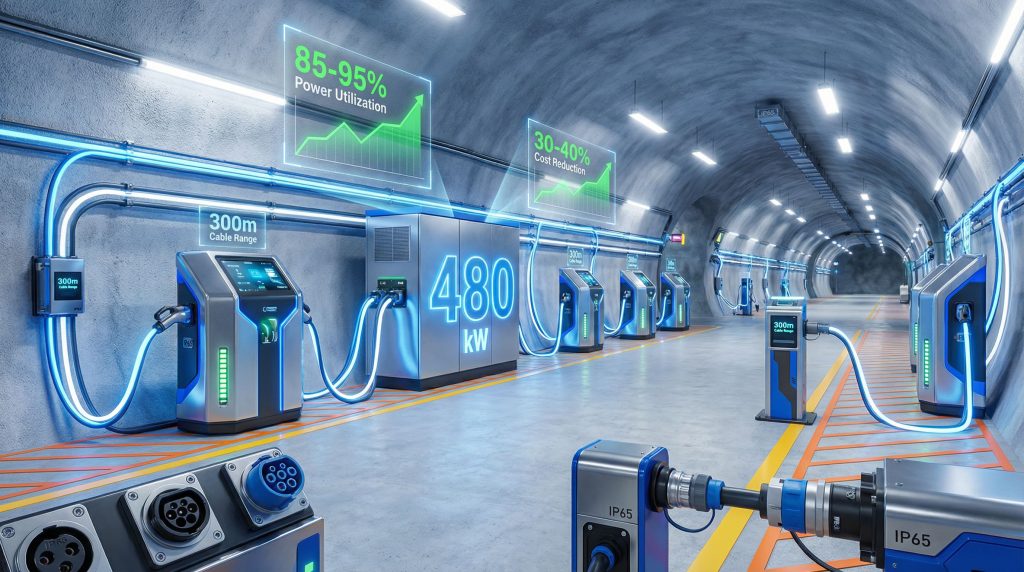
The transformation of heavy industrial equipment from diesel dependency to battery-electric systems represents one of the most significant technological transitions in modern mining operations. Underground facilities face distinct challenges that surface applications rarely encounter, requiring specialised engineering approaches to power distribution, environmental protection, and fleet optimisation. Furthermore, Epiroc launches next generation charging solution specifically designed for these demanding subsurface environments, providing charging solutions that can operate reliably under extreme conditions while maintaining the operational efficiency that mining operations depend on for profitability.
Understanding Underground Mining Electrification Infrastructure Requirements
The evolution toward electric mining vehicles stems from multiple convergent pressures across the industry. Stringent emission regulations continue expanding globally, with underground operations facing particular scrutiny due to confined air circulation systems. Worker health initiatives increasingly focus on reducing exposure to diesel exhaust particulates, while operational cost optimisation drives mining companies to seek alternatives to volatile fuel pricing.
Additionally, corporate sustainability commitments require measurable reductions in Scope 1 emissions, positioning electric equipment as a strategic necessity rather than an optional upgrade. However, implementing comprehensive renewable energy mining solutions requires sophisticated infrastructure planning to ensure reliability and efficiency.
Environmental Resilience Beyond Surface Standards
Underground mining environments subject equipment to conditions that exceed typical industrial specifications by significant margins. Temperature fluctuations can range from 15°C in upper levels to over 60°C near active mining faces in deep operations, creating thermal stress cycles that compromise standard electronic components. According to International Organisation for Standardisation guidelines, underground mining equipment must withstand temperature variations, humidity levels between 60-95%, and dust particulate concentrations reaching 5-10 mg/m³ during blasting operations.
Critical Environmental Factors:
• Dust infiltration protection: Fine silica particles smaller than 10 microns penetrate standard electrical enclosures
• Moisture management: Groundwater seepage and ventilation condensation create corrosion risks
• Vibration tolerance: Continuous mechanical stress from drilling and heavy equipment operation
• Chemical exposure: Exposure to mining chemicals and explosive residues
The IP65 certification standard employed by the next generation charging solution provides complete dust-tight protection and water jet resistance from all directions. This specification addresses the unique combination of environmental stressors present in underground mining that would quickly compromise surface-grade equipment.
Mining operations in challenging environments, such as South Africa's deep gold mines extending beyond 3,500 meters, require equipment capable of functioning in ambient temperatures exceeding 50°C. Consequently, standard industrial charging solutions prove inadequate for these extreme conditions.
Spatial Configuration and Installation Constraints
Underground charging infrastructure must navigate spatial limitations that surface installations never encounter. Tunnel widths, ceiling heights, and chamber configurations dictate equipment placement strategies that balance accessibility with operational efficiency. Cable routing through underground networks requires specialised planning to avoid interference with ventilation systems, transportation routes, and emergency evacuation procedures.
Installation Considerations:
• Wall-mounted configurations: Space-efficient solutions for narrow tunnel applications
• Pedestal-mounted systems: Stable installations for wider chamber areas
• Cable extension capability: 300-meter reach from central cabinets to remote charging posts
• Maintenance accessibility: Service requirements in confined spaces with limited surface access
The modular design approach enables incremental capacity expansion without requiring complete system replacement. For instance, this provides operational flexibility as mining operations evolve and expand into new areas, supporting evolving mining industry innovation requirements.
When big ASX news breaks, our subscribers know first
Advanced Fleet Power Management Through Dynamic Distribution
Traditional charging systems operate on fixed power allocation models that create operational bottlenecks during peak demand periods. The dynamic power sharing technology represents a fundamental shift toward intelligent energy distribution that adapts to real-time fleet requirements. This system monitors battery states across up to eight charging stations simultaneously, automatically redistributing available power capacity based on operational priorities.
Real-Time Load Balancing Capabilities:
| Feature | Traditional Fixed Systems | Dynamic Power Sharing |
|---|---|---|
| Power utilisation efficiency | 60-70% average | 85-95% average |
| Queue management approach | Static scheduling | Adaptive prioritisation |
| Peak demand characteristics | Fixed maximum loads | Variable optimisation |
| Fleet availability impact | Schedule-dependent | Demand-responsive |
According to Trent Sears, Epiroc's Global Product Manager for EV Infrastructure, "the dynamic power sharing system maintains high equipment utilisation throughout every shift by adapting in real-time to changing fleet patterns." This technological advancement eliminates the traditional constraint where charging infrastructure availability determines equipment deployment schedules.
Intelligent Power Allocation Mechanisms
The system employs microprocessor-based power management that continuously monitors real-time battery state-of-charge across all connected vehicles. Priority algorithms direct maximum available power to vehicles with the lowest battery charges, effectively balancing depletion rates across the entire fleet. Communication protocols coordinate charging activities across multiple cabinet units, preventing power grid overload while optimising individual vehicle charging curves.
Operational Benefits:
• Peak demand reduction: 15-25% decrease in electrical utility charges through load management
• Equipment availability: Consistent vehicle readiness throughout operational shifts
• Infrastructure efficiency: Reduced electrical installation requirements
• Maintenance optimisation: Coordinated charging reduces component stress
Mining operations typically experience significant demand spikes during shift changes when multiple vehicles require simultaneous charging. Furthermore, dynamic systems eliminate these peaks by sequencing charging activities to maintain optimal power delivery without straining electrical infrastructure.
Decentralised Charging Strategy Implementation
Remote charging post deployment extends charging capability up to 300 meters from central power cabinets, enabling strategic placement near active mining faces. This approach reduces equipment tramming time and associated energy consumption while supporting flexible mine layout modifications without infrastructure overhaul.
The decentralised strategy proves particularly valuable in extensive underground operations where centralised charging would require excessive vehicle movement. Moreover, this strategy integrates seamlessly with data-driven mining operations that optimise equipment deployment and maintenance scheduling.
Strategic Placement Advantages:
• Reduced tramming distance: Minimised non-productive vehicle movement
• Operational flexibility: Charging infrastructure follows mining progression
• Energy efficiency: Lower power losses over shorter cable runs
• Maintenance accessibility: Distributed service points reduce downtime
Technical Specifications for Heavy-Duty Mining Applications
The charging solution delivers 480 kW maximum power output per central cabinet, supporting up to eight charging posts through dynamic power distribution. The system accommodates various equipment manufacturers through OEM-agnostic design principles, utilising standardised charging protocols across different battery technologies. This universal compatibility reduces inventory complexity while enabling mixed fleet operations.
Core System Specifications:
• Maximum power capacity: 480 kW per central cabinet configuration
• Charging post capacity: Up to 8 units per cabinet with dynamic sharing
• Cable extension range: 300 meters maximum from cabinet to remote posts
• Environmental protection: IP65 certification for dust and water resistance
• Communication systems: Real-time telematics integration for fleet management
Monitoring and Diagnostic Integration
Advanced monitoring capabilities provide comprehensive operational oversight through multiple interface options. Interactive LED status indicators offer immediate visual feedback for local personnel, while touchscreen human-machine interfaces enable detailed monitoring and control functions. Remote telematics integration supports surface-based fleet management systems, providing real-time data on charging sessions, energy consumption patterns, and predictive maintenance requirements.
Diagnostic Capabilities:
• Real-time session tracking: Comprehensive data logging for all charging activities
• Predictive maintenance alerts: Component monitoring with failure prediction
• System status visualisation: LED indicators and touchscreen interfaces
• Remote monitoring integration: Surface-based fleet management connectivity
• Plug-and-play electronics: Simplified serviceability and configuration
The telematics support enables tracking of charge sessions with detailed analytics on power consumption, charging efficiency, and equipment utilisation patterns. This data proves essential for optimising fleet management strategies and identifying opportunities for operational improvements, particularly when integrated with AI in mining operations.
Economic Impact Analysis for Mining Operations
The transition to electric mining equipment with advanced charging infrastructure generates substantial economic benefits across multiple operational dimensions. Direct cost reductions include fuel elimination, reduced maintenance requirements, and improved equipment longevity. Indirect benefits encompass enhanced productivity through reduced downtime, improved operational planning capabilities, and risk mitigation from fuel price volatility.
Operational Performance Improvements:
| Metric | Improvement Range | Productivity Impact |
|---|---|---|
| Equipment uptime | 15-25% increase | Extended productive hours |
| Tramming efficiency | 20-30% travel time reduction | More time at working faces |
| Maintenance intervals | 40-50% reduction | Increased operational availability |
| Energy costs | 30-40% decrease vs diesel | Predictable operational expenses |
Note: Performance figures represent internal testing data and may vary based on specific operational conditions and fleet configurations.
Cost Structure Transformation
Electric equipment eliminates diesel consumption, which typically represents 15-20% of total operational costs in underground mining according to International Energy Agency data. The U.S. Energy Information Administration reports that global diesel prices averaged $65-75 per barrel during 2023-2024, with historical volatility ranging from $20-$150 per barrel over the past decade.
This price instability creates significant budget uncertainty for mining operations dependent on diesel-powered equipment. However, innovative next-generation mining equipment provides stable operational cost structures with predictable energy expenses.
Financial Benefits:
• Fuel cost elimination: Complete removal of diesel dependency and price volatility
• Maintenance reduction: Electric motors require significantly less service than diesel engines
• Ventilation savings: Reduced exhaust emissions lower ventilation system costs
• Equipment longevity: Optimised charging protocols extend battery and vehicle lifespan
Supply Chain Risk Mitigation
Reduced reliance on fossil fuels provides protection against supply chain disruptions and geopolitical price fluctuations. Mining operations in remote locations face particular challenges with fuel logistics, including transportation costs, storage requirements, and delivery schedule dependencies. Electric systems sourced from mine power grids or renewable installations offer predictable energy costs and enhanced operational continuity.
The economic case for electrification strengthens as operations scale, with larger fleets realising proportionally greater benefits from fuel elimination and maintenance reductions. Additionally, corporate sustainability reporting requirements increasingly focus on Scope 1 emission reductions, positioning electric equipment adoption as essential for regulatory compliance and investor relations.
Implementation Planning and Infrastructure Integration
Successful deployment of underground charging infrastructure requires comprehensive planning that addresses electrical capacity, installation logistics, and operational transition strategies. Mining operations must evaluate existing power grid capabilities, backup system requirements, and integration with current automation and monitoring systems.
Compliance with underground electrical safety regulations adds additional complexity to installation planning. Consequently, thorough assessment becomes critical for successful implementation.
Infrastructure Assessment Requirements:
• Electrical capacity evaluation: Mine power grid analysis and potential upgrades
• Safety compliance: Underground electrical installation regulations and standards
• System integration: Compatibility with existing mine automation and SCADA systems
• Installation logistics: Equipment delivery and positioning in underground environments
Phased Implementation Strategy
Mining operations typically benefit from graduated conversion approaches that minimise operational disruption while providing opportunities to optimise system performance. Pilot programme development for specific mining areas enables testing and refinement before broader deployment. This phased approach allows personnel training, performance monitoring, and system optimisation during rollout phases.
Implementation Phases:
• Pilot programme development: Limited area testing with selected equipment
• Performance optimisation: System tuning based on initial operational data
• Personnel training: Comprehensive education for maintenance and operational staff
• Scaled deployment: Gradual expansion across mining operations
Return on investment calculations must consider initial capital investment for charging infrastructure, equipment conversion costs, personnel training expenses, and projected operational savings. Long-term strategic benefits include enhanced regulatory compliance positioning, improved worker health and safety metrics, corporate sustainability goal achievement, and competitive advantages in ESG-focused investment markets.
Future Trends in Underground Mining Electrification
The mining industry's electrification trajectory continues accelerating due to increasingly stringent environmental regulations, growing investor focus on sustainable practices, and technological advancement reducing implementation barriers. Competitive pressure for operational efficiency improvements drives adoption rates, while integration opportunities with autonomous systems create additional value propositions.
Industry Transformation Drivers:
• Regulatory pressure: Expanding emission standards and environmental compliance requirements
• Investment criteria: ESG considerations increasingly influence capital allocation decisions
• Technological maturity: Improved battery technology and charging infrastructure reliability
• Operational advantages: Demonstrated productivity and cost benefits from early adopters
Integration with Autonomous Systems
Advanced charging infrastructure provides essential compatibility with autonomous vehicle charging protocols, supporting unmanned equipment operation in hazardous areas. Integration with predictive maintenance and fleet optimisation systems enhances safety through reduced human exposure in dangerous environments. These technological convergences position electric equipment as foundational for next-generation mining operations.
The deployment of sophisticated underground charging infrastructure represents a critical enabler for the mining industry's sustainable transformation. Early adoption provides competitive advantages through operational cost reductions, improved safety performance, and enhanced environmental compliance positioning.
The next major ASX story will hit our subscribers first
Key Considerations for Mining Industry Decision Makers
The evolution of underground charging infrastructure fundamentally alters mining equipment management, offering substantial operational, financial, and environmental benefits. Success requires comprehensive planning encompassing technical requirements, financial projections, and workforce development initiatives.
Critical Success Factors:
• Technical planning: Thorough electrical and spatial assessment before implementation
• Financial modelling: Comprehensive analysis of costs, benefits, and payback periods
• Personnel development: Training programmes for maintenance, operation, and management staff
• Phased deployment: Gradual implementation with performance monitoring and optimisation
Mining operations considering electrification should evaluate their specific operational requirements, existing infrastructure capabilities, and strategic objectives to determine optimal implementation approaches. The technology's proven benefits in improving operational efficiency, reducing costs, and enhancing environmental performance make it an increasingly essential component of competitive mining operations.
Furthermore, the Epiroc launches next generation charging solution demonstrates how advanced engineering addresses the unique challenges of underground mining environments. In addition, this technology positions early adopters for competitive advantages in an increasingly electrified mining landscape.
Further exploration opportunities include examining case studies from mining operations that have successfully implemented electric fleets, analysing regional regulatory requirements and timelines, and investigating financing options for infrastructure upgrades and equipment conversions.
Looking to Capitalise on Mining Industry Innovation?
Discovery Alert's proprietary Discovery IQ model delivers real-time notifications on significant ASX mineral discoveries, including breakthrough technologies transforming mining operations like advanced electrification systems. Explore how major mining discoveries have generated exceptional returns for early investors, then begin your 14-day free trial today to position yourself ahead of the market in this rapidly evolving sector.